What Treatment Does a Soshanguve Data Centre Actually Need?
A Soshanguve data centre generally needs three separate treatment paths: cooling-tower blowdown for reuse or controlled discharge, process wastewater for source-specific neutralisation and pretreatment, and sanitary sewage in a dedicated package plant. Cooling-tower blowdown is the priority because it offers the clearest reuse opportunity. At 4 cycles of concentration, approximately 25–30% of makeup water becomes blowdown, while CTBD TDS may reach 1,200–6,000 mg/L. The design should therefore proceed through measured water balances, chemistry testing, consent triggers and staged treatment selection—not one blended wastewater plant.
The first engineering deliverable is a source-by-source water balance using blowdown flow = makeup flow × (1 − 1/COC), as set out in HydropureWater’s 2026 Soweto guide. A 5–20 MW Johannesburg colocation envelope of 100,000–400,000 L/day at full load is only a preliminary benchmark, not a Soshanguve design flow.
The supplied research does not establish Soshanguve’s exact water supplier, sewer receiver, permit conditions or groundwater constraints. Those are mandatory design inputs. A comparable 2026 data-centre wastewater treatment guide supports the broader stream-separation approach, but it cannot substitute for parcel-level confirmation.
| Design basis | Engineering status for Soshanguve |
|---|---|
| Cooling-tower blowdown | Separate train; prioritise measured reuse potential. |
| Process wastewater | Separate source-specific neutralisation and pretreatment. |
| Sanitary sewage | Dedicated package treatment; exclude from industrial reuse. |
| Water supplier, sewer receiver and consent route | Confirm for the specific parcel before selecting equipment. |
Build the Site Water Balance and Chemical Profile
Equipment sizing should begin with measured flows and chemistry, not the preliminary 100,000–400,000 L/day Johannesburg benchmark. Request daily, peak and batch flows for makeup, evaporation, blowdown, process wastewater, laboratory wastewater, fire-water tests and sanitary sewage. Record whether each flow is continuous, scheduled or event-driven, because batch discharges determine equalisation and dosing requirements.
The CTBD analytical programme should cover TDS, conductivity, pH, silica, calcium, hardness, alkalinity, suspended solids, residual biocide, corrosion inhibitor, scale inhibitor, free chlorine and peroxide. The 1,200–6,000 mg/L CTBD TDS range in HydropureWater’s 2026 Johannesburg guide is a recognition range, not a substitute for Soshanguve sampling. A broad data-centre wastewater treatment guide supports source characterisation before membrane design.
For industrial batch wastewater, IICBEE C1123016 (2023) provides a conservative anchor of pH 6.14, COD 1,923 mg/L and turbidity 506.3 NTU. IICBEE C1123031 (2023) gives a worst-case high-COD envelope of COD 4,485 mg/L and TDS 11,052 mg/L. Neither represents Soshanguve conditions.
Provide equalisation where pH or batch flows swing. HydropureWater’s 2026 Johannesburg guide gives an 8–24-hour practical residence envelope; it is not a universal requirement. Establish the tank working volume from measured batch volume, maximum discharge rate and the required treatment response time.
| Measurement | Required design use |
|---|---|
| Makeup, evaporation and blowdown | Calculate CTBD flow and cycles-of-concentration sensitivity. |
| Peak and batch flows | Size equalisation, transfer pumps and isolation. |
| TDS, silica, hardness and alkalinity | Assess RO recovery, scaling and concentrate route. |
| pH, chlorine, peroxide and treatment chemicals | Define neutralisation, membrane compatibility and biocontrol. |
| TSS and turbidity | Set solids-removal and UF pretreatment criteria. |
Keep Each Waste Stream Separate
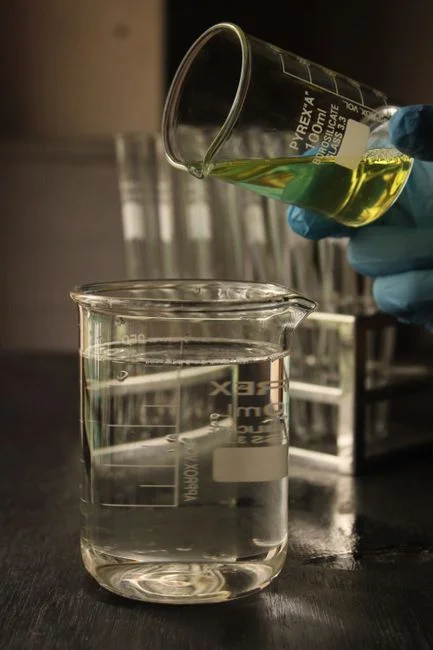
Physical separation through equalisation and treatment limits chemical incompatibility, protects reuse quality and simplifies consent discussions. Cooling blowdown should pass through equalisation, controlled antiscalant and biocide management, solids removal and membrane pretreatment where RO reuse is selected.
Acidic or alkaline process wastewater requires neutralisation and chemical dosing before any downstream biological or membrane process. Do not co-mingle it with CTBD without a dedicated compatibility assessment. HydropureWater’s 2026 Johannesburg guide reports that residual peroxide from slurry polishing can react violently with low-pH acid waste and release hydrogen during batch transfers.
For suspended-solids or slurry wastewater, dissolved air flotation can remove oil, grease, colloids and suspended solids. The same 2026 Johannesburg guide gives a DAF capacity range of 4–300 m³/h and treatment to TSS below 30 mg/L. These figures indicate equipment scale, not a Soshanguve duty.
Sanitary sewage should remain separate in a dedicated WSZ underground package sewage treatment plant. The engineering treatment options for cooling blowdown illustrate the same source-control principle: keep organic load and trace metals outside the industrial reuse stream.
| Stream | Minimum treatment before any reuse decision |
|---|---|
| CTBD | Equalisation, chemical control, solids removal and justified membrane pretreatment. |
| Acidic or alkaline process water | Source isolation, equalisation, neutralisation and downstream polishing. |
| Slurry wastewater | DAF or equivalent solids and FOG removal. |
| Sanitary sewage | Dedicated package sewage treatment. |
Treat Cooling Blowdown for Makeup Reuse
A practical CTBD reuse train starts with equalisation, controlled antiscalant, biocide and corrosion-inhibitor dosing, followed by solids removal and RO pretreatment. Legacy chromate or high-phosphate programmes should not be introduced without checking membrane compatibility, discharge chemistry and reuse implications.
Use multi-media filtration for solids and SDI control. Add a PVDF ultrafiltration pretreatment for CTBD where measured feed quality cannot reliably meet the below 10–15 μm feed criterion cited in HydropureWater’s 2026 Johannesburg guide. Apply scale-inhibitor break and chlorine-dioxide shock dosing before RO where the cooling programme would otherwise foul the membranes.
An industrial RO system for cooling-tower makeup reuse is the principal recovery technology for segregated CTBD. HydropureWater’s 2026 Johannesburg guide reports 70–90% recovery on segregated CTBD with permeate conductivity below 50 μS/cm. Genesis Water Technologies (2026) reports 10–50 mg/L permeate TDS for cooling-tower makeup reuse.
Combined-stream RO recovery should be held to 65–75% according to HydropureWater’s 2026 Johannesburg guide because fouling potential increases. Conventional brackish RO generally plateaus at 75–80% because silica, calcium carbonate and calcium sulfate reach scaling constraints; IDE-Tech (2026) gives the same recovery ceiling.
IDE-Tech’s 2026 MAXH₂O concept is an advanced alternative: conservative RO followed by controlled precipitation of sparingly soluble salts in a fluidised-bed reactor. Its industrial case achieved around 95% recovery with permeate silica of about 1 mg/L. Treat that as a feasibility option for site-specific chemistry, not a standard Soshanguve specification.
| CTBD reuse stage | Acceptance basis |
|---|---|
| Equalisation and chemical control | Measured flow, pH and treatment programme within operating limits. |
| Multi-media filtration or UF | Feed meets the selected RO criterion. |
| RO | Recovery demonstrated at actual TDS and silica; permeate quality suitable for approved makeup use. |
| Concentrate handling | Documented discharge, partial-ZLD or full-ZLD route. |
Decide Between Discharge, Reuse and ZLD
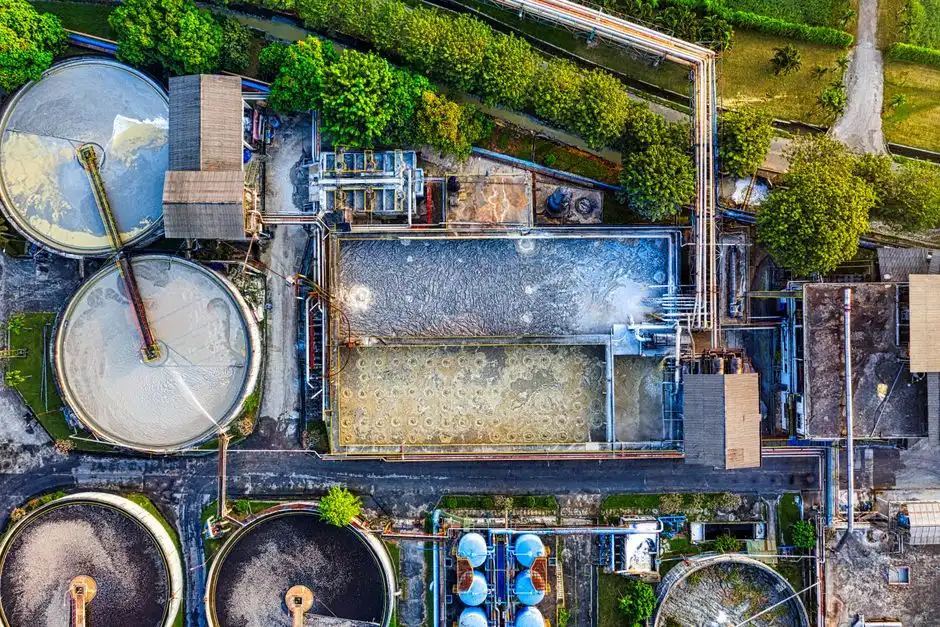
The preferred route depends on measured chemistry, consent conditions, freshwater savings, power resilience and life-cycle cost. Discharge remains viable where the receiving authority accepts negotiated effluent chemistry and segregated neutralisation plus solids treatment achieves it. Soshanguve rules must be confirmed; Johannesburg requirements cannot simply be transferred.
CTBD filtration plus RO becomes the reuse option where reducing freshwater demand justifies the train and the permit pathway supports storage and reuse. Partial zero liquid discharge becomes relevant when the residual stream must be reduced further: HydropureWater’s 2026 Soweto guide cites 80–90% volume reduction as its typical benefit.
Full ZLD should be reserved for closed consent pathways or unusually demanding discharge economics. HydropureWater’s 2026 Johannesburg guide states that ZLD capital cost is 2–3 times the MBR-plus-RO route and identifies approximately 500 m³/day combined flow or a closed consent pathway as triggers for reconsideration.
Directional benchmarks from HydropureWater’s 2026 Soweto guide are US$250,000–500,000 installed for a 50,000-gallon-per-day blowdown RO system, approximately US$1.50–3.00 per 1,000 gallons treated, and US$3–8 million for full ZLD with crystallisation. These are comparison inputs, not quotations for Soshanguve. The wastewater decision framework supports comparing options only after receiving authority requirements are known.
| Route | When it fits | Main decision test |
|---|---|---|
| Controlled discharge | Authority accepts treated effluent and discharge economics remain acceptable. | Can measured chemistry meet the confirmed consent? |
| RO reuse | Freshwater reduction and permitted reuse justify treatment. | Does recovery work at actual TDS and silica? |
| Partial ZLD | Residual volume must fall without full crystallisation. | Does volume reduction justify added energy and maintenance? |
| Full ZLD | Closed consent or unusually high discharge cost. | Does the restricted discharge route justify the capital premium? |
Power resilience is part of treatment selection. Route aeration blowers, RO high-pressure pumps and critical dosing equipment through generator-backed supply or UPS where operational continuity requires it.
Confirm Permits, Monitoring and Local Acceptance
The Soshanguve parcel’s municipality, sewer authority and water supplier must be identified before the discharge or reuse route is fixed. The supplied research discusses Johannesburg and Rand Water requirements, but it does not establish that those requirements govern every Soshanguve site.
Check whether proposed on-site storage or reuse triggers a National Water Act Section 21 water-use authorisation. Record the legal trigger, responsible applicant, submission status and design assumptions in the design-basis memorandum. Do not leave the decision until after treatment procurement.
Confirm current trade-effluent requirements, permitted parameters, consent fees, monitoring frequency and sampling protocol with the receiving authority. Where local limits do not address fluoride, silica or peroxide residuals, HydropureWater’s 2026 Johannesburg guide cites the WHO 2017 wastewater-reuse guidelines and US EPA industrial-effluent framework as reference points; neither substitutes for local consent.
Use a SANAS-accredited laboratory with industrial-effluent experience and confirm that its accreditation scope covers the final authority parameter list. Require baseline sampling before chemical selection, equipment award or acceptance testing.
The 2026 wastewater compliance workflow reinforces the need to verify local requirements rather than transfer generic benchmarks.
- Record the confirmed water supplier, sewer authority and applicable by-laws.
- Document the Section 21 assessment for storage and reuse.
- Obtain the preliminary consent parameter list and monitoring schedule.
- Approve the laboratory scope and baseline sampling plan before equipment selection.
Issue a Procurement-Ready Equipment and Data Schedule
The RFQ package should give every stream its design flow, peak flow, batch flow, TDS, silica, hardness, pH, temperature and required permeate or discharge quality. Specify equalisation, isolation, chemical dosing, solids removal, UF where justified, industrial RO, permeate storage, backwash, sludge handling and bypasses.
For an MBR-plus-RO route, HydropureWater’s 2026 Johannesburg guide gives directional operating costs of US$0.10–0.30/m³ for chemicals and US$0.08–0.15/m³ for power, with membrane replacement every 5–7 years. Suppliers must confirm these assumptions against site water and operating conditions.
For UF, require feed turbidity, recovery, backwash frequency, cleaning method, membrane materials and compatibility with the selected antiscalant and biocide programme. For RO, require recovery at actual feed TDS and silica, membrane flux, antiscalant demand, cleaning frequency, permeate quality, power consumption and concentrate route.
Also require local spare-parts availability, commissioning records, operator training, PLC controls and performance testing against the site water analysis—not generic manufacturer curves. The equipment-selection reference can help structure comparable supplier submissions.
Frequently Asked Questions
What treatment does a Soshanguve data centre need for cooling blowdown?
Start with segregated CTBD equalisation, chemical control and solids removal. Add UF only if measured feed quality cannot reliably meet the selected RO criterion, then use industrial RO for cooling-tower makeup reuse if discharge and authorisation conditions support it. HydropureWater’s 2026 Johannesburg guide reports 70–90% recovery on segregated CTBD, but the supplier must demonstrate performance using actual Soshanguve TDS and silica.
How much should the wastewater treatment budget be?
Request a site-specific quotation rather than adopting a headline cost. HydropureWater’s 2026 Soweto guide gives US$250,000–500,000 installed for a 50,000-gallon-per-day blowdown RO system and approximately US$1.50–3.00 per 1,000 gallons treated. It also gives US$3–8 million for full ZLD with crystallisation. Require quotations based on the measured flow, chemistry, recovery target, power arrangement, concentrate route and acceptance tests.
How should a supplier be selected for Soshanguve?
Check whether the supplier can demonstrate recovery at the actual feed TDS and silica, provide membrane-compatibility evidence for the cooling-water programme, commit to local spare-parts support and include commissioning and operator training. Do not select on nominal recovery alone; require permeate quality, cleaning demand, power consumption and concentrate handling in the performance test.
Can the treatment plant be designed before local permits are confirmed?
No final consent design should be issued first. The municipality, sewer authority, water supplier, trade-effluent parameters, monitoring requirements and potential National Water Act Section 21 trigger must be confirmed for the parcel. Equipment can be tendered against agreed design criteria, but performance acceptance and final procurement award should remain conditional on the consent pathway.