
Why Soweto Data Centers Need a Blowdown-First Treatment Strategy
Cooling tower blowdown is the primary volume, risk, and compliance driver for a Soweto data center, while sanitary sewage is a secondary concern. Globally, 75–90% of data centers use water-based cooling, with evaporative systems dominant in hot, dry climates (UGA CAES Field Report, 2026-05). This places the bulk of the wastewater stream on the cooling loop rather than the sewer stack. For scale, a 100 MW facility can require up to 2 million liters of water per day (IDE-Tech, 2026), making even a fraction of unmanaged blowdown a significant municipal-sewer load.
Teraco's head of sustainability states that a 30 MW closed-loop data center consumes water comparable to an average restaurant annually (Japan Times, 2026-07), proving that the cooling architecture, not the end-of-pipe train, sets the baseline load. South Africa hosts more than 50 data centers with a combined capacity of about 350 MW—less than 1% of the global total—and operates under a national policy calling for environmentally sustainable infrastructure, with the communications minister identifying closed-loop liquid cooling as a standard mitigation (Japan Times, 2026-07).
Soweto-Specific Influent and Site Constraints
Johannesburg and Soweto municipal and borehole supplies consist of hard, mineralized water. Combined with high evaporation, this drives cooling tower blowdown (CTBD) to 1,200–6,000 mg/L TDS—4–8× the makeup water (Genesis Water Technologies, 2026). Cycles of concentration govern both blowdown volume and chemistry: at 4 cycles of concentration (COC), roughly 25–30% of makeup water is lost as blowdown, meaning a site taking 10 million gallons per month of makeup sends 2.5–3 million gallons per month to treatment or sewer (Genesis, 2026). The scaling species that limit recovery are silica, calcium carbonate, and calcium sulfate; conventional brackish RO plateaus at 75–80% recovery before these salts foul the membrane (IDE-Tech, 2026). Pushing past that requires a design that separates salt removal from osmotic-pressure limits and manages scaling chemistry proactively.
Because Soweto sits inside Eskom's load-shedding envelope, every high-energy treatment option must be balanced against diesel runtime. Research indicates that saving water often requires more electricity for cooling, while evaporative cooling uses less electricity but more water (UGA CAES Field Report, 2026-05). OPEX and kilowatt-hours per cubic meter are primary design constraints.
| Parameter | Typical Soweto CTBD range | Source |
|---|---|---|
| TDS | 1,200–6,000 mg/L (4–8× makeup) | Genesis Water Technologies, 2026 |
| Cycles of concentration | ~4 typical operating point | Genesis Water Technologies, 2026 |
| Blowdown fraction at 4 COC | ~25–30% of makeup flow | Genesis Water Technologies, 2026 |
| Suspended solids in CTBD | 10–50 mg/L | Genesis Water Technologies, 2026 |
| Key scaling species | Silica, CaCO₃, CaSO₄ | IDE-Tech, 2026; Genesis, 2026 |
| Conventional BWRO recovery ceiling | 75–80% | IDE-Tech, 2026 |
The Three Realistic Treatment Trains for a Soweto Data Center
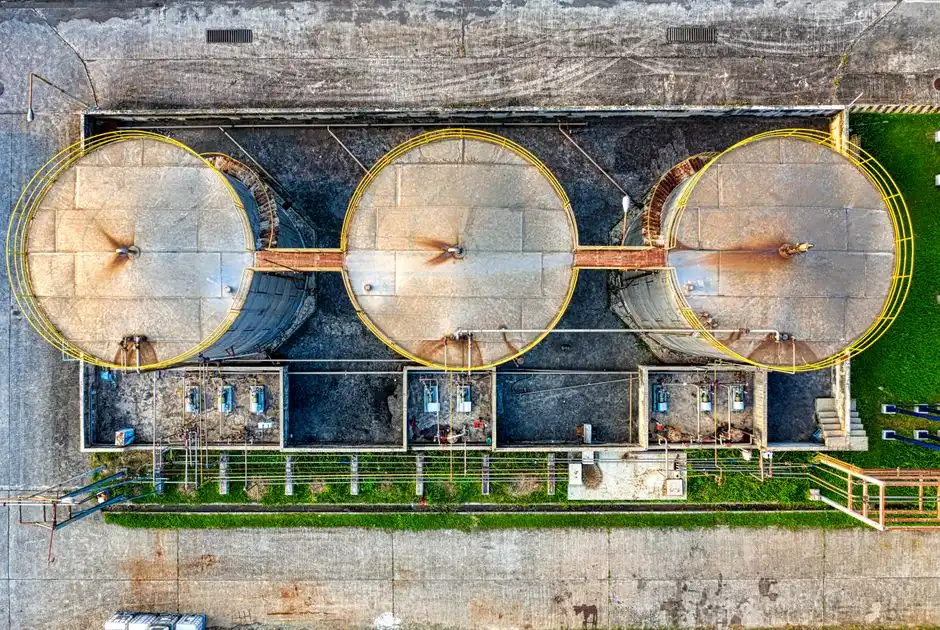
Train A utilizes closed-loop or hybrid cooling with minimal side-stream treatment to target the 70% water-use reduction common in closed-loop systems (UGA CAES Field Report, 2026-05). Side-stream filtration removes suspended solids and biofilm, blowdown volumes remain small, and the residual stream is either reused as irrigation-grade water or discharged under permit. This configuration aligns with the architecture Teraco and the South African communications minister cite as an increasingly standard mitigation (Japan Times, 2026-07).
Train B employs side-stream RO for makeup reuse by integrating side-stream filtration, optional UF, and RO. RO permeate at 10–50 mg/L TDS is blended back as cooling-tower makeup (Genesis, 2026). A 50,000 GPD blowdown RO system costs US$250,000–500,000 installed, with an OPEX of approximately US$1.50–3.00 per 1,000 gal treated, including energy, chemicals, membrane replacement, and maintenance (Genesis, 2026). On the front end, a multi-media filter for SDI control and an industrial RO system for cooling blowdown reuse are the workhorse units.
Train C involves partial or full ZLD, where RO concentrate feeds mechanical vapor compression at 95–98% recovery with distillate below 10 mg/L TDS. CAPEX is US$1–3 million for 10,000–30,000 GPD, with energy consumption of 15–25 kWh per 1,000 US gallons (Genesis, 2026). Full ZLD with a crystallizer pushes CAPEX to US$3–8 million and OPEX to US$5–15 per 1,000 gal treated (Genesis, 2026). When direct discharge fees exceed US$5–15 per 1,000 gal or municipal TDS limits fall below 1,500 mg/L (Genesis, 2026), reuse economics flip toward Train B. In Soweto, confirm the Johannesburg Water municipal TDS limit before sizing.
| Train | Recovery | Indicative CAPEX | Indicative OPEX | Best fit in Soweto |
|---|---|---|---|---|
| A — Closed-loop + side-stream filtration | Up to ~70% water-use reduction vs. open evaporative | Side-stream filter US$50,000–200,000 | Minimal beyond solids disposal and routine maintenance | Default baseline; matches Teraco architecture |
| B — Side-stream RO reuse | 50–85% on blowdown | US$250,000–500,000 per 50,000 GPD RO | ~US$1.50–3.00 per 1,000 gal treated | Where sewer fees exceed reuse OPEX or TDS limits bite |
| C — Partial / full ZLD (MVC + crystallizer) | 85–99% overall | US$1–3 M (MVC) to US$3–8 M (full ZLD) | US$5–15 per 1,000 gal (full ZLD); 15–25 kWh/1,000 gal distillate | Only where discharge is prohibited and water cost is extreme |
Pretreatment Chain: Protecting the Membranes in Hard, Variable Soweto Water
Genesis recommends feed filtration to less than 10–15 microns, chemical conditioning, and pH adjustment ahead of RO, plus side-stream filtration sized at 1–5% of circulation flow (Genesis, 2026). A PVDF ultrafiltration system for RO pretreatment at 0.01–0.1 μm provides a robust biological and TSS barrier, reaching 90–95% recovery with chemical cleaning every 1–3 months (Genesis, 2026). Antiscalant chemistry is critical: a high-silica Soweto CTBD will foul conventional antiscalant programs, requiring hybrid formulations for enhanced protection (Genesis, 2026). A PLC-controlled antiscalant and biocide dosing skid keeps the chemistry on target. Biocide and corrosion-inhibitor selection must be membrane-compatible; legacy chromate or high-phosphate programs create reuse and discharge problems, and tablet-based programs that minimize accumulation of treatment chemistry in blowdown are recommended to protect downstream membranes (Genesis, 2026). Plan for replacement RO and UF membrane elements on a defined interval as part of the OPEX envelope.
Discharge, Permits and South African Compliance Reality
U.S. EPA guidance, which aligns with international practice, states that cooling-system blowdown containing treatment chemicals usually requires permits before discharge, and facilities discharging directly into waterways may require NPDES framework permits (UGA CAES Field Report, 2026-05). South African municipal bylaws apply the same logic through Johannesburg Water trade-effluent rules. Some jurisdictions have implemented total dissolved solids limits below 1,500 mg/L, effectively prohibiting discharge of concentrated CTBD without treatment (Genesis, 2026)—a precedent Soweto planners should verify against current Johannesburg Water bylaws. Direct discharge fees in water-stressed regions can exceed US$5–15 per 1,000 gal (Genesis, 2026), providing a benchmark when comparing sewer discharge against on-site reuse. Specifying closed-loop cooling strengthens the regulatory narrative in permit applications. For a technical reference outside the region, see this comparable 2026 data-center blowdown treatment guide for Vadodara.
Sizing and Supplier-Selection Checklist for Soweto
Start with the blowdown mass balance: blowdown flow = makeup flow × (1 − 1/COC). At 4 COC and 10 million gal/month makeup, blowdown is 2.5–3 million gal/month (Genesis, 2026). Match equipment to the chosen train: multi-media filtration and RO for Train B, UF as a guard when SDI cannot be guaranteed, and a chemical dosing skid for antiscalant and biocide control. Confirm the supplier can document recovery at the actual feed TDS rather than generic curves; IDE reports 95% recovery with permeate silica around 1 mg/L on a high-salinity industrial CTBD (IDE-Tech, 2026). Confirm energy and chemical consumption per 1,000 gal treated at site-specific TDS. Verify that membranes, valves, and consumables are available locally or with short lead times, and keep a stock of water-treatment parts, valves and media on site, as Eskom outages make unplanned downtime expensive. For sizing the ancillary sanitary side, the southern-Africa MBR sizing guide for ancillary sewage loads is a useful reference point.
Frequently Asked Questions
What CAPEX and OPEX envelope should a 5–30 MW Soweto data center plan for in 2026?
For side-stream RO on blowdown, the research cites US$250,000–500,000 installed for a 50,000 GPD RO system, with an OPEX of approximately US$1.50–3.00 per 1,000 gal treated, including energy, chemicals, membrane replacement, and maintenance (Genesis, 2026). MVC concentrate handling adds US$1–3 million of CAPEX and 15–25 kWh per 1,000 US gallons of distillate (Genesis, 2026); full ZLD with a crystallizer reaches US$3–8 million of CAPEX and US$5–15 per 1,000 gal of OPEX (Genesis, 2026). Buyers should request a site-specific costed design based on local TDS and Johannesburg Water discharge fees.
How do I choose between side-stream RO and partial ZLD for a Soweto site?
If direct discharge fees exceed US$5–15 per 1,000 gal or municipal TDS limits fall below 1,500 mg/L, reuse economics favor RO (Genesis, 2026). If discharge is prohibited and alternative water supplies are prohibitively expensive, ZLD becomes justified despite the energy load. In Soweto, consult Johannesburg Water regarding the current trade-effluent TDS limit and discharge fee, and weigh that against Eskom tariff and load-shedding exposure; the closed-loop or Train B path is the default until these figures force a different approach.