What wastewater streams should a Paducah factory evaluate?
Transportation-equipment factories in Paducah should choose DAF when floatable oil, FOG, or poorly settleable solids are the main treatment objective and effective coagulation and flocculation can be provided. A gravity clarifier is more defensible when the wastewater is dominated by readily settleable solids and testing confirms reliable settling at the required clarification rate. The 2026 decision should be based on stream-by-stream characterization, worst-credible flow and contaminant loading, variable-flow testing, controls and sludge handling, and project-specific permit or reuse criteria. Supplier flow ranges are screening data—not Paducah design guarantees.
Start with a wastewater map rather than a blended daily average. Separate wash-water concentrates, oily floor-wash runoff, paint-related wastewater where applicable, cooling or process blowdown, and batch discharges. Identify stormwater excluded from the treatment system and document why it is excluded. For a transportation-equipment plant, batch washing and oily floor-wash events can overload a unit selected from average flow.
| Stream | Information to document | Decision relevance |
|---|---|---|
| Wash-water concentrates | Hourly and daily flow, duration, TSS, oil and grease, FOG, pH, temperature, batch events | Establishes hydraulic and contaminant peaks |
| Oily floor-wash runoff | Collection practices, flow timing, oil and grease, FOG, settleable solids | Tests whether flotation is needed for oil recovery |
| Paint-related wastewater, where applicable | Constituents, batch schedule, compatibility with proposed materials and chemicals | Defines segregation, treatment, and downstream requirements |
| Cooling or process blowdown | Flow, temperature, pH, scaling tendency, chemicals | Determines whether equalization and pretreatment are required |
| Stormwater excluded from treatment | Drainage area, route, exclusion basis | Prevents uncontrolled flow and dilution from distorting sizing |
Give bidders the same measured information package: hourly and daily flow ranges, peak-hour flow, TSS, oil and grease, FOG, settleable solids, pH, temperature, flow duration, and batch-discharge events. Representative wastewater analysis and settleability or flotation testing provide a better basis for mechanism selection than generic application descriptions. For wider process context, compare an industrial ETP with a DAF system only after the factory’s required treatment outcome is clear.
How DAF and gravity clarification separate different contaminants
DAF separates conditioned particles by flotation, while a conventional clarifier separates settleable solids by gravity sedimentation.
| Criterion | DAF | Conventional gravity clarifier |
|---|---|---|
| Separation mechanism | Conditioned particles attach to microbubbles and float to a skimmer | Suspended material settles when gravity overcomes particle buoyancy |
| Best-suited material | Floatable oil, FOG, and solids that do not settle readily | Predominantly settleable solids |
| Main operating dependency | Coagulation, flocculation, mixing, bubble contact, and skimming | Settleability and hydraulic loading |
| Recovered material | Surface float, with heavier solids also collecting at the bottom | Bottom sludge |
| Required evidence | Flotation testing and chemical-response data | Representative settling tests at the required clarification rate |
| Still required downstream | Float and bottom-solids handling | Settled-solids handling |
Clearwater Industries, dated 2026-04-27, describes 30–50 micron microbubbles that lift suspended solids, oils, and fats to the surface for removal by a skimmer. Within a DAF train, flow control and equalization precede chemical conditioning. Coagulation destabilizes contaminants, flocculation creates particles with improved bubble attachment, and pressure release forms the microbubbles.
That makes flotation the stronger candidate when oil and FOG recovery or poorly settleable material is central to the treatment objective. A gravity clarifier remains credible for wastewater dominated by readily settleable solids, but a generic claim of lower cost, smaller footprint, or lower flow rate is not a design basis. Evaluate an industrial DAF system for oil, FOG, and suspended solids and a gravity sedimentation tank against the same factory data.
Terminology also creates procurement risk. Some suppliers describe DAF equipment as a “DAF clarifier.” The quotation should state whether separation occurs by flotation or gravity settling and identify the coagulation, flocculation, pumping, controls, instrumentation, and sludge-handling equipment included in the price.
Which treatment objective should drive the decision?
If the primary objective is recovering oil or FOG, flotation deserves serious consideration because the recovered material leaves as a surface float that can be skimmed.
- For oil or FOG recovery: prioritize a skimmable float, chemical conditioning, and a defined route for the recovered material.
- For gravity-separable solids: consider a clarifier if representative testing confirms that the solids settle sufficiently at the required clarification rate.
- For reuse or further treatment: treat the separator as the first stage of an industrial ETP or combined treatment train when dissolved contaminants, nutrients, or additional water-quality requirements remain.
- For variable wastewater: use laboratory analysis and, where justified, an on-site pilot to compare flotation and gravity settling under representative conditions.
The recovered-material route changes the operating case. DAF produces a surface float that can include oil and FOG, while conventional clarification produces settled sludge. Neither mechanism eliminates downstream handling of solids or oil. The treatment objective should therefore include what happens to the float, sludge, and clarified water—not just the separator’s nominal removal performance.
Do not accept generic claims that gravity clarification is inherently less expensive or less complex. The comparison should use the factory’s wastewater chemistry, production variability, reuse or discharge criteria, and required operating labor. A pilot is particularly useful where a nominal model comparison does not distinguish the mechanisms. DAF Corporation explicitly offers laboratory feasibility analysis and on-site pilot feasibility studies, but the pilot scope should be fixed before authorization: test objectives, sampling procedures, measured parameters, and acceptance criteria.
For related application-specific decision logic, see the buyer’s guides for DAF versus clarifier selection and mining-wastewater clarification. Their treatment objectives differ, so neither substitutes for Paducah wastewater testing.
How should the factory size a DAF or clarifier?
Size on both peak hydraulic flow and contaminant loading at the worst credible operating condition; a unit selected only for average flow can be overloaded by a washing batch, oily floor-wash discharge, or production-driven peak.
| Design input | Required information | Why it matters |
|---|---|---|
| Representative flow and duration | Hourly, daily, peak-hour, and batch-discharge basis | Establishes hydraulic demand and equalization |
| Contaminant loading | TSS, oil and grease, FOG, and settleable-solids basis | A flow rating alone does not establish separation capacity |
| Wastewater chemistry | pH, temperature, and relevant conditioning inputs | Influences coagulation, flocculation, flotation, and settling |
| Separator geometry | Surface loading, solids capture, retention basis, and hydraulic reserve | Shows how the proposed geometry handles the duty |
| Solids removal | Skimmer and sludge-withdrawal arrangement | Defines the route for recovered float and settled solids |
| Validation | Laboratory analysis and, where justified, an on-site pilot plan | Tests the treatment basis against actual wastewater |
Settle equalization and flow-control requirements before final DAF sizing. Washing, painting, and other production activities can create batch flows that affect chemical dose, bubble contact, skimming, and solids withdrawal. The same data package and performance requirements should go to every bidder.
DAF Corporation lists a complete line from 48 GPM to 11,000 GPM and skid-mounted FC Maximizers from 48 GPM to 450 GPM, including 6-foot and 15-foot diameter tank examples. Clearwater Industries, dated 2026-04-27, describes one COMPACT DAF skid for flows of 66 GPM or less and a modular two-skid arrangement for larger flows. These are published selection references, not a Paducah design.
Require bidders to define tank geometry, surface-loading basis, solids-capture basis, retention basis, hydraulic reserve, skimming arrangement, and sludge-withdrawal arrangement. The dissolved-air flotation machine should be selected only after those parameters are tied to the factory’s measured peak flow, peak load, and wastewater chemistry.
What should suppliers quote for a comparable project?
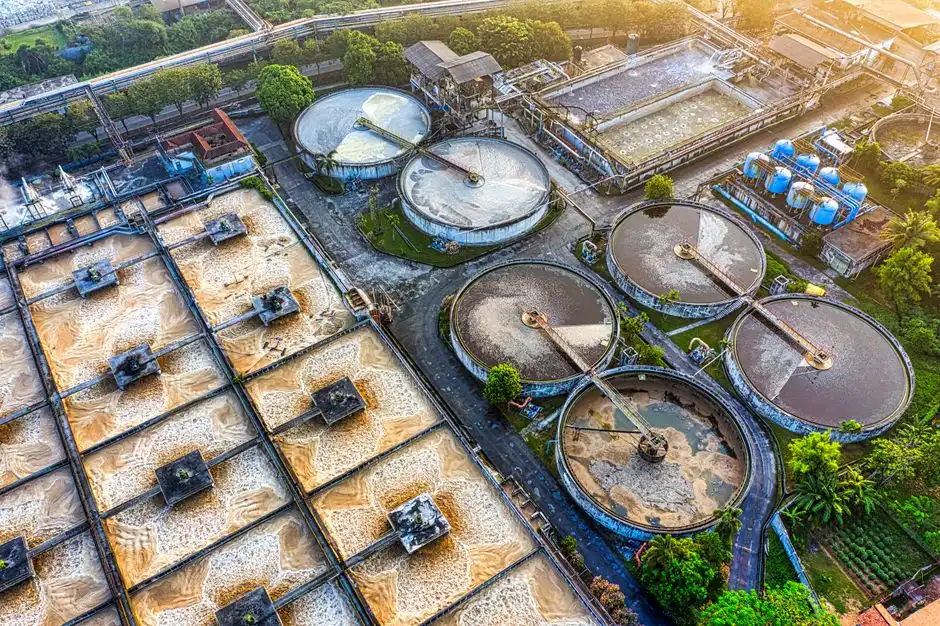
A comparable quotation must identify the separation mechanism and the complete treatment scope, because a lower separator price can omit the equipment needed to achieve the stated result.
| Quotation element | Required information |
|---|---|
| Treatment basis | Wastewater data, design flow, contaminant load, operating range, treatment demonstrations, startup tests, acceptance protocol, and validation assumptions |
| Equipment scope | Separator, coagulation, flocculation, pumping, controls, sensors, skid piping, installation, commissioning, training, and downstream integration |
| Mechanical basis | Tank geometry, loading and retention criteria, skimming, solids withdrawal, materials, and physical access |
| Operating scope | Chemical sequence, controls narrative, maintenance, training, spares, and local support |
| Waste-management scope | Recovered-material and sludge destinations, including dewatering where required |
| Compliance scope | Applicable criteria, treatment demonstration, startup testing, and project-specific acceptance protocol |
Chemical conditioning is not an optional accessory. Clearwater Industries’ COMPACT DAF is a turnkey skid containing chemical-conditioning equipment, a DAF clarifier, sensors, instruments, and a control panel. Require separate pricing for each function so omissions are visible rather than buried in a general skid allowance.
Ask suppliers how peak flows, batch discharges, chemical variability, and reuse or discharge requirements affect the proposed geometry and operating strategy. Clearwater Industries, dated 2026-04-27, reports standard 304 stainless steel construction, with 316 stainless steel, polypropylene, and other materials available on request. The factory should define the actual chemical and temperature environment rather than accept a generic material list.
Include downstream solids handling where the recovered float or sludge requires it, such as a industrial sludge dewatering filter press. For a broader fabricated-metals procurement check, compare DAF and clarifiers for fabricated-metals wastewater while retaining the Paducah stream data and acceptance criteria.
How should operating cost and compliance risk be compared?
Compare bids on more than purchase price: clarified-effluent quality, recovered oil or FOG, sludge characteristics, chemical consumption, energy, maintenance, and reuse potential.
| Comparison element | Information required from each bidder |
|---|---|
| Capital scope | Complete equipment, installation, integration, commissioning, and downstream handling |
| Operating resources | Chemical consumption and energy demand for the selected duty and operating mode |
| Recovered material | Expected oil or FOG quantity, quality, collection method, and destination |
| Residuals | Sludge characteristics, withdrawal arrangement, and handling route |
| Compliance exposure | Treatment basis, startup test, acceptance protocol, and applicable discharge or reuse criteria |
Require DAF energy consumption to be stated per treatment capacity for the selected duty and operating mode, not as an abstract efficiency claim. DAF Corporation reports 92%–98% TSS removal for its round FC Maximizer and 85%–90% for its rectangular RC UniMax. The same source cites operation below 20 ppm of filterable solids and thickened-sludge consistency of 2%–4%. These are supplier-published equipment references, not guarantees for a Paducah factory.
Obtain applicable discharge or reuse criteria from the responsible authority and require the treatment basis, startup testing, and acceptance protocol to demonstrate compliance. A separate treatment step may still be required for dissolved contaminants, nutrients, or other constituents left after physical separation.
No defensible purchase price can be calculated from the supplied research because it contains no quotation, factory-specific flow, wastewater analysis, or treatment duty. Request a treatment study, flow and load data, material schedule, controls scope, validation plan, and complete supply list. Use industrial wastewater pretreatment and sewer-compliance guidance as a framework for documentation, not as a substitute for Paducah permit criteria.
What should be commissioned before the system is accepted?
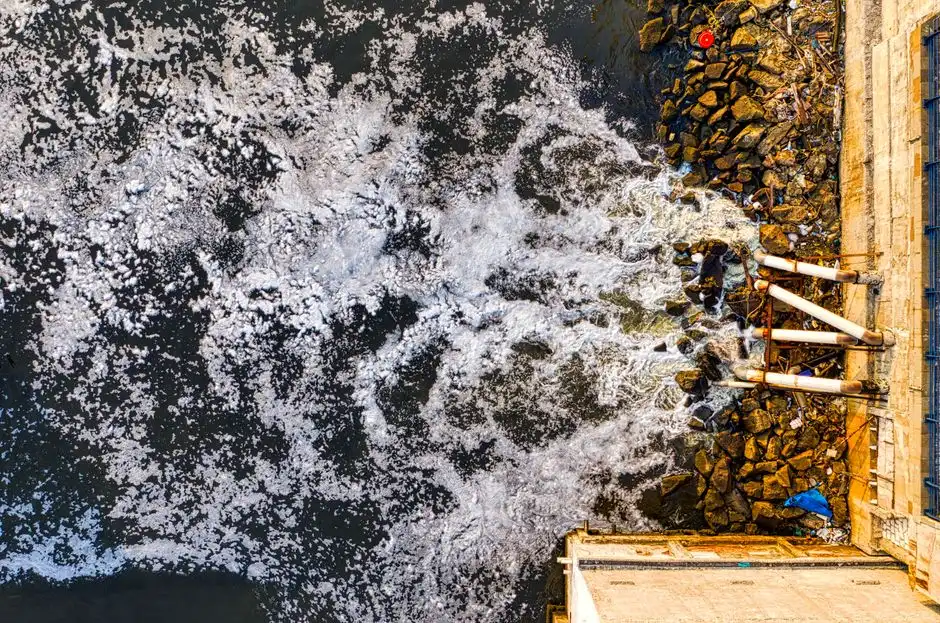
Commission the system with representative wastewater and verify operation across the intended flow and chemistry range before accepting the operating baseline.
- Verify conditioning: confirm that coagulation and flocculation occur in the intended order and with effective mixing so particles can attach effectively to microbubbles.
- Document process performance: record chemical dose, mixing sequence, skimming behavior, solids withdrawal, clarified effluent, recovered material, and downstream sludge-handling performance.
- Check controls: test the actual control philosophy against a PLC-controlled chemical dosing system, rather than accepting pump counts as proof of automatic operation.
- Confirm maintainability: verify physical access for skimming, inspection, cleaning, and sludge removal, and document operator training, preventive maintenance, spare-parts availability, and local support.
For a DAF installation, the acceptance record should connect each observed result to the stated treatment basis: representative influent, operating flow and chemistry, chemical response, float or sludge removal, effluent result, and handling of residues. If a project-specific plate-and-frame sludge dewatering press is included, verify its performance with the actual recovered float or sludge rather than a substitute sample.
A clarifier acceptance test should instead document settling performance at the required clarification rate, solids withdrawal, surface or bottom sludge condition, and clarified-water quality. The acceptance protocol must follow the actual treatment objective—not a generic removal claim.
Frequently Asked Questions
How much does a DAF or clarifier cost for transportation equipment wastewater?
No defensible price can be given without a quotation, factory-specific flow, wastewater analysis, and treatment duty. Ask each bidder for the same complete scope, then compare capital cost alongside chemical consumption, energy, recovered material, sludge handling, maintenance, installation, and commissioning. A separator-only price is not comparable with a turnkey treatment skid.
Which DAF or clarifier supplier should a Paducah factory select?
Select the supplier that demonstrates the mechanism against the factory’s wastewater and commits to a project-specific treatment basis, startup test, and acceptance protocol. Require a material schedule, controls scope, maintenance plan, training, spares, and downstream-integration pricing. Verify that the proposal addresses peak batch flows and the actual oil, FOG, and solids loading rather than a generic application.
Should the unit be sized from average flow or peak flow?
Size against both peak hydraulic flow and peak contaminant loading at the worst credible operating condition. DAF Corporation’s published range of 48 GPM to 11,000 GPM and Clearwater Industries’ 2026-04-27 description of a single COMPACT skid for 66 GPM or less are screening references only. Final sizing requires factory flow duration, batch events, wastewater analysis, and operating range.
Can DAF replace biological or polishing treatment?
Not necessarily. DAF is a physical separation process and may serve as the first stage of an industrial ETP or combined treatment train. If clarified water must be reused or further treated for dissolved contaminants or nutrients, specify those downstream duties separately. Confirm the required treatment sequence with laboratory analysis, pilot work where justified, and the applicable discharge or reuse criteria.