What Kankakee Fabricated Metals Plants Are Actually Discharging
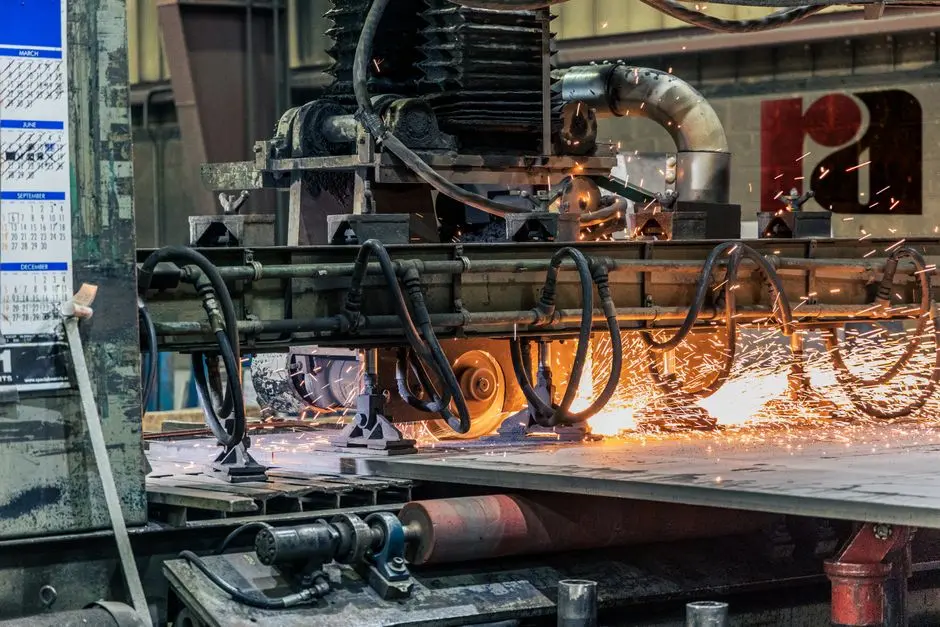
The typical influent at a Kankakee County stamping, machining, or light-fabrication shop is a mixture of alkaline soak cleaners, acid pickling rinses, drawing and stamping compounds, soluble coolants, and tramp oils — all dumped in batches from cleaning baths and process lines. A defensible engineering characterization runs 200–2,000 mg/L FOG, 500–3,000 mg/L TSS, pH swinging from 3 to 11 across shifts, and dissolved zinc, nickel, chromium, lead, and cadmium at concentrations that directly trigger 40 CFR Part 433 categorical pretreatment limits. Hydraulic peaks of 2–4× average are common when a cleaning bath dumps or a rinse line valves open, which is why any primary clarifier has to be sized on peak flow, not average. Microbubble flotation in the 30–50 micron range (per SigmaDAF/Clearwater, 2026) is specifically engineered to lift the light FOG fraction that gravity simply cannot settle.
Most Kankakee County facilities discharge to the Kankakee River Metropolitan Agency / City of Kankakee WWTP, which enforces local surcharges for TSS above 250 mg/L, FOG above 100 mg/L, and any exceedance of 40 CFR Part 433 categorical limits. A single surcharge notice in 2025 was the trigger for two of the three plant managers I have spoken with this year; the third was a new NPDES permit renewal that re-stated the metals ceilings without exception.
| Pollutant | Typical Kankakee shop influent | 40 CFR Part 433 daily maximum | Local POTW surcharge trigger |
|---|---|---|---|
| TSS | 500–3,000 mg/L | — | >250 mg/L |
| FOG / oil & grease | 200–2,000 mg/L | — | >100 mg/L |
| Lead (Pb) | 0.5–5 mg/L | 0.69 mg/L | Any 433 exceedance |
| Cadmium (Cd) | 0.1–1 mg/L | 0.69 mg/L | Any 433 exceedance |
| Zinc (Zn) | 2–20 mg/L | 1.48 mg/L | Any 433 exceedance |
| Nickel (Ni) | 1–10 mg/L | 2.57 mg/L | Any 433 exceedance |
| Total Chromium (Cr) | 0.5–8 mg/L | 1.71 mg/L | Any 433 exceedance |
| pH | 3–11 | — | <6.0 or >10.0 |
The regulatory ceiling is the reason a primary clarifier alone is rarely sufficient: a lamella or circular gravity unit removes settleable TSS but does nothing for dissolved metals, so chemical precipitation at pH 9–10 (typically NaOH or lime dosing) is required to drop Zn, Ni, and Cr below their 1.48–2.57 mg/L daily maximums before any clarifier. The primary clarifier's job is to remove the FOG and the TSS floc that carries the precipitated metals — and that is the job DAF was built for.
How a DAF Clarifier Works (and Why It Fits Fabricated Metals)
A dissolved air flotation clarifier saturates a pressurized side stream (typically 60–80 psig) with air, then releases it through a pressure-reducing valve into the flotation cell. The dissolved air comes out of solution as a cloud of microbubbles — 30–50 microns per SigmaDAF/Clearwater (2026) or 20–40 microns per DAF Corp's Micro Bubble Generator (2025) — that attach to flocculated oil droplets and suspended solids and lift them to the surface in 3–5 minutes. A paddle or flight skimmer then scrapes the float layer into a sludge hopper; clarified effluent exits below a separation wall.
For fabricated metals streams, the chemistry upstream of the cell is what makes or breaks performance. Coagulant (ferric chloride at 50–150 mg/L or alum at 100–250 mg/L) neutralizes the colloidal charge, then an anionic flocculant (typically 1–5 mg/L of a high-molecular-weight polyacrylamide) builds a strong floc the bubbles can actually lift. Without that conditioning, even a well-built cell will underperform. SigmaDAF pairs its DAF units with serpentine floc tubes or mix tanks specifically for this reason (Clearwater, 2026).
Materials of construction matter in Kankakee because acid pickling rinses carry chlorides. Standard 304SS is adequate for the bulk of alkaline wash water; 316SS or polypropylene is the right call for any line that sees chloride concentrations above 200 mg/L or pH below 4. The dissolved air flotation system is available in 304SS as standard with 316SS optional, and skid packaging integrates the aeration skid, saturation tank, reaction/floc tube, clarifier body, and PLC into a single pre-assembled unit — so a Kankakee shop can install in days rather than the months a stick-built concrete clarifier demands.
How a Gravity / Lamella Clarifier Works (and Where It Fails on Metalworking Water)
A gravity clarifier relies on Stokes' law: settleable solids denser than water drop to the bottom of a quiescent tank, clarified water overflows a weir. A lamella clarifier stacks inclined plates (typically 55–60°) inside the tank, shortening the effective settling distance and raising the surface loading rate to 20–40 m/h — roughly 5–10× the capacity of an equivalent circular clarifier footprint. The high-efficiency lamella sedimentation tank is the canonical packaged form for industrial flows below 200 GPM.
On metalworking streams, lamella performance caps at 60–80% TSS removal, and the number drops sharply when oil is present. Free and emulsified oils have a specific gravity of 0.85–0.95 — they float, not sink — so lamella plates cannot remove them; in practice the oil coats the plates, fouls them, and rides the weir into the effluent. FOG removal on a lamella clarifier alone is typically 30–50%, which will not protect a Kankakee shop from a POTW FOG surcharge at 100 mg/L.
Lamella is the right call when the stream is final rinse water with TSS below 200 mg/L and oil below 50 mg/L, or when it is used as a polishing step downstream of DAF to drop TSS into a 20–30 mg/L internal reuse range. It is also worth noting that lamella cannot remove dissolved metals — 40 CFR 433 compliance still requires chemical precipitation followed by media filtration or membrane regardless of whether the upstream clarifier is DAF or lamella. Gravity simply shifts the FOG and TSS problem; it does not eliminate it.
DAF vs Lamella Clarifier: Head-to-Head Comparison
For a 100 GPM fabricated-metals wastewater stream in Kankakee County, the choice between DAF and a lamella clarifier reduces to six engineering parameters. The table below is the artifact to put in front of a CFO or a POTW inspector.
| Parameter | Dissolved Air Flotation (DAF) | Lamella / Gravity Clarifier | Source |
|---|---|---|---|
| TSS removal on metalworking streams | 92–98% (circular FC Maximizer); 85–90% (rectangular RC UniMax) | 60–80% | DAF Corp, 2025; vendor field data |
| FOG / oil & grease removal | >95% | 30–50% (cannot float free oil) | SigmaDAF/Clearwater, 2026 |
| Sludge dry solids (out of cell) | 2–4% | 1–2% | DAF Corp, 2025 |
| Footprint at 100–300 GPM | 80–150 ft² (skid-mounted, ~6 ft tall) | 200–400 ft² | DAF Corp, 2025; VanAire, 2025 |
| Capital cost (2026 turnkey skid) | $80,000–$180,000 (100 GPM) | $40,000–$90,000 (100 GPM) | Industry order-of-magnitude, 2026 |
| 40 CFR Part 433 compliance with chemical precipitation | Yes — one unit handles FOG, TSS, and metals-bearing floc | Marginal — must pair with media filtration or membrane for dissolved metals | EPA 40 CFR Part 433 |
The two numbers that swing a Kankakee project are TSS removal and sludge consistency. 92–98% TSS reduction (DAF Corp circular FC Maximizer, 2025) means a 2,000 mg/L influent exits at 40–160 mg/L, comfortably below the 250 mg/L POTW surcharge. Lamella at 60–80% means the same influent exits at 400–800 mg/L, which is a surcharge every month. Drier sludge at 2–4% dry solids (DAF Corp, 2025) directly reduces downstream dewatering capex — a plate-and-frame press sized for DAF float is roughly 30% smaller than one sized for lamella underflow. The capital-cost gap on the table is real, but the chemical, hauling, and surcharges close roughly half of it within the first 18 months of operation. For a more detailed walkthrough of the regulatory framework, the 40 CFR Part 433 pretreatment compliance guide for fabricated metals covers the categorical mechanics in depth, and a parallel municipal case is in the Muncie fabricated metals DAF vs clarifier buyer's guide.
When Kankakee Factories Should Choose a Lamella Clarifier Instead
Lamella is not a bad technology — it is the wrong primary clarifier for a fabricated metals stream that carries oil. There are three honest use cases in a Kankakee shop.
First, when the stream is final rinse water only, with TSS below 200 mg/L and oil below 50 mg/L. This is the deionized-water final rinse coming off a plating line or a precision-machining washer; it carries trace dissolved metals but almost no FOG. Second, when DAF effluent needs a polish step to meet an internal reuse target of 20–30 mg/L TSS for rinse-water recycling — lamella downstream of DAF is a defensible, low-operating-cost architecture. Third, when capital is the binding constraint and the sub-$50,000 turnkey price point of a small lamella package is the only option a CFO will approve, with the explicit understanding that chemical precipitation and possibly media filtration will still be required for 40 CFR 433 metals.
Building height is a fourth consideration that occasionally tips the choice: a lamella clarifier is typically 8–10 ft tall, while a skid DAF (VanAire, 2025) sits at about 6 ft and a DAF Corp 6 ft diameter FC Maximizer pilot is similarly low-profile. In a Kankakee shop with a low clear height under an existing mezzanine, that 2–4 ft difference can be the deciding factor — but it should never override influent FOG and metals loadings.
How to Decide for Your Kankakee Shop: A 6-Question Framework
Walk through these questions in order. Any "yes" answer pushes toward DAF; if the answer is "no" to all six, lamella is acceptable.
- Is your average FOG above 100 mg/L? If yes → DAF. Lamella cannot float this load, and a lamella effluent will trigger the Kankakee POTW FOG surcharge.
- Are 40 CFR 433 metals (Pb, Cd, Zn, Ni, Cr) in your influent? If yes → DAF with chemical precipitation. DAF carries the metal-bearing floc out as float; lamella can settle some of it but at the cost of much higher effluent TSS.
- Is your available indoor footprint under 200 ft²? If yes → skid DAF (DAF Corp, 2025) over lamella. A 100–300 GPM skid DAF fits in 80–150 ft²; comparable lamella needs 200–400 ft².
- Is your peak flow below 500 GPM with batch discharge? If yes → skid DAF, with a 2-skid modular architecture (SigmaDAF, 2026) above 66 GPM to handle the 2–4× hydraulic peaks from cleaning-bath dumps.
- Do you have an operator on staff, or do you need PLC-only with vendor remote support? Both DAF and lamella support PLC; packaged DAF automation is more mature (SigmaDAF COMPACT, Clearwater, 2026) and typically ships with remote-monitoring options.
- Is your 5-year driver compliance, capacity expansion, or water reuse? Water reuse favors DAF: float scum at 2–4% dry solids dewateres more cheaply than lamella sludge at 1–2% (DAF Corp, 2025), and DAF effluent is more consistent for downstream filtration or membrane polish.
If the answers are split, the tiebreaker is influent FOG. A 100 mg/L FOG stream is the practical threshold above which lamella stops being defensible as a primary clarifier and DAF becomes the right call.
Pilot Testing, Sizing, and What a 2026 Kankakee Installation Actually Costs
Before signing a purchase order, run a 4–8 week on-site pilot. DAF Corp, VanAire, and WesTech all offer pilot or rental units (DAF Corp, 2025; VanAire, 2025; WesTech, 2025) sized from 48 GPM up; the WesTech mobile DAF can typically be brought online in a single day. A pilot on actual shop wastewater, with jar tests for coagulant and flocculant dose, is the only way to validate TSS, FOG, and metals removal before committing six figures.
For sizing, pick the DAF at 2–3× average flow to absorb hydraulic peaks. Hydraulic retention in the flotation zone is typically 20–40 minutes; the DAF line covers 4–300 m³/h (≈18–1,320 GPM) across 13 standard models, which brackets the typical 50–300 GPM Kankakee shop. U.S. builders (DAF Corp, Clearwater/SigmaDAF, VanAire, WesTech) typically run 8–14 week lead times in 2026; the DAF line is a non-U.S. supply option worth pricing in parallel to manage lead time and total cost. A skid-mounted automatic chemical dosing system is almost always paired with a new DAF — plan for it in the budget.
Turnkey CAPEX in 2026 (equipment only, before installation): a 50 GPM skid DAF runs $50,000–$90,000; a 100 GPM skid DAF runs $80,000–$180,000; a 300 GPM skid DAF runs $180,000–$350,000. Add 20–30% for installation, chemical dosing skid, and PLC integration. Confirm 304SS vs 316SS construction against your chloride loading, and confirm warranty terms — VanAire offers 2 years (twice the industry standard, per VanAire, 2025) — before signing. Foam control at the DAF effluent weir is a routine commissioning issue and is covered step-by-step in the DAF foam control guide.
Frequently Asked Questions
Is DAF better than a clarifier for oil removal?
Yes — for free and emulsified oils above 100 mg/L, DAF consistently achieves >95% FOG removal (SigmaDAF/Clearwater, 2026) because the 20–50 micron microbubbles attach to oil droplets and float them. A gravity or lamella clarifier cannot float oil; it only settles solids denser than water, so FOG removal on lamella alone typically caps at 30–50%.
What TSS removal does a DAF achieve on metalworking wastewater?
92–98% on a circular DAF (DAF Corp FC Maximizer, 2025) and 85–90% on a rectangular DAF (DAF Corp RC UniMax, 2025). For a 2,000 mg/L TSS influent, that means an effluent in the 40–300 mg/L range, well below the Kankakee POTW 250 mg/L surcharge threshold.
Does a lamella clarifier meet 40 CFR Part 433 for fabricated metals?
No, not on its own. Lamella removes settleable TSS but does nothing for dissolved lead, cadmium, zinc, nickel, or chromium. Compliance with the 0.69 / 0.69 / 1.48 / 1.71 / 2.57 mg/L daily maximums requires chemical precipitation at pH 9–10 followed by clarification (DAF or lamella) and typically media filtration or membrane polish.
How much does a DAF system cost for a small metal shop in 2026?
For a 50 GPM skid DAF, $50,000–$90,000 turnkey; for a 100 GPM skid DAF, $80,000–$180,000 turnkey. Add 20–30% for installation, the chemical dosing skid, and PLC integration. Pilot rental units are available for $5,000–$15,000 per month from DAF Corp, VanAire, and WesTech.
What footprint does a skid-mounted DAF need?
80–150 ft² for a 100–300 GPM package including the aeration skid, saturation tank, and chemical feed area. Skid heights run 6–8 ft, so most Kankakee shops with standard 16 ft clear heights can install without structural modification.
Related Equipment
- Dissolved air flotation system — specifications, capacity range, and technical data