Separate the data center's wastewater streams first
A data center in Gurugram generally needs two separate wastewater systems: sanitary sewage and industrial process wastewater, primarily concentrated cooling tower blowdown. Blowdown treatment depends on source-water chemistry, cooling cycles of concentration, temperature, pH, biocides, corrosion inhibitors, metals, TDS and the intended route. A practical train can include equalization and cooling, solids removal, pH adjustment, chemical dosing, disinfection, membrane treatment for reuse, and secure handling of concentrated reject or sludge. Reuse as cooling make-up generally requires more demanding treatment than sewer discharge. Final design and discharge limits must be confirmed with the relevant Gurugram sewer authority and pollution-control authorities; the supplied research does not establish site-specific limits.
RSP Engineers identifies cooling tower blowdown as the primary component of process wastewater in most large-scale data centers and states that it must be distinguished from domestic sanitary flow because the two have different discharge characteristics and permitting pathways.
Do not combine these streams by default:
- Sanitary sewage: restroom and kitchen waste, normally evaluated for the sanitary sewer route.
- Process wastewater: cooling-tower blowdown, plus separately characterized cooling-tower or RO backwash, equipment-cleaning wastewater and air-handling-unit condensate.
Assign each stream a destination before selecting equipment: sanitary sewer, industrial sewer, controlled reuse or another authorized route. The cooling configuration determines the wastewater inventory. An evaporative system produces a concentrated blowdown stream; dry and hybrid arrangements require a different hydraulic and chemistry assessment.
Characterize the blowdown before choosing treatment equipment
Cooling tower blowdown becomes concentrated because evaporation removes water while dissolved salts and treatment chemicals remain in the circulating loop, as explained by Water Utility Report and RSP Engineers. Equipment selection should therefore follow measured water chemistry and a reconciled water balance, not a generic blowdown-flow estimate.
Sample across seasonal and operating conditions. The investigation should cover pH, conductivity or TDS, silica, calcium, hardness, suspended solids, temperature, residual biocides, corrosion inhibitors, and metals such as copper and zinc. Include the complete cooling-water chemical package—biocides, corrosion inhibitors, antiscalants and pH-control chemicals—because these constituents directly affect precipitation, membrane compatibility, disinfection and reuse.
Reconcile make-up water, evaporation, blowdown, drift, leaks, emergency dumps and backwash. Genesis Water Technologies reports that actual blowdown can exceed theoretical calculations by 15–30% because of unmeasured losses and emergency dumps. It also gives the theoretical relationship clearly: at 4 cycles of concentration, the blowdown ratio is 25%; at 6 cycles of concentration, it is 20%.
Use source-water analysis, operating logs and meter data rather than assuming contaminant levels. No supplied source establishes a Gurugram-specific limit for TDS, silica, temperature, biocides or metals.
| Design input | What to establish | Why it controls treatment |
|---|---|---|
| Cooling configuration | Evaporative, dry or hybrid; number and operating mode of cooling circuits | Determines whether concentrated blowdown is generated |
| Water balance | Make-up, evaporation, blowdown, drift, leaks, emergency dumps and backwash | Sets hydraulic sizing and equalization requirements |
| Source chemistry | TDS or conductivity, silica, calcium, hardness and metals | Identifies scaling and removal requirements |
| Cooling chemicals | Biocides, inhibitors, antiscalants, pH control and dosing frequency | Determines pretreatment, disinfection and reuse controls |
| Operating variability | Seasonal changes, peak blowdown, temperature and emergency discharges | Defines storage, peak capacity and redundancy |
Any equipment quotation should identify whether treatment chemicals and replacement water-treatment parts, valves and media are included and what the operating assumptions are.
Match each contaminant to the right treatment step
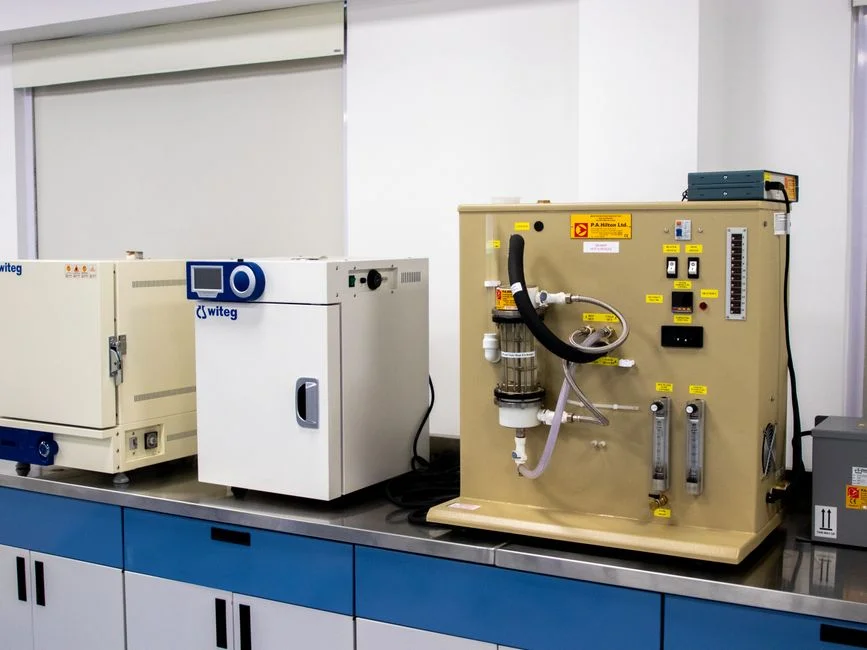
Equalization and cooling should precede polishing where flow, temperature or chemistry varies. RSP Engineers lists temperature reduction and pH adjustment as common pretreatment considerations; its examples of pH 6.0–9.0 and 150°F are not Gurugram requirements and must not be used as local limits.
Physical separation addresses suspended matter, colloids and oil or grease before membrane or chemical treatment. Ultrafiltration can protect downstream equipment where bacteria, colloids and suspended solids are concerns. Automatic chemical dosing supports pH control, coagulation, flocculation and specialty chemical control. Disinfection should be selected only after reviewing the cooling chemical program and receiving-water requirements: Water Utility Report notes that blowdown may contain biocides and corrosion inhibitors, while residual oxidants or other treatment compounds may require additional control.
For cooling make-up reuse, RO can produce permeate, but scaling remains the controlling constraint. IDE Tech reports that conventional brackish-water RO typically reaches 75–80% recovery before scaling becomes unmanageable. The [industrial RO system for cooling-water reuse](https://example.com/product/6-reverse-osmosis-ro-water-purification.html) should therefore be selected around measured scaling chemistry rather than marketed around recovery alone.
| Problem or objective | Primary treatment step | Supplier check |
|---|---|---|
| Variable flow, temperature or pH | Equalization, cooling and pH adjustment | Confirm detention time, mixing, cooling duty and chemical-control range |
| Suspended solids, colloids or oil and grease | Screening, filtration or dissolved air flotation | Require feed limit, removal objective and sludge handling |
| Downstream membrane protection | UF pretreatment | Require membrane material, pore specification, feed turbidity limit, backwash and recovery |
| pH, coagulation or specialty chemical control | Automatic chemical dosing | Confirm chemical compatibility, PLC control, alarms and containment |
| Biological or oxidant control at the destination | Disinfection or dechlorination, subject to authority requirements | Provide residual-monitoring and dose-control requirements |
| Cooling make-up reuse | RO with silica and scale control | Define recovery, scale-management method, reject route and membrane cleaning |
| Treatment-generated solids | Filtration, sludge collection and dewatering | State cake handling, containment, disposal route and operating mode |
Available platform claims provide only a screening basis. HydropureWater states that its DAF range is 4–300 m³/h across 13 models; its UF platform spans 2,000–40,000 L/h, uses 0.03-micron PVDF membranes, accepts turbidity up to 300 ppm, and includes automatic backwash and air scour. Its plate-and-frame filter presses cover 1–500 m² filtration areas with manual, hydraulic or fully automatic PLC operation. These specifications should be checked against verified flow, feed quality and site conditions. A smaller DAF unit may be justified if the measured blowdown flow does not support the larger platform.
For design review, assess the DAF machine for physical separation, UF pretreatment for cooling blowdown, automatic chemical dosing system, industrial RO system for cooling-water reuse, and plate-and-frame filter press for solids dewatering.
Choose between controlled discharge and cooling-water reuse
A discharge-oriented train is principally designed to meet the receiving authority’s acceptance conditions. It may require solids removal, pH control, temperature management and removal or control of regulated constituents. A cooling make-up train adds polishing because recycled water must remain compatible with the cooling system’s scaling, corrosion and biological-control requirements.
Reuse reduces freshwater withdrawals, but it changes rather than removes the chemistry-management problem. Water Utility Report states that recycled water can reduce pressure on drinking-water supplies while still requiring control for scaling, corrosion, microbial growth and pretreatment.
IDE Tech describes a high-recovery concept that combines conservative local RO operation with controlled precipitation of silica, calcium carbonate and other salts into dense solids. The resulting brine, described as primarily sodium chloride, is removed from the main reuse loop. In one industrial application, the reported recovery was around 95% and permeate silica was about 1 mg/L. The source does not identify a Gurugram data center, so those results are a concept reference rather than a performance guarantee.
| Decision | Controlled discharge | Lower-grade reuse | Cooling make-up reuse |
|---|---|---|---|
| Typical destination | Industrial sewer subject to acceptance and permit | Irrigation, dust control or washdown under an authorized use | Cooling tower make-up system |
| Treatment emphasis | Permit parameters, temperature, solids, pH and regulated constituents | Water quality appropriate to the receiving use | Permeate quality, scaling control, corrosion control and biological stability |
| Residual-stream burden | Treated discharge and any sludge | Treated discharge and concentrated reject where present | Concentrated RO reject plus precipitated solids |
| Key commercial drivers | Connection acceptance, compliance cost and avoided treatment infrastructure | Freshwater savings against receiving-use requirements | Freshwater savings, discharge reduction and cooling-system operating reliability |
| Main design risk | Late permit limits | Wrong water quality for the receiving use | Scaling, membrane instability and reject management |
Evaluate lifecycle inputs: verified flow and chemistry, freshwater and sewer costs, discharge charges, chemical consumption, membrane replacement, energy, solids disposal, operator capability and redundancy. Do not compare only equipment capital cost. For membrane selection, confirm the required RO and UF membrane and filter-element performance under the actual feed chemistry.
Design for Gurugram discharge acceptance and site constraints
The industrial sewer route is a separate approval process because the industrial stream and sanitary sewage do not have the same characteristics or acceptance pathway. RSP Engineers describes an industrial user permit containing pollutant limits and pretreatment requirements set by the local sewer authority. For Gurugram, the project team must obtain current requirements from the relevant sewer and pollution-control authorities; the supplied research does not state a Gurugram-specific consent limit or approval procedure.
Confirm connection acceptance, pretreatment standards, permitted parameters, flow conditions, sampling, monitoring and reporting before freezing the process design. Include these India wastewater rules for data-center due diligence in the consultation record, but do not treat them as site-specific consent conditions.
Allocate the treatment area early. The layout must accommodate tanks, pumps, chemical storage, membranes, electrical systems, solids handling, spill containment, drainage and maintenance access. RSP Engineers warns that late treatment-system design can create layout conflicts and that access for chemical delivery and maintenance must be planned.
Plan continuous flow and pH monitoring plus laboratory sampling for other permit parameters, with defined sample points, responsibilities and alarm response. The design must also accommodate hot blowdown, chemical storage and emergency dumps through equalization, cooling, containment and controlled return.
Use a broader India data-center wastewater treatment guide to structure cross-disciplinary diligence, while keeping all final Gurugram acceptance decisions with the competent authorities.
Use a staged selection and procurement framework
The correct sequence begins with the destination and permit basis, followed by source characterization and a verified water balance. Only then should the project request a guaranteed flow, outlet-water or recovery specification.
- Set the destination: define sanitary sewer, industrial sewer or a specific reuse end use.
- Establish the contaminant inventory: complete seasonal sampling and review the cooling chemical package.
- Design pretreatment: include equalization, cooling, solids removal and pH control where justified.
- Select core separation: apply UF, RO or another process according to the verified contaminants and required water quality.
- Add disinfection where required: base the decision on residual chemistry and receiving requirements.
- Define reuse polishing: specify cooling make-up quality and the scale-control method.
- Close the residual-stream loop: design reject and solids handling before equipment selection.
Right-size for measured flow and staffing. Genesis Water Technologies warns that hyperscale reuse technology requiring dedicated operators and multi-stage RO can perform uneconomically at smaller facilities and recommends modular systems matched to facility scale and capabilities.
The supplier package should state a guaranteed treated-water or permeate specification, normal and peak flow, operating envelope, chemical and membrane consumption, availability target, monitoring, alarm strategy, maintenance response and service scope. Check cited equipment claims against the duty; HydropureWater states that its industrial RO platform can reach 95% recovery, but measured blowdown scale chemistry may require a more advanced recovery configuration.
| Procurement stage | Buyer decision | Required evidence |
|---|---|---|
| Baseline | Select discharge or reuse | Authority consultation, source sampling and reconciled water balance |
| First investment | Establish controlled discharge or lower-grade reuse | Measured flow, outlet criteria, reject plan, footprint and operator workload |
| Expansion | Add cooling make-up reuse | Operating data, reuse water-quality specification and lifecycle economics |
| Supplier award | Accept performance guarantee | Normal and peak duty, feed envelope, consumption, availability, monitoring and maintenance scope |
For future cooling expansion or make-up polishing, assess whether a industrial water-softener system is technically appropriate from the verified hardness profile; do not assume that softening alone resolves silica, TDS or treatment-chemical loading.
Frequently Asked Questions
How should cooling blowdown treatment equipment be sized for a Gurugram data center?
Size it from verified peak blowdown flow, the reconciled make-up and blowdown balance, required outlet-water quality, operating hours and planned cooling expansion—not IT load alone. Separate treatment of sanitary sewage, cooling blowdown, backwash, cleaning wastewater and condensate prevents one flow from distorting the design basis.
How should the project compare treatment cost and budget?
Compare the treatment system against avoided freshwater purchase, sewer-discharge cost, chemical consumption, membrane replacement, energy, sludge handling and space or infrastructure constraints. Request a site-specific lifecycle cost using verified flow, chemistry, freshwater and sewer tariffs, operating hours and disposal charges. The supplied research does not provide a valid Gurugram project quotation.
Which supplier qualifications should be checked before selecting a blowdown treatment train?
Require measured feed-water data, a guaranteed outlet specification, a clear recovery definition, the scale-management method, the reject-stream plan, monitoring scope, maintenance responsibilities and references for comparable cooling-blowdown duties. Also ask how the supplier defines normal and peak flow and what operating conditions could invalidate the guarantee.
What are the main compliance risks for industrial discharge in Gurugram?
Treat sewer acceptance, industrial-user approval and applicable local environmental requirements as project gates. Obtain current requirements directly from the competent authorities, then map each permitted parameter to treatment, monitoring, sampling and reporting. Generic example ranges must not be substituted for Gurugram consent conditions.
Should a data center choose sewer discharge, lower-grade reuse or cooling make-up reuse?
Choose according to the final destination and required water quality. Sewer discharge is driven by acceptance conditions; lower-grade reuse must match irrigation, dust-control or washdown requirements; cooling make-up reuse requires additional polishing and scale control. Available equipment alone is not a sufficient basis for selection.