What Erbil Effluent Projects Need to Achieve
An effluent treatment plant in Erbil should be selected around the wastewater composition, required flow, discharge or reuse objective and available footprint. Erbil-specific research found that municipal BOD5, COD, ammonia nitrogen and TSS exceeded discharge standards, while a primary-unit-plus-wetland combination achieved reported removals of 94.75% BOD5, 93.07% COD and 96.72% TSS. For industrial streams, DAF can remove suspended solids, oil and grease, while MBR or UF may suit water-reuse applications. A 2023 refinery study found API-DAF pretreatment delivered approximately 90% TSS and oil-and-grease removal with lower projected energy use than MBR, showing why treatment sequence and final-use requirements must drive selection.
Define the required outcome before selecting a process: environmental discharge, sewer pretreatment, irrigation, green-space reuse, process-water recovery or direct reuse each imposes different acceptance criteria. Removal efficiency describes what the treatment stage removes; it does not by itself establish whether the final water meets the intended reuse or discharge standard.
Salahaddin University–Erbil researchers reviewed 47 municipal wastewater parameters over 26 years, from 1994 to 2020. The study reported that BOD5, COD, ammonia nitrogen and TSS exceeded wastewater discharge standards, and characterized Erbil municipal wastewater as normally weak-to-medium strength. It also found that lifestyle, climate, combined or separate sewerage systems, and service area affected wastewater quality, so a project should obtain current site-specific analysis rather than rely solely on a regional average (Shuokr Qarani Aziz, IOP Conference Series: Materials Science and Engineering, 2020).
The scale of municipal reuse should not be confused with an industrial plant. The reported Erbil project uses more than 20 biological, chemical and mechanical stages and routes treated water to agricultural land, the city green belt, green spaces and parks (Kurdish Globe, 2026). An industrial or decentralized project can begin with a defined process boundary, but its final-use route still needs confirmation.
| Project objective | Information to define before selection | Relevant treatment question |
|---|---|---|
| Environmental discharge | Applicable discharge limit, sampling method and receiving environment | Which biological, solids-removal and disinfection stages are required? |
| Sewer pretreatment | Industrial discharge agreement and prohibited pollutants | Does the stream require equalization, DAF or solids removal before discharge? |
| Industrial reuse | Process-water quality, variability and reuse destination | Does pretreatment need to remove oil, grease, colloids or shock loads? |
| Irrigation or green-space reuse | Local reuse criteria and salinity or nutrient limits | Can the selected process reliably meet the specified final-water criteria? |
For a smaller municipal or facility-scale concept, an underground packaged sewage treatment plant can be evaluated as an integrated alternative, subject to site analysis and confirmed treatment requirements.
Choose the Treatment Route by Wastewater Risk
DAF, MBR, UF and packaged biological plants remove different contaminants and should not be treated as interchangeable equipment choices. The correct route begins with the dominant wastewater risk and the required final-water quality.
Use dissolved air flotation where suspended solids, oil and grease, free oil, colloids or other floatable material could interfere with downstream biological or fine membrane treatment. In the refinery-effluent study published in Membranes on 2023-08-01, an API separator followed by DAF delivered approximately 90% TSS and oil-and-grease removal and 75% COD removal. The same study explains that MBRs can produce clarified, potentially reusable effluent, but require robust upstream oil-and-grease removal to consistently reach reliably low levels.
Use an integrated MBR wastewater treatment system when biological treatment and membrane solids separation must be combined within a compact process. HydropureWater specifies capacities of 10–2,000 m³/day, submerged PVDF membranes and a footprint stated to be 60% smaller than conventional systems. These are supplier specifications, not evidence that every MBR installation in Erbil will perform identically.
Use UF as a polishing or pretreatment barrier where fine solids, colloids and bacteria must be removed. The specified 0.03 micron UF polishing system has a listed capacity of 2,000–40,000 L/h, PVDF membranes, automatic backwash and air scour. UF does not by itself establish suitability for every irrigation or process-water reuse route; salinity, dissolved organics, pathogens and the governing reuse criteria remain separate questions.
Use a packaged anoxic and aerobic system for decentralized sewage duties where biological treatment, sedimentation and disinfection can be integrated in a buried unit. The specified WSZ series covers 1–80 m³/h for communities and facilities. The DAF wastewater pretreatment system and underground packaged sewage treatment plant therefore address different parts of the decision: upstream contaminant removal versus integrated sewage treatment.
| Technology | Primary role | Best fit | Key limitation to verify |
|---|---|---|---|
| DAF | Remove floatable material and suspended solids | Industrial pretreatment containing oil and grease or colloids | Does not remove all dissolved contaminants; sludge handling is required |
| MBR | Combine biological treatment with membrane solids separation | Compact biological systems and clarified, potentially reusable effluent | Requires appropriate upstream pretreatment and membrane maintenance provisions |
| UF | Polish fine solids, colloids and bacteria | Final membrane barrier before a defined reuse step | Does not resolve every dissolved-salt, organic or reuse requirement |
| Packaged anoxic/aerobic plant | Integrate biological treatment, sedimentation and disinfection | Decentralized sewage treatment | Confirm hydraulic loading, treatment stages and final-water requirements |
For background, the DAF versus oil-water-separator comparison and 2026 MBR wastewater engineering guide provide useful route-specific context, but final selection still depends on the documented influent and effluent requirements.
Build the Process from Inlet to Effluent
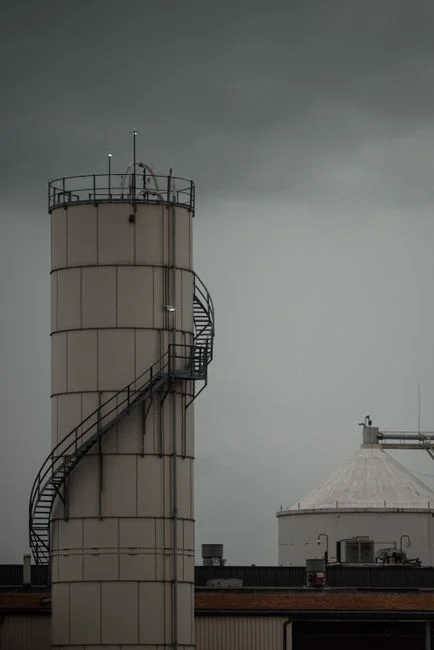
A treatment train should be built from the inlet condition to the final-use requirement, not from a list of individual products. Flow characterization comes first because it determines equalization, biological loading, membrane sizing and residual-treatment capacity.
- Characterize flow. Provide average flow, peak flow, catchment or factory discharge profile, storm and bypass conditions, and available installation area.
- Characterize quality. Request laboratory analysis for BOD5, COD, ammonia nitrogen, TSS, oil and grease, pH and stream-specific contaminants. A generic flow figure cannot replace these results.
- Protect downstream equipment. For industrial pretreatment, position screening and equalization before DAF where rags, debris, variable flow or shock loads could affect flotation.
- Define biological treatment. Establish the role of primary solids removal, aeration, sludge handling, recirculation and disinfection before selecting an integrated biological package.
- Define final polishing. For membrane reuse, determine whether the required outcome needs UF, reverse osmosis or another treatment step. A University of Twente thesis described nanofiltration as suitable for polishing wastewater-treatment-plant effluent to EU Water Framework Directive standards for agricultural or indirect potable-use scenarios (Schrader, University of Twente). Local acceptance criteria must still be confirmed.
- Close the process boundary. Include sludge or concentrated-residue handling. Selecting treatment equipment without a residue route can transfer the compliance burden downstream.
Headworks and pretreatment must match the incoming stream. A rotary mechanical bar screen can address screenings and debris, while an automatic chemical dosing system may be required for pH control, coagulation or another defined chemical duty. These links do not establish that either unit is needed at every site.
Where treatment produces a concentrated sludge, the buyer should define how it will be thickened, dewatered and disposed of. The specified plate-and-frame filter press is a potential solids-dewatering step, but its selection requires the incoming sludge characteristics, required dry-solids endpoint and destination of the resulting cake.
Compare Technology Before Requesting a Proposal
A comparable quotation must state the same treatment basis for every bidder. Otherwise, differences in treatment scope, civil works or final-water requirements can make the prices misleading.
Require each quotation to identify the treatment objective, design flow, influent basis, final-use target and proposed process sequence. Then compare DAF, MBR, UF and packaged biological systems by contaminant removal, hydraulic capacity, footprint, automation, energy use, chemical consumption, sludge production and maintenance access. Equipment price alone omits several costs that can determine whether the plant is operable.
The refinery comparison provides a bounded example rather than an Erbil tariff estimate. In the Membranes study dated 2023-08-01, API-DAF pretreatment used 0.091 kWh/m³, compared with 0.86 kWh/m³ for the projected MBR; the reported net present value was around one sixth that of the MBR. The study also states that the waste streams and final disposal routes differed between pretreatment and MBR. That distinction matters when comparing an equipment package with a complete biological treatment and solids-management system.
| Bid comparison item | Evidence required from each supplier | Why it matters |
|---|---|---|
| Design basis | Average and peak flow, influent analysis, operating assumptions and final-use target | Prevents proposals based on different wastewater duties |
| Process performance | Removal targets, final effluent parameters and sampling points | Separates removal efficiency from compliant final-water quality |
| Process scope | Headworks, equalization, treatment, filtration, disinfection and sludge handling | Excludes unpriced scope gaps |
| Operating resources | Energy demand, chemical use, controls, maintenance intervals and access requirements | Supports lifecycle comparison rather than equipment-price ranking |
| Delivery and warranty | Supply boundary, installation, commissioning, training, spare parts and warranty | Clarifies who remains responsible after handover |
Do not transfer the refinery study’s energy or net-present-value result directly into an Erbil tender. Any project-specific comparison must account for local wastewater, energy tariffs, scale, labor, climate and disposal costs. Where these inputs are unavailable, the buyer should request the calculation assumptions rather than accept a transferred headline figure.
Attach the performance guarantee to named sample points and parameter definitions. Mechanical, electrical, civil, installation, commissioning, training and maintenance responsibilities should be allocated explicitly. The cost breakdown for industrial wastewater treatment buyers can support that structure, but Vancouver-specific costs cannot serve as an Erbil quotation.
Prepare an Erbil Supplier Brief and Site Plan
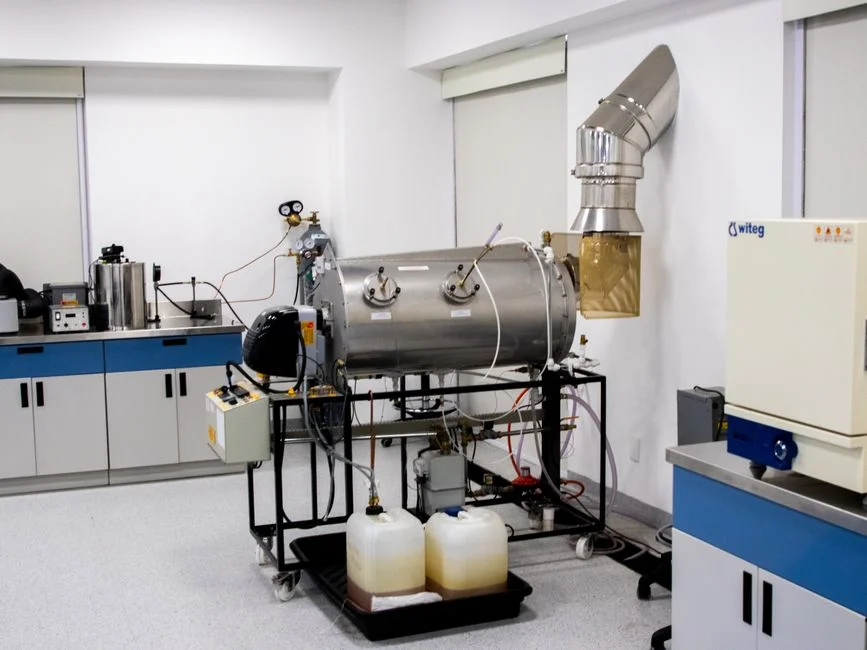
A technically defensible supplier brief should contain the documented wastewater basis, site constraints and required final-water outcome in one package. This gives bidders enough information to propose a defensible train and gives evaluators a common basis for comparison.
Include the current wastewater analysis, average and peak flow, treatment objective, site coordinates, available footprint, utility connections, soil or foundation information, and intended reuse or discharge route. State a preferred technology only after screening the alternatives; alternatively, ask bidders to justify the most suitable treatment train for the documented influent and effluent requirements.
Request a mass balance covering headworks, equalization, biological or flotation treatment, filtration, disinfection, sludge handling and final reuse infrastructure. Also request a process flow diagram, equipment schedule, controls architecture, P&ID, electrical requirements, commissioning plan, spare-parts list and O&M manual. If disinfection is part of the reuse or discharge train, evaluate the selected ozone generator for water-tank sterilization or UV water sterilizer against the required water matrix and monitoring obligations.
The municipal Erbil project is a planning benchmark, not an industrial sizing template. Kurdish Globe reported a planned 840,000 m³/day capacity, four phases, a 225-dunam site and a 22 km collection pipeline linking six outlets. The project also includes more than 20 biological, chemical and mechanical stages. These figures describe a municipal megaproject; they do not establish the capacity, footprint or process complexity of an industrial effluent treatment plant in Erbil.
Before tender issue, resolve missing site information, confirm which authority or reuse recipient will set acceptance criteria, and identify the party responsible for sludge disposal and long-term operation. Without those inputs, supplier proposals will remain conditional and difficult to compare.
Frequently Asked Questions
What is the best effluent treatment plant technology for industrial wastewater in Erbil?
There is no universal technology. Choose DAF when oil, grease, colloids or suspended solids could disrupt downstream biological or membrane treatment; choose MBR when biological treatment and membrane solids separation are required; and use UF as a polishing barrier when the final-use specification requires it. Base the decision on current laboratory analysis, flow variation and the required final-water parameters.
How much should an ETP proposal in Erbil cost?
A defensible price requires a design flow, wastewater analysis, treatment target, site footprint, utility conditions, civil-work boundary and residue-disposal route. Request an itemized quotation covering equipment, installation, commissioning, training, controls, chemicals, energy assumptions, maintenance and sludge handling. Do not derive an Erbil price from the refinery comparison or another city’s cost guide.
How do I size an effluent treatment plant for an industrial facility?
Size from the documented average and peak flows, contaminant loading, operating variability and final-use criteria. For biological processes, the influent analysis determines organic and ammonia loads; for DAF and MBR, hydraulic and contaminant loading must be checked separately. Include equalization, peak-flow response and off-spec bypass or diversion provisions in the sizing basis.
Which supplier qualifications reduce commissioning and compliance risk?
Require demonstrated experience with the proposed process, named commissioning responsibilities, a process flow diagram and P&ID, controls documentation, an O&M manual, operator training, critical spares and a measurable performance guarantee. The small wastewater treatment plant SCADA cost guide can help structure automation questions, while the polymer-overdosing field guide illustrates why chemical control must be included in operating review.
Can treated wastewater from Erbil be reused for irrigation?
Reuse is technically possible, but the route requires site-specific criteria. The 2020 Salahaddin University–Erbil study reported that primary units plus wetland achieved 94.75% BOD5, 93.07% COD and 96.72% TSS removal, and concluded that the resulting effluent could support green-area irrigation. Buyers must still confirm the current irrigation standard, receiving area, salinity, nutrients, pathogens and monitoring plan before approving reuse.