Vancouver Wastewater Treatment Plant Cost 2026: CAPEX, OPEX and Tech-Specific Breakdown for Industrial Buyers
In 2026, Vancouver wastewater treatment plant cost ranges from about $1.5 million for a compact MBR system serving 5,000 people to $3.86 billion for Metro Vancouver's North Shore WWTP. That figure is a roughly 450% rise from the original $700 million envelope, driven by inflation, scope changes, and labour shortages. Industrial buyers should budget CAPEX of $250–$1,200/m³/day for modular systems, energy OPEX of $0.10–$0.30/m³, and membrane replacement of $50–$100/m²/year, plus British Columbia Municipal Wastewater Regulation (B.C. Reg. 87/2012) compliance. The tech-specific models and ROI logic below align a project budget with current Lower Mainland market reality.
Why Vancouver Wastewater Treatment Costs Are Climbing: 5 Hidden Drivers
Vancouver and British Columbia wastewater treatment costs are climbing because five structural pressures hit CAPEX and OPEX at once. Each driver is a line item a buyer should price separately rather than fold into a single contingency. BC's construction cost index rose 32% between 2020 and 2025, outpacing national averages and pulling material and labour costs with it, according to Metro Vancouver data cited in regional infrastructure reporting. Scope creep added years and dollars: the North Shore WWTP moved from an initial $700 million envelope to $3.86 billion once tertiary filtration, seismic upgrades, and design changes were added. Skilled-trades shortages pushed trade wages up 18% since 2020, and the BC Construction Association attributes roughly 12% of project delays to workforce gaps. Material volatility for stainless steel and PVDF membranes ran ±25% in 2023–2024, which is why most engineers we work with carry a 15–20% materials contingency. Finally, BC's $20 billion 2025 infrastructure pipeline—47% of which is water and wastewater related—tightens contractor availability across the province (BC Infrastructure Report 2024).
Vancouver Wastewater Treatment Plant Cost Breakdown: CAPEX vs. OPEX by System Type
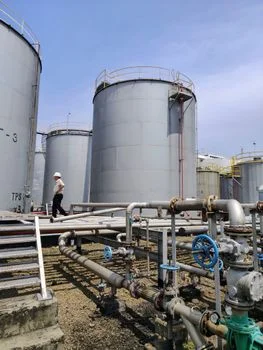
CAPEX per cubic metre per day ($/m³/day) varies widely by process train, and OPEX swings total cost of ownership further once energy and chemicals are counted. Modular systems run $250–$1,200 $/m³/day, conventional activated sludge $800–$2,000 $/m³/day, and Dissolved Air Flotation (DAF) plus tertiary filtration $1,500–$3,000 $/m³/day. OPEX is dominated by power at 30–50% of operating cost, chemicals at 20–30%, labour at 15–25%, and—for MBR trains—membrane replacement at 10–15%. Modular systems such as HydropureWater's WSZ Series cut initial investment by 30–40% but usually need phased expansion once flows pass 500 m³/day. DAF systems add $300–$500 $/m³/day to CAPEX yet cut sludge disposal cost up to 40% versus conventional sedimentation. HydropureWater's integrated MBR trains give a compact footprint and high-quality effluent for reuse or stringent discharge.
| System Type | CAPEX/m³/day (CAD) | OPEX/m³ (CAD) | Key Trade-offs |
|---|---|---|---|
| Modular MBR (e.g., HydropureWater WSZ/MBR series) | $250 - $1,200 | $0.40 - $0.80 | Lower CAPEX, smaller footprint, high effluent quality. Potential for phased expansion needs. |
| Conventional Activated Sludge | $800 - $2,000 | $0.30 - $0.60 | Mature technology, larger footprint, higher energy use than MBR. |
| DAF + Tertiary Filtration (e.g., HydropureWater) | $1,500 - $3,000 | $0.50 - $0.90 | Effective for specific pollutants, reduced sludge volume. Higher CAPEX, requires chemical input. |
For advanced treatment and water reuse, the integrated MBR membrane bioreactor wastewater treatment system is a common selection. For industrial pretreatment and solids separation, the Dissolved Air Flotation (DAF) system handles high solids loads. For compact or underground sites, the WSZ underground integrated sewage treatment plant saves land cost.
Tech-Specific Cost Drivers: Treatment Level, Capacity and Site Constraints
Treatment level, design capacity, and site constraints swing final price by a factor of 2–5×, which is why a single $/m³/day benchmark is rarely enough. Primary treatment is the cheapest at $100–$300 $/m³/day, while advanced treatment trains that target tertiary-quality effluent under BC's Municipal Wastewater Regulation run $1,200–$3,000 $/m³/day. Under B.C. Reg. 87/2012, secondary treatment means CBOD5 and TSS not more than 45 mg/L each; advanced treatment means CBOD5 and TSS of 10 mg/L or less each. Capacity follows a clear economy-of-scale curve: EPA benchmarks from 2024 indicate CAPEX per cubic metre can drop up to 40% once a plant exceeds 10,000 m³/day versus smaller plants. Underground systems such as the WSZ Series add 15–25% to CAPEX but can cut total site cost by roughly 50% by removing land acquisition from the budget. High automation (PLC control, automatic chemical dosing) adds 10–15% to CAPEX and typically returns 20–30% OPEX savings through lower labour and tighter chemical dosing. Meeting advanced-treatment TSS of 10 mg/L or less usually means MBR or DAF with filtration, which adds $200–$400 $/m³/day over a basic primary train. Where phosphorus limits apply, the cost logic for chemical or biological removal is laid out in our phosphorus removal compliance guide.
How to Budget Vancouver CAPEX and OPEX: A 6-Step Selection Checklist
Most plants we size for Vancouver-area clients sit at the lower end of the published CAPEX bands because modular MBR trains dominate small and mid-scale industrial work. Use the steps below before sending out an inquiry. 1) Lock the design flow in m³/day and the peaking factor; under-sizing is the single most expensive retrofit. 2) Set the effluent envelope (BOD, TSS, TN, TP) against BC's Municipal Wastewater Regulation before choosing equipment. 3) Pick a process train—modular MBR, conventional activated sludge, or DAF + filtration—and apply the CAPEX band from the table above. 4) Build OPEX from energy ($0.10–$0.30/m³), chemicals (20–30% of OPEX), labour (15–25%), and membrane replacement ($50–$100/m²/year for MBR). 5) Add 15–20% contingency for material volatility and 10–15% for scope creep, matching what we see on recent Metro Vancouver projects. 6) Validate total cost of ownership over a 20-year horizon against the ROI calculator linked in the next section.
Who This Guide Is For, and Who Should Look Elsewhere
This guide fits industrial buyers, EPC contractors, and procurement managers planning municipal or process-water treatment in BC, typically 50–50,000 m³/day. It also fits developers sizing packaged plants for new subdivisions or resort sites. If you need a single-family septic system, a portable jobsite unit, or a Class A biosolids facility, talk to a local BC designer. Do not size those projects off these CAPEX bands. For data-centre cooling-tower blowdown or high-purity reuse, route to a pure-water engineering team instead—pretreatment is shared, but the polish step is not covered above.
Next Step: Get a Sized Quote
Send your design flow, influent profile, effluent targets, and site constraints. You will receive a sized MBR, DAF, or WSZ proposal with CAPEX, OPEX, and a 20-year total cost of ownership. Request a sized Vancouver wastewater treatment quote and the engineering team will respond within one business day.
Frequently Asked Questions
How much does a Vancouver wastewater treatment plant cost in 2026?
In 2026, Vancouver wastewater treatment plant cost ranges from about $1.5 million for a compact MBR serving 5,000 people up to $3.86 billion for the Metro Vancouver North Shore WWTP. Modular MBR trains typically run $250–$1,200/m³/day in CAPEX, conventional activated sludge $800–$2,000/m³/day, and DAF with tertiary filtration $1,500–$3,000/m³/day.
How does OPEX compare to CAPEX for a wastewater treatment plant?
OPEX is usually 3–8% of CAPEX per year over a 20-year life, so cumulative OPEX often exceeds initial CAPEX. Energy is 30–50% of OPEX, chemicals 20–30%, labour 15–25%, and membrane replacement 10–15% on MBR trains. A plant with $10 million CAPEX and $0.50/m³ OPEX at 5,000 m³/day will spend roughly $3.65 million on OPEX over 20 years, before inflation.
What are the main CAPEX drivers for a Vancouver wastewater plant?
The main CAPEX drivers are treatment level (primary vs. advanced/tertiary-quality), design capacity, site constraints, and automation. Plants above 10,000 m³/day see up to 40% lower unit cost per EPA 2024 benchmarks. Underground installs add 15–25%; PLC and dosing add 10–15%. Material and labour inflation in BC adds another 15–20% contingency on top of the base CAPEX band.
How do you estimate maintenance cost inside OPEX for a treatment plant?
Estimate maintenance by separating routine work from major component replacement. Routine maintenance is typically 2–4% of equipment CAPEX per year, counted as a direct cost. Major replacements include membranes at $50–$100/m²/year for MBR, or diffusers every 7–10 years. Routine OPEX is the annual labour and spares line; replacement belongs in a sinking fund, not in year-one OPEX.
How accurate is a CAPEX and OPEX ROI calculator for a wastewater plant?
An ROI calculator is accurate to roughly ±20–25% at the concept stage, which is enough to rank process options and set a budget envelope. Accuracy tightens to ±10% once a pilot, geotech, and single-line process diagram are complete. Treat the calculator output as a decision tool, not a tender price.
Further Reading
Explore these in-depth articles on related wastewater treatment topics:
- skid-mounted wastewater treatment plant selection guide
- phosphorus removal compliance guide for Vancouver WWTPs