Phosphorus Wastewater Treatment: Process Routes That Meet Permit Limits
Phosphorus wastewater treatment applies chemical precipitation, EBPR, or hybrid polishing against site-specific total-P permits. Chemical trains typically remove 90–98% of phosphorus at about 0.5–1.0 kg dry sludge per kg P removed. EBPR usually delivers 80–90% removal when BOD:P exceeds 20:1. DAF, MBR, or RO polishing serves permits near 0.1 mg/L P.
Why Plants Miss Phosphorus Limits in Practice
A dairy plant in Wisconsin faced about $50,000 per year in fines after effluent total phosphorus stayed above a common <1 mg/L permit target despite a basic chemical precipitation system. Influent phosphorus typically ran 15–20 mg/L from milk processing and CIP. Missed limits raised both penalty risk and public pressure after algal blooms appeared in nearby surface waters. According to CDC 2021 data cited in the original case record, phosphorus-linked harmful algal blooms were associated with 117 human illnesses and 2,715 animal deaths in the United States.
Earlier vendor copy often described an “EPA <1 mg/L” national rule and an “EU <2 mg/L” rule as if they were universal technology standards. According to U.S. EPA NPDES nutrient training (2022), secondary treatment standards for POTWs do not include national technology-based limits for nitrogen or phosphorus. Most U.S. phosphorus limits are water-quality-based or state performance standards. Wisconsin’s NR 217.04 example sets a 1 mg/L total phosphorus performance standard for POTWs and privately owned domestic plants (EPA, 2022). EU Council Directive 91/271/EEC still requires more stringent treatment than secondary treatment for sensitive areas. Plant-facing designs commonly use ≤2 mg/L total P as a working target where local permits apply that value.
Selection therefore starts from the written permit, influent P speciation, carbon availability, sludge outlets, and available footprint—not from a single federal concentration number.
Chemical Phosphorus Removal: Dosage Rates, pH Ranges, and Sludge Production
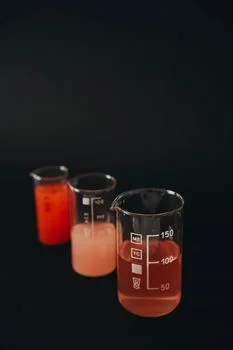
Chemical precipitation removes phosphorus when multivalent metal salts react with orthophosphate to form insoluble solids, typically at 90–98% removal efficiency under controlled pH. Earlier guidance in this article used a practical band of 1.5–2.5 moles of Al³⁺ or Fe³⁺ per mole of phosphorus for about 95% removal. According to the U.S. EPA Nutrient Control Design Manual (January 2009), aluminum-to-phosphorus molar ratios are about 1.38:1 for 75% removal, 1.72:1 for 85% removal, and 2.3:1 for 95% removal. Iron systems often need about 1:1 Fe:P plus roughly 10 mg/L iron for hydroxide demand. Ultra-low residuals can require metal:P ratios between 2 and 6.
Coagulant choice tracks wastewater pH and alkalinity. Alum historically performs best near pH 5.5–6.5. Ferric salts are often run near pH 4.5–5.5 in plant practice. Lime systems need a highly alkaline environment, typically pH 10–11, to form calcium phosphate. The EPA manual notes that recent jar-test work places high efficiency for both iron and alum between pH 5.5 and 7 within a wider operable window of about 3.5–7.5. Operating outside the workable window raises dose and chemical cost.
Table 1: Chemical Coagulant Performance Parameters
| Coagulant Type | Optimal pH Range | Typical P Removal Efficiency | Approx. Chemical Cost (2025) per m³ |
|---|---|---|---|
| Alum (Aluminum Sulfate) | 5.5–6.5 | 90–95% | $0.15–$0.30 |
| Ferric Chloride | 4.5–5.5 | 92–98% | $0.20–$0.40 |
| Lime (Calcium Hydroxide) | 10.0–11.0 | 85–90% | $0.10–$0.25 |
What does phosphorus chemical dosage cost?
Phosphorus chemical dosage cost typically falls in the $0.15–$0.40 per m³ band for alum or ferric at ordinary industrial strengths when jar-tested doses are used. Lime often lands near $0.10–$0.25 per m³ but shifts OPEX into scaling control and larger sludge volumes. Dose cost rises sharply when the effluent target drops below about 0.1 mg/L P because metal:P molar ratios climb. For precise feed control, PLC-controlled chemical dosing systems limit overdosing and pH drift. Similar metal-salt precipitation logic also appears in chemical precipitation for copper removal, where jar tests still set the real mole ratio.
Sludge production for chemical phosphorus removal typically ranges from 0.5–1.0 kg dry solids per kg phosphorus removed. That sludge is often hard to dewater and needs filter presses or centrifuges. Common operating faults include lime scaling, residual metal carryover, and pH swings that force extra acid or base.
Biological Phosphorus Removal (EBPR): Process Design and Troubleshooting
Biological Enhanced Phosphorus Removal (EBPR) uses phosphorus-accumulating organisms (PAOs) and typically achieves 80–90% phosphorus removal when carbon and redox zones are stable. In the anaerobic zone, PAOs release polyphosphate and take up volatile fatty acids, storing them as PHAs. In the aerobic zone, PAOs oxidize stored PHAs and take up phosphorus beyond metabolic need. Wasting PAO-rich sludge then exports phosphorus from the liquid train.
EBPR design depends on carbon and nitrate control. A BOD:P ratio >20:1 and a COD:P ratio >40:1 support PAO growth and luxury uptake. Nitrate recycled into the anaerobic zone competes for carbon and weakens phosphorus release, so internal recycle and anoxic placement matter as much as tank volume.
Table 2: Typical EBPR Process Design Parameters
| Parameter | Typical Range | Impact on Performance |
|---|---|---|
| Anaerobic Zone HRT | 0.5–1.5 hours | Essential for VFA uptake and P release by PAOs. |
| Aerobic Zone HRT | 2–4 hours | Allows for luxury P uptake and PAO growth. |
| Sludge Retention Time (SRT) | 10–20 days | Maintains adequate PAO population. |
| BOD:P Ratio | >20:1 | Sufficient carbon for PAOs. |
| COD:P Ratio | >40:1 | Ensures carbon availability for luxury uptake. |
Well-operated EBPR trains can reach effluent phosphorus below 1 mg/L (EPA 2024). Common failure modes are removal below 70% from weak BOD:P, nitrate intrusion, short anaerobic HRT, or SRT too low to hold PAOs. Secondary clarifiers that turn anaerobic can release phosphorus back into the effluent; shallow blankets and fast return sludge reduce that risk. Compact membrane plants such as submerged PVDF membrane systems for near-zero phosphorus discharge improve solids capture around EBPR biomass and shrink footprint when permits tighten.
Hybrid Systems: Combining Chemical, Biological, and DAF for Ultra-Low Phosphorus
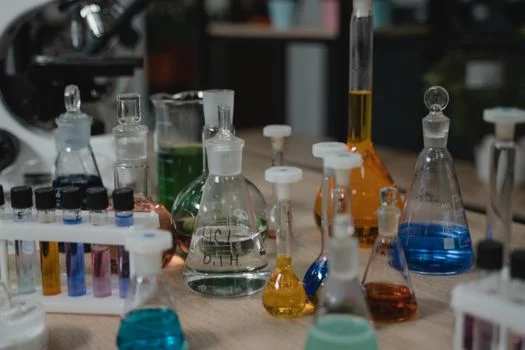
Hybrid phosphorus trains matter when electronics, pharma, or reuse permits require effluent total P below 0.1 mg/L or near non-detect. A frequent three-stage layout starts with chemical precipitation for bulk removal near 90%. A high-efficiency DAF system for phosphorus sludge separation then targets about 95% TSS removal. MBR or RO polishing finishes the train for >99% overall phosphorus removal. That barrier stack often produces effluent below 0.1 mg/L P and can approach California-style 0.05 mg/L watershed targets reported for sensitive receiving waters.
Table 3: Hybrid System CAPEX and OPEX Comparison (100 m³/day)
| System Configuration | Typical CAPEX | OPEX Breakdown (per m³) | Effluent P Target |
|---|---|---|---|
| Chemical + DAF | $500K | Chemical: $0.20–$0.35, Energy: $0.05–$0.10, Sludge: $0.05–$0.10 | <0.5 mg/L |
| EBPR + DAF | $750K | Chemical: $0.05–$0.15, Energy: $0.15–$0.25, Sludge: $0.03–$0.08 | <0.2 mg/L |
| Chemical + MBR | $1.5M | Chemical: $0.15–$0.30, Energy: $0.20–$0.30, Sludge: $0.05–$0.15 | <0.05 mg/L |
| EBPR + MBR | $1.8M | Chemical: $0.05–$0.10, Energy: $0.25–$0.35, Sludge: $0.03–$0.10 | <0.03 mg/L |
| Chemical + DAF + RO | $2.5M+ | Chemical: $0.20–$0.50, Energy: $0.30–$0.60, Sludge: $0.05–$0.15 | <0.01 mg/L (Zero Discharge) |
One semiconductor plant in Taiwan cut influent phosphorus from 20 mg/L to below 0.05 mg/L using chemical precipitation, DAF, and advanced RO systems for water purification and reuse. Recycle of RO reject water cut chemical spend by more than $300K per year in that case and shows why buyers also review zero-discharge systems for high-purity phosphorus removal when reuse credits matter.
Cost Breakdown: CAPEX and OPEX for Phosphorus Treatment Systems in 2025
Capital and operating cost for phosphorus treatment still track flow, influent P, and the permit floor more than brand labels. CAPEX bands used for 2025 planning remain: chemical precipitation about $50K–$500K at 10–100 m³/day; EBPR about $200K–$1M at 50–200 m³/day; hybrid chemical plus MBR/RO about $500K–$2M+ at 100–500 m³/day.
OPEX usually dominates life-cycle cost. Chemical spend often takes 40–60% of OPEX on precipitation-heavy plants. Energy commonly holds 20–30%, especially aeration and membrane duty. Sludge disposal typically takes 10–20%. Labor and maintenance usually sit near 5–10%.
How much does meat-plant phosphorus treatment cost?
Meat-plant phosphorus treatment cost for a mid-size flow near 50–200 m³/day usually lands inside the chemical $100K–$500K CAPEX band or the EBPR $250K–$1M band, depending on blood, rendering, and CIP phosphorus peaks. Annual OPEX for those same flows is often $20K–$150K for chemical trains and $30K–$250K for EBPR trains at the ranges in Table 4. High soluble P with weak BOD favors chemical dosing first; high BOD:P favors EBPR with a chemical trim.
Table 4: Estimated CAPEX and Annual OPEX for Phosphorus Treatment Systems (2025)
| System Type | Flow Rate (m³/day) | Estimated CAPEX | Estimated Annual OPEX |
|---|---|---|---|
| Chemical Precipitation | 50 | $100K–$250K | $20K–$50K |
| Chemical Precipitation | 200 | $300K–$500K | $80K–$150K |
| EBPR (Biological) | 50 | $250K–$500K | $30K–$70K |
| EBPR (Biological) | 200 | $700K–$1M | $120K–$250K |
| Hybrid (Chemical + DAF) | 200 | $750K–$1.2M | $150K–$300K |
| Hybrid (EBPR + MBR) | 500 | $1.5M–$2.5M | $400K–$800K |
A $1M hybrid for 500 m³/day at 10 mg/L phosphorus can avoid about $200K per year in fines and excess chemical use versus a non-compliant basic train. Regional permit strategy still belongs in the same spreadsheet used for regional compliance strategies for phosphorus discharge limits.
How to Select the Right Phosphorus Treatment System for Your Plant

Selecting phosphorus treatment works best as a short decision checklist tied to measured data and the permit text.
- Characterize influent thoroughly. Measure total and ortho-P, BOD:P, COD:P, flow, pH, alkalinity, and inhibitors. Influent P >10 mg/L with BOD <100 mg/L usually points to chemical precipitation. High BOD:P favors EBPR.
- Read the exact discharge limit. Distinguish common ~1 mg/L state/NPDES targets from <0.1 mg/L watershed or reuse limits. Ultra-low targets generally need hybrid MBR or RO polishing.
- Check footprint. Conventional EBPR needs more tankage. MBR packages trade membrane OPEX for smaller civil works.
- Budget CAPEX plus 5-year OPEX. A medium plant budget near $500K often supports chemical precipitation with a DAF for phosphorus sludge separation rather than a full membrane hybrid.
- Plan sludge outlets. Chemical sludge volume and dewatering differ from biological sludge. Many plants need a plate and frame filter press for sludge dewatering before landfill or reuse.
- Jar-test the coagulant and mole ratio. Use the EPA Al:P curves as a starting point, then lock dose on plant water.
- Decide trim chemistry versus full hybrid. EBPR plus a small metal-salt trim often beats RO when the permit is near 0.5–1 mg/L P.
The same structured review helps when the wastewater also carries metals, as in nickel wastewater treatment specs for multi-contaminant streams, or when comparing metal-salt dosing practice with chemical precipitation for copper removal.
Who This Is For
This page is for plant engineers, EPC process leads, and procurement managers sizing phosphorus removal against a written permit and a five-year OPEX model. Look elsewhere if you only need municipal secondary treatment without a phosphorus limit, or if your sole issue is sanitary sewage with no industrial P spike. Next step: send influent P, BOD, flow, and the permit limit for a sized dosing, EBPR, or hybrid sketch.
Frequently Asked Questions
What is the optimal pH for alum precipitation?
The optimal pH range for alum precipitation of phosphorus is typically 5.5–6.5, with strong removal often near pH 6.0. Plants in that window commonly see 90–95% phosphorus removal. The EPA Nutrient Control Design Manual also cites high efficiency between pH 5.5 and 7 for alum and iron. Outside about pH 5.0–7.0, efficiency can fall toward 70–80% as aluminum phosphate and hydroxide speciation shift.
What BOD:P ratio is required for successful EBPR?
Successful EBPR generally needs a BOD:P ratio above 20:1 in the anaerobic feed. That ratio supplies volatile fatty acids for PAOs to store PHAs before luxury phosphorus uptake in the aerobic zone. COD:P above 40:1 is a parallel design check when BOD data are incomplete. If either ratio is low, add fermentate or a carbon source before changing tank volumes.
How much sludge does chemical phosphorus removal produce?
Chemical phosphorus removal typically generates 0.5–1.0 kg of dry solids per kg of phosphorus removed. Sludge mass rises with coagulant type, initial phosphorus, and other suspended solids. Ferric systems often yield denser cake than alum, while alum cake can be harder to dewater. Digester and press sizing should use the upper end of that range until plant data exist.
Why is my EBPR system failing to remove phosphorus effectively?
EBPR failure usually traces to low BOD:P, nitrate entering the anaerobic zone, short anaerobic or aerobic HRT, or SRT low enough to wash out PAOs. Secondary clarifier phosphorus release is another common cause when blankets turn septic. Fix the carbon and nitrate path first, then confirm zone DO and HRT before adding continuous metal-salt backup.
What are the main operational costs for an MBR-based phosphorus removal system?
MBR-based phosphorus trains usually spend 20–30% of OPEX on energy for aeration and membrane permeate duty. Membrane cleaning chemicals and replacement often add another 10–15%. Sludge disposal commonly takes 5–15%. If a chemical trim is used for ultra-low P, coagulant cost returns as a visible OPEX line and should be jar-tested against the permit floor.