Start with the cooling system and the final discharge route
A data center in Donetsk needs a source-separated wastewater plan centered on cooling-tower blowdown, not one generic treatment unit. Genesis Water Tech reports that blowdown at 4 cycles of concentration carries approximately 1,200–6,000 mg/L TDS, 10–50 mg/L suspended solids, treatment chemicals and scaling minerals; approximately 25–30% of makeup water leaves the loop at that concentration. The practical 2026 train is equalization, pH and temperature adjustment, filtration, UF and RO, with permeate reused as cooling makeup and concentrate assigned to an authorized route. Full zero liquid discharge remains a contingency unless discharge is effectively prohibited. Final design requires seasonal Donetsk source-water tests, current Ukrainian permit terms, utility agreement and pilot validation.
Cooling configuration and outlet selection must be settled before equipment selection. Define peak and seasonal makeup demand, available freshwater, cooling cycles, intended reuse and the legally available discharge point. Otherwise, the plant can be technically capable but impossible to operate or permit.
Keep cooling-tower blowdown, plant and equipment washdown, chemical-dosing reject, glycol-bearing freeze-protection flow and sanitary wastewater separate until compatibility and treatment requirements are established. Reuse reduces freshwater demand, but it does not remove the duty to manage RO concentrate or rejected side streams. The regional examples in the data center cooling blowdown treatment guide and comparative treatment guide provide process references, not Donetsk permit evidence.
| Waste stream | First engineering question | Initial treatment direction |
|---|---|---|
| Cooling-tower blowdown | Can permeate return as makeup, and where does concentrate go? | Equalization, filtration, UF, RO and monitored discharge |
| Plant and equipment washdown | What contaminants and surfactants are present? | Separate collection and characterization |
| Chemical-dosing reject | Can it be returned to the cooling system or neutralized? | Controlled segregation and chemical assessment |
| Glycol-bearing side stream | What glycol concentration and freezing-protection duty apply? | Separate higher-strength treatment |
| Sanitary wastewater | Is there a separate permitted pathway? | Do not combine without confirming compatibility |
Characterize the Donetsk water balance and waste streams
Seasonal source-water characterization, rather than generic U.S. ranges, is the defensible basis for sizing a Donetsk plant. Sample makeup and blowdown for hardness, alkalinity, silica, TDS, suspended solids, temperature and treatment-chemical residuals across operating seasons. The 1,200–6,000 mg/L blowdown TDS and 10–50 mg/L suspended-solids figures reported by Genesis Water Tech are preliminary envelopes because concentration, source water and cooling chemistry determine actual values.
Record peak and average blowdown, evaporation, makeup-water temperature, cooling cycles and seasonal cooling load. The water balance should also distinguish continuous cooling blowdown from intermittent washdown and side-stream losses. Those distinctions determine equalization volume, filtration capacity and whether storage is needed for outages.
Segregate glycol or heat-trace side streams and evaluate them as separate higher-strength wastes. The Ukrainian data center blowdown design considerations identify this separation requirement for freeze-protection streams; Donetsk freeze-protection practice must be checked directly rather than inherited from Kharkiv.
Cybersecurity, power interruption and workforce-access constraints belong in the operating basis. Specify redundant treatment capacity where required, adequate equalization storage, critical spares and an operating response for loss of power, chemical supply interruption or delayed laboratory access. Regional precedent does not establish the local source-water chemistry or current permit envelope.
Match each contaminant to the correct treatment barrier
Each treatment stage should have a measurable contaminant-removal role. Equalization and pH or temperature conditioning stabilize flow and protect downstream equipment; the Kyiv guide cites pH 6.0–9.0 and discharge temperature around 65°C or lower as typical process targets, but the binding Donetsk permit must be obtained first.
Side-stream or multimedia filtration removes suspended solids and biological material before RO. Genesis Water Tech reports filtration capacity equivalent to 1–5% of circulation flow and 10–25 micron filtration. DAF is appropriate where oil, grease, colloids or precipitated metals require separation; the cited equipment envelope covers 4–300 m³/h across 13 standard models. Lamella clarification is the alternative where flocculation and inclined-plate separation fit the waste chemistry; the published envelope gives surface loading rates of 20–40 m/h.
UF removes bacteria, colloids and suspended solids before RO. The published operating envelope is 0.01–0.1 micron, 10–30 psi and 90–95% recovery, with cleaning every 1–3 months depending on feed quality. The hollow-fiber UF pretreatment for industrial RO should be specified against the measured feed envelope rather than nominal flow alone.
RO is the main barrier for dissolved salts, hardness, silica and most treatment chemicals. Genesis Water Tech reports 95–99% rejection, 10–50 mg/L permeate TDS, 150–400 psi and 50–85% recovery. An industrial reverse osmosis system for cooling blowdown reuse must be matched to seasonal scaling calculations and the permitted concentrate route. NF is an alternative when partial hardness and sulfate removal meets the objective; reported NF recovery is 70–85% at 75–150 psi.
Chemical dosing covers pH adjustment, antiscalant and coagulation. Select the program from analyzed calcium, alkalinity, silica, temperature and cycles of concentration; a generic dose cannot establish scale control.
| Barrier | Measurable role | Published operating envelope |
|---|---|---|
| Equalization and conditioning | Flow stability and membrane protection | Kyiv guide: pH 6.0–9.0; temperature at or below approximately 65°C |
| Side-stream or multimedia filtration | Suspended-solids and biological-solids removal | 1–5% of circulation flow; 10–25 μm filtration |
| DAF or lamella clarification | Oil, grease, colloids or precipitated-metals removal | DAF: 4–300 m³/h; lamella: 20–40 m/h surface loading |
| UF | Bacteria, colloids and suspended-solids barrier | 0.01–0.1 μm; 10–30 psi; 90–95% recovery |
| RO | Dissolved salts, hardness, silica and treatment-chemical removal | 95–99% rejection; 10–50 mg/L permeate TDS; 150–400 psi; 50–85% recovery |
| NF | Partial hardness and sulfate removal | 70–85% recovery; 75–150 psi |
Choose between reuse, compliant discharge and zero liquid discharge
Cooling-tower makeup reuse is the base case because it reduces freshwater consumption and discharge volume. Genesis Water Tech reports typical reuse recovery of 60–85%. Direct sewer discharge is economical only when the receiving utility accepts the stream and the industrial wastewater permit covers temperature, pH, TDS, metals, biocides and other relevant pollutants. Some water-stressed jurisdictions apply TDS limits below 1,500 mg/L, and reported direct-discharge fees exceed $5–$15 per thousand gallons; both figures require local verification.
MVC belongs in a partial-ZLD configuration only when the site has a viable brine route or severe water constraints. Genesis Water Tech reports 95–98% recovery of concentrate-stream water, distillate TDS below 10 mg/L and energy use of 15–25 kWh per 1,000 US gallons. The recovered distillate still needs a defined use, while the concentrated brine remains a residual stream.
Full ZLD is a contingency, not the default for a conventional Donetsk site. The same source reports 95–99% overall recovery, solid waste below 1% of original blowdown volume and operating cost of $5–$15 per thousand gallons. These are comparison benchmarks, not a Donetsk estimate. Procurement should proceed only if the outlet screen leaves no liquid-discharge route, or if local freshwater, discharge and concentrate costs demonstrate the required economic case.
| Route | Primary objective | Residual obligation | Decision condition |
|---|---|---|---|
| Direct sewer discharge | Lowest treatment complexity if accepted | Permitted volume and pollutant compliance | Utility acceptance and permit terms confirmed |
| Reuse with compliant discharge | Reduce freshwater and discharge | RO concentrate or rejected side-stream route | Permeate quality fits cooling duty |
| Partial ZLD | Recover water and reduce liquid volume | Concentrated brine management | Viable brine route or severe water constraint |
| Full ZLD | Eliminate liquid discharge | Solid salt and crystallizer management | Discharge effectively prohibited or compelling economics |
Build and validate the treatment train before full-scale procurement

The preliminary sequence is equalization, pH and temperature trim, filtration, optional DAF or lamella clarification, UF, RO and a monitored discharge or reuse connection. Each stage should have a defined control objective, an online measurement and a sampling point. The multimedia filtration equipment reference and membrane-element selection reference can support that specification work, but they do not replace site testing.
Pilot UF plus RO on a slipstream before committing to full-scale membranes. The pilot should establish recovery, scaling indices, membrane flux, cleaning frequency, concentrate chemistry and compatibility with the existing cooling-water treatment program. A slipstream test without representative seasonal chemistry cannot validate scaling control.
For higher-recovery concepts, evaluate controlled removal of sparingly soluble salts rather than assuming conventional RO can be pushed indefinitely. IDE reports an industrial high-recovery case operating at around 95% recovery with permeate silica reduced to about 1 mg/L. This is a demonstrated design approach, not a guarantee for Donetsk feed chemistry; local analysis and pilot results must establish applicability.
Include online flow, pressure, conductivity, pH and temperature instrumentation, plus laboratory sampling ports. Provide controlled bypass, equalization storage and operating responses for power interruptions, membrane fouling, chemical-delivery failure and delayed off-site analysis. These controls matter more than a nominal recovery figure because cooling and discharge obligations continue during equipment faults.
Set the budget and procurement scope
Genesis Water Tech reports $250,000–$500,000 installed for a 50,000 GPD blowdown RO system and $1.50–$3.00 per thousand gallons treated for energy, chemicals, membrane replacement and maintenance. These are vendor-reported U.S.-scope benchmarks, not a Donetsk tender estimate; currency, taxes, freight, local construction, utilities, permits and concentrate disposal are unresolved inputs.
Separate base treatment from optional reuse and ZLD packages. Base scope should cover equalization, filtration and pretreatment, UF, RO, electrical and controls, chemical storage, monitoring and a permitted outlet connection. MVC, thermal systems and crystallizers belong in a separately priced contingency because their capital, energy and solids-handling requirements differ.
Request lifecycle quotations covering membranes, antiscalant, cleaning chemicals, energy, solids handling, monitoring, commissioning, operator training and maintenance. Ask suppliers to state design feed chemistry, recovery basis, concentrate volume and quality, utility requirements, redundancy and exclusions. The RO equipment specifications and supplier selection criteria provides a useful bid-document framework.
| Budget package | Included scope | Pricing evidence required |
|---|---|---|
| Base treatment | Equalization, filtration, UF, RO, controls and monitored outlet | Installed price, utilities, consumables and membrane lifecycle |
| Reuse option | Permanent permeate connection, blending and water chemistry review | Freshwater savings supported by local tariffs |
| Partial ZLD | MVC or brine concentration plus residual management | Energy demand, brine outlet and operating labor |
| Full ZLD | Thermal concentration, crystallizer and solid handling | Salt destination, waste transport and complete lifecycle cost |
Secure the discharge route and monitoring plan
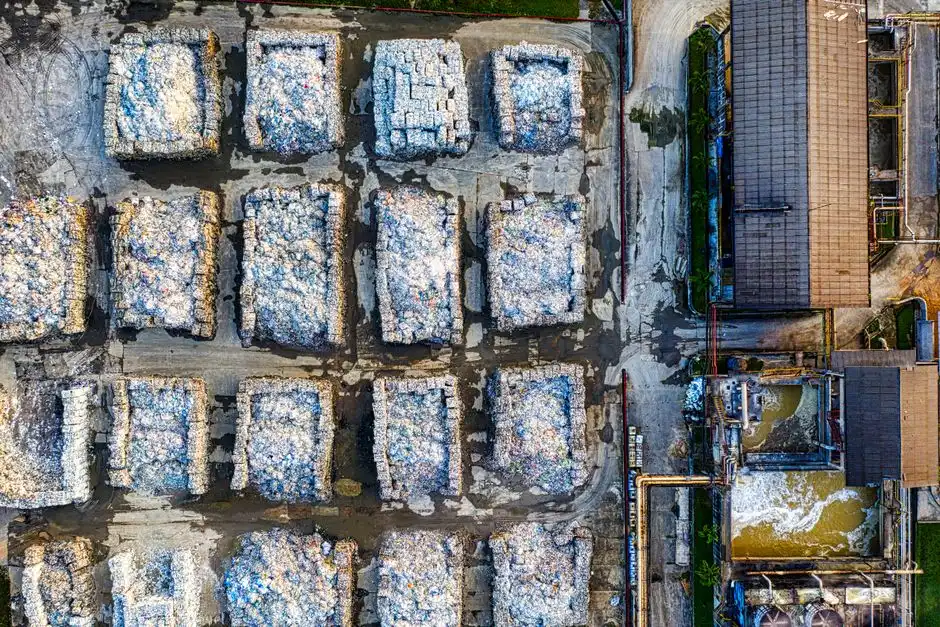
The discharge route must be secured before equipment selection because it determines which contaminants require removal and which residual stream must be managed. Obtain the current rules applicable to the Donetsk site, including wastewater-discharge conditions, special water-use requirements, environmental reporting duties and any receiving-utility agreement. Confirm the legal status and technical limits of the selected sewer, surface-water or alternative outlet with the responsible authority and utility.
Do not transfer Kyiv or Kharkiv permit assumptions into the Donetsk design basis. Generic U.S. limits are also unsuitable unless the applicable Donetsk instrument adopts them. The permit should drive the treatment envelope, while the measured source water determines equipment duty.
Define monitoring for flow, pH, temperature, TDS and TSS, then add permit-specific metals, phosphorus, biocide or thermal constraints where applicable. Assign a compliance owner, sample locations, chain-of-custody procedures, laboratory schedule and corrective-action thresholds before commissioning. Automatic measurements can support process control, but the monitoring plan must also define laboratory verification and reporting.
Verify inspection and reporting cadence directly with the regional ecology authority. The Kyiv guide reports that Ukraine’s 2024–2025 wartime and emergency conditions changed ecology reporting and inspection cycles relative to the pre-2022 baseline; it does not establish Donetsk’s present schedule. Procurement documents should therefore request the valves, filter media and critical spares scope and permit-supporting deliverables separately from the process equipment.
Frequently Asked Questions
How much does treatment cost for a Donetsk data center, and which cost figures can be used for an initial budget?
Use $250,000–$500,000 for a 50,000 GPD blowdown RO system and $1.50–$3.00 per thousand gallons treated only as preliminary vendor-reported benchmarks from Genesis Water Tech. Request a Donetsk quotation stating flow basis, feed chemistry, recovery, concentrate route, utilities, membranes, chemicals, freight, local installation and commissioning. Local electricity, freshwater, discharge and hauling prices remain inputs to obtain rather than assumptions.
Should the project specify UF and RO immediately, or install a pilot first?
Install a representative slipstream pilot before final full-scale procurement. Verify recovery, scaling indices, flux, cleaning frequency and concentrate chemistry under seasonal Donetsk conditions. The pilot should validate compatibility with the selected UF pretreatment for industrial RO and industrial RO treatment train.
Can cooling-tower blowdown be reused as makeup water without a discharge permit?
No blanket exemption should be assumed. Reuse can reduce freshwater and discharge, but concentrate and rejected side streams may still require an authorized outlet. Confirm the reuse condition and residual-discharge obligations with the responsible Donetsk authority before treating the reuse line as the complete solution.
When is full zero-liquid-discharge treatment justified instead of sewer discharge with pretreatment?
Full ZLD is justified when the liquid outlet is effectively prohibited or a verified lifecycle-cost comparison shows that its recovery value exceeds sewer-discharge and partial-concentration alternatives. Genesis Water Tech reports 95–99% overall recovery and $5–$15 per thousand gallons operating cost, but the Donetsk decision must also include concentrate treatment, solid-salt handling, energy availability and permit terms.
How should a supplier be selected to reduce scaling and fouling risk?
Require feed-water envelopes, seasonal design cases, antiscalant controls, membrane materials, normalized flux, cleaning assumptions, recovery limits and concentrate guarantees. Compare UF and RO guarantees against pilot results and require a defined cleaning and replacement plan. Supplier selection should demonstrate chemistry-specific protection, not simply quote a high recovery rate.