Why Cooling Tower Blowdown Is the Core Wastewater Stream for a Kyiv Data Center
Cooling tower blowdown is the dominant process wastewater stream at any evaporatively cooled data center; sanitary flow is comparatively small and is permitted through a separate pathway, so the unit process train and the permit strategy should be sized to blowdown first (RSP Engineers). At 4 cycles of concentration, blowdown volume equals roughly 25–30% of makeup water, meaning a plant drawing 10 million gallons per month discharges 2.5–3 million gallons of concentrated water (Genesis Water Tech, 2025). That stream is not just concentrated source water: it carries corrosion inhibitors, scale preventers, biocides, and metals leached from the cooling loop, which together push blowdown TDS into the 1,200–6,000 mg/L range and create scaling, fouling, and aquatic-toxicity risks (Genesis Water Tech, 2025).
Kyiv plants face a source-water profile that vendor brochures rarely capture. Municipal makeup is largely Dnieper-derived, with seasonal swings in hardness, alkalinity, and silica that change blowdown chemistry week to week. Winter temperatures drop the cooling-tower return and shift the cycles-of-concentration economics, while hybrid adiabatic/dry cooling configurations (common where wartime grid instability has driven redundancy requirements) further complicate the blowdown signature. Before specifying cycles of concentration, the project team should request a source-water characterization with seasonal minima and maxima; the "typical" U.S. blowdown numbers in vendor literature should be treated as a starting range, not a design basis for a Kyiv site.
Constituents of Concern and Permit-Driven Discharge Limits
Each blowdown parameter forces a specific unit process; mapping them up front keeps a permit application defensible against a Ukrainian ecology reviewer. The table below pairs the constituent, the typical concern, and the pretreatment response used in data-center practice (RSP Engineers).
| Constituent | Why It Matters | Permit/Operational Limit (typical) | Standard Response |
|---|---|---|---|
| pH excursions from cooling-tower chemicals | Acidic or alkaline discharge corrodes sewer infrastructure | 6.0–9.0 sewer band | PLC-controlled acid/caustic and antiscalant dosing skid for pH neutralization |
| Elevated temperature | Hot blowdown damages receiving biological treatment | Often capped around 150°F (~65°C) | Holding/cooling tanks ahead of discharge |
| Total residual chlorine and biocides | Toxic to aquatic life and downstream biology | Strict TRC and specific-compound limits | Dechlorination (e.g., sodium bisulfite) or non-persistent biocide selection |
| Heavy metals (Cu, Zn) from corrosion | Bioaccumulative, low ppb/ppm limits | Specific numeric limits per utility | Chemical precipitation with pH/clarifier, ion exchange, or specialized filtration |
| TDS, chlorides, sulfates, phosphates | Numeric or indicator limits in water-stressed jurisdictions | TDS caps below 1,500 mg/L appear in some permits (Genesis Water Tech, 2025) | Confirm against Kyivvodokanal industrial user permit and Ukrainian surface-water rules; advanced reduction via RO if triggered |
| Suspended solids, oil/grease | Upset sewer treatment, pass-through risk | Site-specific TSS limits | DAF or lamella clarifier with chemical precipitation |
Permit limits in Ukraine are not identical to U.S. industrial-pretreatment numbers, and the local Kyivvodokanal industrial user permit is the binding document for sewer discharge. The engineering team should request the actual permit text — and the inspection cadence — before finalizing the chemistry envelope.
A 2026 Treatment Train for Kyiv Data Center Blowdown
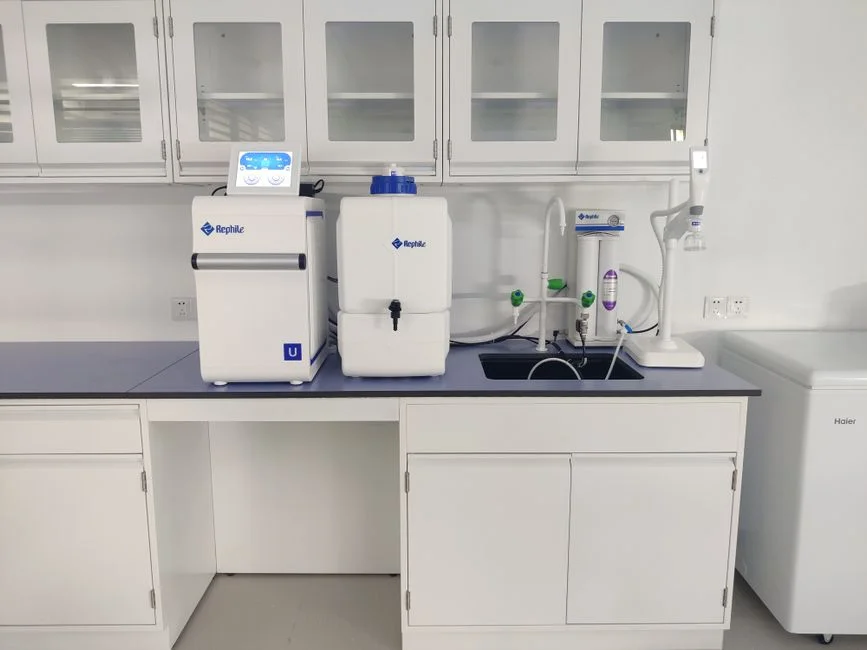
The defensible 2026 sequence is equalization → pH/temperature trim → side-stream or multimedia filtration → DAF/lamella clarifier → UF → RO → optional MVC → optional crystallizer. The table summarizes each stage, the operating envelope from the cited literature, and the equipment link where the design team can examine a specific skid. The numbers below come from Genesis Water Tech (2025) for filtration, UF, RO, and MVC; lamella clarifier surface-loading rates are taken from the manufacturer's published product data.
| Stage | Role | Key Operating Numbers | Reference |
|---|---|---|---|
| Equalization + pH/temperature trim | Stabilize flow and condition downstream units | Sized from peak blowdown rate and cool-down residence; pH 6.0–9.0; temperature ≤ ~65°C at discharge | RSP Engineers |
| Side-stream / multimedia filtration | Removes suspended solids and reduces biological loading; enables higher cycles of concentration | 1–5% of circulation flow; CAPEX $50,000–$200,000; 10–25 µm filtration | Genesis Water Tech, 2025 |
| DAF unit for metals precipitation and TSS polishing / lamella clarifier | Suspended solids, oil/grease, precipitated metals removal | Lamella surface loading 20–40 m/h | Manufacturer product data |
| PVDF ultrafiltration skid as RO pretreatment | Protects RO from particulates, bacteria, and high-MW organics | 0.01–0.1 µm pore size; 90–95% recovery; 10–30 psi operation; backwash with permeate; chemical cleaning every 1–3 months | Genesis Water Tech, 2025 |
| High-recovery industrial RO for blowdown reuse | Dissolved solids, hardness, silica, and most treatment-chemical removal | 95–99% rejection; permeate 10–50 mg/L TDS; recovery 50–85%; 150–400 psi; 50,000 GPD skid CAPEX $250,000–$500,000; OPEX $1.50–$3.00 per 1,000 gal | Genesis Water Tech, 2025 |
| MVC (optional) | Concentrate volume reduction; high-purity distillate reuse | 95–98% recovery of RO concentrate; distillate <10 mg/L TDS; CAPEX $1–3M for 10,000–30,000 GPD; energy 15–25 kWh per 1,000 US gallons | Genesis Water Tech, 2025 |
| Crystallizer (full ZLD only) | Final solid salt cake for disposal | Solid waste <1% of original blowdown volume; combined RO+MVC overall recovery 85–95% | Genesis Water Tech, 2025 |
For a Kyiv data center, the sequencing question is rarely "do we need RO?" — it is "what recovery do we run, and where does the concentrate go?" That choice is driven less by the equipment itself and more by the discharge-versus-reuse decision.
Discharge, Reuse, or ZLD: A Decision Framework for Kyiv Projects
The end-of-pipe choice, not the unit process selection, determines the project's capital and operating profile. Most data-center blowdown applications prioritize cooling-tower makeup reuse as the highest-value path, and discharge compliance or ZLD are evaluated against that baseline (Genesis Water Tech, 2025). Direct discharge fees in water-stressed regions now exceed $5–15 per thousand gallons, and some jurisdictions set TDS limits below 1,500 mg/L that effectively prohibit untreated blowdown discharge (Genesis Water Tech, 2025). For a Kyiv plant, the sewer path through Kyivvodokanal is the default if the industrial user permit is obtainable; partial reuse for irrigation, dust control, or toilet flushing can be added where it reduces freshwater demand without driving a full polishing train (Azura Consultancy, 2024). Full ZLD is a defensible answer only where discharge is effectively prohibited or freshwater cost is extreme, with CAPEX of $3–8M and OPEX of $5–15 per thousand gallons (Genesis Water Tech, 2025).
| Strategy | When It Wins | Typical Cost / Recovery Envelope | Key Risk |
|---|---|---|---|
| Sewer discharge (Kyivvodokanal) | Industrial user permit obtainable, sewer has hydraulic capacity | Discharge fees $5–$15/kgal (Genesis Water Tech, 2025); pretreatment CAPEX sized to permit limits | Permit can impose TDS <1,500 mg/L, biocides, or metals limits that force RO |
| Cooling-tower makeup reuse | Chemistry compatible with existing treatment program; freshwater is costly or scarce | 60–85% recovery; reduces both freshwater and discharge costs | Concentrate disposal remains — partial reuse is not a discharge permit |
| Partial reuse (irrigation, dust, toilet flushing) | Lower polishing acceptable; sustainability narrative helps permitting | Meaningful savings without full RO polish (Azura Consultancy, 2024) | Lower recovery — most blowdown still needs an end-of-pipe route |
| Full ZLD (RO + MVC + crystallizer) | Discharge effectively prohibited, or freshwater cost extreme | CAPEX $3–8M; OPEX $5–$15/kgal; 95–99% recovery; solid waste <1% of blowdown (Genesis Water Tech, 2025) | Energy, maintenance, and crystallizer solids handling dominate OPEX |
| Membrane-based preconcentration + thermal | Middle ground: reduce ZLD energy and OPEX | Cuts ZLD energy demand by ~50% and OPEX by ~30% vs. thermal-only (Azura Consultancy, 2024) | Still requires thermal stage and concentrate management |
For the typical Kyiv project, the practical answer is "RO polishing + sewer discharge under a Kyivvodokanal industrial user permit," with cooling-tower makeup reuse as an opportunistic add-on. RO concentrate is the residual that determines whether MVC and a crystallizer enter the design basis. For the membrane stages, RO and UF membrane elements should be specified for the projected feed-water envelope and cleaning regime, not for the optimistic permeate flow alone.
Permitting, Monitoring, and Compliance in Ukraine (2026 Reality Check)
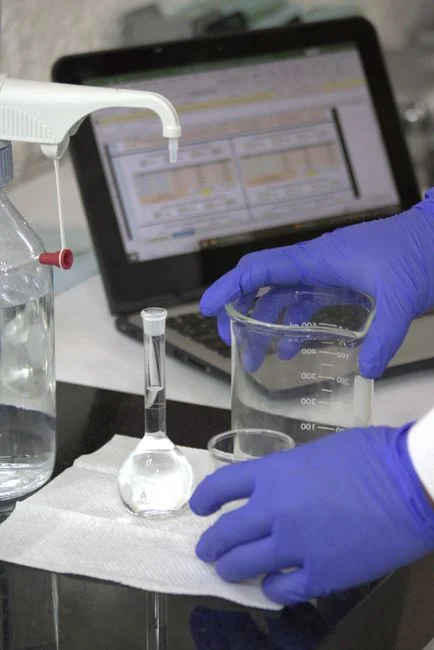
Securing a discharge permit is the start of the compliance load, not the end. Industrial discharge permits require ongoing sampling, certified-lab analysis, and reporting to the permitting authority, with automated pH and flow monitoring on many permits (RSP Engineers). The civil engineering team must allocate space for sampling ports, certified-lab budgets, and a compliance owner inside the facility's operating team from commissioning onward.
Ukraine's 2024–2025 wartime and emergency conditions have shifted ecology reporting cadences and inspection cycles relative to the pre-2022 baseline. Designers should not assume a stable reporting schedule and should confirm current requirements with the regional ecology inspectorate before freezing the design basis. Late engagement with the sewer authority is the most common pitfall: restrictive limits discovered after concept design force redesigns, so Kyivvodokanal should be brought into the project at the concept stage, not at permit submission (RSP Engineers). For broader context on regional cooling-blowdown design choices, the Central-European data center blowdown guide and the companion regional cooling-blowdown guide cover adjacent jurisdictions; for materials selection in aggressive blowdown chemistry, the chemical-resistance guide for wastewater skids is a useful cross-check on piping and skid materials.
Frequently Asked Questions
What treatment train do most Kyiv data centers actually install in 2026?
The 2026 baseline is equalization → pH/temperature trim → side-stream or multimedia filtration → DAF or lamella clarifier → UF → RO, with optional MVC and a crystallizer only when
Frequently Asked Questions
What treatment train does a Kyiv data center need for cooling tower blowdown in 2026?
For 2026 operations in Kyiv, the recommended treatment train consists of a multi-barrier approach: primary side-stream media filtration (typically multi-media or disc filters) for suspended solids removal, followed by chemical conditioning (antiscalant dosing and pH adjustment). This is followed by a two-stage Reverse Osmosis (RO) system to concentrate dissolved solids, and finally, a polishing stage or discharge monitoring station to ensure compliance with local municipal limits.
Given local water hardness levels in the Dnieper basin, the pretreatment stage must include an automated chemical feed system specifically calibrated for high-alkalinity makeup water to prevent scaling on RO membranes, ensuring a normalized flux rate of 15-20 LMH.
How much does a blowdown RO system cost for a mid-size Ukrainian data center, and what recovery should I expect?
For a mid-size data center facility processing 50-100 m³/day of blowdown, capital expenditure for a modular RO system ranges from $85,000 to $150,000 USD, depending on the level of automation and materials of construction. Operational costs are heavily influenced by membrane replacement cycles and electricity tariffs, currently projected at $0.40–$0.70 per cubic meter treated.
System recovery rates are realistically targeted between 75% and 85%. While higher recovery is technically possible, 80% is the industry standard for 2026 to balance membrane longevity against the high mineral content characteristic of Kyiv’s municipal water supply.
Is zero liquid discharge (ZLD) justified for a Kyiv data center, or is discharge to Kyivvodokanal cheaper?
Discharge to the Kyivvodokanal municipal sewer system remains significantly more cost-effective for most data centers, provided the blowdown meets the local "Rules for Receiving Wastewater into the Sewerage System of Kyiv." ZLD systems, which require energy-intensive thermal evaporators or crystallizers, typically carry a CAPEX 400% higher than standard RO systems and are generally only justified if the facility is located in a protected zone or if local discharge tariffs exceed $5.00/m³.
Unless the facility is categorized as a high-load industrial polluter under updated 2026 environmental standards, the ROI on a ZLD system is currently estimated to exceed 12 years, making it financially unviable for standard commercial colocation sites.
What permit and monitoring obligations apply to data center wastewater discharge in Ukraine under 2026 rules?
Under 2026 regulations, data centers must hold a valid "Permission for Special Water Use" and a contract with Kyivvodokanal that specifies Maximum Permissible Concentrations (MPC) for pollutants. Facilities are required to install automated flow meters and periodic sampling ports to monitor pH, temperature, Total Suspended Solids (TSS), and Chemical Oxygen Demand (COD).
Monitoring data must be submitted in quarterly environmental reports to the State Environmental Inspectorate. Failure to maintain discharge parameters within the specified ranges, particularly regarding thermal pollution (temperature must typically stay below 40°C), results in punitive coefficients applied to discharge fees, increasing costs by up to 300%.
How do I size the side-stream filtration and DAF stages ahead of RO for variable blowdown loads?
Side-stream filtration should be sized to handle 5-10% of the total cooling tower recirculation flow rate, ensuring a complete turnover of the tower basin volume every 2 to 4 hours. Media filters should be designed for a surface loading rate of 10-15 m/h to effectively capture silt and biological debris before it reaches the RO feed tank.
Dissolved Air Flotation (DAF) is typically only required if the facility utilizes high concentrations of organic dispersants or if there is significant risk of oil/grease contamination from backup generators. In such cases, the DAF unit should be sized for the peak blowdown flow rate plus a 20% safety factor, utilizing a recycle ratio of 30-50% to ensure optimal bubble-to-particle contact for variable influent loads.