
Why Kharkiv's climate and water profile make blowdown the main wastewater stream
Kharkiv sits in a humid continental (Dfb) climate with January averages around −4.5 °C and July averages near +20.8 °C, so an air-cooled or adiabatic data hall still bleeds water in summer and has to cycle freeze-protection loops in winter. That combination pushes operators toward conventional evaporative cooling towers with chemical-protected blowdown rather than dry coolers, because a −4.5 °C January is not severe enough to eliminate evaporative economics and a +20.8 °C July still demands real heat rejection.
Kharkiv municipal water is moderately hard with elevated sulfate and chloride, so makeup already carries higher scaling potential than the soft-water examples vendor case studies tend to quote. At a 4-cycle-of-concentration (COC) baseline, identified by Genesis Water Tech as a common data center starting point, that makeup profile pushes Kharkiv blowdown toward the upper end of the 1,200–6,000 mg/L TDS range with strong calcium, magnesium, and silica scaling tendency. Ukraine's national water-use permit framework plus local Kharkiv utility rules govern discharge, so a Kharkiv blowdown plan must identify whether the stream goes to municipal sewer, surface water, on-site irrigation, or zero-liquid-discharge (ZLD) before equipment is specified. Winter freeze protection, when implemented with glycol-side or electric heat-trace loops, creates a separate low-volume but high-strength secondary stream that should be segregated and handled as its own waste, not blended with cooling-tower blowdown. For a deeper look at how these constraints reshape cooling architecture, see this data center cooling water sustainability comparison.
What is in data center blowdown and why it must be treated
Cooling-tower blowdown is concentrated recirculating water, not IT process wastewater, and its chemistry is driven by the makeup water plus whatever has accumulated through evaporation. Genesis Water Tech lists the typical constituents as elevated TDS at 1,200–6,000 mg/L (4–8× the makeup), scaling minerals (Ca, Mg, silica, alkalinity), treatment chemicals (biocides, corrosion and scale inhibitors, dispersants), suspended solids at 10–50 mg/L from corrosion products, biofilm, and airborne dust, plus biological content such as planktonic bacteria and biofilm fragments. In a Kharkiv winter–summer cycle, seasonal swings in makeup quality and COC mean the operator should expect a moving target rather than a single number, so the treatment train must be sized for the upper end of the published ranges, not the midpoint. Because blowdown does not contact IT equipment, it is not classified as industrial hazardous wastewater, but its volume, not its toxicity, is what overloads municipal sewers: peak discharge runs 0.03–0.17 L/s per MW and can reach about 20 L/s for a medium facility at peak ambient and IT load, per Müller et al. (2024) as cited in the Arup/LinkedIn analysis. Direct discharge of untreated blowdown is also increasingly constrained by economics: discharge fees of $5–15 per 1,000 gal in water-stressed regions and some jurisdictions enforcing TDS <1,500 mg/L (Genesis Water Tech) are enough to swing the cost case toward on-site treatment. The combination of volume, salinity, and chemistry is the practical justification for treating blowdown on-site rather than sending it to the sewer.
| Parameter | Typical blowdown range (Genesis Water Tech) | Driver / risk for Kharkiv |
|---|---|---|
| TDS | 1,200–6,000 mg/L (4–8× makeup) | Hard, mineralized Kharkiv makeup pushes the upper end; discharge fees and TDS caps apply above 1,500 mg/L |
| Hardness (Ca, Mg) and silica | Concentrated from makeup, scaling risk | Kharkiv hardness and sulfate amplify CaCO3 and silica scaling on membranes and heat exchangers |
| Treatment chemicals | Biocides, corrosion/scale inhibitors, dispersants | Legacy chromate/phosphate programs complicate reuse; modern non-phosphate chemistry is membrane-compatible |
| Suspended solids | 10–50 mg/L | Corrosion products, biofilm, and airborne dust; protect RO with side-stream filtration and UF |
| Biological content | Planktonic bacteria, biofilm fragments | UV or ClO2 polish on reuse permeate needed before return to the tower |
Three end-use options for blowdown in 2026: reuse, compliant discharge, or ZLD
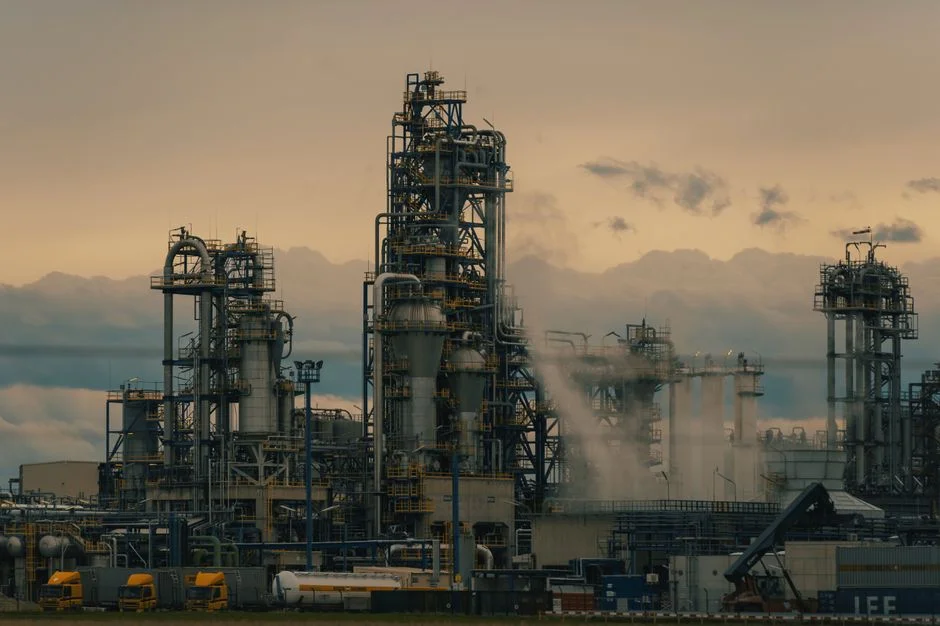
The strategic choice for a Kharkiv site in 2026 is among three end-use paths, each with a different treatment train and cost case. Cooling-tower makeup reuse is the highest-value option: 60–85% recovery, the permeate returns as high-quality makeup, and the site's WUE moves toward the Climate Neutral Data Centre Pact target of 0.4 L/kWh for cool-climate data centers on potable water (Climate Neutral Data Centre Pact 2025 revision, summarized via the Arup/LinkedIn analysis). Discharge compliance is the fallback when reuse is not feasible: the train focuses on TDS reduction, metals removal, and biocide neutralization, and the economic case is built on avoided discharge fees rather than water savings. Zero Liquid Discharge (ZLD) is technically proven and combines RO, mechanical vapor compression (MVC), and crystallizer stages for 95–99% overall recovery, but the published economics are heavy at $3–8 M CAPEX and $5–15 per 1,000 gal OPEX (Genesis Water Tech), which means ZLD is only justifiable where discharge is prohibited or freshwater cost is extreme. For Kharkiv in 2026, the recommended default is reuse-first with a discharge-compliance polish loop; ZLD should be reserved for sites with documented sewer-capacity refusal or a step-change in freshwater cost. Any glycol-bearing side stream from winter freeze protection should be kept segregated and treated as a smaller, higher-strength waste, not blended with blowdown. The same strategic framing is discussed in this data center cooling water sustainability comparison.
Recommended 2026 treatment train for a Kharkiv data center
The treatment train below is sized for a typical 50,000 GPD blowdown stream with a reuse-first objective and a discharge polish loop, anchored to Genesis Water Tech cost and performance data.
Stage 1 is side-stream filtration on the recirculating loop at 1–5% of circulation flow, dropping suspended solids and protecting downstream units; CAPEX runs $50,000–$200,000 for typical data center installations (Genesis Water Tech). Stage 2 is automatic chemical dosing, including a PLC-controlled antiscalant and biocide dosing skid ahead of membranes, with a twin-tank industrial water softener for makeup pretreatment if Kharkiv hardness pushes scaling risk; the skid should be tied to flow and conductivity, not a fixed timer. Stage 3 is ultrafiltration at 0.01–0.1 μm pore size as RO pretreatment, delivered by a hollow-fiber UF system for blowdown pretreatment: >90% suspended solids, bacteria, and colloidal removal, 90–95% UF recovery, low-pressure (10–30 psi) operation, automatic backwash with periodic CIP. Stage 4 is reverse osmosis as the workhorse, an industrial RO system sized for blowdown recovery: 95–99% dissolved-solids rejection, permeate 10–50 mg/L TDS, 50–85% recovery with antiscalant, and a 50,000 GPD skid treating blowdown costs $250,000–$500,000 installed with $1.50–$3.00 per 1,000 gal OPEX (Genesis Water Tech). Stage 5 is optional MVC evaporation on the RO concentrate: 95–98% recovery, distillate TDS <10 mg/L, CAPEX $1–3 M for 10,000–30,000 GPD, 15–25 kWh per 1,000 gal (Genesis Water Tech), and it is justified only when sewer capacity is constrained or ZLD is mandated. Stage 6 is UV or chlorine dioxide polishing on the reuse permeate for biological control before it re-enters the cooling tower, integrated with the existing cooling-water chemistry program. Refer to the UV-C polish on reuse permeate option for the polish step.
| Stage | Function | Key spec | CAPEX (USD) | OPEX driver |
|---|---|---|---|---|
| 1. Side-stream filtration | Drop TSS, protect membranes | 1–5% of circulation, <15 μm | $50,000–$200,000 | Solids disposal, maintenance (Genesis Water Tech) |
| 2. Chemical dosing + softener | Antiscalant, pH, biostat, hardness reduction | Flow/conductivity-paced | Site-specific | Chemicals, salt for softener |
| 3. Ultrafiltration (UF) | RO pretreatment, 0.01–0.1 μm | 90–95% recovery, 10–30 psi | Site-specific | CIP every 1–3 months, backwash water (Genesis Water Tech) |
| 4. Reverse osmosis (RO) | Dissolved-solids removal | 50–85% recovery, 95–99% rejection, permeate 10–50 mg/L TDS | $250,000–$500,000 installed (50,000 GPD) | $1.50–$3.00 per 1,000 gal (Genesis Water Tech) |
| 5. MVC evaporation (optional) | Brine minimization, ZLD polish | 95–98% recovery, distillate <10 mg/L TDS | $1–3 M for 10,000–30,000 GPD | 15–25 kWh per 1,000 gal distillate (Genesis Water Tech) |
| 6. UV or ClO2 polish | Biological control on reuse permeate | Site- and flow-matched | Site-specific | Lamp replacement, ClO2 precursor |
Capex, opex and reuse-vs-discharge decision matrix
A reuse-oriented skid covering side-stream filtration, UF, and RO for a 50,000 GPD blowdown stream sits in the $300,000–$700,000 installed range, with OPEX dominated by energy, antiscalant, and membrane replacement at $1.50–$3.00 per 1,000 gal (Genesis Water Tech). Adding MVC for brine minimization moves CAPEX into the $1.3–$3.7 M range with energy at 15–25 kWh per 1,000 gal of distillate (Genesis Water Tech). Full ZLD (RO + MVC + crystallizer) sits at $3–8 M CAPEX and $5–15 per 1,000 gal OPEX; it is only competitive when avoided freshwater plus avoided discharge fees exceed the energy bill. The swing variable is the discharge fee: at $5–15 per 1,000 gal in water-stressed regions (Genesis Water Tech) and a 3 M gal/month blowdown, a $10/1,000 gal discharge fee equals about $300,000/year, which materially shortens reuse payback. The exact Kharkiv municipal discharge tariff in 2026 must be confirmed with the local utility before procurement; current public sources do not publish a Kharkiv-specific blowdown tariff in the supplied research. In Kharkiv, the 2026 default recommendation is reuse-first with a discharge polish loop; ZLD is reserved for sites where the operator can document sewer-capacity refusal or where corporate water-positive targets force it.
| Option | Scope (50,000 GPD blowdown reference) | CAPEX (USD) | OPEX (per 1,000 gal) | Economic trigger |
|---|---|---|---|---|
| Reuse skid (side-stream + UF + RO) | Cooling-tower makeup reuse, 50–85% RO recovery | $300,000–$700,000 installed | $1.50–$3.00 (Genesis Water Tech) | Default for Kharkiv 2026; aligns with 0.4 L/kWh WUE target (CNDCP 2025 revision) |
| Reuse + MVC brine minimization | RO permeate reused, MVC polishes concentrate | $1.3–$3.7 M | Adds 15–25 kWh per 1,000 gal distillate (Genesis Water Tech) | Sewer-capacity constraint or rising discharge fees |
| Full ZLD (RO + MVC + crystallizer) | 95–99% overall recovery, solid salt cake | $3–8 M | $5–15 (Genesis Water Tech) | Discharge prohibited or freshwater cost is extreme; otherwise not justified |
| Direct discharge with compliance polish | TDS reduction, biocide neutralization | Lower than reuse train | Driven by discharge fee | Avoided fees of $5–15 per 1,000 gal (Genesis Water Tech); reuse blocked by site constraints |
Implementation roadmap and Kharkiv-specific checklist
Phase 1 (weeks 1–4): baseline the makeup water and blowdown with weekly sampling for TDS, hardness, silica, alkalinity, TSS, total phosphorus, biocide residual, and temperature; confirm the 0.03–0.17 L/s per MW peak figure from Müller et al. (2024) against site data. Phase 2 (weeks 5–8): pilot a skid-mounted UF + RO on a slipstream at 1–5% of blowdown flow to validate recovery, scaling indices, and CIP frequency before full-scale procurement. Phase 3 (weeks 9–16): procure and install the engineered train with PLC integration into the cooling-tower control system and a UV or ClO2 polish step on reuse permeate. Phase 4 (ongoing): track WUE in L/kWh against the Climate Neutral Data Centre Pact 0.4 L/kWh target (2025 revision) and report discharge volumes and quality to satisfy Ukrainian permit conditions. For a comparable dry-climate analog, see this comparable data center blowdown treatment in Konya case, and for a tropical reference point this tropical-climate data center blowdown case illustrates how a higher-COC train is scaled.
Frequently Asked Questions
What does a Kharkiv data center blowdown treatment train cost in 2026?
A reuse-oriented skid (side-stream filtration + UF + RO) for a 50,000 GPD blowdown stream sits in the $300,000–$700,000 installed range with $1.50–$3.00 per 1,000 gal OPEX (Genesis Water Tech). Adding MVC moves CAPEX into the $1.3–$3.7 M range, and full ZLD lands at $3–8 M CAPEX with $5–15 per 1,000 gal OPEX (Genesis Water Tech). A buyer should request a site-specific quote that includes Kharkiv makeup water analysis, target COC, and the local discharge tariff, because the swing variable is the avoided discharge fee at $5–15 per 1,000 gal in water-stressed regions (Genesis Water Tech).
How do I size a supplier and validate a treatment train for a Kharkiv site?
Request a process guarantee that ties permeate volume, recovery (50–85% for RO), and concentrate volume to the Kharkiv-specific makeup analysis, and ask the vendor to commit to recovery and scaling-index performance under the site's winter–summer COC swing. Confirm the supplier can integrate the dosing skid, softener, UF, RO, and UV/ClO2 polish into one PLC with the cooling-tower controls, and verify lead time on the 50,000 GPD RO skid ($250,000–$500,000 installed per Genesis Water Tech) against the project's Phase 3 window. The buyer should also obtain a compliance statement against the Climate Neutral Data Centre Pact 0.4 L/kWh WUE target (2025 revision) and against the Ukrainian permit envelope that governs the chosen discharge path.
Can a Kharkiv data center reuse blowdown for cooling-tower makeup at 4 cycles of concentration?
Yes. Cooling-tower makeup reuse typically achieves 60–85% recovery (Genesis Water Tech) and returns permeate at 10–50 mg/L TDS to the tower, which raises the blended makeup quality and supports higher COC. The train is side-stream filtration, chemical dosing, UF at 0.01–0.1 μm, and RO with antiscalant; UV or ClO2 polish on the permeate is standard before it re-enters the cooling loop.
When does ZLD make sense for a Kharkiv data center?
ZLD is justified only when sewer discharge is refused by the local utility, when freshwater cost steps up sharply, or when corporate water-positive targets override OPEX. The published ZLD economics of $3–8 M CAPEX and $5–15 per 1,000 gal OPEX (Genesis Water Tech) are heavy; reuse-first with a discharge polish loop is the 2026 default for Kharkiv, with ZLD reserved as a documented last resort.
Related Equipment
- industrial RO system sized for blowdown recovery — specifications, capacity range, and technical data