Why Pharmaceutical Wastewater Needs a Source-Segregated Treatment Train
Pharmaceutical wastewater treatment in Iraq should be designed as a source-segregated treatment train rather than a single generic unit. Pharmaceutical effluent can contain high COD, active pharmaceutical ingredients, refractory organic contaminants and substantial batch-to-batch variation. Li et al. in the Journal of Water Process Engineering, Volume 63, June 2024, describe the wastewater as highly toxic and difficult to purify because manufacturing generates multiple intermediates and by-products. The practical route is therefore to separate incompatible streams, characterize them, then assign pretreatment, biological treatment and polishing duties according to the required discharge or reuse outcome.
Define the wastewater by where and how it is generated, not simply by the product name. Manufacturing, formulation, equipment cleaning, laboratory, cooling and sanitary streams may have different pollutant profiles and reuse destinations. Dawood and colleagues reported in Environmental Protection Research on 2023-04-19 that modern drugs involve more than 3,000 different substances, illustrating why composition can shift substantially between formulations and batches.
Do not blend streams with incompatible pH, salinity, solvent content, biological toxicity or reuse potential until compatibility has been demonstrated. Site design should also account for Iraq’s high ambient temperatures, available water, power reliability, maintenance access and the final discharge or reuse route. Further context on monitoring and treatment integration is available in the advanced wastewater treatment and monitoring guide.
| Stream | Primary investigation | Segregation decision |
|---|---|---|
| Manufacturing and synthesis | Active ingredients, intermediates, refractory organics, COD and toxicity | Assess separately when compositions or discharge schedules differ |
| Formulation | Product loss, binders, suspended solids and batch variability | Consider reuse potential and biological compatibility |
| Cleaning | Cleaning chemicals, pH, salinity, surfactants and sanitizers | Keep separate from incompatible pH or high-salinity cycles |
| Laboratory | Small-volume hazardous constituents and variable flow | Controlled collection and constituent-specific treatment |
| Cooling and sanitary | Heat, detergents, pathogens and general organics | Evaluate separately where temperature or chemistry affects treatment |
Build the Treatment Route from Real Wastewater Data
A pharmaceutical wastewater treatment plant should be sized from a sampling programme that captures the actual operating envelope, not from a single laboratory result. Sampling must cover production campaigns, cleaning cycles, peak and low-flow periods, batch dumps and abnormal operations. The output should be a mass balance for each segregated stream, including confirmed average and peak flows and the concentrations of pollutants that control pretreatment, biological loading, membrane design or reuse.
Request flow, pH, COD, BOD, TSS, TDS, total nitrogen, ammonia nitrogen, total phosphorus, salinity, temperature and relevant process-specific constituent data. Also identify active pharmaceutical ingredients, antibiotic residues, solvents, cleaning chemicals and high-salinity cleaning cycles where they occur. These constituents determine whether a stream requires biological treatment, physical separation, chemical destruction, special handling or exclusion from the main biological system.
Dawood et al.’s Environmental Protection Research review, published 2023-04-19, reported COD, BOD, TSS and TDS removal efficiencies between 20% and 95% across the investigated treatment options. That range is context, not a design guarantee: the difference between technologies and operating conditions is too broad to use as a universal loading or sizing allowance.
- Separate streams before sampling.
- Sample normal production, cleaning and dump periods.
- Test general parameters and identified process-specific constituents.
- Construct average and peak mass balances.
- Assign treatment objectives and acceptance criteria.
- Size equalization and each downstream unit from the design envelope.
Equalization should be assessed against batch discharges and the selected operating schedule. Chemical pretreatment should follow the coagulant dosing system design criteria once jar testing establishes actual treatment demand.
| Design input | Minimum basis | Equipment consequence |
|---|---|---|
| Hydraulic flow | Average and confirmed peak flow by stream | Equalization volume, pumping and hydraulic losses |
| Organic load | COD and BOD across production and cleaning periods | Biological and chemical pretreatment duty |
| Solids | TSS and settleable-solids behavior | Screening, clarification and sludge handling |
| Nutrients and salinity | Total nitrogen, ammonia nitrogen, total phosphorus and salinity | Biomass viability and pretreatment requirements |
| Specific constituents | Active ingredients, antibiotics, solvents and cleaning chemicals | Special treatment, separation or acceptance limits |
| Reuse objective | Intended reuse and required water quality | Whether UF, RO or further polishing is justified |
Pretreat the Wastewater Before Biological or Membrane Treatment
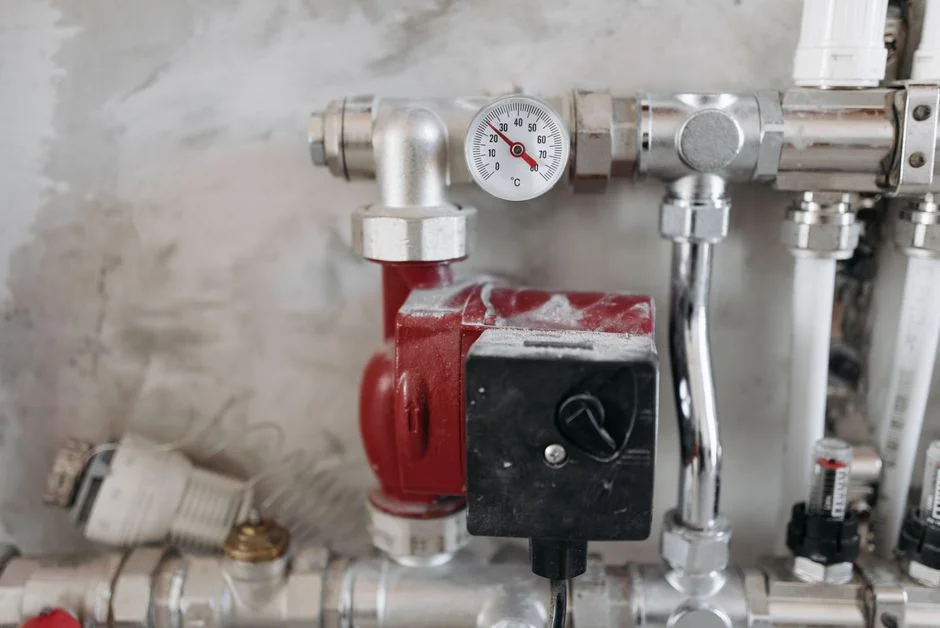
Pretreatment should protect biological treatment and membranes from shock loads, suspended solids and incompatible chemistry; it should not be treated as a fixed recipe. ENCON’s commercial overview identifies high COD and waste-stream variability as reasons pharmaceutical streams can be difficult to treat with conventional chemical, filtration or biological systems. Equalization is therefore the first control point, followed by unit operations selected from confirmed stream characteristics.
Screening protects downstream equipment from discrete solids. Grit removal addresses dense inorganic material. Oil and grease control, solids removal and chemical conditioning may be required depending on the wastewater. Each stream should be evaluated independently before common pretreatment is adopted. A dissolved air flotation unit, such as the DAF wastewater treatment machine, may be considered where suspended material or floatable contaminants are confirmed; it is not an automatic requirement for every pharmaceutical stream.
An MBR combines biological treatment with membrane solids separation, but it does not make uncontrolled screening, equalization or incompatible-stream segregation unnecessary. Feed chemistry, solids loading, temperature and biological toxicity still determine feasibility. Membrane fouling is a design and operating issue, not something that can be resolved by selecting a membrane unit alone.
Chemical dosing may support pH adjustment, coagulation and flocculation. There is no defensible universal dose in the supplied evidence; determine demand through jar testing and supplier design data. The automatic chemical dosing system should be specified around the confirmed chemical, dose range, storage arrangement, mixing requirement, control method and operator interface.
Where volume reduction rather than hydraulic treatment is the priority, evaporation may be considered. ENCON states that its evaporators can reduce disposal volume and cost by up to 99% or more and handle different waste streams simultaneously, but this is a supplier claim, not a universal performance figure. The buyer must request site-specific mass and energy balances, condensate quality, chemical handling and lifecycle-cost evidence.
| Problem confirmed in wastewater | Potential pretreatment | Verification needed |
|---|---|---|
| Variable flow or batch dumps | Equalization and controlled pumping | Campaign data and operating schedule |
| Suspended solids or floatables | Screening, DAF or solids removal | Solids characterization and jar testing |
| Biologically inhibitory constituents | Source segregation, chemical or destructive pretreatment | Constituent-specific analysis and toxicity assessment |
| pH or chemical-dose demand | Chemical conditioning | Jar tests and chemical compatibility data |
| Disposal-volume burden | Evaporation or concentration where justified | Mass and energy balance, condensate testing and cost model |
Compare MBR, UF and RO for the Final Treatment Stage
MBR, UF and RO perform different jobs: MBR couples biological treatment with solids separation, UF provides solids and colloid separation, and RO removes dissolved constituents through a high-pressure membrane process. Their selection should follow the required water-quality objective rather than a preference for the most advanced technology.
Use MBR where biological treatment and solids separation are required together. The specified integrated MBR wastewater treatment system uses submerged PVDF membranes, is described as producing effluent below 1 μm, occupies 60% less footprint than conventional systems, and is offered from 10 to 2,000 m³/day. These are supplier specifications, not a guarantee for pharmaceutical wastewater; process loading, feed chemistry, final effluent criteria and pretreatment still control the actual design.
Use UF primarily for solids, colloid and bacteria removal without chemicals, and as pretreatment for higher-pressure systems. The specified UF water treatment system uses 0.03-micron PVDF membranes, provides 2,000–40,000 L/h, includes automatic backwash and air scour, and accepts feed turbidity up to 300 ppm. The feed requirement must still be demonstrated against the complete wastewater train.
Use RO where reuse, pharmaceutical process-water production or permeate polishing is required. The specified industrial pharmaceutical RO system is described as achieving recovery rates up to 95% with fully automated PLC operation. RO does not substitute for biological treatment where biodegradable load requires it, and its pretreatment and concentrate-management requirements must be included in the project scope.
| Technology | Treatment objective | Feed requirement | Output role | Principal concern | Specified scale |
|---|---|---|---|---|---|
| MBR | Biological treatment and solids separation | Controlled chemistry, solids loading and compatible biology | Treated effluent for discharge or reuse | Biofouling, membrane fouling and sludge management | 10–2,000 m³/day |
| UF | Solids, colloid and bacteria separation without chemicals | Acceptable turbidity and controlled feed quality | Filtrate or pretreatment for higher-pressure systems | Fouling, backwash and recovery | 2,000–40,000 L/h |
| RO | Dissolved constituent removal and polishing | Low-fouling feed and defined recovery target | Permeate for reuse or process-water production | Energy demand, scaling and concentrate management | Recovery up to 95% |
Keep EDI outside the wastewater-treatment boundary unless the reuse specification requires it. It is presented as a pharmaceutical ultrapure-water polishing technology for RO permeate, not as the principal process for destroying pharmaceutical contaminants in wastewater. The literature range of 20%–95% removal reported by Dawood et al. in 2023 must not be converted into an equipment guarantee.
Integrate Sludge, Disinfection and Water Reuse Without Overdesigning the Plant

Sludge handling must be included in the treatment concept because separating it from the liquid train does not remove the disposal obligation. Separated biological solids and chemical sludge require a defined route to thickening, dewatering, storage and disposal. The specified plate and frame filter press is offered with filtration areas from 1 m² to 500 m² and manual, hydraulic or fully automatic PLC-controlled operation; selection depends on sludge volume, solids behavior, cake-discharge requirements and operating labor.
Assess disinfection independently from pharmaceutical and refractory-organic removal. The specified ozone generator and water-tank sterilization system can form part of a microbial-control train, while UV or chlorine dioxide may suit different receiving-water and reuse conditions. The choice requires a defined microbial objective and evidence of interaction with residual organics and downstream equipment.
Distinguish wastewater reuse from pharmaceutical process-water production. An MBR reuse objective centers on the quality of treated effluent; high-purity process water may require RO followed by EDI, as described in the EDI electrodeionization system. These are separate procurement scopes even when reuse creates an interface between them.
Li et al. warned in the Journal of Water Process Engineering, June 2024, that composite processes can have long chains, large land requirements, high costs and high carbon emissions. Use modular stages where expansion is credible, but do not omit necessary pretreatment or sludge handling. Include odor control, chemical storage, site utilities, remote monitoring, operator training and maintainable access in the project scope from the outset.
Prepare a Site Questionnaire and Supplier Qualification Checklist
A comparable enquiry requires confirmed source data rather than an equipment list. The request should include the wastewater analyses and flow range by stream, production schedule, batch-discharge behavior, required effluent use, available footprint, utilities, installation method and local operating constraints. The ETP due diligence checklist provides a useful structure for identifying information gaps before bids are compared.
Each bidder should state the proposed treatment objective, mass-balance assumptions, pretreatment duties, membrane or biological design basis, automation scope, redundancy, controls, installation requirements, commissioning tests and operating support. Request comparable pharmaceutical or industrial wastewater references and specific maintenance plans for membrane fouling, chemical supply, spare parts and specialist support.
Ask suppliers to identify applicable Iraqi environmental approvals, sewer or discharge conditions and reuse constraints. The supplied research does not establish a generic Iraqi national discharge limit, so the responsible engineer should confirm the applicable requirements for the plant and receiving route rather than inserting an unsupported limit into the specification.
Compare bids on the whole-life scope: pretreatment, sludge handling, chemicals, power, membranes, commissioning, training, spares and warranty. Li et al. identified long composite process chains as a challenge in 2024; require bidders to explain how their proposed scope can be simplified without compromising the stated effluent objective.
| Supplier response required | Evidence to request | Procurement risk exposed |
|---|---|---|
| Site-specific design basis | Mass balance, average and peak duty, pretreatment logic | Undersized or incorrectly configured equipment |
| Performance obligation | Acceptance tests and guaranteed outlet parameters | Unclear responsibility for overall performance |
| Compliance allocation | Permit assumptions, discharge or reuse conditions and approval responsibilities | Design based on inapplicable limits |
| Installation readiness | Civil requirements, utilities, lifting, access and commissioning plan | Installation delay and site disruption |
| Operations support | Training, spares, consumables, controls access and specialist maintenance | Long-term operating failure |
| Lifecycle scope | Chemical, power, membrane, sludge, maintenance and replacement assumptions | Low purchase price with high operating burden |
Frequently Asked Questions
What information is required before a pharmaceutical wastewater treatment plant in Iraq can be sized?
Require confirmed flows and wastewater analyses for each segregated stream, together with the production schedule, batch-discharge pattern, final effluent use and utility constraints. Include COD, BOD, TSS, TDS, nutrients, pH, salinity, temperature and identified active pharmaceutical ingredients, solvents or cleaning chemicals. Without these inputs, a defensible unit capacity or quotation cannot be established.
Is an MBR sufficient for pharmaceutical wastewater treatment?
Not universally. MBR combines biological treatment with solids separation, but additional treatment may be needed for specific contaminants, reuse quality, microbial control or process-water production. The final answer depends on the confirmed effluent objective and the proposed train’s pretreatment, membrane and polishing duties.
How should MBR and RO be compared when selecting equipment?
Compare them by objective rather than by capital footprint alone. MBR provides biological treatment and solids separation; RO requires a controlled feed and adds energy, recovery, scaling and concentrate-management duties. Request a whole-life comparison covering pretreatment, chemicals, power, membranes, sludge and the intended water quality.
What should a supplier provide to demonstrate Iraqi project readiness?
Require a site-specific design, confirmed utility and installation assumptions, identified approval and compliance responsibilities, commissioning tests, training, spares and after-sales support. Ask how the supplier will control membrane fouling, maintain chemical supply and access specialist maintenance. This is more useful than a generic qualification statement.
Are pharmaceutical process-water production and wastewater treatment the same equipment scope?
No. Wastewater treatment removes or concentrates contaminants from an effluent stream. Pharmaceutical process-water production requires a defined water-quality specification and may use RO followed by EDI. Reuse can connect the two scopes, but each should be quoted against its own acceptance criteria and operating risks.