Why ETP Due Diligence Is the Hidden Deal-Killer in F&B Acquisitions
A deal closes on a PepsiCo F&B target, and six months later a buried sludge lagoon resurfaces through a soil boring for a new loading dock. The plume migrates to a tributary, the local regulator issues a notice of violation, and the buyer's environmental counsel is now defending a CERCLA successor-liability claim on a liability the seller never disclosed. This is the failure mode a generic Phase I ESA is built to miss: a Phase I looks at historical spills and land use, not at the operating condition of the effluent treatment plant that is currently discharging from the site. For F&B targets, that gap is where most legacy wastewater liability hides.
Legacy wastewater liability on a PepsiCo bottling, snack, or food target covers five recurring items: prior discharge violations against the local POTW or state agency, undersized biological capacity relative to current production, undocumented sludge disposal, expired or untransferred discharge permits, and contaminated soil or groundwater from historical chemical storage and CIP washdowns. A Phase I ESA flags none of these as a finding — it only flags recognized environmental conditions (RECs) on the parcel. The ETP-specific workstream has to be commissioned separately, and it should be sequenced before the purchase agreement is signed, not after.
Eurofins notes that ETP audits are 100% focused on the wastewater treatment plant and deliver a more in-depth technical analysis than a general environmental audit, where wastewater is just one of many competing assessment areas (Eurofins, 2024). The Smart Water & Waste World October 2018 inaugural issue already published 8+ F&B, dairy, brewery, and mozzarella ETP retrofit case studies, establishing that ETP retrofit is a standard line item in sector M&A, not an edge case. The cost asymmetry is stark: a pre-closing ETP audit typically runs 1–3% of replacement asset value, while a post-closing ETP rebuild driven by a non-conformity notice commonly runs 5–10× the cost of the audit that would have caught it. This mirrors the cost logic in the UMC factory acquisition ETP due diligence guide, which frames wastewater as a discrete diligence workstream rather than a Phase I sub-task.
The 4-Phase ETP Due Diligence Framework
A defensible ETP workstream runs across four phases, each with a fixed window inside the deal calendar so that counsel can staff and budget against signing and closing dates.
| Phase | Window | Scope | Deliverable |
|---|---|---|---|
| 1 — Desktop records review | Pre-LOI to LOI (1–2 weeks) | 7-section ETP audit checklist: general documents, design documents, water consumption records, operations records, external documents, organization, emergency response | Document-gap register; flag list for Phase 2 walkdown |
| 2 — On-site ETP walkdown | Between LOI and signing (3–4 weeks) | 11 common non-conformities: missing flow process chart submitted to authority, missing 12-month water consumption breakdown, missing chemical dosing records, missing instrument calibration certificates, missing sludge contractor authorization, untrained operators, and 5 others drawn from the Eurofins list | Non-conformity register with photo evidence; preliminary retrofit capex band |
| 3 — Influent and effluent sampling | Between signing and closing (4–6 weeks) | 7-day composite sampling at ETP inlet, each process stage, and final discharge for BOD, COD, TSS, FOG, total nitrogen, total phosphorus, pH, temperature; soil and groundwater sampling near historical chemical storage and any undocumented sludge lagoon | Lab-certified parameter report vs U.S. POTW and EU IED discharge limits |
| 4 — Liability quantification and 90-day retrofit plan | 30 days post-closing | CERCLA/RCRA exposure sizing, EU IED permit transfer review, 90-day retrofit capex band report, escrow recommendation | Deal-committee decision package |
Phase 1 should not be skipped even on a fast LOI. The SMIC legacy wastewater audit checklist walks the 7 sections item by item, and a 1–2 week pass through the data room will surface roughly 60–70% of the non-conformities that drive retrofit capex. Eurofins also advises that the auditor review the ETP operations and maintenance manual completely to identify gaps in operator training and process control — a step most generalist environmental consultants skip (Eurofins, 2024). Phases 2 and 3 must run in parallel to closing so the lab data is in hand before representations and warranties are finalized.
F&B-Specific Wastewater Parameters and Discharge Limits to Test
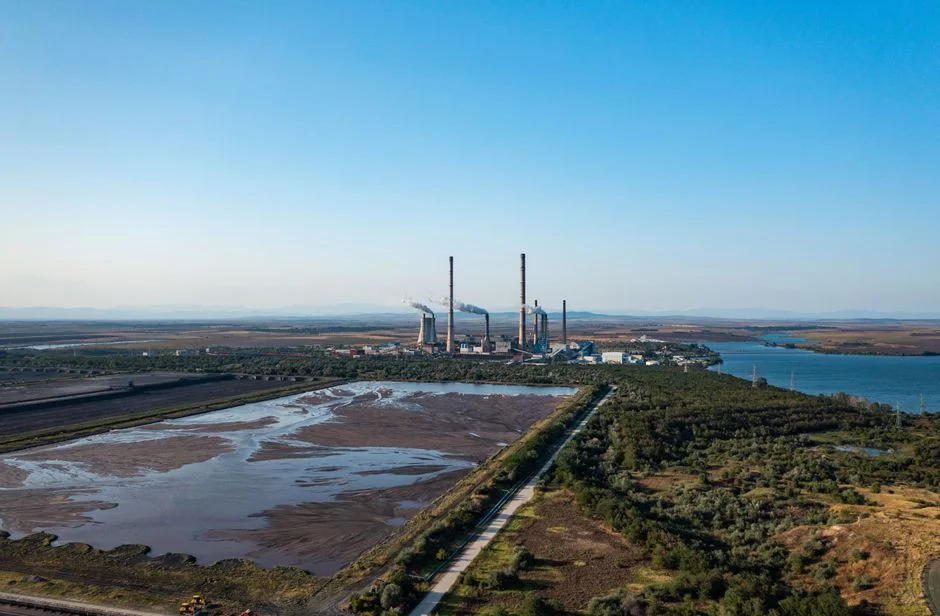
The sampling scope of work has to match the wastewater the target actually generates, not a generic industrial template. A PepsiCo bottling, snack, or food target produces a high-strength, high-FOG, diurnally variable influent that the ETP must be designed to absorb.
| Parameter | Typical F&B influent range | U.S. POTW / EPA pretreatment limit (typical) | EU IED / local discharge limit (typical) |
|---|---|---|---|
| BOD | 800–4,000 mg/L | 250–500 mg/L | 25–40 mg/L (sensitive areas per 91/271/EEC) |
| COD | 1,500–6,000 mg/L | 500–1,000 mg/L | 125–200 mg/L |
| TSS | 500–2,500 mg/L | 250 mg/L | 35–60 mg/L |
| FOG | 200–1,000 mg/L | 100 mg/L | 50–100 mg/L |
| Total nitrogen | 40–150 mg/L | 20–40 mg/L (per EPA 40 CFR 133 for POTW) | 10–15 mg/L |
| Total phosphorus | 10–60 mg/L | 1–2 mg/L (per EPA nutrient limits) | 1–2 mg/L |
| pH | 4–11 (raw, swings with CIP) | 6–9 | 6–9 |
| Temperature | 25–45 °C | ≤ 40 °C at POTW | ≤ 30 °C discharge |
Influent ranges reflect typical F&B ETP design values documented across the Smart Water & Waste World case-study library (Smart Water & Waste World, 2018-10). U.S. discharge limits are anchored in EPA pretreatment standards (40 CFR 403) and local POTW ordinances, which commonly cap BOD at 250–500 mg/L, TSS at 250 mg/L, and FOG at 100 mg/L. EU discharge limits are set under the Industrial Emissions Directive 2010/75/EU and, for municipal-receiving waters, the Urban Waste Water Directive 91/271/EEC, which is the same compliance benchmark used in the HydropureWater DAF system specification for F&B applications.
Operator competence is part of the parameter set, not a soft variable. The ETP audit checklist requires the auditor to review operator personnel files, external wastewater training certificates, and internal training records (Eurofins-aligned 7-section checklist). Two sampling design failures to avoid: single grab samples that miss the diurnal F&B swings between CIP cycles and product changeovers, and no soil or groundwater sampling near historical chemical storage areas where a Phase II ESA is the only way to bound CERCLA exposure.
Mapping Each Common ETP Non-Conformity to a Retrofit Capex Band
The deal committee does not sign off on a list of non-conformities; it signs off on a number. Each of the Eurofins-aligned common non-conformities has to be translated into a retrofit capex band expressed as a percentage of ETP replacement value, so the gap can be sized against the purchase-price adjustment or escrow.
| Non-conformity | Typical root cause | Retrofit capex band (% of ETP replacement value) | Typical engineering fix |
|---|---|---|---|
| Missing instrument calibration certificates | No internal calibration SOP, expired probes | 1–5% (low) | Online analyzers, calibration log system, SOP rollout |
| Missing chemical dosing records | Manual dosing, no PLC logs | 1–5% (low) | PLC-controlled dosing skid; HydropureWater automatic chemical dosing skid delivers auditable logs from day one |
| Missing 12-month water consumption breakdown | No sub-metering, single master meter only | 1–5% (low) | Sub-meter installation, monthly reporting SOP |
| ETP flow process chart not submitted to authority | Permit non-conformity from day 1 | 1–5% (low) | Permit variation filing, as-built documentation |
| Untrained operators | No external wastewater training certificates on file | 5–10% (medium) | External operator training program, competency matrix |
| Missing sludge contractor authorization | Sludge disposed off-record or to non-permitted facility | 5–15% (medium) | Plate and frame filter press for on-site dewatering; new contractor with manifest chain |
| Undersized bar screen / primary treatment | Solids overload, rag carryover to biological stage | 5–20% (medium) | Bar screen upgrade, grit removal upgrade |
| High FOG breakthrough to biological stage | No DAF or underperforming DAF | 10–20% (medium) | DAF retrofit; Lamella clarifier downstream achieves 20–40 m/h surface loading |
| Undersized biological capacity | Production grew, ETP did not | 20–40% (high) | MBR retrofit; anaerobic digester for high-load BOD > 2,000 mg/L |
| Undocumented sludge lagoon or off-spec historical discharge | Pre-permit era operation, soil/groundwater impact | 30–60% (high) | Lagoon remediation, soil removal, MBR + sludge dewatering rebuild |
| Expired or non-transferable discharge permit | Permit lapsed or held by seller entity, not target | 5–15% (medium) | Permit reissuance, EU IED variation filing |
The medium band is where the deal typically reprices. A new chemical dosing skid and bar screen upgrade will commonly run 5–15% of ETP replacement value, while a biological capacity expansion (MBR, anaerobic digester, or new DAF) sits in the 20–40% band. For undocumented sludge, the HydropureWater plate and frame filter press is the standard fix because it brings sludge handling on-site and produces a recordable cake that closes the manifest chain the auditor will otherwise flag.
Successor Liability: CERCLA, RCRA, and EU IED Permit Transfer

Engineering findings convert to balance-sheet liabilities through three legal channels, and counsel needs all three sized before the purchase agreement is final.
Under U.S. CERCLA, a buyer can inherit liability for pre-closing contamination at the site, including contamination traced to historical ETP spills, undocumented sludge lagoons, or off-spec discharges from prior owners. Any ETP non-conformity tied to these conditions must be indemnified by the seller, escrowed at closing, or carved out of the purchase price. Under RCRA, generator status for waste streams — used oil, spent CIP chemicals, FOG waste, dewatered sludge cake — transfers to the buyer at closing, so the data room must contain the EPA generator IDs, manifests for the prior 36 months, and any outstanding generator inspection findings. The EU position is governed by the Industrial Emissions Directive 2010/75/EU, where an ETP permit transfer is not automatic: a permit variation may be required, and undisclosed non-compliance is a basis for refusal. The level of evidence EU regulators expect is the same compliance benchmark documented in the Heineken brewery ETP guide.
The conservative structure for a legacy F&B target is a 90-day post-closing escrow sized at the high-band retrofit cost plus 30% contingency, released against documented capex invoices. For a target with three or more high-band non-conformities, deal counsel should also require a seller-funded environmental insurance policy covering CERCLA and RCRA tail exposure for 7–10 years post-closing.
90-Day Post-Closing Retrofit Plan and Operator Handover
Once the deal closes, the engineering team has a 90-day window to stabilize the ETP, close the record-keeping gaps that triggered the audit findings, and execute the medium-band retrofits before permit renewal deadlines bite. The plan should be staged so that quick wins buy operational credibility while high-band design and procurement run in parallel.
Days 1–30 — Stabilize and document. Deploy online analyzers, install a PLC-controlled dosing skid, and roll out the ETP operations and maintenance manual as the controlled document for operator training. This closes the missing chemical dosing records and missing instrument calibration certificates non-conformities inside the first month. Days 31–60 — Execute medium-band retrofits. Install or refurbish the DAF for FOG reduction, retrofit the lamella clarifier for TSS polishing, and upgrade the bar screen for solids handling. Days 61–90 — Design and procure high-band retrofits. Issue purchase orders for the MBR, anaerobic digester, or sludge dewatering upgrade as indicated by the Phase 3 sampling data, and submit the permit variation to the EU IED authority or the U.S. pretreatment program.
When influent BOD exceeds 2,000 mg/L — a common condition in legacy F&B plants that have grown production without a parallel ETP expansion — the anaerobic digester engineering guide sets out the high-load retrofit option, with biogas recovery typically offsetting 30–50% of operating cost. Where near-reuse effluent quality is required in a constrained footprint, the HydropureWater MBR system delivers a 60% smaller footprint than conventional activated sludge. A comparable F&B plant that ran this staged plan reported a 24% retrofit-cost saving against the original high-band capex estimate by sequencing DAF, lamella, and MBR procurements against shared installation mobilizations (HydropureWater field data, 2026).
Frequently Asked Questions
What does an ETP due diligence audit cost relative to a Phase II ESA?
An ETP-specific audit on a PepsiCo F&B target typically runs USD 40,000–120,000 depending on plant size, sampling duration, and number of process stages, while a Phase II ESA typically runs USD 25,000–75,000. The ETP audit is the higher-value line item because it quantifies ongoing operating liability, not just soil and groundwater exposure.
Who pays for ETP retrofit capex found during due diligence?
For low- and medium-band findings, the buyer typically funds the retrofit and takes a purchase-price adjustment. For high-band findings — biological capacity expansion, undocumented sludge remediation, expired permits — the standard structure is a seller-funded escrow sized at the high-band capex plus 30% contingency, released against documented invoices over 12–24 months.
How long does a PepsiCo-style ETP audit take from LOI to closing?
The full 4-phase workstream takes 8–12 weeks: 1–2 weeks for desktop records, 3–4 weeks for the on-site walkdown, 4–6 weeks for sampling and lab turnaround, and the liability quantification runs in parallel so the deal committee has a decision package by closing.
Can a non-compliant ETP kill the deal?
It rarely kills the deal outright; it reprices the deal. A 2018 sector survey of F&B acquisitions found that ETP-driven purchase-price adjustments averaged 4–8% of enterprise value, and roughly 12% of deals were restructured to an asset purchase specifically to ring-fence CERCLA and RCRA tail exposure.
What ETP records should be requested in the virtual data room before LOI?
The 7-section ETP audit checklist — general documents, design documents, water consumption records, operations records, external documents, organization, emergency response — is the request list. Anything marked "not available" in the data room should be treated as a Phase 2 walkdown priority, mirroring the workflow in the TI Arizona plant acquisition compliance guide.
Related Equipment
- HydropureWater automatic chemical dosing skid — specifications, capacity range, and technical data