What treatment does a Chihuahua data center actually need?
A data center in Chihuahua generally needs two separate treatment trains: one for sanitary wastewater and one for cooling-tower blowdown. Cooling blowdown is usually the larger water-management opportunity; at 4 cycles of concentration, it represents roughly 25–30% of makeup water and may contain 1,200–6,000 mg/L TDS, elevated silica and hardness, and treatment-chemical residuals. The right system depends on the receiving body, NOM-001-SEMARNAT-2021 limits, makeup-water chemistry, reuse target, and concentrate-disposal route. A practical 2026 sequence is side-stream filtration, UF, and RO, with NF as a hardness-focused alternative and MVC or ZLD considered only when the permit, brine-disposal cost, or water-scarcity constraint justifies it.
The sanitary train serves staff, cafeteria, and restroom flows. It requires biological treatment because the principal contaminants are biodegradable organics, nutrients, and pathogens. The blowdown train handles a physically and chemically different stream: concentrated salts, suspended material, scale-forming constituents, corrosion products, and residual cooling chemicals. A single plant attempting to treat both would complicate biological loading, membrane feed chemistry, chemical control, and reuse quality.
A closed cooling loop is not water-free. Evaporation continuously removes water from the circulating system, so the operating objective is lower freshwater withdrawal and controlled discharge or reuse, not elimination of liquid discharge.
Before selecting equipment, establish four site facts:
- Measured blowdown flow, including routine operation and emergency dumps;
- Makeup-water chemistry, including TDS, silica, hardness, chloride, and residual treatment chemicals;
- Cooling configuration and verified cycles of concentration;
- The receiving body, permitted discharge route, and reuse objective.
The recommended sequence is measurement and permit confirmation, followed by a modular side-stream filtration and UF/RO train. Reserve ZLD for a documented constraint involving concentrate disposal, water scarcity, or prohibited discharge. The data center wastewater and cooling blowdown treatment guide provides the broader engineering context.
Start with the Chihuahua permit, water-source, and receiving-body questions
Nom-001-SEMARNAT-2021 is the federal framework for industrial discharges, but the applicable requirements and authorization route depend on where the water will go. A project discharging to the Río Grande, Río Bravo, or a municipal collector must establish the corresponding permit conditions; a project delivering treated water to an irrigation user must establish the reuse requirements and authorization. The equipment scope cannot be finalized from the federal standard alone.
For the permit kickoff, request three documents in writing:
- The current NOM-001 limits and monitoring conditions for the proposed receiving body;
- The applicable cessionario or municipal tariff schedule;
- Any industrial-park pretreatment or sewer-discharge rules.
This package should be coordinated through the project’s Mexican Mexico wastewater permit and treatment requirements review. A permitted discharge may still be unavailable if utility capacity, water allocation, pretreatment rules, or the chosen reuse route does not support the proposed operation.
Makeup-water source is a design input, not a procurement detail. Reclaimed municipal effluent, treated industrial wastewater, and brackish groundwater have different ionic profiles and scaling risks. The selected source determines the antiscalant, biocide, corrosion-control, and membrane-compatibility requirements for the blowdown train.
| Design question | Information required | Decision affected |
|---|---|---|
| Where can water be discharged? | Written receiving-body requirements and local pretreatment rules | Permit limits, monitoring, discharge train |
| What will the discharge cost? | Current municipal or cessionario tariff | Reuse economics versus discharge |
| Where does makeup water come from? | Source-specific chemistry and available allocation | Cooling chemistry and membrane pretreatment |
| Can the water be reused? | Recipient water-quality specification and authorization | Treatment target and recovery rate |
| Where will concentrate go? | Permitted injection, haulage, or disposal route | RO, partial ZLD, or full ZLD |
The Ciudad Juárez guide in HydropureWater’s 2026 regional analysis is a benchmark only. Its receiving-body arrangements, tariffs, and utility assumptions must not be transferred to Chihuahua without local confirmation. City of Chihuahua requirements, Chihuahua state requirements, and the permit conditions imposed by the actual receiving body may differ. Water allocation and community expectations can also constrain the project before treatment equipment is ordered.
Quantify the cooling-blowdown opportunity before sizing the plant
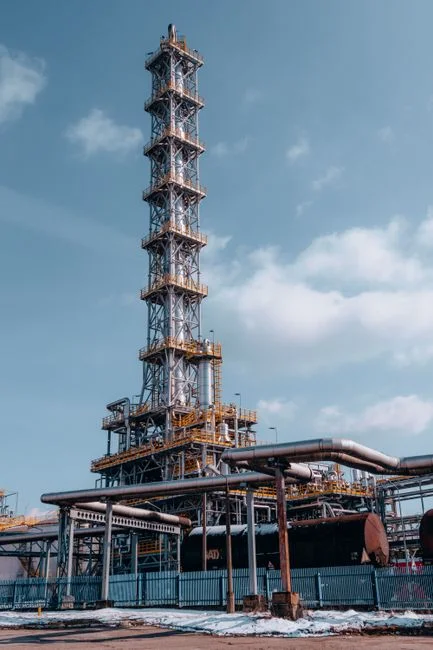
The defensible capacity basis is a measured water balance, not a calculation from cooling-equipment nameplate data alone. Genesis Water Technologies gives the relationship Blowdown = Makeup ÷ (CoC − 1). At 4 cycles of concentration, theoretical blowdown is 25% of makeup; at 6 cycles, it is 20%. The difference is five percentage points, or a 20% reduction in blowdown volume, rather than the 50% reduction sometimes assumed.
The Ciudad Juárez planning benchmark places blowdown at roughly 25–30% of makeup water at 4 CoC and gives a TDS range of 1,200–6,000 mg/L, with elevated silica, hardness, and treatment-chemical residuals. These are regional benchmark values, not Chihuahua test results. On the same benchmark, a 10 million-gallon-per-month facility at 4 CoC would discharge approximately 2.5–3 million gallons per month.
Genesis Water Technologies also reports that actual blowdown can exceed theory by 15–30% because of unmeasured losses and emergency dumps. The design flow should therefore distinguish a normal operating case from a maximum case, with the latter explicitly defined rather than hidden inside an equipment selection factor.
Stage 1 of the Genesis Water Technologies roadmap requires monitoring makeup water, blowdown volume, evaporation, conductivity, pH, and suspended solids. These measurements establish actual consumption, reveal seasonal operating patterns, and provide feed chemistry for treatment design.
WUE alone does not establish discharge compliance or reuse potential. The project should track three separate quantities: water consumed, water discharged, and water returned to process use. A discharge stream and a recovered reuse stream have different quality and value even when they appear in the same water-use total.
Treat sanitary wastewater and cooling blowdown as separate flows
Sanitary wastewater and cooling blowdown should not share a biological or membrane treatment train. Domestic sewage requires removal of biodegradable organics, nutrients, and pathogens. Cooling blowdown instead presents dissolved salts, suspended material, scale-forming constituents, and residual biocides. Combining them can increase the biological load, alter membrane-feed chemistry, and make reuse compliance harder to demonstrate.
HydropureWater’s Mexico City guide provides a sanitary benchmark. Its MBR systems use submerged PVDF membranes, are offered from 10–2,000 m³/day, and can produce effluent below 1 μm filtration after treatment, supporting near-reuse objectives. The range is a procurement benchmark; the Chihuahua flow must be measured and confirmed.
The same guide identifies a WSZ underground package plant for sanitary flows within a 1–80 m³/h envelope. It combines anoxic and aerobic biological contact oxidation, sedimentation, and disinfection in a buried package. It is a lower-complexity option where sewer discharge is acceptable and intensive reuse quality is unnecessary.
MBR is the stronger option when sanitary effluent is intended for cooling makeup, toilet flushing, or irrigation, subject to confirmation of the receiving body’s water-quality requirements. A DAF unit can remove suspended solids, free oil and grease, and colloidal material from industrial wastewater, but it does not replace biological treatment for domestic sewage or RO for dissolved-solids removal.
| Decision | Sanitary wastewater | Cooling blowdown |
|---|---|---|
| Primary contaminants | Biodegradable organics, nutrients, pathogens | Dissolved salts, suspended solids, scale formers, residual biocides |
| Core treatment | Package biological plant or MBR | Filtration, UF, then RO or NF as justified |
| Package-plant benchmark | WSZ: 1–80 m³/h where sewer discharge is acceptable | Not a substitute for dissolved-solids treatment |
| Reuse-oriented benchmark | MBR: 10–2,000 m³/day with submerged PVDF | RO permeate must meet the intended process-water specification |
| DAF role | Not a replacement for biological treatment | Optional solids or oil-removal pretreatment |
Use the domestic sewage treatment buyer’s guide as a general buying reference, but keep the Chihuahua sanitary design tied to measured flows, discharge authorization, and the selected reuse endpoint.
Build the blowdown treatment train from the contaminants outward
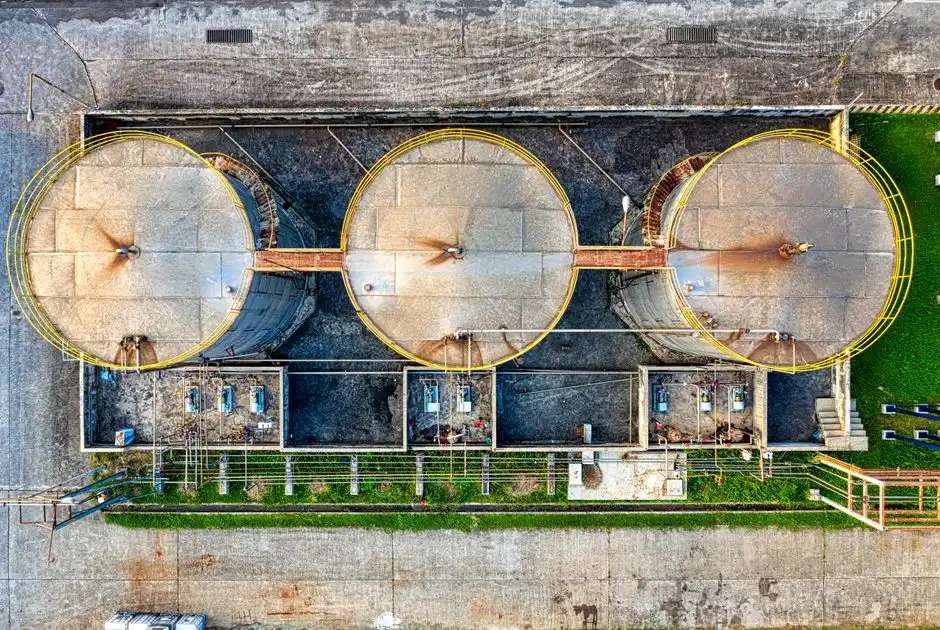
Side-stream filtration is the first physical barrier. HydropureWater reports treatment of 1–5% of total circulation flow through 10–25 μm self-cleaning spiral or multimedia equipment, with indicative installed cost of US$50,000–200,000. The purpose is to remove suspended solids, biofilm fragments, and corrosion products before they foul membranes or force premature cooling blowdown.
UF follows when membrane treatment is required. HydropureWater reports 0.01–0.1 μm PVDF membranes, 10–30 psi operating pressure, 90–95% recovery, and chemical cleaning every 1–3 months. A hollow-fiber ultrafiltration system can provide the biological and particulate barrier and condition the RO or NF feed.
RO is the default for general dissolved-solids removal. HydropureWater reports 95–99% dissolved-solids removal, permeate TDS of 10–50 mg/L, operating pressure of 150–400 psi, and 50–85% recovery on blowdown. Its cited installed cost for a 50,000 GPD system is US$250,000–500,000, with operating cost of US$1.50–3.00 per thousand gallons. The industrial RO blowdown-reuse system should therefore be specified around site flow, feed chemistry, recovery, and concentrate volume rather than a generic package rate.
NF is the lower-pressure alternative when hardness, rather than total dissolved solids, controls the discharge requirement. HydropureWater reports 75–150 psi, 70–85% recovery, and permeate TDS at 30–50% of feed. It should not be substituted for RO where total salinity, chloride, or other dissolved constituents govern the permit.
| Stage | HydropureWater-reported scope | Engineering purpose |
|---|---|---|
| Side-stream filtration | 1–5% of circulation; 10–25 μm spiral or multimedia; US$50,000–200,000 installed | Remove solids, biofilm fragments, and corrosion products |
| UF pretreatment | 0.01–0.1 μm PVDF; 10–30 psi; 90–95% recovery; cleaning every 1–3 months | Provide biological and particulate barrier; condition RO or NF feed |
| RO | 95–99% TDS removal; 10–50 mg/L permeate; 150–400 psi; 50–85% recovery; US$250,000–500,000 installed for 50,000 GPD; US$1.50–3.00/kgal OPEX | General reuse-grade dissolved-solids removal |
| NF | 75–150 psi; 70–85% recovery; permeate TDS at 30–50% of feed | Hardness-controlled discharge or partial softening |
Chemical control must be designed with the membrane train. Confirm silica, hardness, residual biocide, scaling potential, and membrane compatibility through site testing. Controlled antiscalant and biocide dosing may be necessary, but excessive chemical addition can increase the dissolved-solids load and downstream treatment demand.
The 2026 regional methodology places multi-media filtration and automatic chemical dosing beside the membrane equipment. For Chihuahua, the design sequence remains filtration, UF, and RO or NF; the source chemistry determines whether softening or additional pretreatment is required. A comparison of industrial wastewater treatment processes can help maintain equivalent technical and commercial criteria across bids.
Choose discharge, reuse, partial ZLD, or full ZLD
Discharge compliance sets the minimum equipment scope: size against the written NOM-001-SEMARNAT-2021 conditions and receiving-body agreement, not only against a corporate reuse target. A reuse case adds a second requirement because recovered water must also satisfy the intended process specification.
For cooling-tower makeup reuse, HydropureWater reports 60–85% recovery. The recovered stream is process water, not automatically suitable for direct return to the tower. Its conductivity, hardness, silica, biocide residual, pH, and corrosion compatibility must match the cooling system and its chemical program.
Partial ZLD is appropriate when the objective is to reduce discharge volume while retaining a manageable concentrate stream. HydropureWater reports an 80–90% reduction in discharge volume for the partial-ZLD configuration, but the residual brine still needs an approved route such as deep-well injection, hauling, or special permitting.
MVC evaporation is the next step when the project needs a salt stream rather than liquid concentrate. HydropureWater reports 95–98% concentrate recovery, distillate TDS below 10 mg/L, energy consumption of 15–25 kWh per 1,000 gallons, and capital cost of US$1–3 million for a 10,000–30,000 GPD unit.
Full ZLD is the capital-intensive option. HydropureWater reports 95–99% overall recovery, less than 1% solid waste, capital cost of US$3–8 million, and operating cost of US$5–15 per thousand gallons. It should proceed only after the permit, water cost, brine route, disposal cost, and operating scale support the investment.
| Option | Trigger | Evidence and required proof |
|---|---|---|
| Discharge treatment | Permitted discharge is available and meets the required quality | Written receiving-body limits; treatment sized to those conditions |
| Reuse | Recipient requires a defined process-water quality | HydropureWater benchmark: 60–85% recovery; verify cooling chemistry |
| Partial ZLD | Discharge volume must fall while a brine route remains available | HydropureWater benchmark: 80–90% discharge-volume reduction; obtain approval for residual brine |
| Full ZLD | Discharge is constrained and concentrate must be converted to a managed solid | HydropureWater benchmark: 95–99% recovery, less than 1% solid waste, US$3–8 million CAPEX, US$5–15/kgal OPEX |
HydropureWater reports direct-discharge fees in water-stressed regions above US$5–15 per thousand gallons. That is a benchmark, not the Chihuahua tariff. Obtain the local schedule and include disposal, hauling, utilities, concentrate treatment, and avoided water costs in the investment comparison. The discharge, reuse, and ZLD decision benchmark provides a useful framework, but every local cost and permit input must be replaced with Chihuahua evidence.
Build a defensible procurement and implementation plan
Phase 1 establishes the factual basis. Install metering and monitoring for makeup, blowdown, evaporation, conductivity, pH, and suspended solids. Reconcile measured blowdown with the theoretical water balance and identify seasonal variation, emergency dumping, and unaccounted losses.
Phase 2 tests lower-cost interventions before expanding treatment capacity. Repair leaks, eliminate unnecessary once-through cooling, correct premature blowdown controls, and improve side-stream filtration where suspended solids are forcing unnecessary discharges. These measures change the water and contaminant load presented to the treatment plant.
Phase 3 converts the permit and operating data into a performance-based specification. The package should define permeate quality, feed flow, recovery, concentrate volume and quality, availability, chemical consumption, membrane cleaning, and the operating conditions used for guarantees. It should also identify bypass, upset, and fail-safe operating responses.
Require bidders to provide a per-thousand-gallon operating-cost breakdown covering energy, chemicals, membrane replacement, and labor. Consistent boundaries prevent a low energy bid from omitting maintenance or a membrane bid from excluding antiscalant and concentrate management. Recovery guarantees should be tied to measured site chemistry rather than clean-water membrane performance.
Use pilot testing or a guaranteed water-balance verification before full deployment. Regional chemistry is a screening reference, not a substitute for Chihuahua influent testing. The data center blowdown implementation benchmark can inform the sequence, but the final acceptance test must use the site’s cooling configuration, makeup source, and measured seasonal load.
Frequently Asked Questions
Which treatment train should a Chihuahua data center use first?
Start with the stream that matches the objective: biological treatment or MBR for sanitary wastewater, and filtration plus UF followed by RO or NF for cooling blowdown. Do not combine the streams. A package plant may be appropriate for sanitary discharge, while an ultrafiltration pretreatment skid and an industrial RO blowdown-reuse system address the separate dissolved-solids problem.
How should the data center size blowdown treatment capacity?
Use measured blowdown, not only the theoretical cooling-water ratio. Genesis Water Technologies reports that actual blowdown can exceed theory by 15–30% because of unmeasured losses and emergency dumps. Define normal and maximum flow separately, then reconcile those values with makeup, evaporation, and operating cycles before selecting membrane capacity.
What budget should be allowed for wastewater and cooling-blowdown treatment?
Request comparable scopes from every bidder. HydropureWater’s 2026 benchmarks are US$50,000–200,000 for side-stream filtration; US$250,000–500,000 installed and US$1.50–3.00 per thousand gallons for a 50,000 GPD blowdown RO system; and US$3–8 million capital cost with US$5–15 per thousand gallons operating cost for full ZLD with crystallizer. These are benchmark scopes, not a Chihuahua quotation.
How should a buyer qualify an equipment supplier?
Require the supplier to demonstrate sizing against site-specific flow and chemistry, guaranteed recovery under the stated feed composition, membrane and chemical compatibility, and a documented concentrate-management route. Also require a transparent operating-cost breakdown covering energy, chemicals, membrane replacement, and labor. A generic performance curve or reference project does not replace those checks.
When is full ZLD justified for a Chihuahua data center?
Full ZLD is justified only when the business case establishes that discharge is constrained and the brine or solid-waste route is permitted and practical. The decision must include the Chihuahua permit, local discharge tariff, water availability, disposal cost, operating scale, and the HydropureWater benchmark of US$3–8 million capital cost plus US$5–15 per thousand gallons operating cost. It is not the automatic default for either stream.