Why Ciudad Juarez data centers need a dedicated blowdown and wastewater strategy
A data center in Ciudad Juarez, Mexico must treat two distinct waste streams — sanitary/domestic wastewater from the facility and cooling-tower blowdown — and it must do so under NOM-001-SEMARNAT-2021 discharge limits in a Chihuahuan Desert basin where freshwater and discharge permits are constrained. Cooling-tower blowdown is the dominant stream: at 4 cycles of concentration roughly 25–30% of makeup water is discharged, and blowdown TDS typically reaches 1,200–6,000 mg/L with elevated silica, hardness, and treatment-chemical residuals (Genesis Water Technologies). The standard 2026 train pairs side-stream filtration (1–5% of circulation flow) with UF pretreatment, NF or RO for reuse-grade permeate, and — for sites targeting near-ZLD — MVC evaporation. Discharge compliance, not water reuse, usually sets the minimum bar.
The economic pressure is concrete. At 4 cycles of concentration, a facility using 10 million gallons per month discharges 2.5–3 million gallons as blowdown (Genesis Water Technologies). The Mexican Data Center Association (MEXDC) projects more than 100 new data centers by 2030, with direct investment above US$9 billion and an industry contribution of 5.2% of national GDP by 2029 (approximately US$73.54 billion) (Mexico Business News, 2025; Mexico Business News, 2025). For U.S. context, Lawrence Berkeley National Laboratory (2024) reported direct cooling water use above 64 billion liters in 2023, projected to double or quadruple by 2028 — a trajectory that any operator scoping a Juarez build should plan against rather than dismiss as a "U.S. problem" (Mexico Business News, 2025).
The Rio Grande / Rio Bravo basin is the binding constraint for any Juarez site. While Mexico's published water-stress example sits in Queretaro — the Valle de San Juan del Rio aquifer recorded a 56.8 billion liter deficit in July (Expansion, cited in Mexico Business News, 2025) — the same transboundary logic applies along the Rio Grande, where U.S. and Mexican allocations are already contested. A hyperscale operator that pulls from a stressed basin without blowdown reuse is exposed on three fronts: CONAGUA title assignment, maquila-park utility availability, and reputational risk during a permitting cycle. That is why the design conversation has to start with a treatment train, not a cooling-tower selection.
What Mexican regulators and utilities expect from a Juarez data center
Industrial discharges in Mexico are governed by NOM-001-SEMARNAT-2021, which sets the maximum permissible pollutant concentrations in wastewater discharges to receiving bodies (NOM-001-SEMARNAT-2021 compliance guide). The first engineering decision is not technology — it is hydrology. The receiving body (Rio Grande, Rio Bravo, municipal collector, or a reuse-permitted irrigation user) determines the applicable limits, the frequency of self-monitoring, and whether additional local or state rules layer on top. A blowdown stream that is perfectly legal on an agricultural reuse permit can be non-compliant on a municipal collector without a pre-treatment agreement.
U.S. practice is moving toward discharge-side caps. Some water-stressed jurisdictions have implemented total dissolved solids limits below 1,500 mg/L, effectively prohibiting discharge of concentrated blowdown without treatment (Genesis Water Technologies). In water-stressed regions, direct discharge fees now exceed US$5–15 per thousand gallons, making blowdown disposal a measurable OPEX line that a reuse train can offset. A Juarez operator should request, in writing from the cessionario or municipal utility, the current tariff schedule and confirmation of any industrial-park pre-treatment rules before locking the train scope.
Local governance is evolving in parallel with federal rules. Queretaro's 2022 "Water Law" allows concession of water services to private companies, and Chihuahua may pursue similar frameworks. Permit engineers should also track any future federal cross-border allocation rules affecting the Rio Grande. The practical checklist for a permit kickoff meeting is short: current NOM-001 limits for the chosen receiving body, the cessionario or municipal tariff schedule, and confirmation of any industrial-park pretreatment rules. Without these three documents the rest of the design is guesswork.
Cooling-tower technology choices for the Chihuahuan Desert
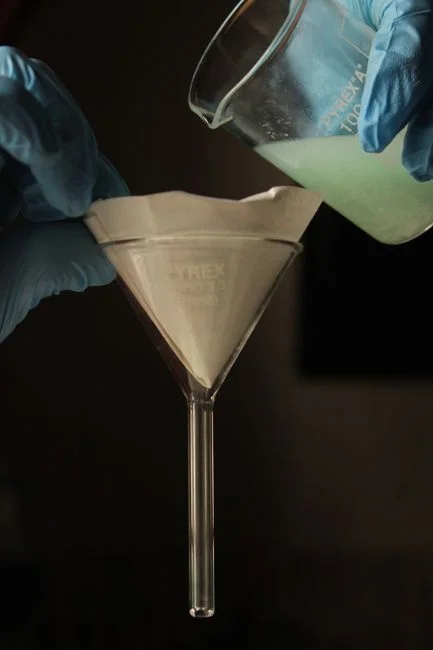
A "closed-loop" system does not mean water-free. Water is consumed 24/7 through evaporation even when blowdown is minimized, and effluent supply depends on the host municipality's treatment capacity (La Plata Community Group, 2026). In the Rio Grande Valley context, five million gallons per day of demand — a figure referenced for Harlingen Waterworks — strongly suggests evaporative cooling towers, hybrid wet/dry systems, or expansion-sized infrastructure, not air-only systems. The same heuristic applies to a Juarez maquila-park site drawing 3–5 MGD.
Air-based cooling, such as the AWS installation in Queretaro, minimizes water draw but increases energy intensity; full immersion cooling remains rare and capital-intensive at hyperscale (Mexico Business News, 2025; La Plata Community Group, 2026). For Juarez's hot, dry climate, a hybrid wet/dry cooling tower with adiabatic assist during peak ambient is the most common compromise — it lowers blowdown volume per MW versus a standard evaporative tower but still requires blowdown treatment. The dry side of the heat exchanger handles the bulk of the load in shoulder seasons; the adiabatic pre-cooling kicks in only on the hottest days.
Makeup water source shifts blowdown chemistry. Reclaimed municipal effluent, treated industrial wastewater, and brackish groundwater each produce different ionic profiles and therefore different scaling risks downstream. A designer that commits to a hybrid wet/dry tower without confirming the makeup water source is designing blind. The local infrastructure reality — most new Mexican hyperscale builds are landing inside or adjacent to existing maquila parks with their own utility and pre-treatment arrangements — means the water source is often dictated by the host park, not chosen freely by the operator.
Building the blowdown treatment train: from side-stream filtration to RO
The 2026-standard treatment train is a four-stage configuration that can be assembled in a single skidded package for a hyperscale site. Every stage is justified by blowdown water-quality data, not by catalog habit.
| Stage | Function | Operating parameters | Indicative cost (S1) |
|---|---|---|---|
| Side-stream filtration | Removes suspended solids, biofilm fragments, and corrosion products ahead of membranes; enables higher cycles of concentration | 1–5% of total circulation flow; 10–25 micron self-cleaning spiral or multimedia | CAPEX US$50,000–200,000 |
| Ultrafiltration (UF) | Biological and particulate barrier; RO/NF pretreatment | 0.01–0.1 micron PVDF; 10–30 psi; 90–95% recovery; permeate backwash | Component of integrated skid |
| Reverse osmosis (RO) | Dissolved-solids removal for reuse-grade permeate | 150–400 psi; 50–85% recovery on blowdown; permeate TDS 10–50 mg/L | CAPEX US$250,000–500,000 for 50,000 GPD; OPEX US$1.50–3.00 per kgal |
| Nanofiltration (NF) — alternative to RO | Hardness-limited discharge or partial softening | 75–150 psi; 70–85% recovery; permeate TDS 30–50% of feed | Lower than RO at same flow |
Side-stream filtration comes first. Installation at 1–5% of total circulation flow, with 10–25 micron self-cleaning spiral or multimedia filtration, costs US$50,000–200,000 for typical data center installs and pays for itself by keeping heat exchangers clean and reducing downstream membrane fouling (Genesis Water Technologies). A multi-media filter in this position is standard practice for silica- and phosphate-rich cooling chemistry.
UF comes next, with 0.01–0.1 micron PVDF membranes operating at low pressure (10–30 psi) and 90–95% recovery, permeate-backwash maintenance, and chemical cleaning every 1–3 months. A hollow-fiber UF pretreatment skid serves as the RO/NF feed conditioner and as a standalone biological barrier if the operator ever wants to skip the RO stage. RO is the workhorse: it removes 95–99% of dissolved solids, produces permeate at 10–50 mg/L TDS, runs at 150–400 psi with 50–85% recovery on blowdown, and a 50,000 GPD system costs US$250,000–500,000 installed with OPEX US$1.50–3.00 per thousand gallons (Genesis Water Technologies). For sites where hardness is the discharge limiter rather than total TDS, NF at 75–150 psi and 70–85% recovery offers a lower-energy alternative. Antiscalant chemistry — including catalytic programs designed for silica- and phosphate-rich blowdown — materially extends RO uptime. A industrial RO system paired with a PLC-controlled antiscalant and biocide dosing skid is the typical 2026 package.
Zero and partial ZLD options for arid sites near the Rio Grande
Full ZLD is the option of last resort because of capex, but it is technically proven. An MVC evaporator downstream of an RO/NF front end achieves 95–98% recovery of concentrate with distillate TDS below 10 mg/L, at 15–25 kWh per 1,000 gallons and CAPEX of US$1–3 million for a 10,000–30,000 GPD unit (Genesis Water Technologies). A full ZLD configuration — RO at 70–80% recovery, evaporative concentration at 95%, and a crystallizer — reaches 95–99% overall recovery with less than 1% solid waste, at CAPEX US$3–8 million and OPEX US$5–15 per thousand gallons. For guidance on how to compare ZLD configurations against the local tariff and permit structure, the ZLD plant buyer's guide walks through the design choices.
For most Juarez sites the smarter 2026 play is partial ZLD. Concentrating blowdown to reduce discharge volume by 80–90% captures most reuse benefit at much lower cost; the residual brine can be sent to deep-well injection, hauled to an approved disposal facility, or periodically discharged under special permits (Genesis Water Technologies). Solar evaporation ponds are a candidate for the final stage in arid Chihuahua, given the high net evaporation and low rainfall, but the operator must confirm land availability and CONAGUA brine-disposal rules before assuming ponds are permissible. SMRs and waste-heat-driven evaporators are forward-looking options for co-located data center and treatment campuses but remain prospective rather than available for Juarez builds in 2026 (Mexico Business News, 2025).
Decision framework: matching the train to blowdown TDS and reuse targets
The end-use objective should drive the train, not the catalog. Cooling-tower makeup reuse yields 60–85% recovery and is the highest value proposition for most data center applications (Genesis Water Technologies). Discharge compliance — the NOM-001-SEMARNAT-2021 minimum bar — is sized to local permit limits, not to the reuse goal. Process-water reuse (irrigation, washdown) accepts lower recovery but still requires pathogen and salt control. Full ZLD is justified only when alternative water is unavailable or discharge is prohibited — a real but minority case in the current Mexican regulatory environment.
| Blowdown TDS envelope | Reuse target | Recommended 2026 train | Add-on for compliance / arid constraint |
|---|---|---|---|
| 1,200–2,500 mg/L (4 COC, relatively clean makeup) | Cooling-tower makeup | Side-stream filtration + UF + RO | Antiscalant dosing; standard NOM-001 monitoring |
| 2,500–4,500 mg/L (higher COC or harder makeup) | Cooling-tower makeup, partial ZLD | Side-stream filtration + UF + RO with antiscalant program; consider NF if hardness-limited | Brine management plan; pond or hauling permitted |
| 4,500–6,000 mg/L (silica- or phosphate-rich legacy chemistry) | Discharge compliance priority, reuse as secondary | Side-stream filtration + UF + RO; catalytic pretreatment for silica | MVC if disposal cost exceeds US$5–15/kgal discharge-fee band |
| Brine beyond RO recovery limits | Near-ZLD or full ZLD | RO + MVC + crystallizer | Only when local discharge is prohibited or brine hauling infeasible |
For RO and UF membrane replacement planning, a side-stream filtration + UF + RO train is the 2026 default for hyperscale Juarez builds. Add MVC only when the disposal cost of RO concentrate or the permit constraint crosses the US$5–15/kgal discharge-fee threshold (Genesis Water Technologies). Buyers should pair the train with a PLC-controlled antiscalant and biocide dosing skid sized to the chosen membrane stage. The RO OPEX breakdown for 2026 is the natural companion read when you are budgeting the operating side of the same train.
Frequently Asked Questions
What permit does a data center in Juarez need to discharge cooling blowdown?
Industrial discharges in Mexico fall under NOM-001-SEMARNAT-2021, and the applicable limits depend on whether the receiving body is the Rio Grande, a municipal collector, or a reuse-permitted irrigation user (NOM-001-SEMARNAT-2021 compliance guide). The permit engineer should request, in writing, the current NOM-001 limits for the chosen receiving body, the cessionario or municipal tariff schedule, and any industrial-park pre-treatment rules before sizing the train.
What does a blowdown reuse train cost in 2026 and how do I budget for it?
Indicative installed costs from published 2026 references: side-stream filtration US$50,000–200,000; a 50,000 GPD blowdown RO system US$250,000–500,000 installed with OPEX of US$1.50–3.00 per thousand gallons; full ZLD with crystallizer US$3–8 million at OPEX US$5–15 per thousand gallons (Genesis Water Technologies). For OPEX benchmarking on a like-for-like basis, request a per-kgal breakdown that includes energy, chemicals, membrane replacement, and labor from each bidder, and compare against the RO OPEX breakdown for 2026 to keep proposals on a consistent footing.
Can I reuse municipal-treated wastewater as cooling-tower makeup in Ciudad Juarez?
Reclaimed effluent reduces pressure on freshwater supplies but is not unlimited — supply is tied to population size, wastewater output, and the host utility's treatment capacity (La Plata Community Group, 2026). The buyer must request the cessionario's available reclaimed-water allocation, residual chlorine range, and any industrial-park pre-treatment rules before assuming reclaimed water can be the sole makeup source for a hyperscale cooling tower.
How do I size an RO system for a 5 MW or 50 MW data center hall?
Size the RO to the blowdown flow, which at 4 cycles of concentration is roughly 25–30% of makeup water — a 10 million gallon per month facility produces 2.5–3 million gallons of blowdown (Genesis Water Technologies). The buyer must request site-specific blowdown volume and chemistry (TDS, silica, hardness, residual biocides) from the cooling-tower vendor and confirm the chosen recovery rate (50–85% on blowdown) before locking the RO capacity. Comparable regional case studies — the Novosibirsk data center blowdown guide and the Ludhiana data center blowdown guide — show how recovery targets shift with local permit structure.
Related Equipment
- industrial RO system — specifications, capacity range, and technical data