What Streams Must a Setagaya Data Center Treat?
A Setagaya data center normally needs a side-stream filtration, ultrafiltration and brackish-water reverse-osmosis train for cooling-tower blowdown reuse, with concentrate discharged to sewer under a site-specific pretreatment permit. Tokyo-area data indicate 1,200–6,000 mg/L blowdown TDS at 4–6 cycles, with silica identified as the scaling constraint. RO permeate of 10–50 mg/L TDS can be blended as cooling makeup. High-recovery reuse or ZLD should be selected only when sewer acceptance, water use efficiency targets or corporate water goals justify the additional energy, cost and permitting burden.
The treatment boundary must be established stream by stream. Begin with cooling-tower evaporation and blowdown, then identify RO concentrate, UF backwash, chemical-dilution waste, cooling-equipment drains and domestic or process wastewater. These streams should not be combined until their hydraulic peaks, chemical inventories and contaminant concentrations are known.
Cooling blowdown is concentrated wastewater because evaporation removes water while dissolved solids and treatment chemicals remain in the basin. The Water Utility Report, updated 2026-04-14, notes that blowdown can contain elevated salts, heavy metals, biocides, corrosion inhibitors and altered pH. The 2026 Tokyo treatment guide specifically identifies suspended solids, biofilm fragments, biocides, corrosion inhibitors, scale inhibitors and dispersants as material components of the cooling-blowdown chemistry.
Classify each stream by its likely destination before selecting equipment. Clarified blowdown may proceed to ultrafiltration and RO for makeup reuse; UF backwash may require separate equalization or return; chemical-dilution streams may require neutralization; and domestic or process wastewater may need a different treatment route. The approach in this site-specific cooling blowdown treatment methodology remains useful, but Setagaya utility, basin and permit data must determine the final boundary.
Request a 12-month source-water and blowdown chemistry baseline before final sizing. The same 2026 Tokyo guide recommends establishing a 12-month compliance baseline after commissioning, making the pre-design dataset a prerequisite rather than an optional refinement.
Build the Setagaya Blowdown Mass Balance
At 4 cycles of concentration, approximately 25–30% of cooling makeup exits as blowdown, but that relationship must be recalculated from the Setagaya site’s measured evaporation and actual cycles. The 2026 Tokyo guide attributes the relationship to Genesis Water Technologies and warns against treating it as a permanent design constant.
Start with the site’s actual makeup flow, evaporation rate, cycles of concentration, operating hours and expected variability. Then calculate the blowdown flow and average daily contaminant mass. Size the membrane system for peak-hour loading, not only the daily average, and retain a separate peak-day hydraulic case. The same worksheet should track minimum flow, because very low feed flow can change recovery, cleaning frequency and control stability.
| Parameter | Research reference | Setagaya procurement use |
|---|---|---|
| Makeup-water TDS | 70–200 mg/L in Tokyo-area screening data from the 2026 Tokyo guide | Replace with utility and basin test data |
| Makeup calcium and magnesium | Calcium 8–18 mg/L; magnesium 3–8 mg/L in the 2026 Tokyo guide | Check carbonate and general salt-loading tendency |
| Makeup silica | 8–25 mg/L in the 2026 Tokyo guide | Use for RO recovery and precipitation testing |
| Blowdown at 4–6 cycles | 1,200–6,000 mg/L TDS; suspended solids 10–50 mg/L in the 2026 Tokyo guide | Screen pretreatment and sewer acceptance |
| Blowdown flow relationship | Approximately 25–30% of makeup at 4 cycles, according to Genesis Water Technologies as reported in the 2026 Tokyo guide | Recalculate from site evaporation and cycles |
These values are not Setagaya permit limits or guaranteed feed compositions. The 2026 guide notes elevated calcium, magnesium, silica and alkalinity at 4–6 cycles, so the site worksheet should include all relevant ions, alkalinity, conductivity, silica, suspended solids, metals and chemical residuals. A broader reference is available in this data center cooling blowdown treatment guide.
Choose the Pretreatment Train That Protects the Membranes
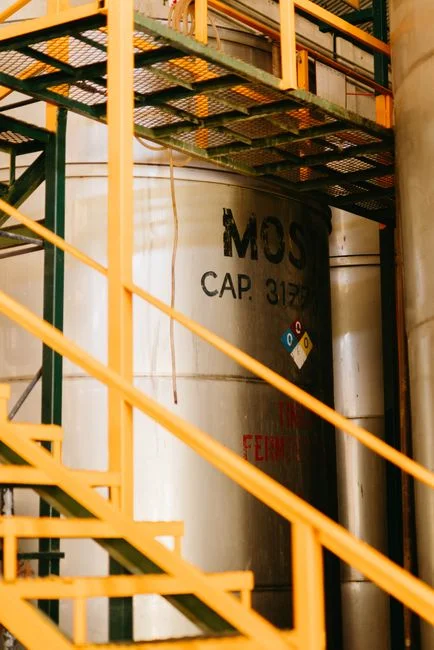
The pretreatment train must remove solids, protect RO from oxidants and prevent the cooling chemical program from converting a standard RO train into a fouling or scaling problem. The 2026 Tokyo guide identifies membrane fouling and scaling caused by inadequate upstream removal as the most common failure mode, rather than failure of the RO stage itself.
Use side-stream filtration as the first solids barrier. The 2026 Tokyo guide specifies a self-cleaning 10–25 micron spiral filter ahead of UF, followed by multi-media polishing where turbidity excursions may follow fan service or fill changes. The buyer should request differential-pressure data, automatic backwash logic, bypass arrangement and demonstrated performance against the expected suspended-solids load before accepting a filter skid.
Use PVDF ultrafiltration where corrosion products, biofilm fragments and airborne dust can reach the RO feed. The 2026 guide describes a 0.01–0.1 micron UF design envelope with 90–95% recovery. A PVDF ultrafiltration pretreatment for cooling-blowdown reuse should therefore be evaluated against that envelope, including backwash recovery, cleaning chemistry and feed compatibility.
| Protection step | Technical basis | Procurement check |
|---|---|---|
| Side-stream filtration | 10–25 micron self-cleaning spiral filter in the 2026 Tokyo guide | Confirm particle-removal duty, cleaning cycle and bypass controls |
| Multi-media polishing | Specified in the 2026 Tokyo guide for turbidity excursions after fan service or fill changes | Define when polishing is required and how it is operated |
| PVDF UF | 0.01–0.1 micron design envelope and 90–95% recovery in the 2026 Tokyo guide | Request backwash frequency, recovery and cleaning validation |
| Oxidant control | Free chlorine below 0.1 mg/L ahead of RO, with sodium bisulfite quenching, in the 2026 Tokyo guide | Require residual measurement and interlocks before membrane feed |
Oxidizing biocides require particular attention. The 2026 guide requires free chlorine below 0.1 mg/L before polyamide RO membranes and identifies sodium bisulfite as the relevant quenching step. A PLC-controlled automatic chemical dosing system should therefore include monitored oxidant demand, quench verification and low-residual interlocks rather than relying only on a timer.
Where cooling programs use phosphorus-based inhibitors, evaluate non-phosphate, low-fouling alternatives. The 2026 Tokyo guide identifies total phosphorus as a discharge-compliance issue and links inhibitor selection to both membrane protection and sewer acceptance. The multi-media filtration stage should be specified around expected turbidity, not generic “polishing” language.
Select RO, High-Recovery Reuse or ZLD
For a sewered Setagaya site, the practical baseline is side-stream filtration, UF and brackish-water RO, with RO concentrate sent to sewer under a site-specific pretreatment permit. The 2026 Tokyo guide gives this train 70–85% RO recovery and 10–50 mg/L TDS permeate, which can be blended into cooling-tower makeup.
Silica sets the boundary between conventional and high recovery. The 2026 guide identifies a 150–180 mg/L scaling threshold and reports that conventional BWRO is generally limited to 75–80% recovery before silica scaling forces shutdown unless controlled precipitation or dynamic operation is applied. An industrial RO system for cooling-tower makeup reuse should therefore be quoted against site-specific silica, recovery, concentrate chemistry and cleaning assumptions.
For higher recovery, the 2026 Tokyo guide describes fluidized-bed precipitation before a second RO pass. It reports approximately 95% overall recovery, approximately 1 mg/L silica in the permeate and an 80–90% reduction in discharge volume. This option should be compared on the combined value of freshwater savings, sewer charges, water use efficiency reporting and the additional capital, energy and solids-handling burden. The broader 2026 data center water reuse engineering and cost trends provide a useful comparative framework, but local utility tariffs and permit terms remain necessary inputs.
| Option | Research basis | Decision condition |
|---|---|---|
| UF + BWRO; concentrate to sewer | 70–85% RO recovery and 10–50 mg/L permeate TDS in the 2026 Tokyo guide | Use when sewer acceptance is obtainable and the lowest-complexity train meets water targets |
| Precipitation + second RO | Approximately 95% overall recovery, approximately 1 mg/L permeate silica and 80–90% lower discharge in the 2026 Tokyo guide | Use when higher recovery or lower discharge has quantified value |
| RO + MVC + crystallizer ZLD | 95–99% recovery in the 2026 Tokyo guide | Reserve for denied sewer discharge, a board-level water-positive mandate or a documented showcase position |
At the 200 m³/day comparison scale used in the 2026 Tokyo guide, standard UF plus BWRO is estimated at ¥30–60 million CAPEX and ¥180–360/m³ OPEX. The high-recovery option adds ¥20–40 million in CAPEX and is reported to achieve payback in 3–5 years through avoided sewer charges, lower freshwater purchases and benchmark positioning. Those figures are not a Setagaya quotation: they depend on the specified flow, source chemistry, operating hours, energy tariffs, sewer surcharges, labor, membrane replacement and chemical consumption.
Full ZLD is the premium case. The 2026 guide reports a 5–8× CAPEX premium over standard RO reuse and OPEX of ¥600–1,800/m³ at 200 m³/day scale. It also reports an approximately ¥150–400 million CAPEX range for hyperscale ZLD. The selection question is not whether ZLD uses more energy, but whether sewer denial or a binding water-positive objective makes that burden necessary. The 2026 ZLD engineering and cost review is relevant to that comparison.
Life-cycle energy must be included. Open Engineering Inc’s 2026 study, “Reclaiming Cooling: Wastewater Reuse as a Strategic Resource for Data Center Water Management,” reports about twice the global warming potential for its wastewater case than for the freshwater case, with treatment energy responsible for roughly 80% of the difference. Water savings therefore do not automatically establish a climate benefit.
Navigate Setagaya Discharge and Operating Compliance
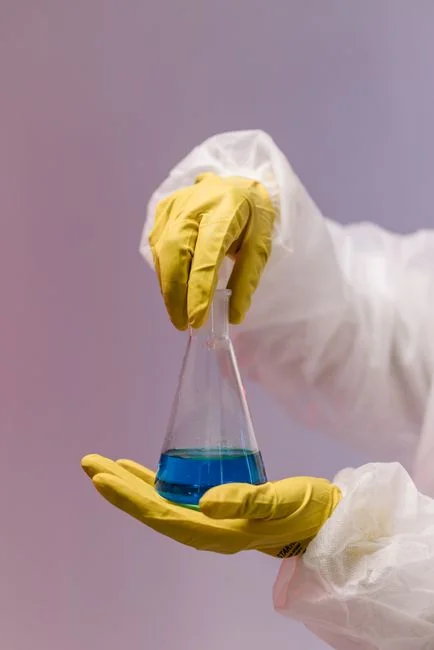
Japan’s Water Pollution Control Act sets the national effluent floor, while the current Setagaya sewer contract and the relevant Tokyo authority can impose tighter pH, suspended-solids, COD, total nitrogen, total phosphorus, metal and residual-biocide requirements. The treatment train should be selected only after those requirements are translated into a concentrate chemistry and monitoring specification.
The 2026 Tokyo guide cites national suspended solids of no more than 200 mg/L and limits of no more than 40 mg/L in some sewer contracts. These are reference values, not confirmed Setagaya limits. Obtain the current sewer contract, written acceptance criteria and regulator confirmation before using either figure in design or procurement.
Permit timing affects the project schedule. The 2026 guide reports a 4–9 month review for a new cooling-blowdown discharge permit and a longer period when ZLD is proposed. It also recommends enhanced monitoring of biocides, phosphorus and metals after commissioning. Equipment lead times, site construction and operator training should therefore be sequenced against that review rather than added later.
Treat reuse and disposal as separate compliance workstreams. Reuse does not remove the obligation to control the permeate blend or the concentrate. If a non-phosphate inhibitor or biocide-rotation program is proposed, obtain written acceptance from the receiving sewer authority. The 2026 guide’s sequence is to minimize chemical dose, neutralize residual oxidant where necessary and document monitoring.
Where biocide control requires an onsite generation step, assess the chlorine dioxide generation system as part of the complete chemical-control design. The equipment proposal should identify residual measurements, reaction demand, containment, worker exposure controls and discharge consequences. A related cross-border wastewater compliance review illustrates why jurisdiction-specific requirements must remain separate from the technical train.
Move from Water Testing to Commissioned Compliance
Engineering should proceed as one permit-and-bench-test sequence, not as parallel equipment and compliance workstreams. The 2026 Tokyo guide calls a pre-engineering bench test on site makeup water, operated to the planned cycles of concentration, the cheapest protection against an equipment-selection error.
- Collect representative source-water, makeup-water and blowdown data, including seasonal conditions and the proposed cooling chemical program.
- Run a bench test at the planned cycles of concentration to observe silica behavior, solids loading, oxidant demand and chemical consumption.
- Pilot the selected train long enough to validate recovery, concentrate composition, cleaning frequency, membrane performance and control response under the intended operating envelope.
- Submit the equipment specification, representative analyses, concentrate destination and monitoring plan to the sewer authority before final procurement.
- Install online conductivity and pH monitoring, with laboratory control for silica, suspended solids, phosphorus, metals and residual biocides relevant to the approved chemical program.
- Start the 12-month compliance baseline at commissioning and document chemical dosing, cleaning cycles, permeate blending and concentrate management.
The pilot should challenge the actual failure modes: fan service, fill changes, biofilm fragments, oxidant residuals, silica excursions and concentrated chemical discharge. For a high-recovery train, test the precipitation stage and second RO pass together; otherwise recovered water may meet permeate targets while the concentrate still exceeds permit conditions.
Procurement packages should also be operationally complete. The treatment parts, valves and filter-media schedule should identify critical spares and consumables, while the water-treatment operating cost breakdown provides a structure for comparing quotations. Define membrane life, chemical consumption, cleaning frequency, energy, labor and monitoring before comparing supplier proposals.
Frequently Asked Questions
What treatment train is most practical for a Setagaya data center with sewer access?
Start with side-stream filtration, PVDF UF and brackish-water RO, and send the concentrate to sewer only under an approved pretreatment permit. The 2026 Tokyo guide gives this baseline 70–85% RO recovery and 10–50 mg/L TDS permeate. Confirm silica behavior, concentrate composition and sewer acceptance before fixing the recovery target.
What does a 200 m³/day cooling-blowdown reuse system cost, and what operating assumptions drive the estimate?
The 2026 Tokyo guide estimates ¥30–60 million CAPEX and ¥180–360/m³ OPEX for side-stream filtration, UF and BWRO at 200 m³/day. The estimate is not a Setagaya quotation. Ask each supplier to state its source-water chemistry, operating hours, cycles of concentration, energy tariff, sewer surcharge, chemical program, membrane-replacement allowance, labor basis and recovery guarantee in the priced offer.
When does high-recovery reuse or ZLD justify its additional capital and energy cost?
Use high recovery when the combined value of reduced freshwater purchases, lower sewer charges, water use efficiency reporting and avoided discharge capacity exceeds the added operating burden. Reserve ZLD for denied sewer discharge, a binding water-positive mandate or a documented showcase requirement. The 2026 guide reports approximately 95% recovery for precipitation plus second RO and a 5–8× CAPEX premium for ZLD over standard RO reuse.
Which data should be requested from a treatment supplier before sizing UF and RO equipment?
Request 12 months of source-water and blowdown analyses, measured evaporation, makeup flow, operating hours and cycles of concentration, plus the complete biocide, inhibitor, antiscalant and dispersant inventory. Require a supplier to base its PVDF ultrafiltration pretreatment and industrial reverse-osmosis train on those site inputs and to state recovery, concentrate chemistry, cleaning frequency and peak-flow performance.
What permits and monitoring must be addressed before discharge or commissioning?
Confirm the current Setagaya sewer contract, pretreatment application, discharge limits, chemical acceptance criteria and reporting schedule with the receiving authority. The 2026 Tokyo guide reports a 4–9 month review for a new cooling-blowdown discharge permit and recommends a 12-month compliance baseline after commissioning. Prepare online conductivity and pH records plus laboratory sampling for silica, suspended solids, phosphorus, metals and residual biocides before start-up.
Related Equipment
- PVDF ultrafiltration pretreatment for cooling-blowdown reuse — specifications, capacity range, and technical data
- industrial RO system for cooling-tower makeup reuse — specifications, capacity range, and technical data