What Zero Liquid Discharge Actually Means in 2026
Zero liquid discharge in 2026 is defined as a treatment train that recovers at least 95% of influent water as reusable permeate or distillate and converts the remaining dissolved solids into dry salts or saleable byproducts, with no continuous liquid stream leaving the plant boundary. The three working bands engineers use in 2026 bid specifications are: ZLD at ≥99% recovery and no liquid effluent; near-ZLD at 95–98% recovery with a small brine bleed to lined ponds or third-party crystallizers; and minimum liquid discharge (MLD) at ≤95% recovery, typically accepted only when a final brine bleed is permitted. The word "zero" is therefore a brine evaporation and crystallization outcome, not a literal claim of zero volume; the engineered boundary is the elimination of a routine liquid effluent point, not the elimination of all moisture on site. The 2024 Springer review of tannery wastewater management by Nithya et al. confirms that the membrane-plus-thermal hybrid train is now the dominant 2026 ZLD architecture worldwide, replacing older evaporation-pond-only designs that no longer pass current discharge rules.
The 2026 Regulatory and Market Pull Behind ZLD Adoption
The 2026 market for ZLD systems is projected to reach $12–14B globally at an 8–10% CAGR, extrapolated from the 2019–2026 GLOBE NEWSWIRE/Research and Markets forecast trajectory and consistent with 2025–2026 sector analyst updates. Three regulatory blocks are doing most of the pulling. China has revised GB/T 31962 alongside sector-specific GB standards for coal chemical, integrated circuit, and lithium-battery materials plants, with the effect of making ZLD or near-ZLD functionally mandatory for any new plant in a water-constrained basin; the 99.9% arsenic removal benchmark documented in the semiconductor arsenic ZLD case study is a typical compliance target. India has the CPCB ZLD mandate for textile and tannery clusters, and the Middle East effectively prices brine disposal at $5–15/m³ across GCC jurisdictions, shifting project economics toward ZLD even where regulation is silent. In the EU and US, the Industrial Emissions Directive 2010/75/EU BAT-AEL tightening for surface treatment and chemicals, plus US EPA multi-sector effluent guidelines revisions, are pushing coal-plant flue-gas desulfurization blowdown and refinery wastewater toward full or near-ZLD. The 2026 sector adoption ranking, by installed capacity, is coal chemical > power (FGD) > tanneries > semiconductors > battery materials > food processing, and the table below summarizes the drivers per region.
| Region | Primary 2026 Driver | Typical Mandate / Threshold | Most Affected Sectors |
|---|---|---|---|
| China | Revised GB/T 31962 and sector GB standards | ≥99% water reuse; 99.9% target pollutant removal | Coal chemical, IC, lithium battery materials |
| India | CPCB ZLD mandate | Zero liquid effluent for tannery/textile clusters | Tanneries, textiles, distilleries |
| GCC / Middle East | Brine disposal cost ($5–15/m³) and water scarcity | Economic closure, not strict mandate | Power, refining, desalination retentate |
| European Union | IED 2010/75/EU BAT-AEL tightening | Site-specific emission limits for surface treatment, chemicals | Chemicals, surface treatment, refining |
| United States | EPA multi-sector effluent guidelines revisions | Zero-discharge for FGD blowdown, refinery wastewater | Coal power, petroleum refining, semiconductors |
The same regulatory tightening is already driving third-generation compound semiconductor fabs to adopt hybrid ZLD, as shown in the gallium nitride wastewater case study that pairs 99.8% gallium recovery with full water closure.
The Standard ZLD Process Train and 2026 Parameter Benchmarks
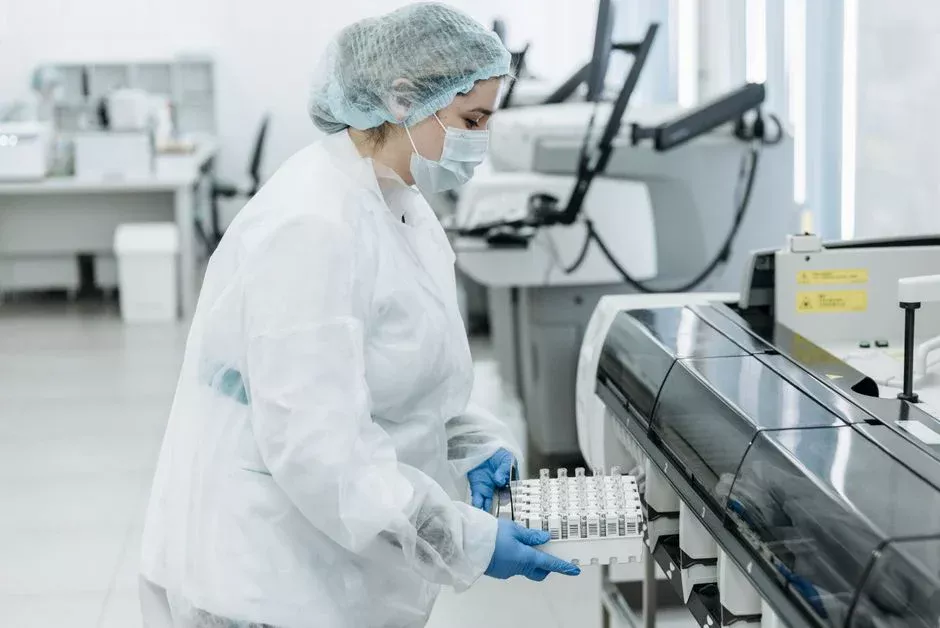
Every 2026 industrial ZLD system shares a four-stage architecture: physicochemical pretreatment, membrane concentration, thermal or mechanical concentration, and crystallization or drying. Stage 1 is coagulation followed by a DAF pretreatment skid and ion-exchange softening, with an automatic chemical dosing for ZLD pretreatment loop holding TSS below 10 mg/L and hardness below 50 mg/L as CaCO₃ to protect downstream reverse osmosis. Stage 2 is membrane concentration, typically brackish water RO followed by seawater RO where influent TDS exceeds 30,000 mg/L; a properly designed industrial RO membrane system delivers 95% permeate recovery and concentrates feed from 5,000–50,000 mg/L TDS up to 70,000–250,000 mg/L in the brine stream. Stage 3 is thermal concentration via forced-circulation crystallizer, multiple-effect evaporator (MEE), or mechanical vapor recompression (MVR), with MVR cutting specific steam consumption by 30–60% relative to MEE in 2026 installations. Stage 4 is crystallization and drying, producing NaCl, Na₂SO₄, or mixed salt cake above 99% dry solids; saleable grades such as food-grade NaCl at >99.5% purity are realistic where the feed chemistry is well controlled. The Ma et al. integrated membrane-and-thermal study for coal chemical near-zero liquid discharge remains the textbook 2026 reference architecture, pairing two-stage RO with MVR and a forced-circulation crystallizer at 5,000–20,000 m³/day.
| Stage | Unit Operation | Key 2026 Parameter | Typical Output |
|---|---|---|---|
| 1. Pretreatment | Coagulation, DAF, softener | TSS <10 mg/L, hardness <50 mg/L as CaCO₃ | Clarified feed to RO |
| 2. Membrane | BWRO / SWRO, two-stage | 65–85% recovery per stage, 95% overall | Permeate (reuse) + brine 70,000–250,000 mg/L TDS |
| 3. Thermal/Mechanical | MEE, MVR, FC crystallizer | MVR cuts energy 30–60% vs MEE | Concentrated liquor 200,000–300,000 mg/L TDS |
| 4. Crystallization/Drying | Forced-circulation crystallizer, centrifuge, dryer | >99% dry solids; NaCl >99.5% purity | Saleable salt cake; zero liquid stream |
2026 CAPEX and OPEX: What ZLD Actually Costs to Build and Run
Defensible 2026 cost bands for full ZLD start with CAPEX of $1.5M–$5M for small 50–200 m³/day systems, $4M–$18M for mid-scale 500–2,000 m³/day trains, and $20M–$80M+ for plants above 5,000 m³/day, with the 2026 filter press CAPEX/OPEX breakdown illustrating how downstream dewatering fits into a sub-system budget. OPEX for full ZLD runs $0.8–$3.0 per m³ treated, with thermal energy at 40–60% of OPEX, chemical pretreatment at 15–25%, membrane replacement at 10–15%, and labor and maintenance at 10–20%. By comparison, near-ZLD sits at $0.4–$1.5/m³ and conventional biological plus chemical plus sludge treatment sits at $0.2–$0.6/m³, so the cost gap ZLD must close through recovered water value, salt sales, or avoided brine disposal is roughly $0.4–$2.4/m³. The MVR-versus-MEE trade-off is one of the few places 2026 buyers can move OPEX meaningfully: MVR raises CAPEX 15–25% but cuts energy by 30–60%, and payback typically lands at 2–4 years for brine flows above 500 m³/day. The OPEX categories above are benchmarked against the broader 2026 industrial wastewater OPEX guide, and where cooling water is part of the closure loop, the closed-loop cooling water ZLD guide documents the additional blowdown treatment cost. Hidden 2026 costs buyers should reserve for: salt cake transport and disposal contracts, offtake and monetization agreements for recovered salts, and continuous online compliance monitoring instrumentation (conductivity, pH, flow, and TDS at every ZLD boundary point).
| System Scale (m³/day influent) | CAPEX Range (2026) | OPEX Range ($/m³ treated) | Best-Fit Technology Stack |
|---|---|---|---|
| 50–200 (small) | $1.5M–$5M | $1.5–$3.0 | DAF + BWRO + MEE + crystallizer |
| 500–2,000 (mid) | $4M–$18M | $0.8–$2.0 | DAF + two-stage RO + MVR + FC crystallizer |
| >5,000 (large) | $20M–$80M+ | $0.8–$1.5 | Two-stage RO + MVR + dual crystallizer lines |
ZLD vs Near-ZLD vs Conventional: The 2026 Selection Framework
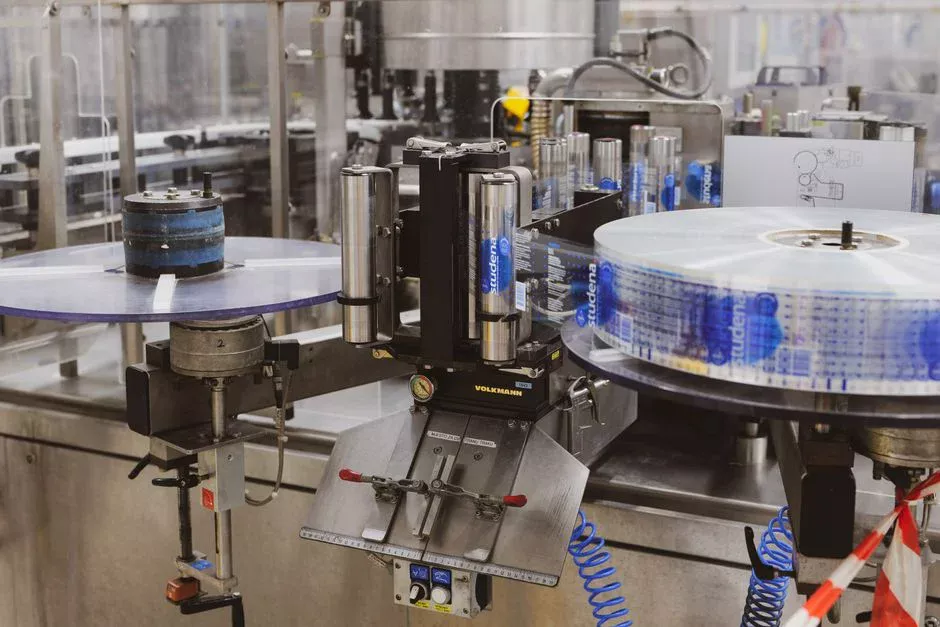
The decision is driven by five variables: influent TDS, brine disposal cost, water scarcity index at the site, marketability of the recovered salt, and the regulatory ceiling the plant must meet. Full ZLD is the right answer when influent TDS exceeds 50,000 mg/L, brine disposal is more than $8/m³, the plant sits in a water-stressed basin (per WRI Aqueduct or local equivalent), and the recovered salt has a confirmed offtake at a net-positive price. Near-ZLD is correct when a lined evaporation pond or a contracted third-party crystallizer can take a small bleed, or when the regulator allows a ≤2% liquid bleed to a controlled point, and OPEX sensitivity to brine transport is moderate. Conventional biological plus chemical plus sludge treatment remains the right call when discharge to a municipal sewer or surface water is permitted and brine is below 2% of total flow; this is still the dominant 2026 outcome for low-TDS, biodegradable streams such as food processing washwater. The matrix below is the version EPC engineers should paste into bid evaluation documents.
| Decision Axis | Full ZLD | Near-ZLD | Conventional (Bio + Chem) |
|---|---|---|---|
| CAPEX (500 m³/day) | $4M–$10M | $2M–$6M | $0.5M–$2M |
| OPEX ($/m³) | $0.8–$3.0 | $0.4–$1.5 | $0.2–$0.6 |
| Water Recovery | ≥99% | 95–98% | 0–60% (depends on RO add-on) |
| Compliance Risk | Lowest; zero liquid effluent | Low; small bleed permitted | Highest; vulnerable to permit tightening |
| Salt Value | Direct sale (NaCl, Na₂SO₄) | Occasional; bleed to pond | None; sludge disposal cost |
Where ZLD Is Working in 2026: Sector Snapshots and Lessons
Tanneries in India and Bangladesh are running 2026 ZLD trains that combine chrome recovery, two-stage RO, and MVR crystallization, recovering 99% of process water and producing reusable Na₂SO₄ at >99% dry solids, with the Springer 2024 review documenting the architecture. Coal chemical plants in northern China operate integrated membrane-plus-thermal near-ZLD trains at 5,000–20,000 m³/day, using the Ma et al. ScienceDirect design as a template for two-stage RO plus MVR plus forced-circulation crystallizer. Semiconductor fabs running high-purity water reclaim loops pair RO with electrodeionization and a ZLD brine polish, as in the gallium nitride ZLD case recovering 99.8% of the gallium. Power plants are deploying FGD blowdown ZLD using DAF pretreatment, BWRO, and MVR, often coupled with a flue-gas desulfurization scrubber on the air side for combined air-and-water compliance. The single most common failure mode in 2026 ZLD retrofits is undersized softening and pretreatment that lets Ca²⁺ and silica reach the thermal stage, where they scale MVR tubes within weeks; a properly designed biological or MBR upstream, for example an MBR integrated wastewater treatment unit, paired with a filter press for ZLD salt cake dewatering, is the lesson most consistently re-learned on retrofit jobs.
Frequently Asked Questions
What recovery percentage counts as ZLD in 2026? Full ZLD is ≥99% water recovery with no continuous liquid effluent, while near-ZLD is 95–98% with a small permitted bleed.
How much does a 500 m³/day industrial ZLD system cost in 2026? CAPEX runs $4M–$18M and OPEX runs $0.8–$3.0 per m³ treated, with MVR-based trains at the lower end of the energy range.
Which sectors are adopting ZLD fastest in 2026? Coal chemical leads by installed capacity, followed by power plant FGD, tanneries, semiconductors, battery materials, and food processing.
What is the single most common ZLD retrofit failure in 2026? Undersized softening and pretreatment allowing Ca²⁺ and silica to foul the MVR or MEE thermal stage, which is preventable with a properly sized DAF plus softener train ahead of the membranes.