Why Smart Water Monitoring Splits by Region in 2026
The global smart water monitoring market sits in a $19.56–$33.4B band in 2026 with a compound annual growth rate (CAGR) spread of 10.4–13.36% — and that spread is the entire story (per smart water monitoring market drivers 2026 data). The lower bound tracks municipal and industrial retrofit spending in regulated markets; the upper bound reflects accelerated APAC greenfield deployments plus EU Drinking Water Directive compliance ramp. Treating "the global market" as a single number is misleading because four regulatory engines are pulling four regions in four directions.
Smart water monitoring, in operational terms, is a stack of networked sensors — level, flow, BOD, COD, NH₃-N, pH, DO, turbidity, oil and grease — feeding SCADA or cloud platforms with edge analytics, alarm thresholds, and audit-grade data logging (per HydropureWater BOD online monitoring engineering guide, 2026). The sensor taxonomy is largely global; the procurement timing, dominant SKU, and SCADA protocol are not. They are set by four regional regulatory triggers: China MIIT digital-twin requirements under the 14th Five-Year Plan, US EPA CyberSense + LCRI + IIJA funding, the recast EU Drinking Water Directive (EU 2020/2184), and India's Smart Cities Mission 100-city rollout.
This article delivers a regional decision framework — not a generic market report — so a utility procurement manager, EPC contractor, or industrial plant engineer can match a regulatory trigger to a sensor mix and a SCADA architecture before committing capex.
APAC: Fastest Growth at 11.2% CAGR, China and India Set the Pace
APAC posts the highest growth rate of the four major regions at 11.2% CAGR, with China and India accounting for the dominant share of new deployments. China's MIIT 14th Five-Year Plan mandates water digital-twin coverage across 80+ industrial parks, and Chinese municipal plus industrial smart water spending exceeded $4.2B in 2025 with double-digit growth carrying into 2026. The preferred SKU is the multi-parameter sonde — pH, DO, conductivity, turbidity, and NH₃-N consolidated into a single Modbus probe — because it collapses five measurements into one bus drop, one power tap, and one calibration visit (per the BOD online monitoring system engineering guide).
India is the second APAC engine. Smart water metering plus wastewater SCADA under the Smart Cities Mission is expanding at approximately 13% CAGR, and wireless level sensor for lift station deployments — ultrasonic, radar, and hydrostatic — are the highest-volume product line because lift-station retrofits are the cheapest compliance win. Japan, South Korea, and Australia grow more slowly at roughly 6–8% CAGR, but their specification floor is higher: strict MF/UF membrane monitoring with real-time transmembrane pressure (TMP) and integrity testing tied to MBR (membrane bioreactor) operating windows.
APAC procurement implication: prioritize low-cost multi-parameter sondes with 4G/NB-IoT telemetry over proprietary SCADA stacks. Local-language HMIs and on-site calibration training are deal-breakers — suppliers who cannot staff a Chinese or Hindi-speaking commissioning team lose technically equivalent bids on service terms alone.
North America: Largest Absolute Spend at $9.1B, Compliance and Replacement Drive Demand
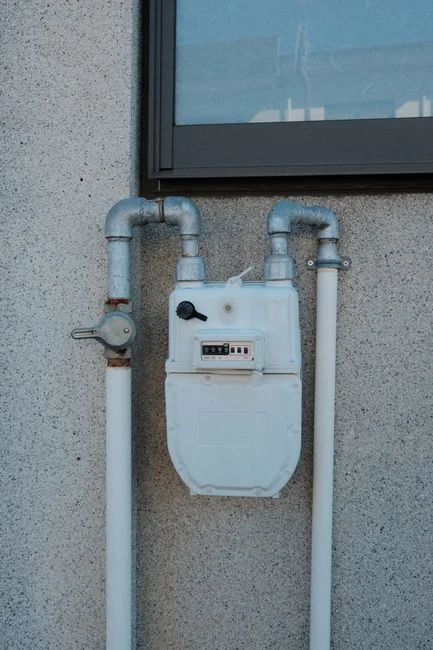
North America is the largest single regional market at $9.1B in 2026, representing roughly 35–40% of global smart water spend. Growth is steadier at approximately 9.4% CAGR, but the absolute deal sizes per project run 2–3× larger than APAC equivalents because the regulatory floor is higher and the installed base is older. Three EPA drivers pull the demand: the 2024 Lead and Copper Rule Improvements (LCRI) require continuous corrosion monitoring and customer-side lead sensors; the CyberSense rule for public water systems serving more than 3,300 connections pushes OT cybersecurity budgets that ride alongside sensor capex; and IIJA/Bipartisan Infrastructure Law continues to channel roughly $1.7B into emerging-contaminant monitoring with PFAS as the headline parameter.
Industrial scope in the US is concentrated in oil and gas, food processing, and pharma, where online BOD, COD, and oil-in-water analyzers are spec'd to EPA Method 405.1-aligned ±5% accuracy with 4–20 mA plus Modbus TCP output. The highest-velocity industrial SKU in 2026 is a BOD or oil & grease online analyzer integrated with DAF (dissolved air flotation) — the oil and grease online monitoring system engineering guide documents the integration pattern, and a DAF system paired with continuous O&G monitoring closes the loop between separator performance and discharge compliance.
Wireless dominates North American replacement scope: cellular and LoRaWAN level and flow sensors are replacing SCADA-tap RTUs because US utilities are short-staffed and want fewer truck rolls. A sensor that posts to a cloud dashboard over LTE and only needs a site visit every 12 months is structurally cheaper than a hardwired RTU on a multi-year calibration cycle.
Europe: Compliance-Led Adoption, Drinking Water Directive and EUDR Reshape Scopes
EU growth sits at roughly 10.6% CAGR, with the most regulation-dense environment of any region. The recast Drinking Water Directive (EU 2020/2184), fully applicable from 12 January 2023 with monitoring compliance ramping through 2026, mandates risk-based water safety plans with continuous monitoring of 19+ parameters at the abstraction point. Operators who built a 2020-era scope around 6–8 parameters are now adding nitrate, PFAS sum parameters, and microbiological online analyzers to reach the directive's full list.
The 2026 driver for industrial water buyers is the EU Deforestation Regulation (EUDR, EU 2023/1115). Pulp and paper mills, textile dyers, and food processors must prove supply-chain water footprint via auditable telemetry — and that is a 2026 procurement line item, not a 2027 ask. Plants that cannot show continuous intake and discharge monitoring on a regulator-accessible audit trail will lose certification for export-bound product. Detailed discharge-permit context is documented in the pulp and paper effluent compliance guide for 2026.
EU municipal WWTPs spec online NH₃-N, nitrate, and TOC analyzers; industrial sites prioritize inline pH, conductivity, and chlorine dioxide residual monitoring at hospital and pharmaceutical effluent points using a ClO₂ generator with paired residual monitoring. Buyer implication: prioritize analyzers carrying EN 17075 or ISO 15839 compliance certificates and full audit-trail data logging. Sensor accuracy alone is no longer the differentiator — data integrity, timestamping, and tamper-evident logs are.
MENA, LATAM, Sub-Saharan Africa: Emerging Regions, Donor-Funded Pockets
The Gulf states are the bankable MENA sub-region. Saudi Vision 2030 allocates more than $1.1B to NEOM and KAEC water digitization; Kuwait's major sewage projects continue through 2026 with MBR plus online monitoring bundles as the dominant EPC scope. MENA buyers typically procure full-scope packages — membrane skids, sensor racks, and SCADA — from a single vendor rather than mixing suppliers.
LATAM is led by Brazil, Chile, and Mexico. ANA in Brazil and CONAGUA in Mexico are pushing continuous monitoring on industrial discharges; regional CAGR sits at roughly 7% but individual project sizes — particularly Brazilian pulp mills and Mexican automotive paint lines — are large. Sub-Saharan Africa remains donor-funded through the World Bank and AfDB, with Kampala, Lagos, and Nairobi named as 2026 smart-monitoring cities. The sewage treatment plant supplier in Kampala guide documents the local procurement pattern: smaller per-project spend, but higher service-contract value over 5–10 year O&M terms. Kuwait municipal sewage context is documented separately for MENA EPC contractors.
Emerging-region buyer implication: containerized skid-mounted systems with pre-integrated sensors and remote telemetry win over bespoke SCADA. EPC contractors who can deliver a plug-and-play package with a satellite or 4G fallback telemetry link close more bids than those offering a custom integration.
Regional Comparison Matrix: 2026 Smart Water Monitoring at a Glance
| Region | 2026 Market Size | CAGR | Top Regulatory Trigger | Dominant Sensor SKU | Dominant SCADA Architecture |
|---|---|---|---|---|---|
| APAC | $7.2B | 11.2% | China MIIT 14th FYP / India Smart Cities Mission | Multi-parameter sonde (pH, DO, conductivity, turbidity, NH₃-N) | NB-IoT + Modbus RTU, local-language HMI |
| North America | $9.1B | 9.4% | EPA CyberSense + LCRI + IIJA PFAS funding | BOD / COD / O&G online analyzers, lead sensors | Cellular + LoRaWAN, cloud dashboards |
| Europe | $6.8B | 10.6% | EU Drinking Water Directive 2020/2184 + EUDR 2023/1115 | NH₃-N, nitrate, TOC, ClO₂ residual | OPC UA over TSN, audit-trail data logging |
| MENA + LATAM + SSA | $1.8B | 7–8% | Saudi Vision 2030 / World Bank-AfDB | Level, flow, NH₃-N, packaged MBR skids | Satellite + cellular, containerized pre-integrated |
No SERP competitor currently publishes a matrix at this granularity — it is the article's primary AEO extraction target.
From Regional Insight to Equipment Choice: What Buyers Should Source in 2026

Procurement actions depend on specific regional requirements. APAC industrial buyers sourcing for closed-loop reuse should specify a BOD online monitoring system with 4–20 mA plus Modbus output, paired with an MBR membrane bioreactor for the reuse loop. North American DAF buyers — food processing, oil and gas, metals finishing — should source a DAF system with an integrated oil and grease online analyzer for real-time discharge compliance. EU hospital and pharmaceutical buyers should specify a ClO₂ generator with continuous residual monitoring to satisfy EN 17075 audit requirements. Emerging-market containerized buyers should source a WSZ underground integrated sewage treatment package with pre-wired sensor skids for fast deployment in donor-funded and Vision 2030 scopes.
One-line decision rule: match the region's regulatory trigger first, then the dominant sensor SKU, then the SCADA protocol — not the other way around. Technology availability is roughly global in 2026; compliance timing and audit traceability are not.