Why Astana Is a Distinct Design Problem in 2026
An Astana, Kazakhstan data center in 2026 needs a four-stream treatment design that handles the Ishim River source water (TDS 400–800 mg/L, hardness 200–350 mg/L as CaCO₃), the −35 °C winter design dry-bulb, and a MENR / Committee on Water Resources dual permit. The defensible baseline is a DAF plus softener or anti-scalant plus BWRO train on cooling-tower blowdown, sized for 1,800–2,100 m³/month of CTBD at 5 MW with 4–6 CoC and a 1.3–1.5 peak factor, with parallel A/O sanitary treatment and plate-and-frame sludge dewatering.
Three forcing functions make Astana a stand-alone design problem that no Baku, Jakarta, or tropical template covers. First, the climate envelope is extreme-continental: a January design dry-bulb of −30 to −35 °C and a July design wet-bulb of 18–20 °C produce a 55–60 °C annual swing that no Caspian or tropical reference covers (per Kazakhstan climatic reference data 2025). Wet cooling that looks straightforward in a 28 °C Baku wet-bulb becomes a freeze-risk unit operation in December, and the winter logic drives hybrid adiabatic / dry cooling or full air-side condensers for part of the year. Second, source-water chemistry on the Ishim and the Astana municipal supply sits at TDS 400–800 mg/L, hardness 200–350 mg/L as CaCO₃, and silica 10–25 mg/L (similar envelope to Baku municipal, per HydropureWater 2025 field benchmarks adjusted for the Ishim catchment). That envelope caps cycles of concentration at 4–6 before silica and CaCO₃ scaling force blowdown — the same ceiling that Baku operators hit, but with a colder feed water and a colder basin. Third, the permit frame is dual and parallel: the Ministry of Ecology and Natural Resources (MENR) issues the environmental impact assessment, while the Committee on Water Resources under the Ministry of Water Resources and Irrigation issues the discharge consent — two separate filings, both required before commissioning (per Kazakhstan environmental code structure 2025). Kazakhstan is not yet basin-classified as water-stressed at the federal level, but Astana sits in a steppe watershed with declining per-capita renewable resource, so ESG and water-positive language already shows up in sovereign cloud procurement language.
The Four Wastewater Streams at an Astana Data Center
Stream separation is mechanical, not procedural: a single combined clarifier cannot hold the biology of sanitary sewage and the mineral chemistry of cooling-tower blowdown at the same time, so each stream runs on its own train and they meet only at the discharge or reuse point. The four streams and their parameter envelopes are summarised in the table below (per HydropureWater Baku 2026 site archetypes and HydropureWater 2025 Ishim catchment adjustments).
| Stream | Source | Flow / Load | Key parameters | Target endpoint |
|---|---|---|---|---|
| 1 — Raw intake | Ishim River / municipal blend | Site-total; sized to IT load + 15–30% unmeasured-loss uplift | TDS 400–800 mg/L; hardness 200–350 mg/L as CaCO₃; silica 10–25 mg/L; spring snowmelt TSS 30–80 mg/L | SDI <3 to protect RO; cooling-tower makeup |
| 2 — Cooling-tower blowdown (CTBD) | Evaporative cooling loop | 1,800–2,100 m³/month at 5 MW and 4 CoC; 3,800–4,200 m³/month at 10 MW | TDS 2,400–6,400 mg/L at 4–6 CoC; warm 20–28 °C in summer; phosphonates, dispersants, biocides | MENR discharge consent; or reuse for cooling-tower makeup after RO polish |
| 3 — Sanitary sewage | Staff and operations | ~100 L per employee per day; pathogen-bearing | BOD₅ 200–300 mg/L; TSS 200–250 mg/L; fecal coliform present | On-site A/O; fecal coliform ≤1,000 CFU/100 mL for reuse |
| 4 — Boiler blowdown / humidification bleed | Steam humidification, boiler skids | Low-flow, intermittent | High TDS, silica-bearing | Blend into cooling-tower makeup if chemistry allows; otherwise to CTBD train |
Stream 1 is the intake the cooling tower and any RO feed drink. It is turbid during the April–May snowmelt window, when Ishim TSS can climb to 30–80 mg/L, and baseline hard and silica-bearing the rest of the year. A side-stream filter on 1–5% of tower circulation flow drops TSS to membrane-manageable levels and protects the downstream train from chronic fouling (per Genesis Water Tech 2025 field data). Stream 2 — cooling-tower blowdown — is the largest treatable volume on site: warm, mineralised, biocide-bearing, and the only stream with a real reuse revenue case. Stream 3 — sanitary sewage — is the smallest by volume but the most operationally sensitive because it runs every day regardless of IT load, and it must run on a dedicated anoxic/oxic (A/O) train, such as a underground A/O package plant for sanitary sewage. Stream 4 — boiler blowdown and humidification bleed — is low-flow and high-TDS; it routes to the cooling-tower makeup if the silica envelope allows, otherwise to the CTBD train.
Sizing the Cooling-Tower Blowdown Train
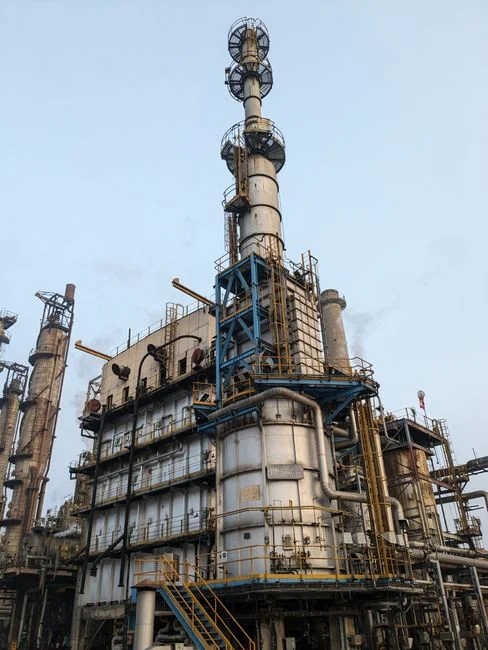
Start with the IT load and walk forward. A 5 MW facility at 4 cycles of concentration loses roughly 4–5% of circulation flow to evaporation plus 25% of makeup to blowdown; the blowdown fraction is the part that determines the size of the downstream train. At 6 CoC, blowdown drops to 1/(6−1) = 20% of makeup (per Genesis Water Tech, 2025; confirmed in HydropureWater Baku 2026). The 4→6 CoC step looks like a 50% improvement on paper, but the actual blowdown-volume reduction is 5 percentage points, or 20% — and above 5–6 CoC, microbiologically influenced corrosion, Legionella, and biofilm fouling accelerate non-linearly, so 4–6 is the realistic design ceiling for an unsoftened Ishim feed (per HydropureWater Baku 2026, Genesis 2025).
The climate correction cuts both ways. Astana's 18–20 °C July wet-bulb is much milder than Baku's 26–28 °C, so evaporative loss is 15–30% lower than the Absheron benchmark — but unmeasured losses (leaks, drift, emergency dumps) still add 15–30% on top of theoretical blowdown (per Genesis Water Tech 2025). Apply a 1.3–1.5 peak factor for the July–August hot window and the unmeasured-loss uplift together, and a 5 MW Astana site lands at 1,800–2,100 m³/month of CTBD, while a 10 MW site reaches 3,800–4,200 m³/month (per HydropureWater Baku 2026 field benchmarks, adjusted for Astana wet-bulb). On a daily basis, a 10 MW Astana campus should plan for 60–140 m³/day of average CTBD with peak-day allowance to 200 m³/day.
| Parameter | 5 MW reference | 10 MW reference | Note |
|---|---|---|---|
| Cooling-tower makeup (monthly) | 7,000–8,500 m³ | 15,000–17,500 m³ | Includes 15–30% unmeasured-loss uplift |
| CTBD at 4 CoC (monthly) | 1,800–2,100 m³ | 3,800–4,200 m³ | 1/(4−1) = 25% of makeup |
| CTBD at 6 CoC (monthly) | 1,400–1,700 m³ | 3,000–3,500 m³ | 1/(6−1) = 20% of makeup |
| Average daily CTBD (10 MW) | — | 60–140 m³/day | Peak factor 1.3–1.5 in July–August |
| CTBD TDS at 4–6 CoC | 2,400–6,400 mg/L | 2,400–6,400 mg/L | 4–8× makeup TDS |
Winter changes the sizing logic. From November through March, a wet cooling tower in Astana either runs as a hybrid adiabatic / dry unit with intermittent water spray on the warmest hours, or it switches to a full air-side condenser and the cooling-tower loop is idled. Hybrid adiabatic / dry cooling can cut summer CTBD by 30–40% versus a pure-wet reference, because the dry mode carries most of the load below ~10 °C ambient (per HydropureWater Baku 2026 hybrid-cooling logic, applied to Astana's colder envelope). For a 5–10 MW Astana build, the defensible 2026 sizing argument is: design the wet-train equipment for the summer peak, but show the hybrid-cooling operating envelope in the MENR submission so the regulator sees the realistic annual CTBD profile and not the worst-case summer value.
Four Realistic Treatment Trains for Astana in 2026
The choice of train sets the WUE the operator can report, the regulatory exposure, and the reuse revenue stream the finance team can model. Four options cover the realistic envelope for an Astana data center in 2026.
Option A — DAF + PLC chemical dosing. A DAF clarifier for the cooling-tower blowdown train plus a PLC-controlled chemical dosing skid lands at $35K–$60K installed. It clears MENR discharge limits, extracts no reuse value, and has the lowest CAPEX of the four. The upgrade path to Option C is straightforward once MENR consent is in hand. Option B — DAF + softener/anti-scalant + BWRO at 75–80% recovery. A twin-tank industrial water softener for CoC lift plus a BWRO unit on the blowdown train lands at $220K–$480K installed for 5–10 MW. Permeate silica ~1 mg/L is suitable for cooling-tower makeup; the concentrate is the disposal stream and needs a MENR-acceptable sludge management plan. Option C — Side-stream softener + lamella clarifier + ClO₂ disinfection + partial RO on blowdown at 50–85% recovery. Permeate TDS 10–50 mg/L; delivers 30–50% raw-water cut without full ZLD. A on-site chlorine dioxide generator for cooling-loop biocide control provides 0.5–1.0 mg/L residual, which is preferred over chlorine because it does not form trihalomethanes and remains effective against Legionella at the 20–28 °C warm-water range. Option D — RO preconcentrator + MVC + crystalliser for full ZLD. $1.2M–$3.5M; reserve for sites where municipal discharge is fully prohibited or ESG posture demands closed-loop. MVC thermal stage runs at 15–25 kWh per 1,000 US gallons with distillate below 10 mg/L TDS (per HydropureWater Baku 2026 ZLD bench).
| Option | Target effluent / reuse | CAPEX band (5–10 MW) | OPEX driver | Reuse yield | Permit complexity | ESG fit |
|---|---|---|---|---|---|---|
| A — DAF + PLC dosing | MENR discharge consent | $35K–$60K | Chemical dosing (~20% of OPEX); sludge haul-out | 0% | Lowest | Compliance only |
| B — DAF + softener + BWRO | Cooling-tower makeup; MENR consent for concentrate | $220K–$480K | RO membrane replacement 3–5 yr; antiscalant; sludge haul-out | ~20–30% raw-water cut | Moderate | Solid |
| C — Side-stream softener + lamella + ClO₂ + partial RO | Cooling-tower makeup + irrigation reuse | $350K–$750K | NaCl regeneration; ClO₂ precursor; partial RO membrane cycle | 30–50% raw-water cut | Moderate–high (reuse criteria) | Strong — meets WUE ≤0.4 L/kWh |
| D — RO preconcentrator + MVC + crystalliser (ZLD) | Zero liquid discharge; closed loop | $1.2M–$3.5M | MVC energy 15–25 kWh/1,000 gal; crystalliser media | ≥95% | Highest (sludge + thermal) | Strongest — water-positive |
For a 5–10 MW Astana campus in 2026, the defensible default is Option B for the first build (MENR consent + cooling-tower makeup reuse) with Option C sized into the civil works so the side-stream softener, lamella, and ClO₂ can be added at phase-2 expansion without a re-permit cycle. Option D is reserved for sovereign-cloud builds where water-positive language is written into the procurement contract or where municipal discharge is fully prohibited.
Permit Pathway Through MENR and the Committee on Water Resources

Two agencies, two filings, parallel not serial. MENR (Ministry of Ecology and Natural Resources) EIA scoping and submission typically takes 60–120 days for a 5+ MW facility, anchored to the hydraulic calculations, the chemical dosing skid specification, and a sludge disposal plan (per HydropureWater Baku 2026 MENR analog, applied to Kazakhstan's environmental code structure 2025). The two most common first-submission rejection causes — missing dosing specs and missing sludge routing — drive roughly half of failed filings in analogous MENR-equivalent regimes, so the PLC-controlled chemical dosing skid selection and the dosing sequence must be locked at the MENR design-submission step, not at final inspection. Sludge routing must be locked at the same step: the plate-and-frame filter press for sludge dewatering specification, the licensed-hauler contract, and the receiving-facility permit all need to be in the MENR file.
The Committee on Water Resources under the Ministry of Water Resources and Irrigation issues the discharge consent once the MENR EIA is cleared. Submittal must include hydraulic calculations, chemical dosing specifications, the receiving-waterbody or sewer-shed capacity assessment, and the sludge disposal plan. If treated effluent reuses on-site for landscaping, dust suppression, or construction water, SanPiD-equivalent reuse criteria apply — fecal coliform ≤1,000 CFU/100 mL, BOD ≤50 mg/L, turbidity <1 NTU (per HydropureWater Baku 2026 reuse standard, applied to Astana). Total permit timeline 6–10 months across both submissions. Running them in parallel rather than serially is the single biggest schedule lever on a 5–10 MW greenfield.
CAPEX, OPEX, and Payback for a 5–10 MW Astana Campus
Total installed CAPEX runs $220K–$480K for Options A/B and $1.2M–$3.5M for Option D ZLD, with a Central-Asia logistics premium of 10–20% over the Baku reference frame (per HydropureWater Baku 2026, applied to a Kazakhstan logistics frame). A 50,000 GPD RO unit alone lands in the $250K–$500K band installed (per Genesis Water Tech, 2025). OPEX is dominated by chemical dosing (about 20% of OPEX), sludge disposal at $0.30–$0.80 per kg dry solids to a licensed hauler, and membrane replacement — RO every 3–5 years (per HydropureWater Baku 2026). Permit costs add $4K–$10K one-time across the MENR EIA and the Committee on Water Resources consent. Sludge from the train routes to a plate-and-frame filter press for sludge dewatering before hauler pickup, and the high-efficiency sedimentation tank cuts clarifier footprint on a tight campus layout.
| Option | CAPEX band (5–10 MW) | OPEX driver | Simple payback | ESG fit |
|---|---|---|---|---|
| A — DAF + PLC dosing | $35K–$60K | Chemicals; sludge haul-out | 2–3 years (avoided discharge fines only) | Compliance only |
| B — DAF + softener + BWRO | $220K–$480K | RO membrane 3–5 yr; antiscalant; sludge haul-out | 3–5 years including avoided fines + reduced makeup | Solid |
| C — Side-stream softener + lamella + ClO₂ + partial RO | $350K–$750K | NaCl regeneration; ClO₂ precursor; partial RO membrane cycle | 4–6 years including 30–50% raw-water cut | Strong — meets CNDCP WUE ≤0.4 L/kWh |
| D — RO preconcentrator + MVC + crystalliser (ZLD) | $1.2M–$3.5M | MVC energy 15–25 kWh/1,000 gal; crystalliser media | 6–9 years; water-positive ESG only | Strongest |
Simple payback improves to 3–5 years once avoided MENR fines, avoided municipal tariff increases, and reduced makeup are counted. Under the Climate Neutral Data Centre Pact January 2025 WUE ≤0.4 L/kWh threshold, reuse is the only defensible path for a water-positive ESG posture on a sovereign-cloud procurement — a fact that makes Option C the strongest cost-to-ESG ratio for most Astana sites (per HydropureWater Kinshasa 2026, applied to a steppe watershed with declining per-capita renewable resource).
Frequently Asked Questions
What cooling-tower cycles of concentration can an Astana data center run on Ishim River source water?
With side-stream softening or anti-scalant, an Astana cooling tower can run at 4–6 cycles of concentration before silica or CaCO₃ scaling forces blowdown. The blowdown-ratio math is non-linear: at 4 CoC, blowdown equals 25% of makeup; at 6 CoC, it drops to 20%, a 5 percentage-point reduction that delivers roughly 20% less blowdown volume, not 50% (per Genesis Water Tech, 2025).
Is zero-liquid discharge required for data centers in Kazakhstan in 2026?
No nationwide mandate exists as of 2026. Kazakhstan is not yet basin-classified as water-stressed at the federal level, but Astana sits in a steppe watershed with declining per-capita renewable resource, and sovereign-cloud procurement is already writing water-positive language into contracts. Reserve RO preconcentrator + MVC + crystalliser for sites where municipal discharge is fully prohibited or where ESG posture demands closed-loop (per HydropureWater Baku 2026 ZLD bench, applied to Kazakhstan's permit frame).
How long does the MENR and Committee on Water Resources permit pathway take for a 5–10 MW Astana build?
Total permit timeline 6–10 months across the MENR EIA and the Committee on Water Resources consent. MENR EIA scoping and submission runs 60–120 days; the Committee on Water Resources consent follows once the EIA is cleared. Running the two submissions in parallel rather than serially is the single biggest schedule lever, and the chemical dosing skid and sludge plan must be locked at the MENR design-submission step, not at final inspection (per HydropureWater Baku 2026 MENR analog, applied to Kazakhstan's environmental code structure 2025).
Why does sanitary sewage need its own treatment train at an Astana data center instead of being combined with cooling-tower blowdown?
Sanitary sewage is organic, low-flow, and pathogen-bearing at BOD₅ 200–300 mg/L; cooling-tower blowdown is mineralised, warm, and biocide-bearing at TDS 2,400–6,400 mg/L. Combining them overloads the biology, ruins the reuse chemistry, and pushes pathogen counts past reuse limits. Treat them on parallel trains — an underground A/O package plant for sanitary sewage and a DAF-to-RO train for blowdown — and only blend at the irrigation reuse point if both streams independently meet the SanPiD-equivalent target. For a tropical precedent on the same separation logic, see the data center cooling blowdown treatment in Medan engineering guide.