Which rules control a Durango sewer discharge?
No single federal or municipal limit can be assumed for a mining or metals plant near Durango. Federal pretreatment requirements, Colorado authorization, the receiving POTW’s rules, and site-specific permit conditions operate together. EPA identifies prohibited discharges, categorical pretreatment standards, and POTW local limits as distinct controls, and the applicable permit or regulation controls if guidance conflicts with it. The facility must characterize each waste stream, define peak flow and pollutant loads, select treatment from measured chemistry, and verify compliance at the point where its discharge pipe connects to the POTW collection system. Exploration-stage projects with no wastewater discharge do not establish requirements for a future mine.
Federal pretreatment requirements are addressed under 40 CFR Part 403. A categorical standard may regulate a process because of its pollutants, but EPA explains that a POTW also needs local limits to address facility-specific concerns. A pass-through occurs when pollutants leave the POTW in quantities or concentrations that cause a violation of the POTW’s NPDES permit. An interference occurs when a discharge inhibits or disrupts POTW treatment or sludge processes and thereby causes a permit violation or improper sludge use or disposal. The POTW can therefore impose limits needed to protect its treatment works, sludge processes, effluent, and receiving waters.
EPA states that POTWs impose local limits at the end-of-pipe discharge from an industrial user, meaning the point of connection to the POTW collection system. The final design basis must therefore include the current Colorado authorization, industrial user permit, sewer-use rules, prohibited discharges, monitoring conditions, and signed discharge conditions. Do not infer a numeric Durango limit from federal guidance. A related regional mining and metals pretreatment compliance guide explains the same layered permitting approach, but its examples do not establish local requirements for Durango.
Mine status also changes the regulatory pathway. EPA states that point-source discharges from mining operations, including discharges from associated impoundments, require NPDES authorization. By contrast, the Durango Herald reported on April 7, 2026, that the La Plata exploration program was designed for zero wastewater discharge. An exploratory water-use estimate cannot be used as an operating mine’s wastewater design basis.
| Control | What it determines | Document to obtain |
|---|---|---|
| Federal pretreatment framework | Prohibited discharges and applicable categorical requirements | Applicable 40 CFR Part 403 category and subpart |
| Colorado authorization | State-administered permit or equivalent requirements | Current authorization and conditions |
| POTW requirements | Local limits, prohibitions, monitoring, and acceptance conditions | Industrial user permit and current sewer-use rules |
| Site conditions | Facility flow, chemistry, monitoring, reporting, and operating restrictions | Signed discharge conditions and permit register |
Characterize every wastewater stream before sizing treatment
Treatment capacity should be governed by the stream and event producing the greatest compliance risk, not by an average of all water entering the site. Build a source-by-source sampling plan that separates mine drainage, mineral processing wastewater, tailings-pond effluent, dewatering discharge, stormwater, and any other regulated point source. A stream-average approach can conceal a short, high-strength discharge that determines chemical demand, sludge generation, or peak treatment flow.
For each source, sample normal production, peak discharge, startup, shutdown, rainfall, and other material operating conditions. The analytical program should include flow, pH, metals, TSS, oil and grease, relevant process-reagent residuals, conductivity or TDS, and seasonal variation. Then calculate mass loading as concentration multiplied by flow. Compare the maximum concentration, maximum flow, and combined event to identify the condition that controls equipment demand.
The April 2026 Durango Herald report provides a useful local planning signal: the exploration drilling program was designed for zero wastewater discharge, used municipally sourced water that was transported, reused, and removed for off-site disposal, and was expected to use approximately 500 gallons of water per day per rig. The same report stated that no engineering, economic, or environmental studies had been completed for a mine design. That figure is not a treatment-flow assumption for a future mine.
Do not dilute a high-concentration stream merely to lower its average concentration. If metals loading, reagent demand, or peak flow is controlled by one source, consider separate collection and treatment or a controlled equalization strategy. The DAF versus clarifier selection for mining wastewater is useful only after the source profile establishes which contaminant-removal function is required.
| Wastewater source | Characterization focus | Design implication |
|---|---|---|
| Mine drainage | Flow, pH, dissolved metals, acidity, seasonal and storm variation | Determine precipitation, equalization, and solids-handling demand |
| Mineral processing wastewater | Ore constituents, dissolved metals, conductivity or TDS, process-reagent residuals | Separate high-strength process flows where they control chemical demand |
| Tailings-pond effluent | Fine solids, metals, residual chemicals, flow variability | Assess clarification, filtration, and sludge route |
| Dewatering discharge | Geology-dependent chemistry, TSS, flow, discharge duration | Model peak discharge and dewatering-cycle accumulation |
| Stormwater or other point source | Source-specific pollutants, rainfall response, regulated status | Confirm whether segregation or separate treatment is required |
Build a treatment train around the discharge objective
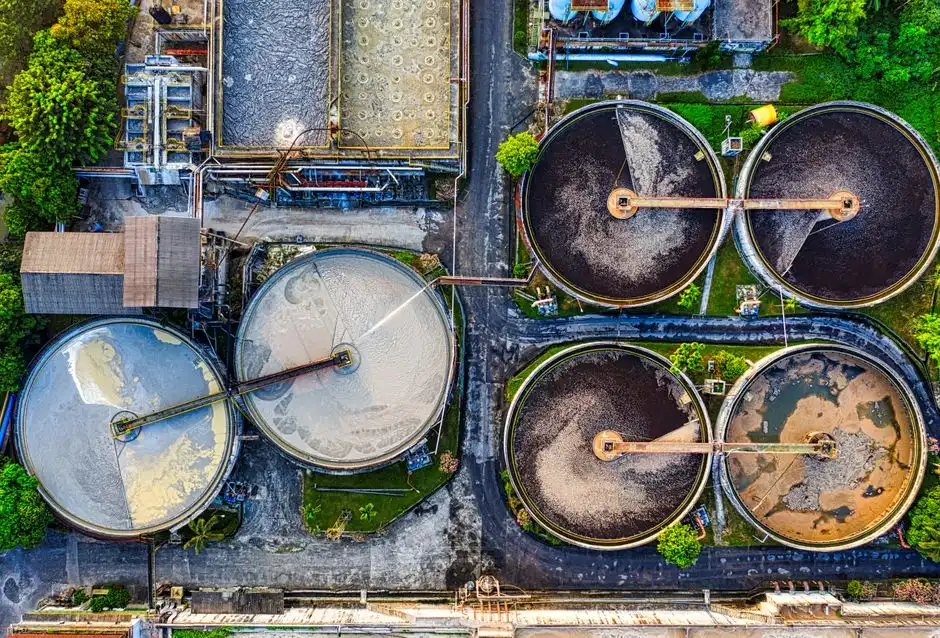
Each treatment step needs a defined contaminant, operating condition, control point, and acceptance evidence. Equalization buffers hydraulic and chemical variation and should be evaluated around the highest anticipated discharge rather than average flow. Pumping and treatment capacity must remain credible during the controlling event; an equipment bid based only on daily average flow has not addressed that requirement.
When dissolved metals must become separable solids, pH correction and chemical precipitation can convert them into solids for subsequent capture. Monitor pH, reagent dosage, and mixing because pH control governs precipitation performance. The DAF system for mining wastewater solids separation is appropriate where buoyant floc, oil and grease, or floatable solids must be removed. Its published capacity range is 4–300 m³/h. Where precipitated solids dominate and a compact separation footprint is important, the lamella clarifier for precipitated mining sludge provides an inclined-plate separation option with published surface-loading rates of 20–40 m/h.
Clarification and filtration are complementary. Clarification removes settleable precipitate or floatable material; multi-media filtration removes residual suspended solids, turbidity, and colloids and protects downstream membranes. Fine colloids that remain can justify UF before RO. The published UF specification covers 2,000–40,000 L/h, uses 0.03-micron PVDF membranes, accepts feed turbidity up to 300 ppm, and includes automatic backwash and air scour.
Add RO only when dissolved metals, conductivity, or salts remain above the applicable sewer requirement or a defined reuse target. A mass balance must identify the concentrate because RO does not eliminate the residual stream. The concentrate needs an authorized destination and its impact on the discharge or reuse plan must be documented.
Chemical-precipitation solids require a managed solids route. The published plate-and-frame press range is 1 m² to 500 m² of filtration area, with manual, hydraulic, and automatic configurations. Selection should follow measured cake volume, target dryness, cycle time, and disposal acceptance—not filtration area alone.
| Process function | Primary purpose | Acceptance evidence |
|---|---|---|
| Equalization | Buffer hydraulic and chemical variation | Peak-flow model, level controls, and upset-storage record |
| pH correction and precipitation | Convert dissolved metals into separable solids | Calibrated pH, dosage trends, and jar or pilot results |
| DAF or lamella clarification | Remove floatable material or settled precipitate | Solids loading, removal performance, and sludge generation |
| Multi-media filtration | Remove residual solids and colloids | Turbidity, solids index where required, and differential pressure |
| UF or RO | Remove fine colloids or dissolved constituents | Validated permeate quality, recovery, and membrane condition |
| Dewatering | Reduce sludge volume for an accepted disposal route | Cake volume, dryness, cycle time, and receiving-site acceptance |
Choose DAF or a lamella clarifier for Durango’s operating envelope
DAF is the better fit when floatable material, oil and grease, buoyant floc, or suitable colloids dominate the separation problem. The selection must address flotation performance, skimming, chemical demand, and the resulting sludge route. A lamella clarifier is generally more suitable when settleable precipitate dominates, available footprint is constrained, and inclined-plate separation with sludge recirculation fits the operating envelope. Verify hydraulic loading against the published 20–40 m/h equipment specification.
Compare both options against the same conditions: average and peak flow, pollutant mass loading, chemical consumption, sludge generation, footprint, operator workload, redundancy, and final compliance during the controlling event. Nameplate capacity alone does not demonstrate that the proposed equipment can treat the wastewater when it matters most. The bid should state the design flow, wastewater profile, required final quality, treatment assumptions, and the evidence used to demonstrate performance.
A published HydropureWater specification states that lamella systems can reduce chemical consumption by up to 30%. Treat this as a company equipment claim, not a regulatory requirement, guaranteed site result, or substitute for a chemical-consumption estimate based on representative wastewater. If a bidder relies on it, request the test basis, chemical definitions, operating conditions, and comparison method.
For polishing options, evaluate the multi-media filtration system for residual solids and membrane protection and the ultrafiltration system for fine-colloid separation as distinct barriers. Neither substitutes for the correct upstream clarification step. A related mining and metals compliance guide provides a broader regional framework, but the equipment decision must remain tied to Durango’s actual wastewater and permit basis.
| Decision criterion | DAF | Lamella clarification |
|---|---|---|
| Controlling contaminant form | Floatable, buoyant, or oil-related material | Settleable precipitate |
| Primary separation mechanism | Flotation and skimming | Inclined-plate settling |
| Equipment focus | Saturation system, recycle, and skimmer | Hydraulic loading, recirculation, and sludge withdrawal |
| Critical bid evidence | Floatation performance, chemical demand, and skum route | Surface loading, solids inventory, and underflow performance |
| Common rejection reason | Applied to predominantly settleable solids without pilot support | Selected without verifying peak solids loading or sludge handling |
Prove compliance with monitoring, records, and contingency controls
Compliance should be demonstrated as a chain of evidence, not inferred from one final sample. Define sampling points at untreated streams, equalization, chemical treatment, clarification, filtrate, and final discharge. This arrangement identifies whether a deviation began in source chemistry, dosing, solids separation, filtration, or membrane treatment.
Record flow, pH, conductivity, chemical dosage, solids-removal performance, filter differential pressure, UF operation, and RO recovery where those stages are present. Map every operating record to the permit condition it supports. Final monitoring frequencies, numerical triggers, sampling methods, and reporting requirements must come from the current industrial user permit and POTW rules.
Develop written alarm, bypass, upset, high-flow, and restart procedures. Each procedure should identify isolation points, permitted storage, sampling requirements, notification responsibilities, and restart criteria. Equipment failure must not become an unauthorized discharge merely because the treatment train lacks a documented operating response.
EPA’s local-limit guidance describes annual reviews and periodic detailed reevaluations. A plant should therefore expect its wastewater profile, local-limit basis, and treatment performance to be reassessed rather than treated as permanently fixed. A complete monitoring program supports that review with traceable operating history.
For a proposed La Plata-area operation, maintain a permit register that clearly separates exploration commitments from future mine-design assumptions. The Durango Herald reported on April 7, 2026, that the exploration project had no completed mine-design engineering, economic study, or environmental study. The plate-and-frame press for precipitated mining sludge and automatic chemical dosing system for controlled precipitation should therefore be specified against confirmed future conditions, not exploration-stage water estimates.
Questions to ask before approving a treatment bid
Approve a bid only after the bidder exposes its assumptions. Request a process flow diagram, source-by-source sampling plan, average- and peak-flow hydraulic model, pollutant mass balance, chemical-consumption estimate, sludge-generation estimate, and final monitoring scheme. Ask the bidder to identify every permit or sewer-rule value used in the design and provide the current authorization document or a clearly marked register of unresolved assumptions.
Require evidence for the controlling operating condition, including redundancy, bypass response, equipment-upset storage, and destinations for sludge and membrane concentrate. Generic equipment specifications cannot establish compliance at the final connection to the POTW collection system. The process flow, equipment configuration, and residual-management plan should align with the same wastewater assumptions.
Do not accept a compliance guarantee based solely on nameplate capacity. Require the supplier to state the design flow, wastewater profile, required final quality, chemical assumptions, sludge quantities, and the evidence supporting each performance claim. A pretreatment procurement framework can help structure those questions, but it does not replace the Durango permit documents.
Treat budget and delivery schedule as unresolved until the wastewater characterization and permit basis are complete. The supplied research contains no supportable Durango-specific treatment cost or delivery schedule. A defensible quotation therefore requires the current permit, representative wastewater data, peak-flow model, residual-disposal route, and a list of unresolved design inputs before procurement compares price and lead time.
Frequently Asked Questions
What numeric sewer limits apply to a mining or metals plant near Durango?
No defensible numeric limit can be stated without identifying the receiving POTW and reviewing the current sewer-use rules, applicable categorical subpart, Colorado authorization, and facility industrial user permit. Request the numerical limits, narrative prohibitions, monitoring conditions, and effective dates in writing. EPA’s regional mining and metals pretreatment guide explains the permitting hierarchy but does not establish Durango limits.
Does a future mine near Durango need a wastewater treatment system now?
Not necessarily, but a zero-discharge exploration program does not determine future mine requirements. EPA states that mining point-source discharges, including associated-impoundment discharges, require NPDES authorization. The April 7, 2026, Durango Herald report stated that the La Plata exploration project had not completed mine-design engineering or environmental studies. Design the treatment train for the future operating scenario, not exploration water use.
Is DAF or a lamella clarifier better for mining wastewater?
DAF fits waste containing floatable material, buoyant floc, oil and grease, or suitable colloids. Lamella clarification fits predominantly settleable precipitate and sites where compact separation is valuable. The controlling wastewater chemistry, peak solids loading, chemical demand, sludge route, and available footprint determine the choice; a general equipment preference is not a defensible basis.
How should an equipment supplier size a pretreatment system?
Require sizing from representative peak flow and peak pollutant mass loading, plus chemical demand and sludge generation. The supplier should demonstrate treatment at the final connection to the POTW collection system during the controlling event. Do not accept sizing from average flow, generic treatment claims, or nameplate capacity alone. If representative data are unavailable, identify them as unresolved design inputs rather than substituting assumptions.
What should a mine wastewater treatment proposal include besides equipment price?
Require the controlling permit conditions, process flow diagram, hydraulic and mass-balance calculations, chemical and sludge estimates, monitoring plan, evidence for the controlling operating condition, upset controls, and documented destinations for sludge and concentrate. This procurement check is distinct from pricing: obtain a complete scope and assumptions register first, then compare quotes on a common basis. The available research does not support a Durango-specific price or delivery promise.
Related Equipment
- DAF system for mining wastewater solids separation — specifications, capacity range, and technical data
- lamella clarifier for precipitated mining sludge — specifications, capacity range, and technical data