Why Birmingham Fabricated Metals Plants Are Regulated Industrial Users
40 CFR Part 433 (Metal Finishing) defines its scope by process, not by NAICS or SIC code, and the legal hook is the six core operations listed in 40 CFR 433.10(a) (per the EPA Metal Finishing Effluent Guidelines page). Those six are: electroplating, electroless plating, anodizing, coating (chromate conversion, phosphate, and similar), chemical etching and chemical milling, and printed circuit board manufacturing. A Birmingham-area job shop that runs even one zinc, nickel, or chromic acid tank is in scope; a stamping cell that ships only dry parts to a separate finisher is generally outside the category, even if its SIC code sits inside Major Groups 34–39. The 46 operations listed in 40 CFR 433.10(a) are downstream sub-categories that get pulled in once any of those six triggers fires (EPA Metal Finishing Effluent Guidelines).
Plants that fall outside Part 433 are not exempt from pretreatment oversight. The general categorical prohibitions in 40 CFR 403.5 — pass-through, interference, fire/explosion hazard, and corrosive damage — apply to any industrial user discharging to a POTW with an EPA-approved pretreatment program. For an Alabama plant the day-to-day paperwork still routes through the local Control Authority rather than directly to EPA, because Alabama does not have full state NPDES primacy delegation for industrial pretreatment enforcement in Jefferson County; the receiving POTW carries that role (per Birmingham sewer use ordinances).
Who the Birmingham Control Authority Actually Is
Under 40 CFR 403.12, the Control Authority is the local POTW if it operates an EPA-approved pretreatment program, and otherwise the state environmental agency. Birmingham-area fabricators discharge to a local POTW whose industrial wastewater / pretreatment permit sets numeric or narrative limits and is independently enforceable by the sewer authority under Birmingham sewer use ordinances. That permit sits on top of the federal rule and is the document an environmental compliance manager should request first, before any treatment equipment is specified (per EPA's Local Limits framework).
Local limits developed under 40 CFR 403.5(c) are always at least as stringent as the federal categorical table and routinely add oil & grease, TSS, and pH caps that the federal Part 433 table does not directly cover (EPA, 40 CFR Part 403.5(c)). The first call for any Birmingham-area plant is therefore the receiving POTW's pretreatment coordinator, to confirm program coverage, request the local discharge permit, and obtain the analytic method list the sewer authority expects on each report.
What 40 CFR Part 433 Actually Limits (PSES vs PSNS)
Part 433 regulates three pollutant families: heavy metals (the Table 1 list at 40 CFR 433.13), total cyanide, and Total Toxic Organics (TTOs). Two parallel sets of numeric limits apply: Pretreatment Standards for Existing Sources (PSES) for facilities operating before August 1982, and Pretreatment Standards for New Sources (PSNS) for facilities constructed after that date; with the exception of cadmium, the numeric values are essentially identical between the two (Iowa Waste Reduction Center, summarizing 40 CFR 433). Daily-maximum and monthly-average concentration limits both apply, and the design has to hold both — not just the long-term average.
The Control Authority can impose stricter numeric or narrative limits through the individual discharge permit, so the design envelope is built from the POTW table layered over the federal table. The categorical envelope is a floor, not a ceiling (EPA, 40 CFR 403.5(c)).
| Pollutant | PSES Daily Max (mg/L) | PSES Monthly Avg (mg/L) | PSNS Daily Max (mg/L) | PSNS Monthly Avg (mg/L) | Source |
|---|---|---|---|---|---|
| Cadmium | 0.69 | 0.26 | 0.11 | 0.07 | 40 CFR 433.13 Table 1 |
| Chromium (total) | 2.77 | 1.71 | 2.77 | 1.71 | 40 CFR 433.13 Table 1 |
| Copper | 3.38 | 2.07 | 3.38 | 2.07 | 40 CFR 433.13 Table 1 |
| Lead | 0.69 | 0.43 | 0.69 | 0.43 | 40 CFR 433.13 Table 1 |
| Nickel | 3.98 | 2.38 | 3.98 | 2.38 | 40 CFR 433.13 Table 1 |
| Silver | 0.43 | 0.24 | 0.43 | 0.24 | 40 CFR 433.13 Table 1 |
| Zinc | 2.61 | 1.48 | 2.61 | 1.48 | 40 CFR 433.13 Table 1 |
| Total Cyanide | 1.20 | 0.65 | 1.20 | 0.65 | 40 CFR 433.13 Table 1 |
| TTOs | 2.13 | — | 2.13 | — | 40 CFR 433.13 Table 2 |
Cadmium is the only metal where PSES and PSNS numeric limits differ materially; a new Birmingham line should be designed to PSNS values, while an existing line can verify against PSES but should still expect the local POTW to apply PSNS-equivalent caps as a conservative baseline (per the national 2026 fabricated metals pretreatment playbook).
The 2026 Treatment Train Birmingham Plants Are Specifying
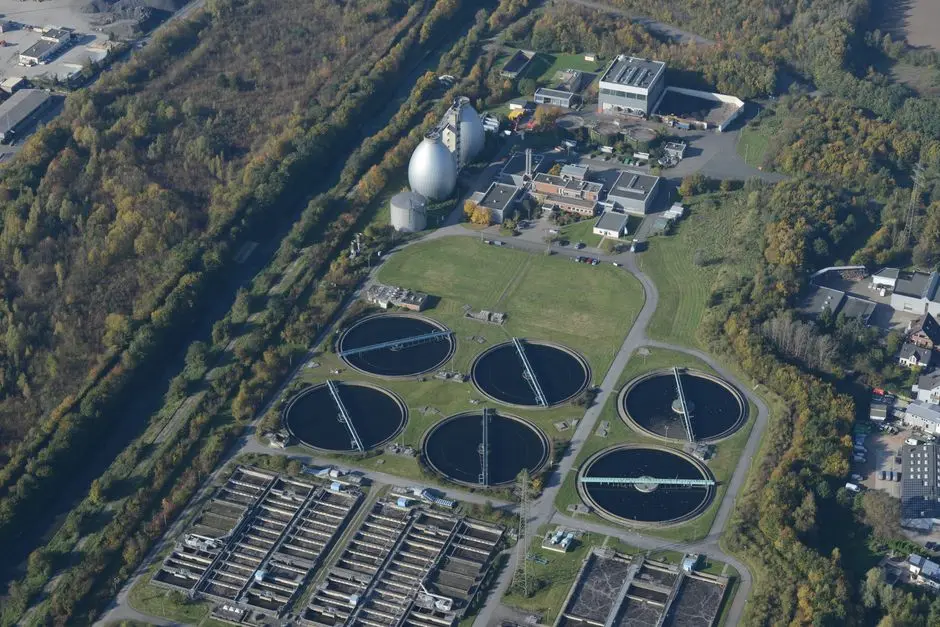
The standard unit-operation sequence for a Part 433 pretreatment system is: rotary mechanical bar screen → flow equalization → cyanide destruction (alkaline chlorination at pH > 11 with ORP control) → hexavalent chrome reduction (sodium metabisulfite or ferrous sulfate at pH 2–3) → pH adjustment → metal hydroxide precipitation → DAF or lamella clarification → polishing filtration → plate-and-frame sludge dewatering. The order is not optional: cyanide before chrome, and chrome before metals precipitation, or else mixed-metal sludges carry residual cyanide and Cr(VI) into the clarifier and the reportable effluent (Iowa Waste Reduction Center; EPA Metal Finishing Effluent Guidelines). Equalization is preceded by a rotary mechanical bar screen to keep rags, wipes, and tramp metal out of the EQ tank — the single most common cause of premature press-cloth failure downstream.
DAF is the workhorse for metalworking waste because it handles the colloidal metal-hydroxide floc that does not settle well in a conventional clarifier, and it also skims free and emulsified oil. Design knobs: hydraulic surface loading 4–20 m/h, air-to-solids (A/S) ratio 0.005–0.060 with 0.02 typical, recycle rate 10–30% of forward flow. A HydropureWater lamella clarifier can substitute for or sit ahead of DAF on low-oil streams, with surface loading 20–40 m/h and chemical consumption roughly 30% below a conventional clarifier because the inclined-plate geometry improves floc-blanket contact. Floated sludge typically runs 2–5% dry solids out of the DAF and dewateres to 25–35% on a plate and frame filter press; a belt press is cheaper and continuous but caps at about 22% dry solids on metal hydroxide, so where the hauler bills by wet ton, plate and frame pays back.
Chemical feed is handled by a PLC-controlled chemical dosing skid managing NaOH/H₂SO₄ for pH trim, sodium metabisulfite for chrome reduction, NaOCl for cyanide destruction, and anionic/cationic polymer for floc. Each pump needs a calibration column and a stroke-count totalizer — without those, the operator is dosing blind and the effluent proves it. Alarm and shutdown interlocks on pH excursion, ORP out of range, and high TSS should auto-divert flow back to the equalization basin header so a chemistry upset does not become a discharge violation.
| Unit Operation | Key Setpoint (2026) | Failure Mode if Skipped |
|---|---|---|
| Rotary bar screen | 2–6 mm aperture | Tramp metal blinds press cloth |
| Equalization basin | pH 6–9 smoothed, flow CV < 0.5 | Downstream chemistry chases batch dumps |
| Cyanide destruction (alkaline chlorination) | pH > 11, ORP > +650 mV | Cyanide resolubilizes metal precipitates |
| Cr(VI) reduction | pH 2–3, ORP 250–300 mV | Cr(VI) bypasses precipitation; reportable exceedance |
| Metal precipitation | pH 8.5–9.5 | Zn, Ni, Cd remain soluble; permit exceedance |
| DAF clarification | Surface loading 4–20 m/h, A/S 0.02 typical, recycle 10–30% | TSS carryover; oil breakout in EQ basin |
| Lamella clarifier (alt.) | Surface loading 20–40 m/h, ~30% lower chemical use | Footprint penalty on low-oil streams |
| Plate-and-frame press | Cake 25–35% DS | Wet-ton haul cost; possible leachate violation |
A HydropureWater DAF system sized to the actual equalized flow and oil load typically removes > 95% of free and emulsified oils and > 90% of TSS on a metalworking waste stream, given proper floc conditioning upstream.
What a Birmingham Floor Drain Actually Looks Like

Most fabricated metals floors generate the same four contaminant families regardless of process mix: free and emulsified oils from stamping, machining, and drawing compounds; dissolved heavy metals (Zn, Ni, Cu, Cr, Pb, Cd) from plating rinsewater and acid pickling; hexavalent chromium from chromic acid anodizing, hard chrome, and conversion coating; and TSS from grinding swarf, casting sand, and hydroxide floc carryover. Cyanide appears wherever alkaline cyanide plating (Zn, Cu, Cd, Ag) is still in use and must be destroyed before metals precipitation or it resolubilizes the precipitates downstream (Iowa Waste Reduction Center).
HydropureWater field data (2026) for a mixed floor drain entering pretreatment shows oils 50–500 mg/L, total dissolved metals 5–200 mg/L, TSS 100–1,000 mg/L, and pH swinging 2–12 across batch dumps. A stamping cell may hold pH near 7 with low metals; a hard chrome line will spike Cr(VI) to 50+ mg/L and drop pH below 2 on a rinse dump. The sampling implication is direct: a one-week composite is the minimum before specifying equipment, because a 4-hour composite that misses the Friday afternoon dump will undersize the equalization basin. The 2026 chromium discharge standard for electroplating compliance treatment guide walks through the same influent envelope and the corresponding reduction-stage sizing.
Birmingham 2026 Reporting Calendar Under 40 CFR 403.12
The administrative cadence is dictated by 40 CFR 403.12, and the Birmingham-area plant inherits it almost verbatim (Iowa Waste Reduction Center, summarizing 40 CFR 403.12 and 40 CFR 433). The first deliverable is the Baseline Monitoring Report (BMR), due to the Control Authority at least 90 days before the plant first discharges regulated wastewater. The second is the initial compliance report, due within 90 days of the compliance date, with pollutant concentrations, average and maximum daily flows, and a corrective plan if limits are not yet met. After that, the plant files semi-annual compliance reports in June and December, each containing pollutant concentrations, flows, sampling/analytical methodology, and a signed compliance certification. The Control Authority must be notified immediately of any release that could interfere with the POTW, and on-site records must be retained for at least three years and produced on request.
| Deliverable | Trigger / Due | Contents | Authority |
|---|---|---|---|
| Baseline Monitoring Report (BMR) | At least 90 days before first discharge of regulated wastewater | Table 1 pollutant results, flow, process description, analytical methods | Control Authority (per 40 CFR 403.12) |
| Initial compliance report | Within 90 days of compliance date | Pollutant concentrations, avg and max daily flows, corrective plan if needed | Control Authority (per 40 CFR 403.12) |
| Semi-annual compliance report | June and December, annually | Pollutant concentrations, flows, sampling/analytical methods, signed certification | Control Authority (per 40 CFR 403.12) |
| Release notification | Immediately on any release that may interfere | Verbal or written notice to POTW | Receiving POTW (per 40 CFR 403.12) |
| Record retention | Minimum 3 years on site | BMR, compliance reports, sampling logs, calibration records, chain-of-custody | Available to Control Authority on request |
For a Birmingham-area fabricator, the practical first call is to the receiving POTW's pretreatment coordinator to confirm program coverage and get a copy of the local discharge permit before any equipment is ordered.
PFAS and the 2026 Forward-Look for Chrome Finishers
EPA's Preliminary Effluent Guidelines Program Plan 15 (September 2021) announced a rulemaking for PFAS discharges from a subset of Metal Finishing and Electroplating facilities, and the agency has identified chrome finishing facilities (chromium plating, chromium anodizing, chromic acid etching, chromate conversion coating) as the predominant PFAS source in the category because some operations have used PFAS-based fume suppressants on hexavalent chromium (EPA Metal Finishing Effluent Guidelines). The rulemaking docket is EPA-HQ-OW-2022-0869; no numerical PFAS limit has been issued for chrome finishers as of 2026.
EPA rescinded its 2022 nonbinding PFAS wastewater permit guidance on 19 September 2026 (per Waste Dive, summarized in the EPA 2022 PFAS wastewater permit guidance rescission note), which changes permitting around PFAS more broadly but does not unwind the category-specific rulemaking on EPA-HQ-OW-2022-0869. The pragmatic 2026 design move for a Birmingham chrome finisher is to design the pretreatment train so an anion exchange or GAC polish skid can be bolted on later, rather than install it now and pay to operate it ahead of any actual limit.
Frequently Asked Questions
Does 40 CFR Part 433 apply to a small Birmingham job shop with one plating line?
Yes. The rule is process-based, not size-based: performing any one of the six core operations — electroplating, electroless plating, anodizing, coating (chromate conversion, phosphate, etc.), chemical etching and chemical milling, or printed circuit board manufacturing — pulls the 46 operations listed in 40 CFR 433.10(a) into scope (per EPA Metal Finishing Effluent Guidelines). One plating tank is enough to trigger coverage.
When is the Baseline Monitoring Report due for a new fabricated metals plant in Jefferson County?
The BMR must be submitted to the Control Authority at least 90 days before the plant first discharges regulated wastewater (per 40 CFR 403.12). The initial compliance report is then due within 90 days of the compliance date, with semi-annual reports following every June and December thereafter.
What is the difference between PSES and PSNS, and which should a new Birmingham plant design to?
PSES (Pretreatment Standards for Existing Sources) applies to facilities operating before August 1982, and PSNS (Pretreatment Standards for New Sources) applies to facilities established after that date. With the exception of cadmium, the numeric limits per 40 CFR 433.13 Table 1 are essentially identical; the legal hook differs. A new Birmingham-area plant should design to PSNS, and should still expect the local POTW to apply PSNS-equivalent caps as a conservative baseline.
Can a plant drop Total Toxic Organics (TTO) monitoring after the first BMR?
Possibly. The Control Authority may waive ongoing TTO monitoring if the facility demonstrates TTO compliance in the BMR and completes the follow-up tasks the CA prescribes (per 40 CFR 433). The waiver is at the Control Authority's discretion, not the facility's, so the BMR submission is the lever to negotiate it.