What the Chromium Discharge Standard for Electroplating Actually Says in 2026
The 2026 chromium discharge standard for electroplating typically caps total chromium at 1.0 mg/L and hexavalent chromium Cr(VI) at 0.2 mg/L in China (GB 21900-2008), while the EU BAT-AEL under IED 2010/75/EU pushes Cr(VI) to ≤0.1 mg/L for sensitive discharges. Raw electroplating rinsewater can carry 50–500 mg/L Cr(VI), so a chemical reduction step converting Cr(VI) to Cr(III), followed by alkaline precipitation, is required to reach the standard. The four-jurisdiction table below gives the numerical ceilings an EHS manager can copy straight into a discharge permit application.
| Jurisdiction / Standard | Total Cr (mg/L) | Cr(VI) (mg/L) | Discharge Point | Notes |
|---|---|---|---|---|
| China GB 21900-2008 Table 1 (existing facilities) | ≤1.0 | ≤0.2 | Surface water / municipal sewer | Effective 2008; in force through 2026 |
| China GB 21900-2008 Table 2 (new facilities, since 2008) | ≤0.5 | ≤0.2 | Surface water | Tighter total-Cr ceiling for greenfield sites |
| EU IED 2010/75/EU BAT-AEL, 2024 update (Surface Treatment of Metals) | 0.2–1.0 | 0.1–0.2 | 0.2 mg/L total Cr / 0.1 mg/L Cr(VI) for surface water; 1.0 / 0.2 for sewer | BAT-AEL ranges, not single values |
| US EPA 40 CFR 413 / 433 Metal Finishing Categorical Pretreatment (existing sources) | 2.77 daily max / 1.71 monthly avg | 0.77 daily max / 0.32 monthly avg | POTW sewer (pretreatment) | Daily maximum and monthly average limits both apply |
| US EPA 40 CFR 413 / 433 (new sources) | 1.71 daily max | 0.32 daily max | POTW sewer (pretreatment) | Tighter ceilings since 1984 promulgation |
| WHO Drinking-Water Guideline (1993, in force) | ≤0.05 (health-based) | Not separately listed | Potable water | Benchmark only if treated effluent is reused as process water |
A common point of confusion: the US EPA NESHAP for Hard and Decorative Chromium Electroplating (40 CFR 63 Subpart N) regulates air emissions from plating tanks (CrO₃ mist), not wastewater. Compliance teams conflating the two end up citing air-emission limits in a wastewater permit application — a misread that the table above eliminates at a glance.
Why Hexavalent Chromium Is Regulated Differently From Total Chromium
Cr(VI) is classified by IARC as a Group 1 carcinogen, is highly mobile in the aqueous phase, and resists conventional hydroxide precipitation. In contrast, Cr(III) is an essential human nutrient at trace levels and precipitates as Cr(OH)₃ above pH 5.5, with Ksp ≈ 6.3 × 10⁻³¹ (per 2025 inorganic chemistry references). That 24-order-of-magnitude gap in solubility is why the standard specifies two separate columns rather than a single "total Cr" ceiling.
A total-Cr-only compliance reading can mask a Cr(VI) violation. Treatment trains that adsorb or co-precipitate Cr(III) without first reducing Cr(VI) will pass a total-Cr field meter while still releasing 0.3–0.8 mg/L Cr(VI) — well over the 0.2 mg/L ceiling. Every compliance sample must therefore run both parameters: total Cr by ICP-OES at a 0.03 mg/L method detection limit, and Cr(VI) by 1,5-diphenylcarbazide colorimetry at 0.004 mg/L (EPA Method 218.6 / ISO 18412). The standard sampling protocols differ by jurisdiction: GB 21900-2008 requires instantaneous grab or 4-hour composite samples at the discharge point, while the EU BAT-AEL expects a 24-hour flow-proportional composite. Plants exporting to both markets typically run both protocols on parallel auto-samplers to avoid a second audit cycle.
Treatment Trains That Hit Cr(VI) ≤0.2 mg/L — Chemistry, Equipment, and Cost
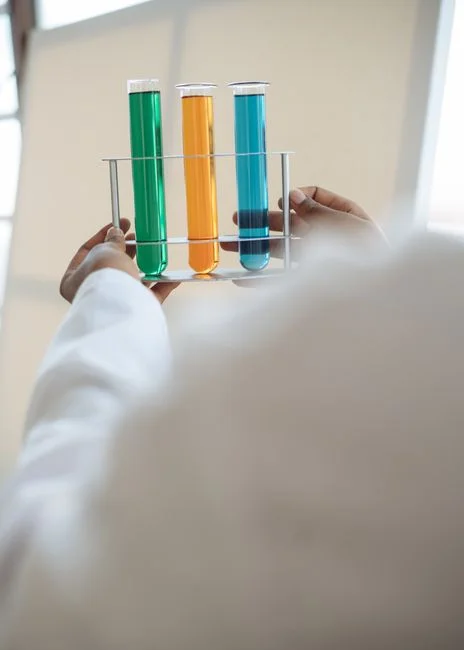
Three treatment-train architectures reliably hit Cr(VI) ≤0.2 mg/L on electroplating rinsewater in 2026. The right choice depends on discharge point, reuse mandate, and CAPEX ceiling — not on vendor marketing.
| Parameter | Option 1: Chemical Reduction + Precipitation | Option 2: Reduction + Precipitation + Ion Exchange | Option 3: Reduction + Precipitation + RO / Electrodialysis |
|---|---|---|---|
| Reagent (reduction) | FeSO₄·7H₂O at 2.5–3.0× stoichiometric, or Na₂S₂O₅ at pH 2.5–3.0 | Same as Option 1 | Same as Option 1 |
| pH for Cr(OH)₃ precipitation | 8.5–9.5 (NaOH or Ca(OH)₂) | 8.5–9.5 | 8.5–9.5 |
| Typical effluent Cr(VI) | ≤0.1 mg/L | ≤0.05 mg/L | ≤0.02 mg/L |
| Typical effluent total Cr | ≤0.5 mg/L | ≤0.1 mg/L | ≤0.05 mg/L |
| Water-reuse suitability | Discharge only | Rinsewater reuse up to 70% | ZLD / >95% reuse |
| Indicative CAPEX adder (vs baseline) | Baseline (≈ $80K–$2M for 5–50 m³/day) | +$80K–$250K | +$150K–$600K |
| Sludge classification | H07 (China) / F006 (US RCRA) | Same | Same; lower volume |
Option 1 — chemical reduction + precipitation remains the baseline for roughly 95% of metal-finishing plants. The reduction tank typically holds 30–60 minutes of retention at peak flow; FeSO₄·7H₂O is dosed at the 2.5–3.0× stoichiometric ratio to overcome side reactions with dissolved oxygen, pH is corrected to 8.5–9.5, and the precipitated Cr(OH)₃ is captured in a lamella clarifier for Cr(OH)₃ precipitation. A PLC-controlled FeSO₄ and NaOH dosing skid tied to ORP and pH probes is the only way to hold the reaction inside the 200–250 mV ORP window during shift swings.
Option 2 — ion-exchange polishing targets plants that must hit ≤0.1 mg/L Cr(VI) for EU surface-water discharge or that want to reuse rinsewater. A weak-base anion resin selectively captures Cr(VI) as HCrO₄⁻; regeneration with NaOH + NaCl produces a small concentrated brine stream that is recycled to the reduction tank, so the ion-exchange step does not generate a second waste stream. CAPEX adder runs $80K–$250K for a 5–20 m³/day polishing train.
Option 3 — membrane polish (RO or electrodialysis) applies where water scarcity or a zero-liquid-discharge mandate justifies the spend. RO rejects 95–99% of dissolved Cr species but requires a UF pretreatment stage to prevent fouling; electrodialysis is more energy-intensive but tolerates higher TDS. CAPEX premium of $150K–$600K over baseline is recoverable only on sites where freshwater cost exceeds $3/m³ or where the local regulator caps total dissolved-solids discharge.
All three options generate a Cr(III)-rich hydroxide sludge classified as hazardous — H07 under China's national hazardous-waste list and RCRA F006 in the US. The sludge is dewatered with a filter press for hazardous Cr(III) sludge dewatering to below 60% moisture before licensed disposal, cutting sludge mass for off-site transport by roughly 70% versus a drying bed. The full 2026 CAPEX envelope for a metal-finishing wastewater train — including civil works, instrumentation, and commissioning — sits between $80K and $6M depending on flow and reuse fraction, as detailed in the 2026 metal finishing wastewater treatment plant cost guide.
Step-by-Step Compliance Playbook for an Electroplating Plant
Five steps transition a plant from initial chromium detection to a discharge permit and a SCADA-trended compliance record. This sequence serves as a roadmap for EHS engineers managing the implementation.
- Characterize the waste stream. Composite-sample rinsewater over five consecutive production days; record pH (typically 1.5–4.0 for Cr(VI) rinse), total Cr, Cr(VI), and hourly flow. Use the peak Cr(VI) loading — often 50–500 mg/L — to size the reduction tank at 30–60 minutes of hydraulic retention.
- Match the discharge point to the right standard. Sewer discharge in the US follows EPA categorical pretreatment limits (2.77 mg/L total Cr daily max); surface-water discharge in the EU triggers the 0.1–0.2 mg/L Cr(VI) BAT-AEL; reuse as process rinsewater brings the WHO 0.05 mg/L benchmark into scope. This decision determines whether Option 1 alone is sufficient or whether polishing (Options 2 or 3) is mandatory.
- Install a PLC-controlled dosing skid for FeSO₄ and NaOH with ORP (±10 mV) and pH (±0.1) probes. Manual dosing often fails audits because shift-to-shift variability pushes the reduction reaction out of its 200–250 mV ORP window. Vendor selection criteria for the PLC platform are covered in the 2026 PLC control supplier buyer's guide.
- Design the lamella clarifier with sludge recirculation. Returning 10–20% of settled sludge to the flocculation zone raises floc density and cuts FeSO₄ consumption by up to 30% (per HydropureWater field data, 2026), which directly lowers monthly OPEX.
- Commission a Cr(VI)-specific online analyzer at the discharge point, tied into the plant SCADA, with an EPA-compliant colorimetric method (e.g., at 540 nm after 1,5-DPC reaction). Continuous trending provides the evidence package auditors expect and catches a chemistry upset within 15 minutes rather than the next day's composite sample.
Frequently Asked Questions
What is the Cr(VI) limit for electroplating wastewater in China under GB