What Drives the 2026 Price of a Metal Finishing Wastewater Treatment Plant
A 2026 metal finishing wastewater treatment plant price is governed by four engineering variables: hydraulic flow, the influent contamination map, the discharge limit the plant must hit, and the level of automation. Get any one of these wrong in your RFP and the equipment list — and the budget number — moves by 2–5×.
Flow rate is the dominant cost driver because tank volume, pump sizing, and clarifier footprint all scale with it. A 5 m³/day bench-scale skid for a small anodizing line sits in the low five figures, while a 500+ m³/day turnkey installation at a PCB fab routinely exceeds $3M. The cost curve is not linear — above 200 m³/day, the price per cubic meter rises because equalization tanks, dual DAF trains, and redundant MBR cassettes kick in.
The influent chemistry drives process selection more than flow does. A typical plating line carries Zn, Ni, Cu, Fe, Al, and free cyanide at pH 9–12; an Open Access Library study confirmed that Zn/Ni/Cu/Fe/Al and CN- coexist in alkaline conditions and require staged precipitation followed by CN- oxidation. Add Cr(VI) from a hard-chrome or decorative line and the train gains a reduction stage plus alkaline chlorination for total cyanide destruction.
Discharge targets force extra stages before the last unit op is even selected. Plants discharging to a US POTW under 40 CFR 413 have different limits than EU sites governed by IED 2010/75/EU, and Chinese facilities under GB 21900–2008 face total chromium ≤1.0 mg/L and Cr(VI) ≤0.2 mg/L — limits tight enough to require ion exchange or RO polishing. Automation level changes the final line item: manual control panels save 15–25% CAPEX versus PLC/SCADA, but PLC/SCADA itself only adds 5–8% to the equipment total and cuts operator hours by 80%.
| Cost Driver | 2026 Range | Primary CAPEX Lever |
|---|---|---|
| Hydraulic flow | 1–2,000 m³/day | Tank, pump, and footprint scaling; non-linear above 200 m³/day |
| Contaminant profile | Zn/Ni/Cu only → mixed metals + Cr(VI) + CN- | Adds reduction, chlorination, and sludge-handling stages |
| Discharge limit | POTW (loose) → surface water (tight) | Triggers MBR/RO polishing when reuse >70% or TDS <0.5 mg/L |
| Automation | Manual panel → PLC/SCADA | +5–8% equipment cost, −80% operator hours |
2026 CAPEX Ranges by Plant Size and Contamination Profile
Metal finishing wastewater treatment CAPEX in 2026 clusters into four defensible tiers, each tied to flow and contamination profile rather than to a vendor catalog. The number to bring to finance depends on which tier matches your site.
Tier 1 — Small job shop (≤50 m³/day, single-metal drag-out rinse): $80K–$180K. Equalization, pH adjustment with NaOH/H₂SO₄, hydroxide precipitation, and a lamella clarifier. No reduction stage, no CN- destruction, no membrane polishing. Typical for a single zinc or nickel line.
Tier 2 — Mid-volume electroplating (50–200 m³/day, mixed Zn/Ni/Cu, no CN-): $180K–$450K. Adds a dissolved air flotation system to remove precipitated metal hydroxides and FOG, a sand filter for TSS polishing, and a plate-and-frame filter press for sludge dewatering. This is the workhorse configuration for general metal finishers and decorative platers.
Tier 3 — Cyanide or hex chrome line (50–200 m³/day, Cr(VI) + CN- destruction required): $400K–$900K. Adds a two-stage reduction (FeSO₄ or NaHSO₃ for Cr(VI) → Cr(III) at pH 2–3) and alkaline chlorination for total cyanide destruction (pH >10.5, NaClO dose, 30–60 min retention). The chemistry tanks alone add $80K–$150K before the DAF.
Tier 4 — High-volume or zero-discharge plant (200–2,000 m³/day, mixed contaminants, water reuse): $900K–$6M+. Adds an MBR membrane bioreactor system for organics and TSS polishing to <1 mg/L, plus an industrial RO polishing system for closed-loop rinse water. For a deeper look at MBR sizing versus MBBR, the MBR vs MBBR 2026 comparison is a useful reference.
Per-m³/day rule of thumb (2026): $1,800–$3,500 per m³/day for Tier 2–3 systems, $3,800–$6,500 per m³/day for Tier 4 zero-discharge systems. Below 50 m³/day, the per-unit cost rises because engineering and controls dominate; above 500 m³/day, it rises again because of train redundancy.
| Tier | Flow (m³/day) | Contaminant Profile | 2026 CAPEX (USD) | Process Train |
|---|---|---|---|---|
| 1 | ≤50 | Single metal, no CN-/Cr(VI) | $80K–$180K | pH adjust + lamella clarifier |
| 2 | 50–200 | Mixed Zn/Ni/Cu | $180K–$450K | Equalization + DAF + sand filter + sludge press |
| 3 | 50–200 | Adds Cr(VI) and/or CN- | $400K–$900K | Tier 2 + reduction + alkaline chlorination |
| 4 | 200–2,000 | Mixed + reuse target | $900K–$6M+ | Tier 3 + MBR + RO |
Process Train Selection: Which Technologies Earn Their Place in 2026
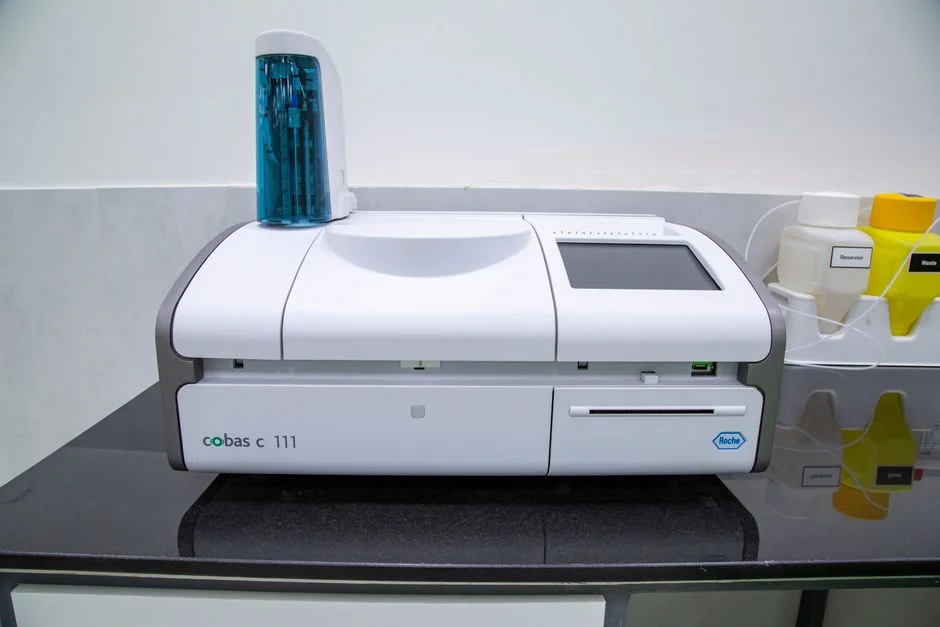
Overengineering is the single most common CAPEX mistake. Every unit op must earn its place against the influent chemistry — here is the 2026 decision logic in order of appearance in the train.
Equalization and pH adjustment are non-negotiable. Plating rinses arrive at pH 9–12 from alkaline zinc and cyanide baths, and at pH <2 from acid pickle rinses. A 24-hour equalization tank with NaOH/H₂SO₄ dosing via a PLC-controlled chemical dosing skid flattens the hydraulic and chemical spikes that otherwise blow downstream precipitation stages. Target pH is 8–9 for hydroxide precipitation of Zn, Ni, Cu, and Cr(III).
Chemical precipitation + DAF is the workhorse for Tier 2–3. A dissolved air flotation system handling 4–300 m³/h will remove 90–95% of precipitated metal hydroxides and FOG, with float solids 3–5% dry solids. For sites with FOG <50 mg/L and lower TSS, a high-efficiency sedimentation tank (lamella clarifier) runs at surface loading 20–40 m/h and cuts chemical consumption by 30% compared with DAF at equivalent load. The pressure flotation vs DAF decision guide covers the trade-offs in detail.
MBR enters when organics or footprint drive the choice. An MBR membrane bioreactor system (corrected product anchor: integrated MBR) occupies roughly 60% of the footprint of conventional activated sludge, drives effluent TSS below 1 mg/L, and handles COD swings from cleaning compounds. It is mandatory when influent COD exceeds 800 mg/L or when discharge to surface water requires TSS <10 mg/L.
RO polishing is reserved for reuse targets and tight TDS limits. An industrial RO polishing system is justified only when water reuse exceeds 70% of plant demand or when total dissolved metals must drop below 0.5 mg/L for closed-loop rinse water. RO reject volume is typically 25–35% of feed and carries the concentrated brine to sludge.
Sludge dewatering closes the loop. A plate and frame filter press with 1–500 m² filter area dewatered metal-hydroxide sludge to 25–35% dry solids, reducing disposal tonnage by up to 60% versus belt-press or drying-bed alternatives. For a steel-mill parallel, the steel mill wastewater treatment plant price 2026 guide shows the same dewatering logic at higher flow.
OPEX Breakdown: What the Plant Actually Costs to Run in 2026
The cheapest CAPEX is rarely the cheapest 5-year lifecycle. A Tier 2 DAF system runs at $0.18–$0.65 per m³ treated; a Tier 4 MBR+RO zero-discharge plant runs at $0.40–$1.20 per m³. Multiply by annual flow and the OPEX gap between two adjacent bids can exceed $150K per year.
Chemicals dominate at 35–45% of OPEX. NaOH for pH lift, H₂SO₄ for Cr(VI) reduction, polymer flocculant for DAF, and NaClO for cyanide destruction in alkaline chlorination. For a Tier 3 line, NaClO alone runs $0.04–$0.09 per m³ at typical dose rates of 8–12 mg Cl₂ per mg CN- oxidized.
Sludge disposal is the second-largest line item. Hazardous-metal hydroxide sludge shipped as a RCRA-listed waste runs $80–$220 per wet ton in 2026 (US benchmark). For a 200 m³/day plant generating 8–12 wet tons/day, that is $230K–$960K per year in disposal alone — a number that justifies a filter press on the first day.
Energy scales with the train. DAF-only systems draw 0.4–0.9 kWh/m³. Adding MBR raises this to 1.4–2.2 kWh/m³, primarily from aeration. RO polishing adds another 0.6–1.3 kWh/m³ for high-pressure pumps, taking the total to 2.0–3.5 kWh/m³ for a Tier 4 zero-discharge plant. At $0.10/kWh, the energy bill for a 500 m³/day Tier 4 plant is $35K–$64K per year.
Labor collapses with PLC/SCADA. A manual plant needs 4–6 operator-hours per day; a PLC/SCADA plant needs under 1 hour per day for routine checks. At fully loaded labor of $35/h, that is $50K–$70K per year saved on a single-shift operation.
| OPEX Lever | Tier 2–3 (DAF) | Tier 4 (MBR + RO) | Share of OPEX |
|---|---|---|---|
| Chemicals (NaOH, H₂SO₄, polymer, NaClO) | $0.08–$0.22/m³ | $0.14–$0.35/m³ | 35–45% |
| Sludge disposal | $0.05–$0.18/m³ | $0.12–$0.40/m³ | 20–30% |
| Energy | $0.04–$0.09/m³ | $0.20–$0.35/m³ | 15–25% |
| Labor + consumables | $0.01–$0.16/m³ | $0.01–$0.10/m³ | 5–15% |
| Total | $0.18–$0.65/m³ | $0.40–$1.20/m³ | 100% |
Regional Compliance Variables That Shift the 2026 Price Tag
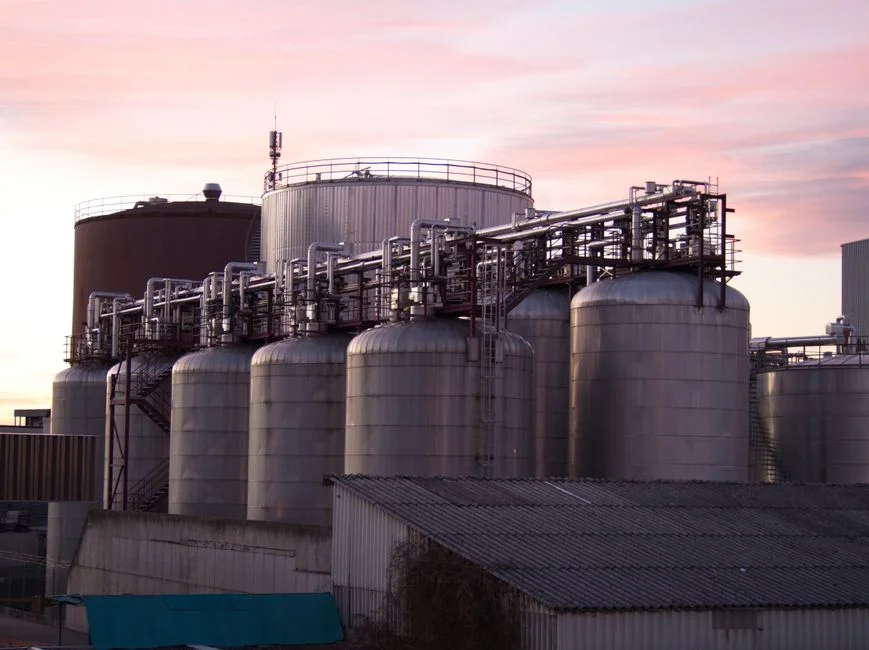
The same 200 m³/day plant can cost $450K in one jurisdiction and $1.1M in another because the discharge limit dictates whether RO polishing is optional or mandatory. Four regulatory regimes cover most procurement decisions in 2026.
EU IED 2010/75/EU sets Zn, Cu, and Ni limits at 0.5–2 mg/L for direct surface-water discharge. Hitting 0.5 mg/L reliably from a precipitation train alone is unrealistic, so EU Tier 2 plants almost always need RO or ion-exchange polishing — adding $150K–$400K to the CAPEX versus a US POTW discharge.
US EPA 40 CFR 413 (electroplating point source category) allows 2.61 mg/L Cu and 4.0 mg/L Ni for direct discharge, but most plants discharge to a POTW under a local sewer use ordinance that is often tighter — 1.0 mg/L Cu and 1.0 mg/L Ni are common limits that still fit a DAF + sand filter train without membranes.
China GB 21900–2008 caps total chromium at 1.0 mg/L and Cr(VI) at 0.2 mg/L — values that force a Cr(VI) reduction stage plus a polishing step. Newer 2024–2026 provincial updates are pushing toward 0.1 mg/L Cr(VI) in watershed-sensitive areas, which is a near-RO-only envelope.
India CPCB and UAE Federal regulations increasingly mirror EU IED limits, raising the floor for what counts as a compliant plant. Plants exporting to EU customers or supplying EU-tier OEMs should design against the IED envelope from day one; the CAPEX premium is typically recovered in 18–30 months through avoided retrofit and discharge-fee penalties.
Buyer's Checklist: How to Scope a 2026 Metal Finishing Wastewater RFP
Use this five-item checklist before issuing any 2026 RFP — it forces the vendor to quote against the same numbers your finance team will audit.
- Confirm a 7-day composite influent analysis covering pH, TSS, COD, total metals (Zn, Ni, Cu, Cr, Fe, Al), Cr(VI), total cyanide, and FOG.
- Define the discharge route explicitly: direct to surface water, municipal sewer, or zero-liquid-discharge to on-site reuse.
- Request a guaranteed CAPEX line item, a 5-year OPEX projection with chemical and sludge-disposal assumptions stated, and a performance guarantee with liquidated damages tied to discharge limits.
- Specify skidded, pre-wired, factory-tested unit ops to cut on-site installation time below 6 weeks.
- Require a Cr(VI) and total cyanide destruction guarantee with measured effluent values, not just a process narrative.
Frequently Asked Questions
How much does a metal finishing wastewater treatment plant cost in 2026? A small electroplating shop below 50 m³/day with zinc and nickel only spends $80K–$250K on a chemical precipitation + DAF train, while a facility handling hexavalent chromium, cyanide, or mixed metal-finishing waste scales to $500K–$6M with MBR and RO polishing (HydropureWater field data, 2026).
What is the per-m³/day cost for an electroplating wastewater system? Budget $1,800–$3,500 per m³/day for Tier 2–3 DAF systems and $3,800–$6,500 per m³/day for Tier 4 zero-discharge MBR + RO trains in 2026.
Which technology is required for hexavalent chromium removal? Hexavalent chromium requires reduction to Cr(III) at pH 2–3 using FeSO₄ or NaHSO₃, followed by hydroxide precipitation at pH 8–9, typically in a two-stage train ahead of the dissolved air flotation system.
How is total cyanide destroyed in plating wastewater? Alkaline chlorination at pH >10.5 with NaClO dose of 8–12 mg Cl₂ per mg CN- oxidized, with 30–60 minutes retention, converts free cyanide to cyanate and then to CO₂ and nitrogen.
What is the typical payback for zero-liquid-discharge on an electroplating line? For a 200 m³/day Tier 4 plant, the OPEX savings from reduced water intake ($1.50–$3.00/m³ potable) and avoided discharge fees typically recover the MBR + RO CAPEX premium in 24–36 months.
How much dry solids does a plate-and-frame filter press produce? A plate and frame filter press dewatered metal-hydroxide sludge reaches 25–35% dry solids, cutting wet-ton disposal volume by up to 60% versus belt-press or drying-bed alternatives.