Wastewater Treatment Plant Cost in Nha Trang 2025: CAPEX, OPEX & Tech-Specific Breakdown for Industrial Buyers
In Nha Trang, a 1,000 m³/day industrial wastewater treatment plant costs VND 15–30 billion (CAPEX) and VND 1,200–2,000/m³ (OPEX), depending on technology. For example, an MBR system meets QCVN 40:2011/BTNMT’s COD limit (<150 mg/L) but costs 30% more upfront than conventional activated sludge. Land acquisition (VND 2–5B/ha in coastal zones) and sludge disposal (VND 1.5M/ton) add 20–40% to total costs. This guide breaks down these numbers by tech, capacity, and compliance needs for Nha Trang’s industrial buyers.
Why Wastewater Treatment Plant Costs in Nha Trang Are Higher Than Global Averages
Coastal land prices in Nha Trang’s industrial peripheries range from VND 2–5 billion per hectare, representing a 15–30% premium on CAPEX compared to inland provinces like Binh Duong or Dong Nai, according to 2023 Khanh Hoa Provincial People’s Committee data. This geographical "land tax" forces industrial facilities to prioritize high-efficiency, low-footprint technologies like Membrane Bioreactors (MBR) over land-intensive lagoon systems. the local labor market for skilled WWTP operators is influenced by the region's dominant tourism sector; average wages for technical staff in Nha Trang (VND 12–18 million/month) are approximately 20% higher than the national industrial average as plants compete with high-end resorts for engineering talent.
Compliance with QCVN 40:2011/BTNMT, the national technical regulation on industrial wastewater, is strictly enforced in the Khanh Hoa province to protect the sensitive marine ecosystem of Nha Trang Bay. Meeting Class A limits (COD < 75 mg/L) or even standard industrial park limits (COD < 150 mg/L, TSS < 100 mg/L) necessitates tertiary treatment stages. For a typical textile or electronics plant, these additional filtration and oxidation units add VND 3–8 billion to the initial CAPEX. Without these, plants risk heavy fines or closure under the Vietnam Environmental Protection Law 2020.
Sludge management presents a significant secondary cost driver. Unlike northern industrial hubs with established waste-to-energy infrastructure, Nha Trang faces limited landfill capacity and stringent coastal environmental protections. Per the Coastal Cities Environmental Sanitation Project (CCESP) Phase 2 report, sludge disposal costs have escalated to VND 1.5 million per ton. This high rate makes investment in advanced sludge dewatering cost comparisons for Nha Trang’s WWTPs essential for long-term budget sustainability, as reducing sludge volume directly offsets the high disposal fees.
CAPEX Breakdown for Industrial Wastewater Treatment Plants in Nha Trang
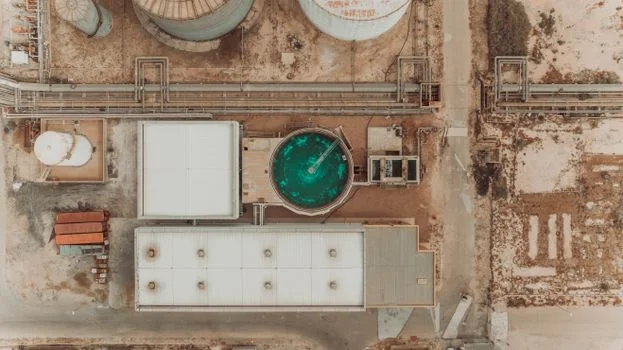
Civil engineering and structural works constitute 40–55% of the total CAPEX in Nha Trang, typically costing between VND 5–15 billion for a 1,000 m³/day facility. These costs are inflated by the requirement for specialized coastal corrosion-resistant coatings and high-sulfate-resistant concrete to withstand the saline air and groundwater common in the region. Excavation in Nha Trang’s varied coastal terrain, which often involves high water tables, requires expensive dewatering and shoring techniques during the construction of aeration tanks and clarifiers.
The choice of technology is the primary variable in equipment expenditure. MBR systems for QCVN 40 compliance in Nha Trang’s electronics/textile plants command the highest equipment price point at VND 25–45 million per m³/day of capacity due to the cost of membrane modules and automated scouring systems. In contrast, DAF systems for Nha Trang’s food processing plants are more economical at VND 15–30 million per m³/day, particularly for high-FOG (fat, oil, and grease) seafood processing effluent. Conventional activated sludge remains the cheapest at VND 10–20 million per m³/day but requires a footprint up to four times larger than MBR.
Engineering, Procurement, and Construction (EPC) fees in Khanh Hoa typically range from 10% to 20% of the total project value. Turnkey MBR projects sit at the higher end of this range due to the complexity of PLC integration and membrane commissioning. Permitting and environmental documentation, including the Environmental Impact Assessment (EIA), can cost between VND 500 million and VND 2 billion, depending on the plant's proximity to protected coastal zones.
| Cost Component | Conventional Activated Sludge | DAF (Food Processing) | MBR (Electronics/Textile) |
|---|---|---|---|
| Equipment (VND/m³/day) | 10M – 20M | 15M – 30M | 25M – 45M |
| Civil Works (1,000 m³/day) | VND 8B – 15B | VND 6B – 10B | VND 5B – 8B |
| Land Requirement | ~2,000 m² | ~1,000 m² | ~500 m² |
| Permitting & EIA | VND 500M – 1.5B | VND 500M – 1.5B | VND 1B – 2B |
OPEX Costs: How Technology and Compliance Impact Your Annual Budget
Energy consumption is the largest contributor to OPEX for advanced systems, with MBR plants in Nha Trang consuming 0.8–1.5 kWh per m³ of treated water. Based on 2024 Vietnam Electricity (EVN) industrial rates, this translates to VND 500–1,200/m³ just for power. The high energy demand is driven by the continuous aeration required to prevent membrane fouling, a cost that is significantly lower in conventional gravity-fed systems but at the expense of effluent quality.
Chemical expenditures are particularly high for facilities utilizing Dissolved Air Flotation (DAF). Effective coagulation and flocculation require Polyaluminum Chloride (PAC) at approximately VND 15,000/kg and polyacrylamide at VND 80,000/kg. For a seafood processing plant in Nha Trang, chemical costs typically range from VND 200–500/m³. To optimize these costs, many plants are shifting toward PLC-controlled chemical dosing for DAF and conventional systems, which reduces chemical waste by 15–25% compared to manual dosing.
Sludge disposal remains a critical OPEX line item. A 1,000 m³/day plant generating 0.5 tons of sludge per day will spend approximately VND 270 million annually on disposal fees alone (at VND 1.5M/ton). Maintenance in Nha Trang’s coastal environment also requires an annual budget of 2–3% of CAPEX for the replacement of corroded valves, sensors, and the re-application of protective coatings on exposed metal surfaces.
| OPEX Category | Estimated Cost (VND/m³) | Primary Driver |
|---|---|---|
| Energy | VND 300 – 1,200 | Aeration (MBR is highest) |
| Chemicals | VND 100 – 500 | Coagulants/Flocculants (DAF is highest) |
| Sludge Disposal | VND 300 – 800 | Moisture content & landfill distance |
| Labor | VND 400 – 700 | Operator expertise level |
| Maintenance | VND 200 – 500 | Coastal corrosion & membrane cleaning |
Technology Comparison: MBR vs. DAF vs. Conventional Activated Sludge for Nha Trang’s Industries
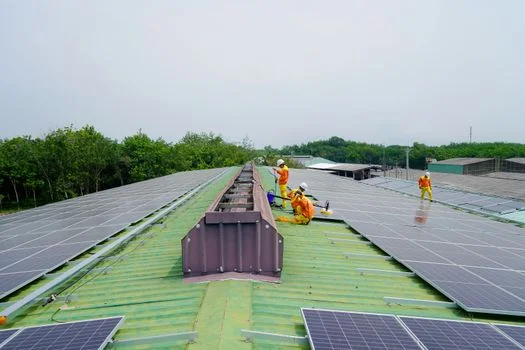
MBR technology offers the highest level of treatment, consistently producing effluent with COD < 50 mg/L and TSS < 5 mg/L, which easily surpasses QCVN 40 Class A standards. While the CAPEX (VND 25–45M/m³/day) and OPEX (VND 1,500–2,500/m³) are the highest among all options, the footprint of 0.5 m²/m³/day is vital for electronics and textile plants located in high-value coastal real estate. This technology is the preferred choice for PCB wastewater treatment costs and compliance strategies where high organic loads and toxic pollutants must be removed with absolute reliability.
For Nha Trang’s massive seafood and dairy sectors, DAF systems are the industry standard. They are specifically engineered to remove 95% or more of Fats, Oils, and Grease (FOG), which can blind membranes or kill biological cultures in other systems. DAF CAPEX is moderate (VND 15–30M/m³/day), and its ability to handle fluctuating influent loads makes it more resilient than conventional biological treatment for seasonal food processing. According to food processing wastewater treatment costs and tech comparisons, DAF combined with a secondary biological stage provides the best ROI for organic-heavy waste.
The North Nha Trang WWTP serves as a historical benchmark, utilizing an Imhoff tank and trickling filter system. While this configuration has a relatively low OPEX (VND 1,800–2,500/m³ for municipal-grade waste), its effluent COD often ranges between 120–180 mg/L. For modern industrial buyers, this performance is insufficient for QCVN 40 compliance without significant upgrades. An MBR upgrade for such a facility would improve effluent COD to < 50 mg/L, though it would increase OPEX to VND 2,000–2,800/m³ due to increased power demands.
| Feature | MBR | DAF | Conventional |
|---|---|---|---|
| Effluent COD | < 50 mg/L | 100 - 200 mg/L (pre-bio) | 80 - 150 mg/L |
| Footprint | 0.5 m²/m³/day | 1.0 m²/m³/day | 2.0 m²/m³/day |
| Best Use Case | Electronics, Textiles | Seafood, Food Processing | Light Manufacturing |
| Complexity | High (Automated) | Medium | Low to Medium |
Compliance Costs: Meeting QCVN 40:2011/BTNMT in Nha Trang’s Coastal Environment
Meeting the QCVN 40 COD limit of <150 mg/L (Class B) or <75 mg/L (Class A) often requires the addition of tertiary treatment units such as sand filters or activated carbon towers, which add VND 3–8 billion to the CAPEX of a standard industrial plant. In the electronics sector, achieving these limits is mandatory for licensing. the removal of Nitrogen (Ammonia-N < 10 mg/L) usually requires an integrated Anoxic/Oxic (A/O) process, which increases the volume of biological tanks and can add VND 5–10 billion to the civil works budget of conventional systems.
Monitoring and reporting are significant hidden costs. The Department of Natural Resources and Environment (DONRE) in Khanh Hoa requires continuous monitoring for many industrial discharge points. An online monitoring station equipped with COD, TSS, NH4-N, pH, and flow sensors costs between VND 1 billion and VND 3 billion to install. Annual maintenance, calibration, and lab verification fees for these systems range from VND 500 million to VND 1.5 billion.
To ensure compliance, buyers should budget for the following checklist:
- EIA and Permitting: VND 500M – 2B (depending on scale).
- Online Monitoring System: VND 1B – 3B (upfront).
- Annual Audits and Lab Fees: VND 300M – 800M.
- Disinfection Systems: Chlorine dioxide generators for pathogen control are often required to meet coliform limits in coastal discharge.
- Operator Training: VND 200M – 500M for certification in advanced PLC systems.
Decision Framework: How to Select the Right WWTP for Your Nha Trang Facility
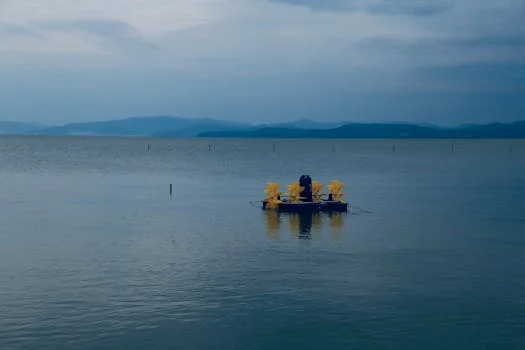
Selecting a wastewater treatment plant in Nha Trang requires a balance between high land costs and strict discharge limits. The first step is a comprehensive influent characterization. A professional lab test (VND 5–15 million) is essential to determine the concentrations of COD, TSS, and FOG. Over-designing leads to wasted CAPEX, while under-designing leads to QCVN 40 violations and costly retrofits.
Once the influent is characterized, the second step is to assess footprint constraints. If your facility is located in a high-density area near Nha Trang city center or the Dien Khanh industrial zones, the VND 2–5B/ha land cost usually makes MBR the most cost-effective choice despite its higher equipment price. For seafood processors with more available land, a DAF system followed by a JY series integrated water purification system for tertiary polishing provides a more balanced CAPEX/OPEX profile.
| If your condition is... | And your constraint is... | Then the recommended tech is... |
|---|---|---|
| COD > 1,000 mg/L | Footprint < 1,000 m² | MBR |
| FOG > 200 mg/L | Budget < VND 20B | DAF + Sand Filter |
| Low-strength (COD < 400) | Ample land available | Conventional Activated Sludge |
| Textile/Dyeing Waste | Strict Color/COD limits | MBR + Ozone/Color Removal |
Frequently Asked Questions
What is the average cost per m³ for a wastewater treatment plant in Nha Trang?
The average investment (CAPEX) ranges from VND 15–30 million per m³ of daily capacity. Operating costs (OPEX) typically range from VND 1,200–2,500 per m³ treated. For a 1,000 m³/day MBR plant, expect a CAPEX of VND 25–45 billion and an OPEX of VND 1,500–2,500/m³.
How much does it cost to meet QCVN 40:2011/BTNMT in Nha Trang?
Compliance typically adds VND 3–10 billion to the initial CAPEX for tertiary treatment and monitoring equipment. It also increases OPEX by VND 300–800/m³ due to additional energy, chemicals, and mandatory annual environmental audits costing VND 300M–800M.
What is the cheapest wastewater treatment technology for Nha Trang?
Conventional activated sludge has the lowest upfront CAPEX (VND 10–20M/m³/day). However, for food processing plants, DAF is often cheaper in the long run because it prevents grease-related system failures. MBR is the most expensive but offers the smallest footprint and highest effluent quality.
How much land is needed for a 1,000 m³/day WWTP in Nha Trang?
An MBR system requires approximately 500 m², a DAF system requires 1,000 m², and a conventional activated sludge plant requires at least 2,000 m². Given Nha Trang’s land prices of VND 2–5 billion per hectare, footprint reduction can save billions in land acquisition costs.
What are the hidden costs of wastewater treatment in Nha Trang?
Key hidden costs include sludge disposal (VND 1.5M/ton), coastal corrosion protection (VND 500M–2B), and online monitoring equipment (VND 1–3B). Additionally, the cost of the Environmental Impact Assessment (EIA) and operator training can add VND 700M–2.5B to the total project budget.