Why Steel Mill Wastewater Pricing Varies 10×
A single price tag for a steel mill wastewater treatment plant is misleading because the same flow rate can cost anywhere from $150,000 to $8 million depending on what is in the water. The four characteristic sub-streams — coke-making, blast furnace/BOF gas cleaning, hot rolling mill cooling, and pickling — carry fundamentally different contaminant loads, and each one selects a different process train. Coke plant wastewater alone runs 1,500–5,000 mg/L COD, 200–1,500 mg/L ammonia, 100–1,000 mg/L phenol, and 5–50 mg/L cyanide at pH 7–10, which is a biological stripping problem, not a clarification problem. BOF slag blowdown carries 1,000–5,000 mg/L TSS at 60–80 °C and pH 8–11 — high-temperature clarification. Rolling mill effluent holds 50–500 mg/L emulsified oil that needs dissolved air flotation. Pickling liquor holds 5–15% free HCl or H₂SO₄ with 50–200 mg/L dissolved iron — an acid recovery problem, not a wastewater problem at all.
The "Made-in-China" low-end listings of $1,130–$1,500 per packaged set are real, but they cover domestic-strength sewage at <50 m³/d, not industrial steel-mill flows. The three price multipliers that actually move a 2026 budget are: daily capacity (m³/d), sub-stream count (single segregated stream vs mixed), and discharge target (sewer discharge, surface water reuse, or zero-liquid-discharge). For budgeting purposes in this guide, CAPEX covers equipment + civil + installation; OPEX covers energy, chemicals, sludge disposal, and labor.
Steel Mill Wastewater Characteristics and the Sub-Streams That Move the Price
Match the parameter matrix below to your own effluent profile before you size a budget — the sub-stream, not the flow, decides which unit operations show up in the quote.
| Sub-stream | COD (mg/L) | Other key parameters | Primary treatment goal |
|---|---|---|---|
| Coke plant (ammonia/phenol/cyanide) | 1,500–5,000 | NH₃-N 200–1,500; phenol 100–1,000; CN⁻ 5–50; pH 7–10 | Ammonia stripping, biological oxidation of phenol/CN⁻ |
| BOF slag blowdown / blast furnace gas cleaning | 200–800 | TSS 1,000–5,000; temp 60–80 °C; pH 8–11; high suspended iron | Cooling, high-rate clarification, DAF |
| Hot rolling mill scale & cooling water | 300–1,200 | Oil & grease 50–500; TSS 200–800; emulsified oils | DAF for FOG/SS, emulsion breaking |
| Pickling acid (HCl or H₂SO₄) | Low (organic) | Free acid 5–15%; Fe²⁺ 50–200 mg/L; TDS 50,000–200,000 | Acid recovery via diffusion dialysis or ion exchange |
| Combined mill sewer (post-segregation) | 300–1,000 | Oil 20–100; SS 100–500; temperature 30–45 °C | Biological treatment (MBR or A/O + clarifier) |
The regulatory envelope that drives equipment sizing is one of three: China GB 13456-2012 for the iron and steel industry sets reuse-tier limits at COD ≤50 mg/L, ammonia ≤5 mg/L, and SS ≤30 mg/L; EU IED 2010/75/EU defines BAT-AEL ranges for indirect and direct discharge; US EPA 40 CFR Part 420 (Iron and Steel) sets subcategory effluent limits for cokemaking, sintering, and forming operations. Coke and pickling are almost always segregated — their chemistry poisons biological activity and corrodes concrete. BOF, rolling, and combined mill sewer are typically blended upstream of equalization and treated biologically, which is why a single DAF + MBR train can cover 60–70% of an integrated mill's flow. Pickling acid, by contrast, is handled as a recovery loop (diffusion dialysis recovers 70–90% of free HCl/H₂SO₄) and never enters the biological train.
A Typical Process Train and the Equipment Behind Each Step
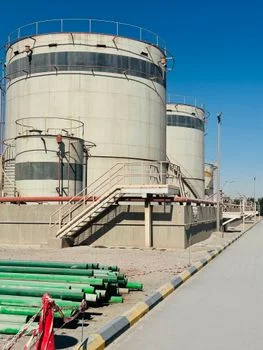
For a 1,000 m³/d mixed-stream mill on a biological train, a turnkey supplier will quote seven discrete blocks. Build the budget line by line.
- Pre-treatment. A GX rotary mechanical bar screen with 2–6 mm aperture handles continuous-duty headworks on industrial flows; pair it with a vortex grit remover. Budget $15,000–$60,000 for screening + grit removal on a 1,000 m³/d plant.
- Oil and suspended solids. A dissolved air flotation system rated 4–300 m³/h is the cost-defining step for rolling-mill and BOF effluent — micro-bubble flotation removes 90–95% of free and emulsified oil at 5–25 m³/m²/h hydraulic loading. Budget $40,000–$180,000 for a 1,000 m³/d DAF skid.
- Equalization and pH correction. An EQ tank sized for 8–24 hours of hydraulic retention plus a PLC-controlled chemical dosing system for NaOH/H₂SO₄ and coagulant. Budget $20,000–$60,000 for tankage + dosing skid.
- Primary clarification. A HydropureWater high-rate lamella clarifier operating at 20–40 m³/m²/h surface loading cuts polymer consumption by 30% versus conventional circular clarifiers. Budget $30,000–$120,000.
- Biological treatment. An integrated MBR membrane bioreactor system rated 10–2,000 m³/d delivers <1 μm effluent at 60% smaller footprint than conventional activated sludge; for a side-by-side view of MBR vs CAS see the MBR vs Conventional Activated Sludge: 2026 Engineering Comparison. Budget $80,000–$350,000 for MBR tankage + membrane cassettes on a 1,000 m³/d plant. OPEX characterization for the upstream DAF is in the DAF Plant Operating Cost Breakdown: 2026 OPEX Guide.
- Sludge handling. A plate and frame filter press with 1–500 m² filtration area dewateres combined DAF float and biological waste activated sludge to 18–25% DS. Budget $25,000–$90,000 for the press + polymer makeup.
- Optional reuse or ZLD. An industrial RO system plus brine concentrator and forced-circulation crystallizer pushes recovery above 95%. The RO block alone runs $80,000–$300,000; full ZLD hardware and evaporation/crystallization adds $200,000–$2,000,000+ depending on recovery target and feed TDS. For the train-selection logic between RO and full ZLD see the Industrial Reverse Osmosis vs Zero Liquid Discharge: 2026 Comparison.
For oil-laden streams, a DAF System vs Oil Water Separator: 2026 Engineering Comparison walks through when DAF replaces a corrugated plate interceptor.
2026 CAPEX Bands by Plant Size and Treatment Depth
The matrix below is the budget envelope a 2026 capex request can be built on. Rows are daily flow; columns are treatment depth. Ranges are turnkey installed cost (equipment + civil + piping + commissioning) for a mixed-stream mill in a low-to-medium civil-cost region; add 15–25% for remote sites or aggressive corrosion-resistant alloy specifications.
| Flow (m³/d) | Biological only (DAF + MBR) | Physico-chemical + biological | Full ZLD (with crystallizer) |
|---|---|---|---|
| 500 | $150K–$450K | $300K–$700K | $1.2M–$2.5M |
| 2,000 | $600K–$1.6M | $1.0M–$2.4M | $3.5M–$7.0M |
| 5,000 | $1.5M–$3.5M | $2.5M–$5.0M | $5.0M–$8.0M+ |
Converted to per-m³/d installed, typical CAPEX is $300–$900 per m³/d for a biological train, $500–$1,200 per m³/d for physico-chemical + biological, and $1,500–$3,500 per m³/d for full ZLD (HydropureWater field data, 2026). The Made-in-China baseline of $1,130–$1,500 per set applies only to packaged domestic plants below 50 m³/d and low-strength effluent — useful as a sanity check, but understating the steel-mill job by a factor of 5–10 if applied to industrial flow. OPEX the CAPEX against: $0.15–$0.60 per m³ treated for a biological train, $0.40–$1.20 per m³ for physico-chemical + biological, and $0.80–$2.50 per m³ for ZLD. Energy typically accounts for 30–40% of OPEX, chemicals 20–35%, and sludge disposal 10–25% (HydropureWater field data, 2026). Civil and installation in a steel-mill setting add 25–45% to bare equipment CAPEX because of heavy foundations under DAF and clarifier skids, FRP or lined concrete for acid-area bunding, and corrosion-resistant pipework for chloride service. MBR systems of the type referenced in the integrated MBR membrane bioreactor system product specification typically fall in the lower-middle of the biological-train CAPEX band at 1,000 m³/d scale.
How to Match Process Train to Discharge Standard and Reuse Goal
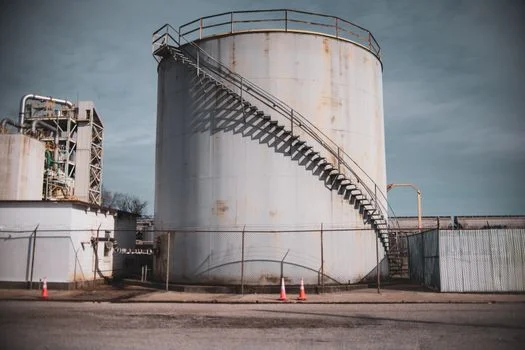
The decision logic is: define the discharge target first, then size the train. Sewer discharge to a municipal POTW with adequate capacity takes a biological train (DAF + A/O + clarifier or MBR) at the lower CAPEX band, $150,000–$1.6 million depending on flow. Direct surface water discharge meeting China GB 13456 Class 1A or EU BAT-AEL adds tertiary multi-media filtration and disinfection — a HydropureWater ClO₂ generator for effluent polishing adds $25,000–$80,000. Cooling-tower makeup reuse, which usually needs <50 mg/L TDS and <5 mg/L silica, adds a multi-media filter ahead of an industrial RO system for 70–80% recovery. A zero-liquid-discharge mandate, common in water-stressed regions of northern China, western India, and southeastern Spain, adds a brine concentrator and forced-circulation crystallizer — the +$200,000–$2,000,000+ line that defines the top of the price range. Pickling acid recovery sits outside the wastewater CAPEX conversation but is a parallel revenue stream: diffusion dialysis plus acid adsorption typically recovers 70–90% of free HCl or H₂SO₄ and pays back the recovery unit over 2–4 years, which is the strongest single talking point for CFO-level approval of an integrated mill project.
Frequently Asked Questions
What is the typical CAPEX for a 1,000 m³/d steel mill wastewater treatment plant in 2026? A biological train (DAF + equalization + MBR) typically costs $400,000–$1,000,000 installed, while a full ZLD system with crystallizer runs $1,800,000–$4,000,000 for the same flow (HydropureWater field data, 2026).
How much does a zero-liquid-discharge system add to steel mill wastewater CAPEX? ZLD hardware (brine concentrator + crystallizer) adds $200,000–$2,000,000+ on top of a biological train, pushing total installed cost to $1,500–$3,500 per m³/d capacity for water-stressed sites.
Can pickling acid be recovered instead of treated as wastewater? Yes. Diffusion dialysis recovers 70–90% of free HCl or H₂SO₄ from spent pickling liquor, offsetting CAPEX through acid resale and typically paying back the recovery skid in 2–4 years.
What discharge standard applies to steel mills in China? GB 13456-2012 sets COD ≤50 mg/L, ammonia ≤5 mg/L, and SS ≤30 mg/L for the iron and steel industry; GB Class 1A reuse limits drive tertiary filtration and disinfection on the treatment train.
Why do Made-in-China packaged plants at $1,130–$1,500 not apply to steel mills? Those units are rated below 50 m³/d for domestic-strength effluent; industrial steel-mill flows run 500–5,000 m³/d with COD 1,500–5,000 mg/L and high-temperature slag blowdown, which is 5–10× the cost of a packaged domestic plant.