Finland’s sewage treatment equipment market is defined by strict EU and national regulations, with suppliers offering advanced technologies like MBR (99% TSS removal) and DAF (95% FOG removal) to meet limits such as the EU Urban Waste Water Directive 91/271/EEC (BOD ≤ 25 mg/L, COD ≤ 125 mg/L). In 2025, industrial buyers face CAPEX ranges of €200,000–€2M for turnkey systems, with OPEX varying by technology (e.g., MBR: €0.30–€0.50/m³ vs. conventional: €0.15–€0.25/m³). This guide provides engineering specs, cost benchmarks, and compliance data to select the right sewage treatment equipment supplier in Finland for your project.
Finland’s Sewage Treatment Equipment Market: Regulations, Trends, and Buyer Challenges
Finland’s stringent environmental regulations, particularly the EU Urban Waste Water Directive 91/271/EEC, mandate advanced sewage treatment solutions across municipal and industrial sectors. The Finnish Water Act (587/2011) reinforces these directives, establishing national permitting requirements and discharge limits. Finland is committed to the Baltic Sea Action Plan (BSAP), aiming for significant nutrient reduction, including a 40% phosphorus reduction target by 2027, which drives demand for highly efficient phosphorus removal technologies from Finland wastewater treatment plant suppliers. These regulatory pressures directly influence the technical specifications and performance expectations for all sewage treatment equipment supplier in Finland.
Key market trends shaping the Finnish wastewater sector include a notable shift towards energy-positive plants, integrating biogas recovery from sludge digestion to offset operational costs. Demand for modular systems is experiencing a 20% Compound Annual Growth Rate (CAGR) from 2023–2025, driven by the need for scalable and rapidly deployable solutions for remote communities or expanding industrial facilities. The adoption of digital monitoring, utilizing IoT sensors for predictive maintenance and real-time process optimization, is also becoming standard practice.
Despite these advancements, buyers face several challenges. Initial CAPEX for industrial sewage treatment equipment in Finland can range from €200,000 to €2M for turnkey systems, necessitating robust financial planning. Limited local suppliers for highly specialized niche applications, such as complex mining effluent treatment or pharmaceutical wastewater, often require engagement with international providers. Additionally, strict permitting timelines, typically 6–12 months for new installations, demand proactive project management and detailed compliance documentation. For instance, a Finnish pulp mill recently avoided €500K/year in non-compliance fines by implementing an integrated high-efficiency DAF system for Finland’s food processing and pulp/paper industries followed by an MBR system for sensitive areas like Baltic Sea catchments, reducing its COD from 1,200 mg/L to below 150 mg/L, demonstrating the critical role of advanced treatment in meeting stringent discharge limits.
Engineering Specs for Key Sewage Treatment Technologies in Finland
Selecting the appropriate sewage treatment equipment supplier in Finland requires a detailed understanding of the engineering specifications for various core technologies, ensuring alignment with influent characteristics and stringent discharge limits. Each technology offers distinct advantages for specific applications and compliance requirements.
MBR Systems
Membrane Bioreactor (MBR) systems integrate biological treatment with membrane filtration, offering superior effluent quality. Typical PVDF membrane pore sizes are 0.1 μm, effectively removing suspended solids, bacteria, and viruses. Flux rates generally range from 15–25 LMH (liters per square meter per hour). Energy consumption for MBR systems, primarily for aeration and membrane scouring, is between 0.6–1.2 kWh/m³. A key advantage is their compact footprint, often 60% smaller than conventional activated sludge systems for comparable capacity. Effluent quality from an MBR system for sensitive areas like Baltic Sea catchments typically achieves COD ≤ 50 mg/L, TSS ≤ 5 mg/L, and Total Nitrogen (TN) ≤ 10 mg/L, making it suitable for discharge into sensitive receiving waters (Nordic WaterTech data).
DAF Systems
Dissolved Air Flotation (DAF) systems are highly effective for removing fats, oils, grease (FOG), and suspended solids (TSS) from industrial wastewater. The technology relies on generating microbubbles, typically 30–50 μm in diameter, which attach to contaminants and float them to the surface for skimming. Hydraulic loading rates for DAF units range from 5–15 m/h. Removal efficiencies are high, achieving 95% for FOG and 92–97% for TSS. HydropureWater’s DAF systems offer capacities from 4–300 m³/h and operate with a saturation pressure of 3–5 bar, ensuring efficient microbubble generation for various industrial applications, including food processing and pulp/paper.
Conventional Activated Sludge
Conventional activated sludge (CAS) systems are widely used for municipal and industrial wastewater. They typically involve an aeration tank followed by a secondary clarifier. Hydraulic Retention Time (HRT) generally ranges from 4–8 hours, while Sludge Retention Time (SRT) is 5–15 days. Energy use is approximately 0.3–0.5 kWh/m³. While robust, CAS systems have limitations, particularly poor performance when faced with shock loads, such as sudden spikes in organic content from pulp mill effluent, which can lead to biomass washout and non-compliance.
Sludge Dewatering
Efficient sludge dewatering is crucial for reducing waste volume and disposal costs. Two common technologies are plate and frame filter presses and belt presses. Plate and frame filter presses offer higher solids capture (typically 95%) and achieve a drier cake (30–40% solids content) compared to belt presses, which typically capture 90% solids and produce a cake dryness of 20–25%. OPEX for plate and frame filter presses is generally higher (€0.10–€0.20/m³ sludge) due to batch operation and labor intensity, while belt presses are more continuous and have lower OPEX (€0.05–€0.15/m³ sludge). For a detailed cost comparison of sludge dewatering technologies for Finnish projects, a total cost of ownership analysis is recommended.
Disinfection
Disinfection ensures the removal of pathogenic microorganisms before discharge or reuse. Chlorine dioxide (ClO₂) and UV irradiation are common methods. HydropureWater’s ClO₂ generators offer capacities from 50–20,000 g/h, achieving a 99.9% kill rate for E. coli. UV disinfection requires a dose of 40 mJ/cm² for 4-log inactivation of most pathogens, with lamp lifespans typically 12–18 months. UV systems are chemical-free but require regular lamp replacement and cleaning to maintain efficacy.
| Technology | Key Specs | Typical Effluent Quality | Energy Use (kWh/m³) | Footprint Reduction |
|---|---|---|---|---|
| MBR System | PVDF 0.1 μm pore, 15–25 LMH flux | COD ≤ 50 mg/L, TSS ≤ 5 mg/L, TN ≤ 10 mg/L | 0.6–1.2 | 60% smaller than CAS |
| DAF System | 30–50 μm microbubble, 5–15 m/h hydraulic rate | 95% FOG removal, 92–97% TSS removal | 0.2–0.4 | Dependent on flow, generally compact |
| Conventional Activated Sludge | 4–8 hr HRT, 5–15 day SRT | BOD ≤ 25 mg/L, COD ≤ 125 mg/L, TSS ≤ 35 mg/L | 0.3–0.5 | Standard, requires secondary clarifier |
| Plate & Frame Filter Press | 95% solids capture, 30–40% cake dryness | N/A (sludge dewatering) | 0.10–0.20 (OPEX €/m³) | Batch process, compact for throughput |
| Belt Press | 90% solids capture, 20–25% cake dryness | N/A (sludge dewatering) | 0.05–0.15 (OPEX €/m³) | Continuous, larger footprint than plate press |
| ClO₂ Disinfection | 50–20,000 g/h capacity | 99.9% E. coli kill rate | Minimal (chemical generation) | Compact |
| UV Disinfection | 40 mJ/cm² dose | 4-log inactivation | Variable (lamp power) | Modular |
Technology Comparison: Which System Fits Your Finland Project?
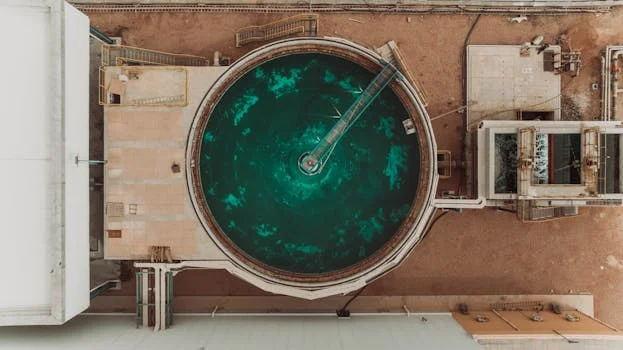
Matching sewage treatment technologies to specific project requirements in Finland is critical for achieving both compliance and operational efficiency, especially given diverse industrial and municipal needs. The selection process must consider influent characteristics, discharge limits, space availability, energy consumption, and the unique challenges of cold climates.
Use-Case Matching
- Municipal Wastewater: For most municipalities, a conventional activated sludge system with tertiary treatment (e.g., sand filtration, phosphorus removal) is common. However, for sensitive receiving waters or high-quality effluent needs, an MBR system for sensitive areas like Baltic Sea catchments offers superior performance, meeting stringent nutrient limits.
- Food Processing: Industries with high FOG and organic loads, such as dairies or meat processors, benefit significantly from a primary high-efficiency DAF system for Finland’s food processing and pulp/paper industries followed by biological treatment (e.g., anaerobic digestion or activated sludge).
- Pulp and Paper: These facilities often generate high COD/BOD wastewater. A combination of DAF for fiber and TSS removal, followed by anaerobic digestion and then aerobic polishing, is often effective.
- Mining: Mining effluent frequently contains heavy metals and suspended solids. Chemical precipitation for metal removal, followed by DAF or clarification, is a common approach.
Cold-Climate Considerations
Finland's climate necessitates specific design considerations for wastewater treatment. Insulated tanks and heat exchangers are vital for maintaining optimal biological activity in activated sludge and MBR systems, preventing temperature drops that can impair microbial performance. Freeze-resistant DAF saturators, similar to Arctic Water Systems’ designs, are essential to prevent ice formation in critical components. For modular underground sewage treatment plant for Finland’s cold climates, underground installation or robust insulation is standard practice to protect against freezing temperatures.
Space Constraints
Space availability is a significant factor in technology selection. MBR systems are highly advantageous due to their 60% smaller footprint compared to conventional activated sludge systems, which require larger aeration tanks and secondary clarifiers. Modular sewage treatment systems for Finland’s remote or space-constrained sites, such as the WSZ series, offer compact, pre-fabricated solutions that minimize on-site construction area.
Energy Efficiency
Energy consumption varies substantially between technologies. MBR systems typically consume 0.6–1.2 kWh/m³, DAF systems 0.2–0.4 kWh/m³, and conventional activated sludge 0.3–0.5 kWh/m³. In industrial applications, incorporating biogas recovery from anaerobic digestion can offset 30–50% of the energy costs, significantly improving the total cost of ownership. The choice of sewage treatment equipment supplier in Finland should consider their offerings in energy recovery and optimization.
Compliance Alignment
The chosen technology must directly address specific compliance requirements. MBR systems are ideal for discharge into sensitive areas, particularly those impacting Baltic Sea catchments, where stringent nutrient (N and P) limits apply. DAF systems are crucial for FOG-heavy industries (food, pulp) to meet discharge limits for suspended solids and grease. Chemical dosing systems are often required for heavy metal removal in mining wastewater to comply with specific local permits.
| Technology | Best Use Case | Cold-Climate Suitability | Space Efficiency | Compliance Strength |
|---|---|---|---|---|
| MBR System | Municipal (sensitive areas), Industrial (high-quality reuse) | High (with insulation/heating) | Very High (60% smaller) | Excellent (low COD, TSS, TN, P) |
| DAF System | Food Processing, Pulp/Paper, Pre-treatment for high FOG/TSS | High (with freeze-resistant saturators) | Medium (compact for primary treatment) | Excellent (FOG, TSS, colloidal particles) |
| Conventional Activated Sludge | General Municipal, Industrial (stable influent) | Medium (requires heated building/tanks) | Low (requires large footprint) | Good (BOD, COD, TSS per EU UWW) |
| Anaerobic Digestion | High-strength industrial (pulp, food), Sludge treatment | High (requires heating) | Medium | Biogas production, COD reduction |
| Chemical Precipitation | Mining (heavy metals), Phosphorus removal | High | Medium | Excellent (heavy metals, phosphorus) |
Cost Benchmarks for Sewage Treatment Equipment in Finland (2025)
Understanding the CAPEX and OPEX for sewage treatment equipment in Finland is essential for accurate project budgeting and long-term financial planning, with significant variations across technologies and operational scales. These benchmarks provide a crucial reference for evaluating proposals from any sewage treatment equipment supplier in Finland.
CAPEX Ranges (Turnkey Systems)
- MBR Systems: €500–€1,200 per m³/day of treatment capacity. This higher cost reflects the advanced membrane technology and superior effluent quality.
- DAF Systems: €120–€300 per m³/h of hydraulic capacity, depending on materials and automation level.
- Conventional Activated Sludge: €200–€500 per m³/day of treatment capacity. This is generally the most economical option for primary biological treatment.
- Tertiary Treatment: Additional costs of €50–€150 per m³/day for advanced filtration or disinfection units.
OPEX Breakdown
Operational expenditures are typically dominated by a few key categories:
- Energy: 40–60% of total OPEX, driven by aeration, pumping, and heating.
- Chemicals: 20–30% for coagulants, flocculants, pH adjusters, and disinfectants.
- Labor: 10–20% for monitoring, maintenance, and operational staff.
- Maintenance: 5–10% for spare parts, membrane cleaning, and equipment servicing.
For example, a 100 m³/h high-efficiency DAF system for Finland’s food processing and pulp/paper industries can cost €0.20–€0.35/m³ to operate, including energy, chemicals, and labor (Vikas Pump data). MBR systems typically have higher OPEX (€0.30–€0.50/m³) due to energy-intensive aeration and membrane cleaning, while conventional systems are lower (€0.15–€0.25/m³).
Finland-Specific Factors
Several factors unique to Finland influence project costs:
- Higher Labor Costs: Skilled technicians and engineers command €50–€80/hour, impacting installation and maintenance budgets.
- Cold-Climate Upgrades: Insulation, heating systems, and freeze-resistant components can add a 10–20% premium to equipment and construction costs. This is a critical consideration for any sewage treatment equipment supplier in Finland.
- Permitting Fees: Environmental permits can range from €10K–€50K, depending on project scale and complexity.
ROI Drivers
Beyond direct costs, return on investment (ROI) is crucial:
- Energy Savings: Implementing energy-efficient equipment or biogas recovery in an MBR system for sensitive areas like Baltic Sea catchments can generate significant long-term savings.
- Reduced Fines: Avoiding non-compliance penalties for exceeding COD or nutrient limits, which can reach up to €100K/year for industrial discharges, provides a substantial financial incentive.
- Water Reuse: Treated effluent can be reused for industrial processes or irrigation, reducing reliance on fresh water supplies, which can cost €1.50/m³ in some areas.
Supplier Pricing
Local suppliers, such as Nordic WaterTech, often offer advantages in faster permitting support, local service, and lower shipping costs. International suppliers, like HydropureWater, can sometimes offer lower CAPEX (e.g., 20–30% cheaper for MBR systems) due to economies of scale, but buyers must factor in shipping, customs, and potentially higher installation costs if local expertise is limited.
| Cost Category | MBR System | DAF System | Conventional Activated Sludge |
|---|---|---|---|
| CAPEX (Turnkey) | €500–€1,200/m³/day | €120–€300/m³/h | €200–€500/m³/day |
| OPEX (per m³) | €0.30–€0.50 | €0.20–€0.35 | €0.15–€0.25 |
| Energy (% of OPEX) | 40–60% | 40–60% | 40–60% |
| Chemicals (% of OPEX) | 20–30% | 20–30% | 15–25% |
| Labor (% of OPEX) | 10–20% | 10–20% | 10–20% |
How to Select a Sewage Treatment Equipment Supplier in Finland: A Zero-Risk Framework
A systematic, multi-step framework is crucial for selecting a reliable sewage treatment equipment supplier in Finland, mitigating risks of non-compliance, cost overruns, and operational failures. This structured approach helps engineering managers, procurement officers, and municipal planners make informed decisions.
Step 1: Define Project Requirements
Begin by compiling a comprehensive checklist of your project's technical and operational needs. This includes detailed influent characteristics (e.g., average and peak flow rates, COD, TSS, FOG, pH, nutrient concentrations), specific discharge limits (EU Urban Waste Water Directive 91/271/EEC or stricter local permits), available space constraints, and the overall budget (CAPEX + OPEX). Defining these parameters precisely will serve as the foundation for evaluating supplier proposals.
Step 2: Shortlist Suppliers
Identify potential sewage treatment equipment supplier in Finland based on critical criteria. Prioritize local compliance expertise, specifically their experience with the Finnish Water Act and regional environmental agencies. Assess their technical support capabilities (e.g., 24/7 service, local spare parts availability) and request relevant case studies of similar projects successfully completed in Finland. For example, a supplier with a proven track record like Nordic WaterTech’s 2023 project for a Helsinki food processor, implementing a DAF + MBR system that achieved 98% COD removal, demonstrates valuable local experience.
Step 3: Request Engineering Proposals
Issue a detailed Request for Proposal (RFP) that explicitly asks for key engineering items. These should include process flow diagrams, comprehensive equipment specs (e.g., membrane pore size for MBR, microbubble size for DAF), guaranteed energy use (kWh/m³), and clear compliance guarantees (e.g., "effluent COD ≤ 125 mg/L" under specified operating conditions). Ensure the RFP mandates a breakdown of both CAPEX and projected annual OPEX.
Step 4: Evaluate Proposals
Create a comparison matrix to objectively evaluate all received proposals. Key metrics should include CAPEX, projected OPEX, system footprint, guaranteed energy use, and an assessment of compliance risk. Be vigilant for red flags such as vague specifications, a lack of local Finnish references, or the absence of cold-climate testing data for their proposed equipment. A supplier who cannot clearly articulate how their system will perform in sub-zero temperatures presents a significant risk.
Step 5: Pilot Testing
For large-scale industrial projects or those with highly variable influent, consider pilot testing a DAF or MBR system for 3–6 months. This crucial step validates the technology's performance with your specific wastewater characteristics under real-world conditions. While it incurs a cost of €20K–€50K, pilot testing significantly reduces the risk of full-scale system failure, which can have far greater financial and compliance implications.
Step 6: Contract Negotiation
Finalize the supplier agreement with robust contractual clauses. Include clear performance guarantees (e.g., "95% uptime" or "guaranteed effluent quality for 5 years"), liquidated damages for project delays or non-performance, and comprehensive local service agreements (e.g., a guaranteed 4-hour response time for critical issues). These clauses protect your investment and ensure long-term operational reliability.
| Step | Key Actions | Evaluation Criteria / Red Flags |
|---|---|---|
| 1. Define Requirements | Influent (COD, TSS, FOG, pH), Discharge (EU 91/271/EEC), Flow Rate, Space, Budget | Incomplete data leads to inaccurate proposals |
| 2. Shortlist Suppliers | Local compliance expertise, 24/7 technical support, Finnish case studies | No local references, limited support network |
| 3. Request Proposals | Process flow diagrams, detailed equipment specs, energy use, compliance guarantees | Vague specs, missing data, generic proposals |
| 4. Evaluate Proposals | CAPEX, OPEX, Footprint, Energy Use, Compliance Risk Assessment | No cold-climate testing data, unclear performance metrics |
| 5. Pilot Testing | On-site trial for 3-6 months (industrial projects) | Skipping this step increases full-scale failure risk |
| 6. Contract Negotiation | Performance guarantees, liquidated damages, local service agreements | Absence of strong guarantees or local support clauses |
Frequently Asked Questions
Finnish buyers frequently inquire about specific aspects of sewage treatment, ranging from regulatory compliance to technology suitability and overall project costs.
What are the discharge limits for industrial wastewater in Finland?
The EU Urban Waste Water Directive 91/271/EEC sets baseline limits for BOD (≤ 25 mg/L), COD (≤ 125 mg/L), and TSS (≤ 35 mg/L) for discharges from urban areas. However, specific industrial sectors, such as pulp and paper or food processing, may face stricter local environmental permits with lower limits (e.g., COD ≤ 100 mg/L, or specific nutrient limits) dictated by the Finnish Water Act and regional environmental authorities. It is crucial to consult your local permit requirements.
How much does a sewage treatment plant cost in Finland?
CAPEX for a sewage treatment plant in Finland varies widely, from approximately €200,000 for a small municipal plant serving 500 Population Equivalent (PE) to €2 million for a large industrial plant treating 5,000 m³/day. OPEX also differs by technology: MBR systems typically cost €0.30–€0.50/m³ to operate, DAF systems €0.20–€0.35/m³, and conventional activated sludge plants €0.15–€0.25/m³.
What is the best sewage treatment technology for cold climates?
For cold climates like Finland's, MBR systems with insulated tanks and heat exchangers, similar to designs by Arctic Water Systems, are highly effective as they maintain optimal biological temperatures. DAF systems with freeze-resistant saturators are also suitable. Conventional systems may require fully heated buildings or substantial insulation to prevent freezing and maintain performance, which adds to both CAPEX and OPEX.
Can I reuse treated wastewater in Finland?
Yes, treated wastewater can be reused in Finland, but primarily for non-potable applications such as industrial process water, cooling water, or irrigation. Effluent from advanced treatment technologies like MBR systems (TSS ≤ 5 mg/L) is often suitable for reuse, but it typically requires additional disinfection (e.g., UV irradiation or chlorine dioxide) to meet specific quality standards for its intended application.
How long does it take to install a sewage treatment plant in Finland?
The timeline for a new sewage treatment plant in Finland generally involves 6–12 months for environmental permitting and design, followed by 3–6 months for construction and commissioning. Modular systems, such as HydropureWater’s modular underground sewage treatment plant for Finland’s cold climates (WSZ series), can significantly reduce construction time, often allowing for installation and commissioning within 4–8 weeks after permit approval, making them ideal for rapid deployment or temporary solutions.