Modular Sewage Treatment System Working Principle: 2025 Engineering Specs, Process Flow & Zero-Risk Selection Guide
A modular sewage treatment system operates on the principle of prefabricated, standardized process units that treat wastewater in parallel or series, offering significant advantages in performance and flexibility. For example, a typical 50 m³/h system utilizing anoxic/aerobic (A/O) biological contact oxidation achieves 92–97% COD removal (from influent concentrations of 300–800 mg/L) and over 95% TSS reduction, occupying a footprint 60% smaller than conventional activated sludge plants. Individual modules typically handle flow rates of 10–20 m³/h, enabling seamless scalability from 1 m³/h for rural clinics to 500 m³/h for large industrial parks by simply adding or removing units. This inherent modularity also provides built-in redundancy: if one module requires maintenance, the remaining units can sustain 70–90% of the overall treatment capacity, preventing complete operational shutdowns.Why Factories and Municipalities Are Switching to Modular Sewage Treatment Systems
A 2024 case study from HydropureWater demonstrates that a textile factory in Dhaka, Bangladesh, reduced unplanned downtime by 40% and compliance fines by 60% after transitioning from a conventional activated sludge plant to a 100 m³/h modular Anoxic/Oxic (A/O) system. This real-world scenario highlights the critical challenges faced by industrial facilities and municipalities with traditional wastewater treatment infrastructure: fluctuating wastewater loads, severe space constraints, and escalating compliance risks. Conventional systems, often built on-site, present several common pain points for operators and procurement teams. Firstly, they typically incur 30–50% higher capital expenditure (CAPEX) due to extensive civil works, specialized labor, and prolonged construction periods. Secondly, installation timelines for conventional plants can stretch from 6 to 12 months, delaying operational readiness and revenue generation. Thirdly, their rigid design offers limited scalability, making it difficult for growing industrial parks or expanding urban areas to adapt to changing flow rates without significant additional investment. Regulatory drivers are further accelerating the shift towards decentralized wastewater treatment solutions like modular systems. The U.S. EPA’s 2025 effluent guidelines for industrial wastewater (40 CFR Part 403) and China’s GB 18918-2002 Class 1A standards increasingly mandate higher treatment efficiencies and stricter discharge limits. These stringent requirements often exceed the capabilities of older, conventional plants, forcing businesses to upgrade or face substantial penalties. Modular packaged sewage treatment plants, with their rapid deployment, compact footprint, and inherent flexibility, offer a compelling solution for achieving consistent compliance and long-term operational resilience.Modular Sewage Treatment System Process Flow: Step-by-Step Engineering Breakdown
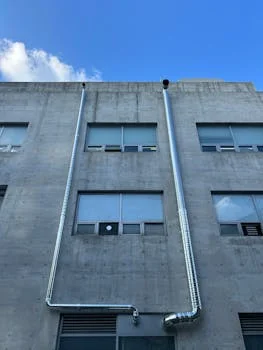
- Influent Screening: Raw wastewater first enters the screening stage. Rotary mechanical bar screens, such as HydropureWater’s GX Series, are employed to remove coarse solids larger than 3 mm. This critical pretreatment step protects downstream pumps, aeration equipment, and sensitive membranes (in MBR systems) from clogging and damage. These screens achieve over 95% removal of suspended solids and debris.
- Pretreatment (FOG/TSS Reduction): Following screening, wastewater often undergoes further pretreatment to reduce fats, oils, and grease (FOG) and remaining suspended solids (TSS). Dissolved air flotation (DAF) systems, like HydropureWater’s, are highly effective here. Operating at flow rates from 4–300 m³/h, DAF systems typically reduce FOG by 90% and TSS by 80% through the introduction of fine air bubbles that float contaminants to the surface for skimming (per EPA 2024 benchmarks). This stage is crucial for optimizing subsequent biological treatment. For more on DAF systems, explore DAF systems for high-efficiency pretreatment in modular plants.
- Biological Treatment (A/O Modules): The core of many modular systems is biological treatment, often utilizing anoxic/aerobic (A/O) modules. In this stage, microorganisms consume organic pollutants (COD and BOD) and nutrients (nitrogen and phosphorus). Anoxic zones facilitate denitrification (converting nitrates to nitrogen gas), while aerobic zones provide oxygen for nitrification and organic matter degradation. These modules achieve 92–97% chemical oxygen demand (COD) removal (from influent concentrations of 300–800 mg/L) and over 95% biochemical oxygen demand (BOD) reduction with a hydraulic retention time (HRT) typically ranging from 6–12 hours. This process aligns with the principles of biological contact oxidation, where biomass adheres to media, enhancing treatment efficiency.
- Clarification: After biological treatment, the mixed liquor flows into a clarification unit to separate treated water from biomass (sludge). Lamella clarifiers, offered by HydropureWater, are a compact and highly efficient option. Their inclined plates increase the effective settling area, reducing surface loading rates to 20–40 m/h. This design typically cuts chemical coagulant consumption by 30% compared to conventional sedimentation tanks, while achieving >90% TSS removal.
- Disinfection: The clarified effluent then undergoes disinfection to eliminate pathogenic microorganisms. Chlorine dioxide generators (e.g., HydropureWater) are commonly used, producing 50–20,000 g/h of ClO₂. This ensures a 99.9% pathogen kill rate, meeting stringent discharge standards and often WHO drinking-water quality guidelines for certain applications (WHO 2022). Learn more about disinfection with chlorine dioxide generators.
- Sludge Handling: The settled sludge from the clarifier, rich in microorganisms and captured pollutants, is processed for dewatering. Plate and frame filter presses (available in sizes from 1–500 m² filter area), like those from HydropureWater, are efficient for this purpose. They dewater sludge to 30–40% solids content, significantly reducing sludge volume and subsequently lowering disposal costs by up to 50% (HydropureWater case data).
The table below summarizes typical engineering parameters for a modular A/O system:
| Process Stage | Key Function | Target Parameter | Typical Performance/Value |
|---|---|---|---|
| Influent Screening | Coarse Solids Removal | Particle Size Cutoff | >3 mm removed |
| Pretreatment (DAF) | FOG & TSS Reduction | FOG Removal | 90% reduction |
| TSS Removal | 80% reduction | ||
| Biological (A/O) | Organic & Nutrient Removal | COD Removal | 92–97% (from 300–800 mg/L) |
| BOD Removal | >95% | ||
| Hydraulic Retention Time (HRT) | 6–12 hours | ||
| Clarification (Lamella) | TSS Separation | Surface Loading Rate | 20–40 m/h |
| TSS Removal Efficiency | >90% | ||
| Disinfection (ClO₂) | Pathogen Inactivation | Pathogen Kill Rate | 99.9% |
| Sludge Handling | Sludge Dewatering | Solids Content Post-Dewatering | 30–40% |
Modular vs Conventional Sewage Treatment: Performance, Cost, and Footprint Comparison
Modular sewage treatment systems consistently demonstrate lower capital expenditure (CAPEX) and operational expenditure (OPEX) compared to conventional, site-built plants, primarily due to factory prefabrication and optimized resource utilization. This head-to-head comparison provides a data-driven justification for industrial buyers considering a switch.- CAPEX (Capital Expenditure): Modular systems typically cost $500–$1,200 per cubic meter of treatment capacity (2025 data). This is approximately 15–25% lower than conventional plants, which range from $700–$1,500 per cubic meter. The savings stem from reduced on-site construction, minimized civil engineering requirements, and streamlined factory assembly.
- OPEX (Operational Expenditure): Energy consumption for modular systems averages 0.3–0.6 kWh/m³ of treated water, a significant improvement over conventional activated sludge plants that consume 0.5–0.9 kWh/m³ (per EPA 2024 benchmarks). This difference is often due to optimized equipment selection, advanced control systems, and compact designs in modular units.
- Footprint: Modular systems are remarkably compact, requiring only 0.5–1.0 m² per cubic meter of treatment capacity. This represents a 60% reduction in land use compared to conventional plants, which typically demand 1.5–2.5 m²/m³. This smaller footprint is crucial for urban areas, constrained factory sites, or containerized vs permanent modular plants where space is at a premium.
- Scalability: Modular systems offer unparalleled scalability, allowing expansion in precise 10–20 m³/h increments by simply adding more units. Conventional plants, by contrast, often require large-scale expansions in 50–100 m³/h jumps, leading to either costly overcapacity or underperformance when demand fluctuates.
- Downtime and Redundancy: A key advantage of modular systems is built-in redundancy. If one module requires maintenance or experiences a fault, the remaining parallel units can maintain 70–90% of the total treatment capacity, preventing complete operational shutdowns (Aquacycl redundancy data). Conventional single-train systems risk 100% shutdowns, leading to significant compliance breaches and production losses.
The following table summarizes the key differences:
| Parameter | Modular Sewage Treatment System | Conventional Activated Sludge Plant |
|---|---|---|
| CAPEX (per m³) | $500–$1,200 | $700–$1,500 |
| OPEX (Energy per m³) | 0.3–0.6 kWh/m³ | 0.5–0.9 kWh/m³ |
| Footprint (per m³ capacity) | 0.5–1.0 m²/m³ (60% smaller) | 1.5–2.5 m²/m³ |
| Scalability | 10–20 m³/h increments | 50–100 m³/h increments (less flexible) |
| Downtime Risk | 70–90% capacity maintained | Risk of 100% shutdown |
| Installation Time | 3–6 months | 6–12 months |
MBR vs SBR vs A/O: Which Modular Technology Fits Your Wastewater?

- MBR (Membrane Bioreactor): Modular MBR systems integrate membrane filtration with biological treatment, providing superior effluent quality. They achieve ultra-low pollutant concentrations, typically less than 1 mg/L BOD, less than 1 NTU turbidity, and over 99.9% pathogen removal. This makes MBR ideal for applications requiring high-quality effluent, such as water reuse in semiconductor manufacturing (e.g., rinse water) or for discharge into sensitive environments. Energy consumption for MBR systems generally ranges from 0.4–0.8 kWh/m³ (HydropureWater MBR Series specs), primarily due to membrane aeration and permeate pumping. Dive deeper into hollow fiber MBR technology for modular systems or explore MBR modules for near-reuse-quality effluent in water-scarce regions.
- SBR (Sequencing Batch Reactor): SBR systems operate in a batch mode, allowing for flexible cycle times that can be adjusted to handle highly variable wastewater loads, common in industries like food processing or breweries. They are effective at achieving 90–95% COD removal. The energy consumption for SBRs typically falls between 0.3–0.6 kWh/m³. While efficient for fluctuating flows, SBRs generally require more operator oversight for precise batch timing and process control compared to continuous flow systems.
- A/O (Anoxic/Oxic): Anoxic/Oxic (A/O) systems, often found in HydropureWater WSZ Series modular units, are particularly well-suited for wastewater streams with high nitrogen concentrations, such as those from fertilizer plants, pharmaceutical manufacturing, or municipal sewage. This technology excels at biological nutrient removal, achieving 85–92% Total Nitrogen (TN) removal through alternating anoxic and aerobic conditions. A/O systems are often the most energy-efficient of the three, with consumption typically ranging from 0.2–0.5 kWh/m³ (HydropureWater WSZ Series data), making them attractive for projects prioritizing lower operational costs. For integrated solutions, consider WSZ Series modular A/O systems for industrial and municipal applications.
- Cost Considerations: MBR modules typically represent a higher initial capital investment, costing 20–30% more than comparable SBR or A/O systems. However, MBRs often eliminate the need for secondary clarifiers and tertiary filtration, reducing overall footprint by up to 40% and potentially simplifying civil works.
- Use-Case Matching: The choice hinges on specific needs. MBR is the preferred choice for applications demanding near-reuse quality effluent or discharge into highly sensitive receiving waters. SBR is ideal for industrial facilities with significant fluctuations in wastewater volume or pollutant concentration. A/O systems are the go-to solution for cost-effective, high-efficiency nitrogen removal, especially where stringent nutrient discharge limits apply.
The table below provides a comparative overview of these modular technologies:
| Technology | Key Advantage | COD Removal Rate | TN Removal Rate | Turbidity | Energy Use (kWh/m³) | Typical Use Case |
|---|---|---|---|---|---|---|
| MBR | Superior Effluent Quality, Smallest Footprint | >97% | 80–90% | <1 NTU | 0.4–0.8 | Water Reuse, Sensitive Discharge |
| SBR | Handles Variable Loads | 90–95% | 70–85% | 5–10 NTU | 0.3–0.6 | Food Processing, Batch Operations |
| A/O | Cost-Effective Nutrient Removal | 92–97% | 85–92% | 5–15 NTU | 0.2–0.5 | High-Nitrogen Wastewater, Municipal |
Step-by-Step Selection Framework for Industrial Buyers
A robust, data-driven selection framework for modular sewage treatment systems begins with a comprehensive analysis of influent wastewater characteristics and regulatory compliance requirements to ensure optimal system design and long-term economic viability. Industrial buyers, EHS managers, and procurement teams can follow these steps to make an informed decision:- Step 1: Define Influent Characteristics. Accurately characterize your raw wastewater by collecting 30-day composite samples. Analyze key parameters such as Chemical Oxygen Demand (COD), Biochemical Oxygen Demand (BOD), Total Suspended Solids (TSS), pH, temperature, ammonia nitrogen (NH₃-N), total nitrogen (TN), and total phosphorus (TP). For example, textile wastewater typically exhibits high COD concentrations ranging from 800–1,500 mg/L (per EPA 2024 industry benchmarks).
- Step 2: Match Technology to Compliance Standards. Clearly identify the required effluent quality based on local, national, or international discharge regulations (e.g., GB 18918-2002 Class 1A, EPA NPDES permits). If water reuse is a goal, an MBR system is often necessary to meet stringent turbidity and pathogen limits. For high nitrogen loads, an A/O system is typically preferred for its efficient nutrient removal.
- Step 3: Calculate Required Capacity. Determine the average daily flow rate and, crucially, the peak flow rate for your facility. For industrial facilities, it is common to design for 1.5 times the average daily flow to accommodate surges. Modular systems offer flexibility, allowing capacity expansion in precise 10–20 m³/h increments.
- Step 4: Compare CAPEX and OPEX. Utilize the comparison data (from the "Modular vs Conventional" section) to evaluate both initial capital investment and long-term operating costs. Conduct a lifecycle cost analysis, typically over a 10-year Total Cost of Ownership (TCO) period, factoring in energy consumption, chemical usage, maintenance, and sludge disposal costs.
- Step 5: Evaluate Redundancy Needs. Assess your operational criticality. For 24/7 industrial operations where downtime is costly, parallel modular units are essential to maintain 70–90% treatment capacity during maintenance. For seasonal or less critical applications (e.g., resorts), a single, robust module might suffice.
- Step 6: Assess Footprint Constraints. Measure available space. Modular systems require 0.5–1.0 m²/m³ of capacity, offering a compact solution. For highly constrained sites, consider underground options, such as the WSZ Series underground integrated sewage treatment plants, which allow for landscaping or parking above the system.
- Step 7: Request Pilot Testing. Before a full-scale commitment, request a pilot trial. Reputable vendors, like HydropureWater, offer mobile pilot units for 4–6 week trials with real wastewater. This step is invaluable for validating performance data, confirming treatment efficacy, and fine-tuning operational parameters specific to your influent.
Frequently Asked Questions
What is the typical hydraulic retention time (HRT) for a modular sewage treatment system?
The hydraulic retention time (HRT) for modular sewage treatment systems typically ranges from 6 to 12 hours for biological treatment stages like Anoxic/Oxic (A/O) or Sequencing Batch Reactor (SBR) systems. For Membrane Bioreactor (MBR) systems, the HRT in the biological tank can be similar, but the overall system benefits from longer sludge retention times (SRT) due to membrane separation.
How do modular systems handle shock loads (e.g., sudden increases in COD or flow)?
Modular systems handle shock loads through several mechanisms. Their inherent parallel design allows distribution of the load across multiple units, preventing a single point of failure. Some technologies, like SBRs