Why Hollow Fiber MBR? The Space-Saving Revolution in Wastewater Treatment
Conventional treatment systems utilizing secondary clarifiers and sand filters require a 2–3× larger footprint than MBR systems to achieve comparable effluent quality (EPA 2024 data). For industrial facilities facing urban encroachment or limited land availability, the transition to hollow fiber Membrane Bioreactor (MBR) technology is often the only viable path to expanding capacity while meeting stringent discharge limits. By replacing gravity-based settling with PVDF membrane filtration, these systems achieve an effluent Total Suspended Solids (TSS) of <1 mg/L and turbidity <0.2 NTU, providing a water source suitable for direct reuse in cooling towers, boilers, or irrigation.
A 500 m³/day semiconductor plant in Singapore provides a clear example of this space-saving efficiency. Originally designed with a conventional activated sludge process, the facility faced a mandate to increase capacity within the same physical boundaries. By switching to a HydropureWater’s integrated hollow fiber MBR system for industrial reuse, the plant reduced its total land use by 40%. the elimination of secondary clarifiers and tertiary polishing filters cut the projected Capital Expenditure (CapEx) by $1.2M compared to a conventional expansion (Mitsubishi case study data). This efficiency is driven by the high packing density of hollow fibers, which allow for significantly more membrane surface area per cubic meter of tank volume than any other membrane geometry.
Beyond footprint reduction, the hollow fiber design addresses the "sludge bulking" issues that frequently plague industrial plants. Because the membrane serves as a physical barrier, the system can operate at much higher Mixed Liquor Suspended Solids (MLSS) concentrations—typically 8,000 to 12,000 mg/L—without the risk of solids carryover. This high biomass concentration allows the bioreactor to process higher organic loads in less time, effectively shrinking the required tank volume while stabilizing the treatment process against influent shocks.
Hollow Fiber MBR Process Explained: From Influent to Reuse-Quality Effluent
The hollow fiber MBR process integrates biological degradation and physical separation within a single reactor, maintaining a Sludge Retention Time (SRT) of 15–30 days to maximize biomass activity. Unlike conventional systems where the SRT and Hydraulic Retention Time (HRT) are linked, the MBR allows for independent control of these parameters. This decoupling is critical for industrial wastewater, where slow-growing nitrifying bacteria require long SRTs to effectively degrade complex organic compounds.
The process follows a four-stage engineering sequence:
- 1. Biological Treatment: Influent enters the bioreactor, which is often partitioned into anoxic and aerobic zones. The aerobic zone utilizes activated sludge to degrade Chemical Oxygen Demand (COD) and Biological Oxygen Demand (BOD). The high SRT (15–30 days) ensures that even recalcitrant organics are broken down (Judd Water data).
- 2. Membrane Filtration: Submerged hollow fiber modules, typically constructed from reinforced PVDF with 40 nm pores, are immersed directly in the MLSS. A permeate pump creates a negative transmembrane pressure (MBR) of 0.1–0.5 bar, drawing clean water through the fiber walls while leaving biomass and pathogens in the tank.
- 3. Aeration Scouring: To prevent the formation of a thick "cake layer" on the membrane surface, a coarse bubble aeration system is positioned at the base of the membrane modules. This air scouring (3–6 m³/m²·h) creates turbulence that vibrates the fibers and shears off accumulated solids.
- 4. Permeate Extraction and Backwashing: Treated water is collected in a permeate tank. To maintain a stable flux rate in wastewater treatment, the system periodically reverses flow (backwashing) or performs maintenance cleaning with dilute chemicals to remove internal pore fouling.
The following table outlines the typical process flow parameters for a standard industrial hollow fiber MBR installation:
| Process Phase | Key Mechanism | Engineering Target | Typical Metric |
|---|---|---|---|
| Pretreatment | Screening / DAF Pretreatment | Remove fats, oils, and large solids | <2 mm screen size |
| Bioreactor | Aerobic Oxidation | COD/BOD degradation | MLSS: 8,000–12,000 mg/L |
| Filtration | Submerged Vacuum | Biomass separation | TMP: 0.1–0.4 bar |
| Scouring | Coarse Bubble Aeration | Fouling prevention | SADm: 0.3–0.6 m³/m²·h |
| Effluent | Permeate Pump | Direct Reuse / Discharge | Turbidity: <0.2 NTU |
For engineers designing these systems, understanding how submerged MBR systems compare to hollow fiber designs is essential for optimizing the hydraulic profile. While the submerged configuration reduces the need for high-pressure recirculation pumps, it necessitates a robust aeration design to ensure uniform scouring across the entire fiber bundle.
Engineering Specs: Hollow Fiber MBR Parameters You Must Know

Designers of hollow fiber MBR systems must balance flux rates against Transmembrane Pressure (TMP) to prevent irreversible fouling, typically targeting 15–30 LMH for municipal applications. In industrial settings, where the wastewater chemistry is more complex, these parameters must be adjusted to account for higher concentrations of extracellular polymeric substances (EPS), which increase the "stickiness" of the sludge and accelerate fouling.
| Parameter | Typical Range (Industrial) | Impact on System Design |
|---|---|---|
| Design Flux Rate (LMH) | 12 – 22 LMH | Determines total membrane area required. |
| Transmembrane Pressure (TMP) | 0.1 – 0.5 bar | Operational ceiling; >0.6 bar triggers cleaning. |
| Aeration Rate (Specific) | 3 – 8 m³/m²·h | Primary driver of OPEX (energy consumption). |
| MLSS Concentration | 8 – 15 g/L | Higher MLSS reduces footprint but increases viscosity. |
| Sludge Retention Time (SRT) | 15 – 40 days | Affects sludge yield and nitrification efficiency. |
| Energy Consumption | 0.5 – 0.9 kWh/m³ | Depends on influent strength and aeration efficiency. |
Optimizing MBR aeration energy consumption is the most critical factor in reducing long-term operational costs. Research indicates that aeration for membrane scouring can account for up to 50% of the total energy use in an MBR plant. By utilizing automated dissolved oxygen (DO) control and variable frequency drives (VFDs) on blowers, operators can maintain the required 3–6 m³/m²·h scouring rate while minimizing excess energy waste. Higher aeration rates (exceeding 8 m³/m²·h) may provide marginal improvements in fouling resistance but typically increase OPEX by 20% or more without a proportional increase in membrane lifespan (EPA 2024).
Monitoring TMP is the primary diagnostic tool for MBR health. A stable TMP suggests that the aeration scouring is effectively balancing the deposition of solids on the membrane. However, if the TMP rises rapidly toward the 0.8 bar threshold, it indicates that the "critical flux" has been exceeded, necessitating immediate chemical cleaning. Maintaining an MLSS between 8 and 12 g/L is ideal for hollow fibers; exceeding 15 g/L significantly increases the viscosity of the mixed liquor, which hampers air bubble movement and leads to "sludging" or the clogging of fiber bundles.
Hollow Fiber vs. Flat Sheet MBR: Which System Wins for Your Application?
Hollow fiber MBR systems offer a 30–50% lower CapEx for large-scale projects compared to flat sheet alternatives due to their superior packing density of up to 150 m²/m³. The choice between these two membrane geometries typically hinges on the specific characteristics of the influent wastewater and the available maintenance budget. While hollow fibers excel in large-scale municipal and low-viscosity industrial applications, flat sheet membranes are often preferred for high-strength food processing waste where fiber breakage or "ragging" (clogging by fibrous debris) is a concern.
| Parameter | Hollow Fiber MBR | Flat Sheet MBR | Operational Note |
|---|---|---|---|
| Packing Density | High (100–160 m²/m³) | Low (50–80 m²/m³) | HF requires smaller tanks. |
| CapEx ($/m³/day) | $600 – $1,200 | $900 – $1,800 | HF is more cost-effective at scale. |
| Backwashing | Possible (Standard) | Not Possible | HF uses backpulsing to maintain flux. |
| Fouling Resistance | Moderate | High | FS handles high-TSS better. |
| Cleaning Method | CIP (Chemical in Place) | Manual / Chemical | HF cleaning is highly automated. |
| Typical Lifespan | 5 – 8 years | 6 – 10 years | Depends on chemical exposure. |
For a 500 m³/day system, the market data for 2025 suggests a CapEx of approximately $800,000 for a hollow fiber installation versus $1.1M for a flat sheet system. The cost advantage of hollow fiber stems from the manufacturing efficiency of the fibers and the reduced volume of the stainless steel or plastic frames required to hold them. However, if the influent contains high levels of hair, grease, or fibrous materials—and pretreatment is inadequate—the hollow fiber modules can suffer from "trash" accumulation between the fibers, which is difficult to remove without manual intervention.
In contrast, flat sheet membranes have a defined "channel" for the mixed liquor to flow through, making them less susceptible to clogging from large particles. For most industrial wastewater reuse applications, however, the superior effluent quality and lower initial investment of hollow fiber systems make them the preferred choice, provided that fine screening (<2 mm) is implemented as a non-negotiable pretreatment step.
Real-World Efficiency: How Hollow Fiber MBR Performs in Industrial Applications
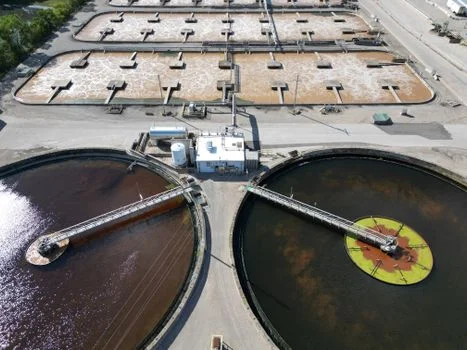
Hollow fiber MBR systems consistently achieve COD removal efficiencies exceeding 95% across varied industrial influents, including high-strength food processing and microelectronics wastewater. The physical barrier of the membrane ensures that even during biological upsets—such as those caused by temperature fluctuations or toxic shocks—the effluent quality remains stable. This reliability is the primary reason MBR is selected for industrial wastewater reuse projects where the water must meet strict internal quality standards for manufacturing processes.
| Industry | Influent COD (mg/L) | Effluent COD (mg/L) | TSS Removal | Pathogen Log Reduction |
|---|---|---|---|---|
| Municipal | 300 – 600 | <25 | >99.9% | 4.0 – 6.0 log |
| Microelectronics | 100 – 400 | <10 | >99.9% | N/A (Chemical focus) |
| Food Processing | 1,500 – 4,000 | <60 | >99.5% | 5.0 – 7.0 log |
| Pharmaceutical | 800 – 2,500 | <50 | >99.9% | 6.0+ log |
In the microelectronics sector, specifically for TMAH (Tetramethylammonium hydroxide) removal, hollow fiber MBRs play a central role. You can see how hollow fiber MBR is used in microelectronics wastewater treatment to achieve 99% removal rates of specialized chemicals that conventional systems fail to treat. By maintaining a high biomass concentration, the MBR fosters the growth of specialized bacteria capable of breaking down these complex nitrogenous compounds. In these applications, the energy benchmark is slightly higher (0.6–0.8 kWh/m³) due to the intensive aeration required to support the high oxygen demand of the concentrated biomass.
Food processing applications present a different challenge: high concentrations of Fats, Oils, and Grease (FOG). While hollow fiber MBRs are highly effective at removing FOG (up to 90%), they require robust upstream protection. A failure in the DAF unit can lead to grease coating the membranes, which causes an immediate spike in TMP. When properly integrated with pretreatment, however, the MBR provides an effluent that is virtually free of Salmonella and E. coli, meeting the highest standards for non-potable agricultural reuse or facility wash-down water.
5 Questions to Ask Before Selecting a Hollow Fiber MBR System
Selecting the correct MBR configuration requires a rigorous evaluation of peak flux rates and long-term membrane replacement costs, which typically account for 10–15% of total lifecycle OPEX. Before finalizing a procurement decision, plant managers and engineers should use the following decision framework to vet potential vendors and system designs.
- 1. What is the design flux rate at peak hydraulic load? Avoid vendors who base their system sizing on "clean water flux." Real-world flux for industrial influent should typically be 15–20 LMH. Sizing a system at 30 LMH may reduce initial CapEx but will lead to rapid fouling and high chemical costs.
- 2. What is the membrane warranty and replacement cost? PVDF hollow fibers generally last 5–8 years. Ensure the warranty covers chemical resistance and fiber integrity. Replacement costs currently range from $50 to $100 per square meter of membrane area.
- 3. Does the system meet local and international discharge standards? Verify that the effluent quality aligns with MBR effluent quality standards such as EPA 40 CFR Part 503 for biosolids or EU Directive 91/271/EEC for urban wastewater.
- 4. What is the guaranteed aeration energy consumption? Request data on the Specific Aeration Demand (SADm). A target of <0.5 kWh/m³ for municipal or <0.7 kWh/m³ for industrial loads is a benchmark for high-efficiency systems.
- 5. Is the system modular for future expansion? Industrial production often scales. A modular hollow fiber design allows you to add membrane cassettes to existing tanks to increase capacity by 20–30% without significant civil works.
Frequently Asked Questions
What’s the difference between hollow fiber and flat sheet MBR?
Hollow fiber MBR uses thousands of 1.9 mm diameter flexible fibers to provide high surface area in a small footprint, whereas flat sheet MBR uses rigid plate-and-frame panels. Hollow fiber is generally more cost-effective for large flows, while flat sheet is more resistant to fouling in very high-solids environments.
How often do hollow fiber membranes need cleaning?
Maintenance cleaning (air scouring) happens continuously. Automated chemical backwashing (with NaOCl or Citric Acid) typically occurs daily or weekly. A full "Recovery Cleaning" or Clean-in-Place (CIP) is usually required every 3–6 months, or whenever the TMP exceeds 0.5 bar.
What’s the lifespan of a hollow fiber MBR membrane?
In most industrial and municipal applications, high-quality PVDF hollow fibers have a lifespan of 5 to 8 years. Lifespan is shortened by excessive exposure to harsh chemicals, temperatures above 40°C, or poor pretreatment that allows sharp debris to damage the fibers.
Can hollow fiber MBR handle high-strength industrial wastewater?
Yes, but the system must be derated. While municipal systems run at 25–30 LMH, industrial systems treating high-COD wastewater are typically designed for 10–15 LMH to manage the higher fouling potential of the sludge. Pretreatment with a DAF is critical if influent COD exceeds 1,000 mg/L.
What’s the CapEx for a 500 m³/day hollow fiber MBR system?
As of 2025, a complete 500 m³/day system typically costs between $600,000 and $1,000,000. This includes the membrane modules, tanks, blowers, pumps, and PLC automation. Operational costs (OPEX) generally range from $0.20 to $0.40 per cubic meter of treated water.
Related Equipment
- HydropureWater’s integrated hollow fiber MBR system for industrial reuse — view specifications, capacity range, and technical data
Need a customized solution? Request a free quote with your specific flow rate and pollutant parameters.