Wet Scrubber System vs Baghouse Comparison Guide
A wet scrubber system vs baghouse comparison guide starts with pollutant phase. Wet scrubbers remove soluble acid gases at 90-99% and can take hot, wet gas. Baghouses reach 99.9% on dry PM but fail on sticky or saturated dust. Plants with both pollutants often need the liquor and the bags in series.
National Emission Standards for Hazardous Air Pollutants (NESHAP) and the EU Industrial Emissions Directive (IED) still force a real comparison of air pollution control devices (APCDs). Exhaust often carries acid gases, volatile organic compounds (VOCs), and ultra-fine particulate matter in one duct. Dry scrubbers, baghouses, and electrostatic precipitators (ESPs) win on some of those loads and lose on others. On the jobs we size, the pick follows the emission profile and the utilities the site can spare.
Liquid-Gas Contact, Removal Range, and Vessel Types
Liquid-gas contact moves pollutants from the exhaust into a liquid and typically reaches removal efficiencies exceeding 90-99% for soluble acid gases. The gas passes a liquid spray, a wetted packing bed, or a high-velocity venturi throat. Water is the usual liquor, and a lime slurry is used when the target is an acid gas. According to US EPA, most absorbers have removal efficiencies in excess of 90 percent for the pollutant they absorb.
For sulfur dioxide (SO2) in flue gas, a Flue Gas Desulfurization (FGD) Scrubber System doses an alkaline reagent and converts SO2 into a manageable byproduct. The same vessel can also take hydrogen chloride (HCl), hydrogen fluoride (HF), and sulfur trioxide (SO3). Inorganic hazardous air pollutants (HAPs), including mercury, can transfer into the liquor when the chemistry is set for them. Fine particulate matter is captured in the same contact step when the contact energy is high enough.
Hot, humid gas does not bring a fire risk or fabric damage, which is the usual failure mode for dry filtration. Gaseous and particulate pollutants can be treated in one vessel, which keeps the layout compact for a complex waste stream. Most plants we size still separate a very high dust load, because nozzle wear rises fast when solids recycle without a bleed. A packed bed, a venturi, or a spray tower is chosen only after that dust load is known.
Common configurations include:
- Packed Bed Scrubbers: Ideal for gas absorption, using high-surface-area media to maximize contact.
- Venturi Scrubbers: Use high-velocity gas to atomize the liquid and capture fine particulates.
- Spray Towers: Low-pressure drop systems suitable for high-volume gas streams with relatively low pollutant concentrations.
wet scrubber water consumption vs alternatives
Makeup water and a wastewater plant decide this choice when the site is dry or has nowhere to treat blowdown. The main disadvantage is significant water consumption and the wastewater stream that follows. That effluent needs secondary treatment to remove captured solids and to neutralize acidity before discharge or reuse. According to US EPA, water is the liquid most commonly used, and liquid flow rate is a primary performance indicator.
Moisture left in the exhaust can form a visible steam plume and can corrode the stack and downstream ductwork. Maintenance has to cover nozzle clogging, scale buildup on packing media, and the integrity of corrosion-resistant liners. A companion note on dry scrubber vs wet scrubber covers reagent choice in more detail than this baghouse page. Most plants we size budget a blowdown treatment skid before they budget a second fan.
Most plants we size in arid regions stop at this water test. Dry scrubbing is rated low to none on water use and produces no wastewater. A baghouse uses no process water and makes no wastewater. Teams who ask what is better for scrubber industrial filter or regular water should start with pollutant phase, because soluble acid gas needs liquor and dry dust needs fabric.
Dry Alkaline Systems That Avoid a Wastewater Plant
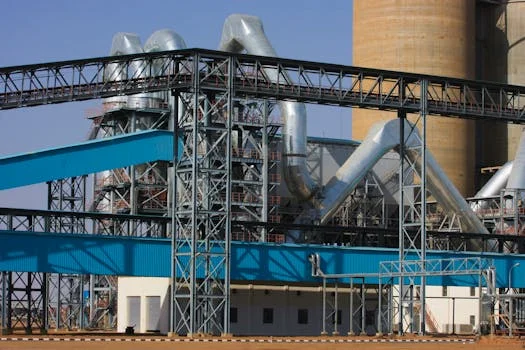
Dry alkaline systems reach 90-95% removal on acid gases and leave no liquid wastewater to treat. A dry sorbent such as hydrated lime, sodium bicarbonate, or trona is injected into the gas. The reagent reacts with SO2 and HCl and forms dry solid salts. Those salts and any fly ash are then caught by a downstream baghouse.
There are three primary types of dry scrubbing technologies:
- Spray Dry Absorbers (SDA): A slurry is atomized into the gas stream; the heat of the gas evaporates the water, leaving dry solids.
- Circulating Dry Scrubbers (CDS): Use a fluidized bed of reagent to maximize contact time and removal efficiency.
- Dry Sorbent Injection (DSI): The simplest form, where dry powder is blown directly into the ductwork.
Water conservation is why arid sites and plants without a wastewater plant prefer this route. The footprint is often smaller because there is no large recirculation tank and no sludge dewatering train. Dry salt or ash is usually easier to landfill than wet sludge. Most plants we size still check reagent cost, because a simple duct injection can look cheap on day one and expensive by month six.
Baghouses, Dust Cake, and Electrostatic Plates
Fabric filters, commonly called baghouses, reach 99.9% for sub-micron particles on dry dust, the highest particulate figure in this comparison. A high-efficiency Pulse Jet Baghouse Dust Collector draws dirty air through porous fabric bags. Dust on the bag builds a dust cake, and that cake raises filtration efficiency as it thickens. According to US EPA, the cake, not the bare fabric, collects small micrometer and sub-micrometer particles, and collection is generally greater than 99 percent.
Cement, woodworking, and metal fabrication plants use these filters for dry particulate. A liquid contactor is the better match for gas-heavy streams or for sticky, moist dust that would blind the fabric. A baghouse is the match for dry, solid particulates. Most plants we size refuse a bag when the gas is saturated, because the cake turns to mud and the pressure drop never recovers.
Electrostatic precipitators serve large power boilers and other high-volume, high-temperature gas. The unit charges particles and collects them on plates of the opposite charge. Pressure drop stays very low, so fan energy stays down, and the casing can take high temperature and very high gas volume. Capital cost and footprint are high, and collection falls when particle electrical resistivity is high.
Standard ESPs do not remove gaseous pollutants unless a sorbent injection system is added upstream. The same limit applies to a baghouse used alone. Most plants we size pair the plate collector with dry sorbent only when SO2 or HCl is on the permit. A short primer on the wet scrubber hardware itself sits on a separate page for nozzle, packing, and liquor detail.
Removal, Water, and Waste Compared
Removal efficiency, water use, and the waste leaving the site are the three results that change the award. The table keeps the same bands used for soluble gases, acid gases, and dry dust. Read a row across one pollutant, not down one column as a universal winner. Most plants we size circle water use and waste byproduct before they circle the efficiency cell.
| Parameter | Wet Scrubber System | Dry Scrubber System | Baghouse (Fabric Filter) |
|---|---|---|---|
| Primary Pollutants | Acid Gases, PM, VOCs, HAPs | Acid Gases (SO2, HCl), some PM | Particulate Matter (PM2.5/PM10) |
| Removal Efficiency | 95-99% (Gases/Fine PM) | 90-95% (Acid Gases) | 99.9% (Dry PM) |
| Water Usage | High (Recirculation/Makeup) | Low to None | None |
| Wastewater Generation | Yes (Requires treatment) | No | No |
| Waste Byproduct | Liquid Sludge | Dry Solid Salts/Ash | Dry Dust/Powder |
| Relative Footprint | Moderate to Large | Compact to Moderate | Moderate |
| O&M Complexity | High (Chemistry/Pumps) | Moderate | Moderate (Bag changes) |
| Temp/Humidity Tolerance | High (Excellent) | Moderate | Limited by bag material |
Particulate collection on a liquid contactor tracks the energy spent contacting gas and liquid. According to US EPA, most wet scrubbing systems operate with particulate collection efficiencies over 95 percent. That band sits inside the table cell of 95-99% for gases and fine PM. Most plants we size do not promise the top of that band on sub-micrometer dust unless the pressure drop is in the high-energy range.
According to US EPA, a low-energy scrubber uses a pressure drop of less than 5 inches of water column and removes particles greater than about 5-10 micrometers in diameter. The same EPA note places medium energy at 5 to 25 inches of water column, enough for micrometer-sized particles but weak on sub-micrometer dust. High energy in that EPA grouping is 25 to over 100 inches of water column and is used for sub-micrometer capture. Spray towers sit in the low-energy group and suit high volume at modest dust loading.
Six Checks Before You Award the Order
A systematic selection process starts with chemical composition, moisture, and temperature variability of the flue gas. Skip a check and the waste plant, not the fan, becomes the surprise. Most plants we size run the six checks below and stop at the first hard fail. The order matters because a water fail makes the efficiency debate irrelevant.
- Identify Primary Pollutants: Determine the ratio of gaseous pollutants to particulates. If the stream is >70% acid gas, a wet or dry scrubber is mandatory.
- Evaluate Regulatory Targets: Review local and national standards (e.g., EPA NSPS).
- Assess Process Conditions: Is the gas above 500°F? Is it saturated with moisture?
- Analyze Site Constraints: Evaluate available space and utilities.
- Calculate Total Cost of Ownership (TCO): Compare the low CAPEX of a dry sorbent injection system against its high reagent cost (OPEX).
- Plan Waste Management: Determine if the facility is better equipped to handle liquid sludge or dry dust.
Who This Comparison Serves
Environmental engineers and procurement leads use a wet scrubber system vs baghouse comparison guide when one air pollution control device must be chosen. The fit is a plant whose gas may hold acid gases, dry dust, or both, under NESHAP, NSPS, or the IED. Gas temperature, moisture, and the presence of a wastewater plant should already be known.
Look elsewhere when the only open question is reagent chemistry, or when the stream is pure VOC with no acid and no dust. A carbon bed or a thermal oxidizer is a different device. Gas above 500°F that is also saturated rules out a standard bag until the cloth rating is known. Most plants we size send that saturated case back to a liquid or dry scrubber bid.
Next step is a one-page gas sheet with flow, temperature, moisture, SO2, HCl, and dust loading. Send that sheet and the waste limit, liquid sludge or dry dust, when you request a sizing review. Ask for the vessel, the waste form, and the water or reagent load in the reply.
Frequently Asked Questions

What is the main disadvantage of liquid scrubbing?
The main drawback is high water consumption plus a wastewater stream that needs secondary treatment. Captured solids and residual acidity must be removed before discharge or reuse. Moisture in the exhaust can form a visible steam plume and can corrode the stack and downstream ductwork. Most plants we size inspect spray nozzles, packing scale, and corrosion-resistant liners on each turnaround.
When does a liquid contactor beat a bag filter?
A liquid contactor is the better fit for gas-heavy streams and for sticky, moist, high-temperature dust that would blind a fabric. A baghouse is the better fit for dry, solid particulates and often reaches 99.9% for sub-micron particles. Most plants we size send saturated gas to a scrubber and dry dust to bags. US EPA notes that high temperatures can damage fabric filters, so check any gas above 500°F.
What is the difference between a scrubber and one named device?
Scrubber is a general term for any air pollution control device that removes pollutants from a gas stream. The word does not name the liquor, the reagent, or the collector. A liquid tower and a dry sorbent duct can both be called a scrubber on a drawing. Most plants we size ask for the pollutant and the waste form before they accept that label.
How do liquid and dry sorbent systems compare for VOC removal?
Liquid scrubbers can remove VOCs when the liquor is a solvent or a chemical oxidant matched to that compound. Plain water does little for gases with low water solubility. According to US EPA, liquids such as amines may absorb hydrocarbons or hydrogen sulfide, and most absorbers exceed 90 percent removal for the target pollutant. Dry alkaline reagents target acid gases such as SO2 and HCl, not a broad VOC load.
What are the typical maintenance requirements for a recirculating scrubber?
Maintenance centers on spray nozzles, pressure drop across the packing, and the corrosion-resistant liner. Nozzle plugs, scale on packing media, and scaling in the liquor lines are the usual causes of a sudden efficiency drop. According to US EPA, pressure differential, liquid flow rate, and liquid outlet concentration are the primary indicators to log. Most plants we size trend those three readings every shift.