What Separates a DAF System from an Industrial Clarifier?
Dissolved air flotation separates particles by attaching microbubbles to them and floating them to a skimming surface, while an industrial clarifier separates conditioned solids through gravity settling or inclined-plate clarification. For mining and metals wastewater in Foraker, the deciding issue is whether the target material is reliably floatable or settleable under the plant’s actual chemistry and flow conditions. Equipment labels do not reveal the full mechanism: a DAF can include a lamella pack, as Clearwater describes for its FPBC model. Buyers therefore need to review both the operating principle and hydraulic configuration, then compare the complete treatment train.
Clearwater’s DAF systems use 30–50 micron microbubbles to lift conditioned solids, oils, and fats to the surface for removal by skimming, according to Clearwater Industries, April 27, 2026. Coagulation and flocculation increase particle size and bubble contact; without suitable conditioning, flotation performance cannot be assumed. The industrial DAF system should therefore be evaluated as a separation process supported by chemical dosing, not as a stand-alone metals-removal guarantee.
For the comparison here, a lamella clarifier combines sludge recirculation, flocculation, and inclined-plate separation in one structure. The plates provide effective settling area while sludge is returned for conditioning. This is a different separation path from microbubble flotation, even though the two technologies can be combined within a DAF package.
The practical question is not whether DAF or “clarifier” sounds more appropriate. It is which mechanism can consistently separate the actual solids at expected peak and average flows, under the plant’s pH and metals chemistry, and within its operating schedule.
Compare DAF and Clarifier Performance for Mining and Metals Wastewater
DAF is generally better aligned with floating conditioned suspended material, oils, fats, and low-buoyancy particles, while lamella clarification is generally better aligned with flocculated solids that settle reliably. Clearwater Industries, April 27, 2026, describes DAF as removing suspended solids, oils, fats, and associated pollutants, and states that chemical coagulation and flocculation are needed to improve particle size and microbubble contact. Aries similarly identifies chemical pretreatment as central to flotation performance.
A lamella clarifier depends on a different sequence: particles must be flocculated, retained in the sludge-recirculation system, and allowed to separate over inclined plates. The lamella clarifier specification gives a 20–40 m/h surface-loading range, but that catalog range is a screening reference rather than a site-specific performance guarantee.
Hydraulic layout must also be considered. Clearwater Industries, April 27, 2026, describes the FPAC as a low-profile cross-flow DAF for small-to-medium flows with very high solids loads. Its FPBC is a high-profile lamella-pack design for low-to-medium solids loads, including low-buoyancy particles. That overlap demonstrates why “DAF” and “lamella” are not mutually exclusive equipment categories.
| Decision factor | DAF | Lamella clarifier |
|---|---|---|
| Separation mechanism | Microbubbles attach to conditioned particles, which are skimmed from the surface | Conditioned solids settle and are separated over inclined plates |
| Best starting fit | Suspended solids, oils, fats, and other material demonstrated to float | Flocculated solids demonstrated to settle |
| Conditioning requirement | pH control, coagulation, flocculation, and reliable bubble attachment | pH control, flocculation, and effective sludge recirculation |
| Residual solids | Skimmed float and heavier settled bottom solids | Sludge collected and removed from the clarifier |
| Controls and operating attention | Recycle, saturation, chemical feed, skimming, sludge movement, and level control | Chemical feed, mixing, sludge return, solids withdrawal, and level control |
| Treatment-train role | Separates conditioned floating material; dissolved contaminants may require additional treatment | Separates conditioned settleable solids; dissolved contaminants may require additional treatment |
Neither mechanism proves discharge compliance by itself. Clarification performance must be demonstrated against the applicable discharge, reuse, or sewer-pretreatment basis. Chemical conditioning and sludge handling remain part of the equipment decision, so a PLC-controlled chemical dosing system should be evaluated alongside the separator.
Choose DAF When Floating and Chemical Recovery Are the Priorities
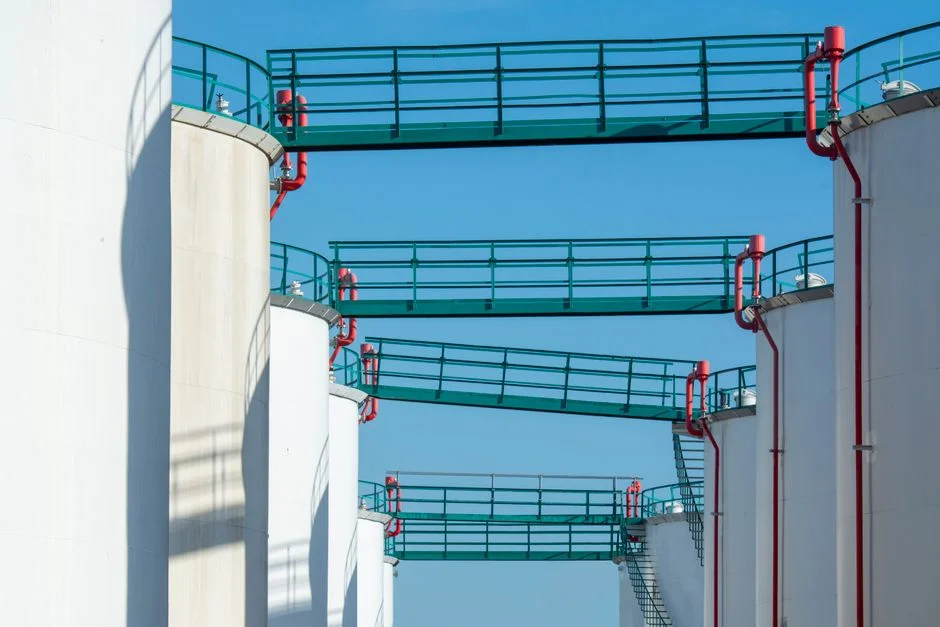
DAF is the defensible starting point when the principal objective is to remove suspended solids, oils, fats, or other material that can be conditioned for flotation and skimmed. It does not remove contaminants merely because they are present in a metals stream; the particles must be suitable for bubble attachment, and the result must be demonstrated with the actual wastewater.
Aries describes a specific sequence: pH control establishes conditions for flocculation, coagulation neutralizes particle charge, and flocculation links particles into larger flocs. Its standard design uses a recirculation pressure of approximately 100 psi and microbubbles of approximately 30 µm, according to Aries, 2026; those are design details of that approach, not universal requirements for every DAF system.
The stream must be tested under proposed chemical conditions because a poorly conditioned wastewater can float poorly, produce unstable flocs, or shift sharply when pH and metals chemistry change. Jar testing can screen coagulants and flocculants. Pilot testing is warranted where flow, composition, or product generation varies enough that laboratory results may not represent plant operation.
The upstream and downstream train also matters. Kemco identifies coarse filtration and pH control before DAF, followed by sludge dewatering after clarification. Coarse solids protection can be addressed through appropriate mechanical screening where suitable for the stream. Chemical feed must be matched to the wastewater, while the resulting float and bottom solids need a defined disposal route. The industrial DAF system is therefore most appropriate when floatable solids, oily material, or colloidal material are confirmed treatment targets—not simply because the process is described as a metals-removal system.
Choose a Clarifier When Settling and Compact Footprint Are the Priorities
A clarifier is the practical starting point when the wastewater contains solids that can be conditioned reliably and then removed by gravity settling or inclined-plate separation. The case is strongest when the required solids are demonstrably settleable and the site values a compact separation structure without relying on bubble attachment.
The lamella clarifier combines flocculation, sludge recirculation, and inclined-plate separation in one structure. The recirculated sludge and chemical conditioning improve the characteristics of the solids before separation. The inclined plates increase effective settling area, allowing more separation area to be installed within a smaller footprint than a conventional broad settling zone. That is a design mechanism, not a universal site-saving guarantee.
Its catalog specification states a 20–40 m/h surface-loading range and says chemical consumption can be reduced by up to 30% compared with conventional clarification. Buyers should request confirmation against the actual wastewater, selected chemicals, operating temperature, and the supplier’s duty-specific design rather than treating either statement as guaranteed site performance.
Settleability is the central operating question. Metals precipitation, pH, particle density, floc strength, and flow variation can all alter the solids that reach the inclined plates. A representative test should therefore use the proposed pH targets, coagulant and flocculant program, solids concentration, and expected hydraulic range. The associated PLC-controlled chemical dosing system should be evaluated as part of the package because chemical feed and sludge recirculation are integral to reliable clarification.
Size the Decision Around Water Chemistry, Flow Variation, and Sludge
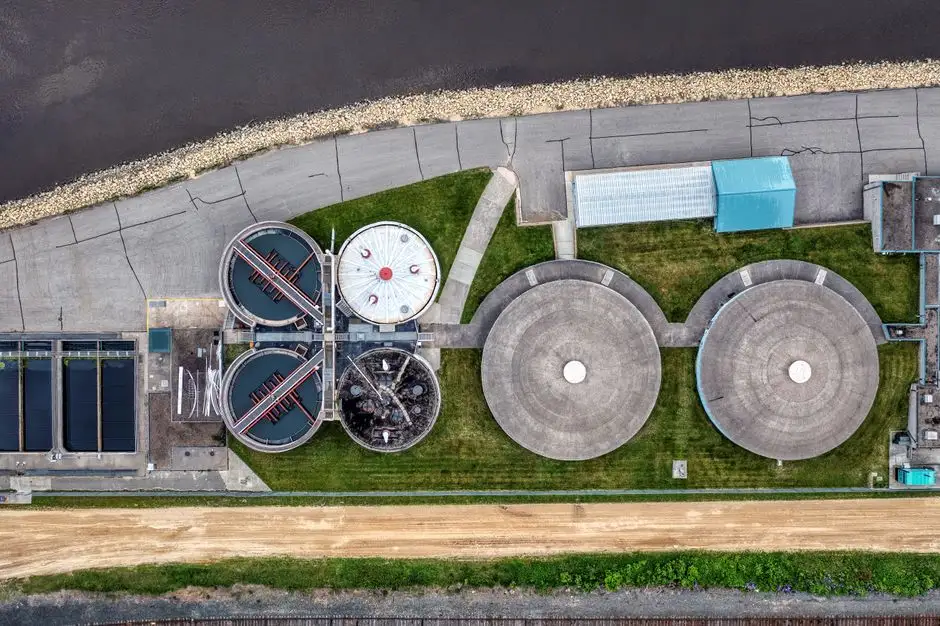
A Foraker plant should size clarification around characterized wastewater and variable flow, not around one nominal flow number. The influent characterization should cover suspended solids, oils and fats, particle settleability or floatability, pH, metals, and every contaminant that must be reduced before discharge or reuse. This determines the treatment objective before equipment is selected.
Map average flow, peak flow, turndown, startup, upset conditions, and batch discharges. Clearwater Industries, April 27, 2026, illustrates how configuration changes with duty: its compact DAF skid uses one skid for flows of 66 GPM or less and a modular two-skid arrangement above that flow. The important lesson is that peak and batch conditions can change the configuration, not that the same threshold applies to every plant.
Chemical conditioning must be included in sizing. Kemco states that accurate pH control is vital to wastewater treatment, while Clearwater Industries and Aries identify coagulation and flocculation as prerequisites for effective clarification. Chemical storage, metering, mixer power, sensor response, and operator access can constrain performance as much as the separator tank itself.
Sludge handling is part of the selection, not an afterthought. A DAF produces skimmed float and heavier settled bottom solids. A lamella system produces sludge that must be collected, recirculated as appropriate, and removed. Kemco identifies sludge dewatering as a downstream requirement; where the solids suit the application, a sludge dewatering filter press may form part of the train.
| Input or output | Information required before selection | Why it affects the decision |
|---|---|---|
| Influent water chemistry | Suspended solids, oils and fats, pH, metals, floatability, and settleability | Defines whether flotation, settling, or complementary treatment is appropriate |
| Hydraulic duty | Average, peak, batch, startup, upset, and turndown conditions | Determines equipment number, configuration, and hydraulic margin |
| Conditioning | Proposed chemicals, doses, mixing, pH control, and chemical storage requirements | Poor conditioning can prevent reliable separation regardless of separator choice |
| Sludge route | Expected float or sludge characteristics, dewatering method, storage, and disposal destination | Clarifier selection is incomplete without a downstream solids plan |
| Site and compliance inputs | Footprint, utilities, maintenance access, controls integration, and applicable discharge basis | Supplied research provides no Foraker-specific utility rates, footprints, disposal costs, or limits |
Obtain those site inputs in writing. They may determine the final choice more decisively than a generic equipment ranking.
Use Pilot Testing and a Compliance Checklist Before Ordering
Wastewater characterization and pilot testing provide a more defensible basis for buying clarification equipment than catalog performance claims. Kemco describes on-site visits, testing, and pilot studies as the basis for designing a DAF around a plant’s unique requirements.
Use a staged process:
- Characterize the influent, including solids, oils, pH, metals, and physical wastewater characteristics.
- Run bench-scale jar tests with candidate coagulants, flocculants, pH targets, and mixing conditions.
- Pilot the shortlisted mechanism with actual solids and the intended chemical program.
- Test clarifier performance using the proposed flocculation and sludge-recirculation conditions; test DAF performance using the proposed conditioning, recycle arrangement, and microbubble conditions.
- Require each proposal to state guaranteed flow, contaminant loading, chemical conditions, equipment materials, controls, sludge handling, commissioning, and service scope.
Do not accept a catalog flow range as a performance guarantee. HydropureWater’s DAF range of 4–300 m³/h across 13 standard models can be used only as a catalog-screening reference; final sizing must reflect the characterized wastewater, operating variation, and supplier guarantees. A broader regional DAF versus clarifier buyer’s guide can support the same staged comparison, but it does not replace site-specific testing.
Confirm the discharge, reuse, or sewer-pretreatment basis with the applicable authority before ordering. The supplied research does not establish Foraker-specific limits, so no numerical requirement should be assumed. Evaluate the complete train—including screening, pH adjustment, chemical feed, clarification, sludge handling, instrumentation, controls, and commissioning—and verify that every stage has a defined operating purpose. The industrial DAF system, PLC-controlled chemical dosing system, and sludge dewatering filter press should be assessed as connected process elements, not isolated products.
Frequently Asked Questions
Should a Foraker mining or metals plant choose DAF or a clarifier when the wastewater contains both settleable solids and oily material?
Start by identifying which contaminant drives the treatment objective. DAF is the stronger candidate for demonstrably floatable suspended material and oils or fats, while a lamella clarifier is the stronger candidate for solids that can be flocculated and settled reliably. Because mixed streams can change materially with production conditions, test both mechanisms with the same real wastewater before comparing performance. Dissolved metals may also require complementary treatment; clarification alone does not establish compliance.
How should DAF and clarifier bids be compared for cost and budget?
Ask each supplier for a complete installed-scope comparison covering equipment, tanks, chemical dosing, controls, utilities, foundations or installation requirements, sludge handling, commissioning, maintenance, and service. Request chemical consumption estimates based on the characterized feed and the supplier’s pilot results, together with the operating assumptions behind each estimate. No supported quotation is available in the research, so require pricing rather than comparing generic equipment prices that exclude site-specific work.
What information is needed to size a clarifier or DAF beyond nominal flow?
Provide wastewater characterization, average and peak flow, batch-discharge details, startup and upset conditions, solids concentrations, pH range, metals chemistry, oil content, settleability or floatability, and the required effluent basis. The sizing table should then show how each configuration responds to those conditions. Do not select from nominal capacity alone; verify that the proposed arrangement handles peaks, turndown, and chemical demand without losing separation performance.
How should suppliers be selected so the proposal is comparable?
Require the same information package from every bidder: feed-analysis basis, pilot or bench-test results, guaranteed flow and loading, equipment materials, controls scope, chemical consumption, sludge characteristics and handling, commissioning, warranties, and service coverage. Confirm that quoted performance applies to the actual wastewater rather than a generic application. A lamella clarifier and an industrial DAF system should then be compared on the same treatment objective and operating envelope.
Does clarification performance demonstrate permit or sewer compliance?
No. Clarification performance demonstrates only the removal achieved under defined test conditions. A permit or sewer-compliance demonstration must connect the full treatment train to the applicable discharge, reuse, or sewer-pretreatment requirements. Confirm those requirements with the relevant authority, and ask for monitoring, reporting, alarms, controls, and operating documentation that support the selected equipment during normal and upset conditions. A mining and metals sewer-limit guide can support that review, but it does not replace written local requirements or test data.