Why Vincennes Mining and Metals Plants Are Revisiting Their Primary Clarifier in 2026
A 1978 EPA characterization of solvent-refined coal process wastewater described effluent as containing "appreciable levels of heavy metals, trace elements, and sulfur compounds" (nepis.epa.gov, EPA-600/7-78-223a, 1978-11). The chemistry has not changed in the four-plus decades since: Vincennes-area operations processing coal fines, aggregates, or metal-finishing rinse water still face a mixed pollutant load that complicates primary solids-separation decisions. The question in 2026 is which physical-chemical configuration meets IDEM inspection requirements.
40 CFR Part 437 sets the effluent limits that govern ore mining and dressing discharges, with categorical caps on TSS, settleable solids, and pH. Any new capital line in 2026 must demonstrate a defensible compliance path against those limits, as the Indiana Department of Environmental Management (IDEM) typically relies on federal categorical standards for facilities discharging to the Wabash or Ohio River basins near Vincennes. A switch in feed ore, a new wash-water stream, or a failed TSS compliance sample shifts the existing primary clarifier from background equipment to a critical operational concern.
Most Vincennes operations run mixed wastewater—including process water, pit dewatering, equipment wash, and occasionally stormwater—meaning a single technology rarely fits every stream. This mismatch brings the head-to-head DAF-versus-lamella decision back to the table for 2026. Engineers in our 2026 DAF vs lamella comparison for mining plants in Wahoo, Nebraska found that technology choice is dictated by influent profile rather than a generic preference. For regulatory framing, the 2026 mining pretreatment compliance guide for US plants details the IDEM and EPA documentation chain required for procurement.
How a DAF System Removes Solids, Oils, and Heavy Metals
Dissolved air flotation separates particles by buoyancy rather than gravity. The recycle-pressurization method supersaturates a side stream of clarified effluent with air at roughly 100 psi (arieschem.com); when released to atmospheric pressure inside the flotation tank, micro-bubbles form in the 20-40 micron range (dafcorp.com) and attach to chemically conditioned flocs.
The chemical conditioning sequence is essential to bubble generation. pH adjustment brings the influent into the optimum range for the coagulant, which neutralizes the surface charge on suspended particles, while a long-chain polymer flocculant bridges destabilized particles into floatable flocs. Vendor performance figures from dafcorp.com put DAF TSS removal at 92-98% on the round FC Maximizer and 85-90% on the rectangular RC UniMax, with one published example clarifying 2,000 PPM feed down to 50 PPM at 500 gpm. For downstream biological loading, vendor data shows COD reduction of 60-80% on typical industrial streams (wastewatermachinery.com).
For the mining use case, micro-bubbles are particularly effective on low-density metal-hydroxide flocs and emulsified oils that gravity clarifiers often miss. A well-conditioned hydroxide floc becomes buoyant once enough 30-micron bubbles adhere, allowing the float layer to carry the trace-metal load to the surface instead of settling. A dissolved air flotation system sized on this principle is the spec most Vincennes metal-finishing shops defend in 2026.
How a Lamella Clarifier Settles High-Solids Mining Wastewater
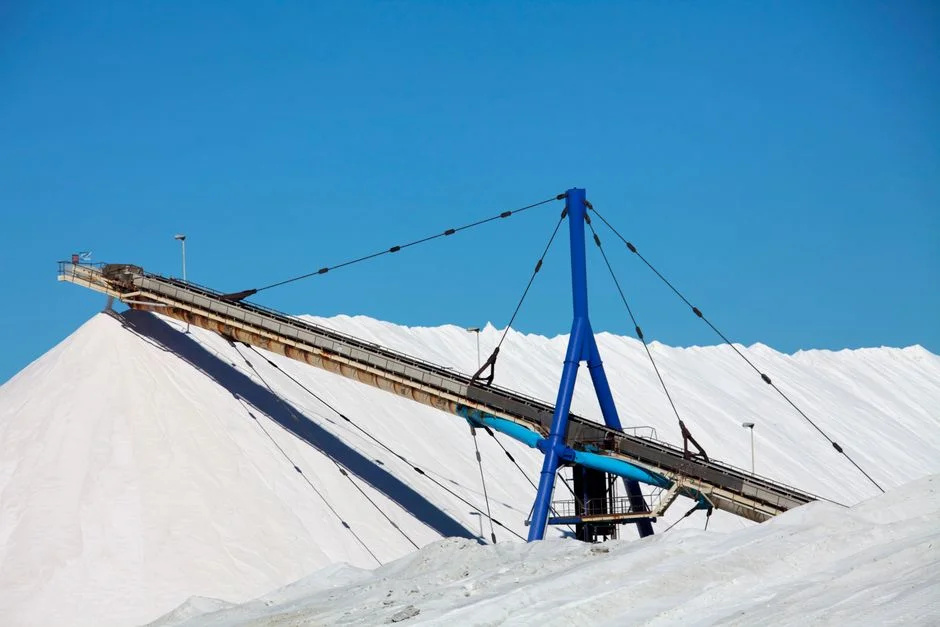
A lamella clarifier utilizes a fundamentally different settling regime than a DAF system. Inclined plates set at 55-60 degrees inside the tank multiply the effective settling area within a small footprint, allowing a properly designed lamella to operate at surface loading rates of 20-40 m/h compared to the 1-2 m/h of a conventional rectangular clarifier. The plate stack turns a 10 m² footprint into the equivalent of a 100+ m² settling surface.
HydropureWater JY/HST-series inclined plate settlers run with internal sludge recirculation and a dedicated flocculation zone, where the sludge blanket acts as a nuclei source for incoming flocs. This recirculation path allows lamella designs to reduce coagulant consumption by up to 30% versus conventional clarifiers, as every precipitated hydroxide floc acts as a seed for the next. The trade-off involves floc density: lamella requires flocs that settle, performing best on high-density metal-hydroxide and tailings slurries in the 3,000-10,000 mg/L TSS range rather than colloidal or oily streams.
Lamella systems struggle in regimes where DAF excels, such as with emulsified oils, low-density colloids, and FOG-laden wash water. Because the surface skimmer on a lamella is not designed to recover a meaningful float layer, these contaminants pass through the plate stack. For variable streams with both settleable solids and floatable contaminants, a lamella clarifier with inclined plates is typically paired with chemical pretreatment tuned to the specific metal being precipitated, with pH control held within a 0.5-unit band.
DAF vs Clarifier: Head-to-Head Comparison for Mining and Metals Streams
The matrix below provides data drawn from vendor specifications, EPA evidence, and the operating envelopes described in the preceding sections for use in procurement planning.
| Parameter | DAF (FC Maximizer / RC UniMax) | Lamella Clarifier (inclined plate) | DAF + Lamella Hybrid |
|---|---|---|---|
| TSS removal efficiency | 92-98% (FC) / 85-90% (RC) at 2,000 PPM feed (dafcorp.com) | 80-95% on settleable solids, lower on colloids | 95-99% combined; lamella polishes DAF effluent |
| Surface loading rate | Low hydraulic loading; float-driven separation | 20-40 m/h via inclined plates (HydropureWater JY/HST) | DAF handles floatables; lamella loads at 20-40 m/h |
| Influent TSS ceiling | ~2,000-3,000 mg/L; above this recycle saturates | >5,000 mg/L with sludge recirculation | Up to 5,000-8,000 mg/L combined |
| FOG / oil handling | Strong; float layer recovers emulsified oils | Weak; emulsified oil passes through plates | Strong; DAF primary removes oil, lamella polishes |
| Footprint per m³/h | ~0.5-1 m²; compact round or rectangular tank | ~1-2 m²; taller but smaller than conventional | Largest of the three; two vessels in series |
| CAPEX per m³/h (typical 2026 US range) | USD 8,000-15,000 (incl. saturation system) | USD 4,000-8,000 (no recycle pump or air system) | USD 12,000-22,000 (both units plus interconnecting piping) |
| OPEX driver | Recycle pump energy + saturation air; higher kWh/m³ | Sludge pumping + polymer; up to 30% less polymer than conventional (HydropureWater JY/HST) | Sum of both; justified only on variable or high-strength feeds |
| Heavy-metal removal track record | Documented on Cu, Zn, Ni, Pb, Fe when paired with pH/coagulant control (EPA-600/7-78-223a, Table 3-23) | Documented on same metals; mechanism is precipitation + settling | Highest margin against 40 CFR Part 437 metal limits |
| Recycle-water demand | 20-30% of treated flow returned to saturator | Minimal; internal sludge recirculation only | DAF recycle + lamella internal recirculation |
| Best-fit feed character | Low-to-moderate TSS, FOG, floatable colloids, fine flocs | High TSS, steady flow, settleable hydroxide flocs | Variable flow, TSS swings 1,000-5,000 mg/L, mixed contaminants |
The EPA evidence base for these technologies is found in Table 3-23 of EPA-600/7-78-223a, "Summary of Removal of Metals by Chemical Clarification and Carbon Adsorption" (nepis.epa.gov, 1978-11), which supports the compliance value of chemical clarification across heavy-metal parameters. The hybrid configuration is frequently chosen for Vincennes tailings-water retrofits in 2026, particularly where influent TSS fluctuates during an 8-hour shift.
Matching the Technology to Your Vincennes Wastewater Profile
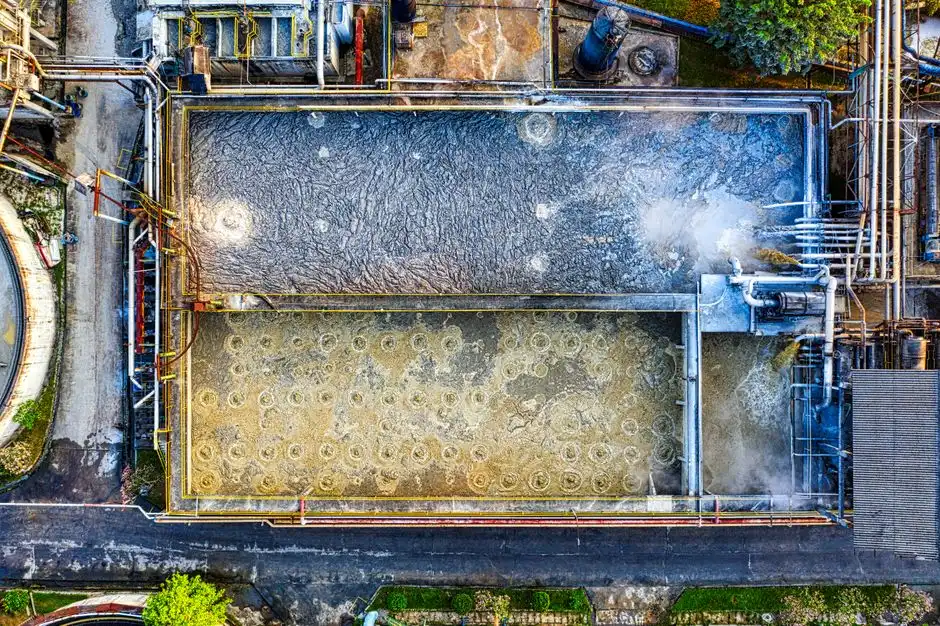
Three routing branches cover the bulk of Vincennes influent profiles. Branch 1 — DAF: TSS below roughly 2,000 mg/L, FOG or floatable colloids present, space constrained. DAF's 92-98% TSS removal on the FC Maximizer (dafcorp.com) handles floatables and produces a thick float layer that dewaters to 2-4% solids, reducing sludge hauling costs.
Branch 2 — Lamella: TSS above 3,000 mg/L, steady flow, and generous floor space. A lamella clarifier with inclined plates loaded at 20-40 m/h (HydropureWater JY/HST data) manages high-solids tailings water with up to 30% less coagulant than a conventional clarifier, maintaining a flat OPEX profile due to the absence of recycle pumps or saturation air systems. However, lamella does not respond well to 2x swings in hydraulic loading.
Branch 3 — DAF + Lamella Hybrid: TSS swings between 1,000-5,000 mg/L across a shift, FOG is present, and discharge goes to a river basin requiring strict adherence to 40 CFR Part 437 limits. DAF removes floatables and emulsified oils, while the lamella polishes the underflow and catches dense hydroxide flocs. This configuration is the standard for Vincennes tailings-water retrofits in 2026.
For very low flow with high-value metal recovery, such as in specialty alloy or precious-metals finishing, a DAF with a sludge thickener recovers the float layer at 2-4% solids (dafcorp.com), allowing the concentrate to be sent directly to a leach circuit. Scaling remains a risk for all cases; high-calcium or high-iron mining water can foul DAF recycle systems. Mitigation requires stainless wetted parts (304L minimum, 316L preferred) and a PLC-controlled coagulant and flocculant dosing skid to hold pH within a 0.5-unit band. For further details on sequencing, the step-by-step 2026 DAF pretreatment process guide covers operations from equalization through sludge handling.
Frequently Asked Questions
Is DAF or a clarifier required to meet 40 CFR Part 437 effluent limits for a mining discharge?
Neither technology is explicitly mandated by 40 CFR Part 437, which sets categorical effluent limits for TSS, settleable solids, and pH. Compliance is demonstrated by performance; EPA Table 3-23 (EPA-600/7-78-223a, 1978-11) documents that chemical clarification with proper pH and coagulant control removes trace heavy metals across both DAF and gravity clarifier configurations. The 2026 selection is driven by influent profile rather than regulatory mandate.
What influent TSS cutoff separates a DAF application from
Frequently Asked Questions
What is the difference between a DAF system and a clarifier for mining wastewater?
A Dissolved Air Flotation (DAF) system removes suspended solids by injecting micro-bubbles into the influent, causing particles with a specific gravity lower than or near that of water to float to the surface for mechanical skimming. In contrast, a traditional clarifier relies on gravity sedimentation, where heavier solids settle to the bottom of a tank to be removed as sludge.
While clarifiers are typically used for high-density, rapidly settling particles, DAF systems are engineered for low-density solids, emulsified oils, and fine metallic precipitates that would otherwise remain suspended in a gravity-based system.
Is DAF or a lamella clarifier better for high TSS mining effluent?
For high Total Suspended Solids (TSS) concentrations exceeding 1,000 mg/L, a lamella clarifier is generally more efficient due to its ability to handle larger mass loadings without the risk of surface overflow associated with flotation systems. Lamella clarifiers provide increased effective settling area within a compact footprint, making them better suited for primary treatment of heavy sediment loads.
DAF systems are typically reserved for polishing applications or secondary treatment steps where TSS levels are lower, or where the contaminants are prone to floatation rather than sedimentation, such as fine colloidal metals or oil-water emulsions common in mining processing circuits.
What TSS removal rate can a DAF achieve on mining and metals wastewater?
When properly optimized with coagulants and flocculants, a DAF system can achieve TSS removal efficiencies ranging from 85% to 98%. The performance is highly dependent on the particle size distribution and the surface charge of the mining waste stream.
In industrial applications, influent TSS levels ranging from 100 mg/L to 500 mg/L are commonly treated down to effluent levels of less than 20 mg/L. Achieving these rates requires precise control of the air-to-solids ratio and hydraulic retention time within the flotation zone.
Do mining plants in Indiana have to meet 40 CFR Part 437 effluent limits?
Yes, facilities in Vincennes and across Indiana that engage in the centralized waste treatment of mining-related effluents are subject to 40 CFR Part 437. This federal regulation establishes effluent limitations guidelines and standards for the Centralized Waste Treatment (CWT) industry, covering metals, oils, and organic pollutants.
Compliance requires adherence to specific numerical limitations for pollutants such as antimony, arsenic, cadmium, chromium, copper, lead, mercury, selenium, silver, and zinc. Operators must ensure their treatment train, whether utilizing DAF or clarification, is capable of meeting these categorical pretreatment standards before discharging to a Publicly Owned Treatment Works (POTW) or surface water under an NPDES permit.
Can a DAF remove heavy metals from mining wastewater to meet EPA discharge limits?
A DAF system can effectively remove heavy metals when combined with a chemical precipitation process. By adding reagents such as lime, sulfides, or organosulfides, dissolved metals are converted into insoluble solid precipitates (metal hydroxides or metal sulfides) that the DAF system can then float and skim from the surface.
While DAF is highly efficient at removing these formed precipitates, it does not remove dissolved metals in their ionic state. Therefore, the success of the DAF in meeting EPA discharge limits is contingent upon the upstream reaction tank's ability to achieve complete precipitation of the target metals prior to the flotation stage.