Separate the data center's three water streams
A Sholapur data center should keep domestic sewage, cooling-tower blowdown, and process or equipment wastewater as separate design streams, then select treatment according to each stream’s destination. Cooling blowdown is not interchangeable with sanitary sewage: evaporation concentrates dissolved salts, scaling minerals, treatment chemicals, suspended solids, and biological content. Genesis Water Technology reports that a data-center cooling tower operating at 4 cycles of concentration typically loses approximately 25–30% of makeup water to blowdown.
Give each stream its own flow meter and sampling point. This prevents one discharge from setting the duty of equipment intended for a materially different water quality. It also makes it possible to identify whether savings come from reduced blowdown, a higher cooling tower cycles of concentration, or another water-conservation measure.
Before selecting equipment, prepare a measured 12-month water balance covering:
- evaporation, drift and cooling-tower blowdown;
- domestic discharge and process discharge;
- reuse, sludge production and product losses; and
- freshwater makeup by source and operating condition.
Set the endpoint before defining the process. A stream may be destined for cooling makeup reuse, equipment washdown, compliant discharge, or liquid-free disposal. These endpoints impose different quality targets and concentrate-management requirements.
For comparison with another data-center methodology, the 2026 data-center wastewater and cooling-blowdown treatment guide applies the same separation principle, but the water balance and reuse decisions must still be based on the Sholapur facility rather than transferred from another location.
Characterize water before selecting treatment equipment
Representative sampling establishes whether the treatment train can handle the actual water rather than a single acceptance sample. The sampling plan should cover flow, pH, conductivity, TDS, hardness, alkalinity, silica, TSS, biological loading, residual biocide, corrosion-inhibitor residuals, and every treatment-chemical product used in the cooling system.
Genesis Water Technology gives blowdown TDS of typically 1,200–6,000 mg/L and suspended solids of typically 10–50 mg/L. These are reference characteristics for source water, cycles of concentration, and operating conditions—not Sholapur acceptance limits or guarantees for the proposed equipment.
| Parameter | Why it affects design | Buyer evidence required |
|---|---|---|
| Flow profile | Sets equalization, pretreatment and recovery-system duty | Minimum, average and peak flow under representative tower operation |
| pH, alkalinity, hardness and silica | Determines scaling and precipitation risk | Source and blowdown datasets, including chemical dosing |
| TDS and conductivity | Defines desalination demand and concentrate mass | Makeup and blowdown results with sampling method identified |
| TSS and biological loading | Controls pretreatment and disinfection requirements | Representative solids and biological measurements |
| Biocide and inhibitor residuals | Influences membrane compatibility and discharge treatment | Complete chemical products, application rates and residual analyses |
| Cooling-system configuration | Sets the reuse chemistry and operating envelope | Cycles of concentration, metallurgy, heat-load profile and chemical program |
Sample both source water and blowdown across representative operating conditions. Record the existing cooling tower cycles of concentration, makeup-water source, treatment-chemical program, tower metallurgy, and heat-load profile because each affects scaling, corrosion, fouling, and reuse compatibility. Use the water-treatment parts, valves and media range to confirm that chemical dosing, control, and monitoring components are compatible with the selected process.
Do not derive a final Sholapur permit limit from generic industry figures. Obtain the applicable consent conditions from the local authority and a licensed Indian environmental consultant.
Choose between reuse, discharge compliance and zero liquid discharge
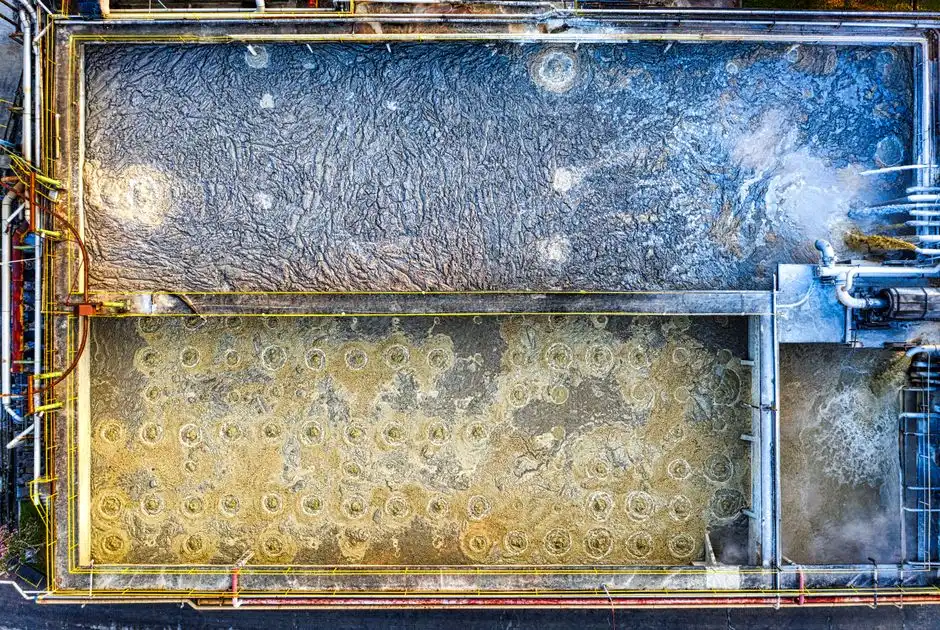
Cooling makeup reuse, compliant discharge, and zero liquid discharge solve different problems and should not be compared on permeate quality alone. The selected endpoint determines the required separation, the operating energy, the concentrate route, and the commercial value of recovered water.
| Decision route | Primary objective | Reference performance from Genesis Water Technology | Main design check |
|---|---|---|---|
| Cooling makeup reuse | Reduce scaling potential, suspended solids, and biological content while preserving compatibility with the cooling-water chemistry program | Typically 60–85% recovery | Permeate chemistry, antiscalant demand, cycles of concentration and concentrate disposition |
| Discharge compliance | Meet the pollutants and concentrations named in the Sholapur consent | No site-specific recovery value established by the supplied research | Applicable consent limits and treatment for the relevant pollutants |
| Zero liquid discharge | Remove the liquid-waste stream through membrane concentration, thermal evaporation, and crystallization | 95–99% overall water recovery; less than 1% of original blowdown volume as solid waste | Energy availability, brine chemistry, crystal handling and liquid-waste elimination |
For discharge compliance, potential treatment drivers described by the supplied research include TDS, metals, and biocide neutralization, but no Sholapur limit is established. The buyer therefore needs the consent document before fixing an equipment duty or guaranteeing an endpoint.
Lifecycle analysis changes the purchasing decision. The 2026 Open Engineering Inc LCA found that the wastewater-reuse scenario had about twice the global warming potential of the freshwater case, with treatment energy accounting for roughly 80% of the difference. The same study reported an indirect water penalty of approximately 0.93 L/m³, less than 0.1% of the direct displacement benefit. Energy and water value must therefore be evaluated together, not treated as interchangeable benefits. The wastewater reuse and water-security forum article provides a related route for evaluating reuse within a wider site strategy.
Build a pretreatment and desalination train for cooling reuse
A defensible cooling-reuse train controls solids and residual chemistry before desalination, then verifies that the permeate can enter the existing cooling-water program. A practical sequence is equalization, side-stream or dedicated filtration, chemical conditioning where justified, UF, RO or NF where required, final stabilization, and controlled return to cooling-tower makeup.
The 2026 Open Engineering Inc LCA compared a depth filtration, granular activated carbon, and chlorination train; high-recovery designs may require additional conditioning. Blowdown treatment must address suspended solids, biocide and inhibitor residuals, scaling minerals, and biological content before the membrane boundary. A hollow-fiber ultrafiltration system belongs where particulate and microbial load must be reduced before RO. The specified UF system uses 0.03-micron PVDF membranes, handles up to 2,000–40,000 L/h, accepts up to 300 ppm turbidity, and provides automatic backwash and air scour.
Follow UF with an industrial RO water treatment system when reuse requires dissolved-solids, hardness, and silica control. Genesis Water Technology reports RO removal of 95–99% of dissolved solids, permeate TDS of 10–50 mg/L, and typical blowdown recovery of 50–85%.
| Stage | Function | Evidence or design basis |
|---|---|---|
| Filtration and equalization | Removes solids and smooths feed variability | Measured TSS, turbidity, and flow profile |
| Chemical conditioning | Controls pH, scaling tendency, and residual incompatibility | Antiscalant dosing study and membrane-compatibility review |
| UF | Reduces suspended solids and microbial load before RO | Specified system: 0.03-micron PVDF; up to 2,000–40,000 L/h; up to 300 ppm turbidity |
| RO | Controls dissolved solids, hardness, and silica | Genesis Water Technology: 95–99% dissolved-solids removal; 10–50 mg/L permeate TDS; 50–85% recovery |
| NF alternative | Provides partial hardness and sulfate removal | Genesis Water Technology: 70–85% recovery; 75–150 psi; permeate at 30–50% of feed-water TDS |
Use the PLC-controlled chemical dosing skid for pH adjustment and antiscalant control where analysis supports it. The system handles coagulants, flocculants, pH adjusters, and specialty chemicals. Consider NF only when partial hardness and sulfate removal meets the endpoint. Chemical-production impacts require review because the 2026 LCA identified chemical production as the main contributor in its fully decarbonized-grid sensitivity analysis.
Treat sanitary and process wastewater on their own terms
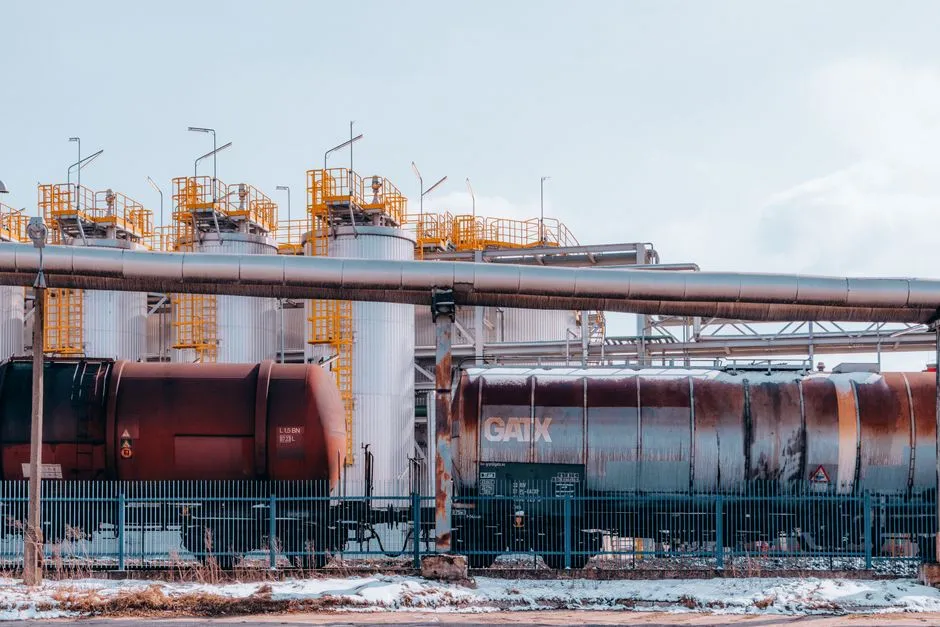
Domestic sewage and industrial process wastewater require different biological, solids, and disinfection unit operations. Cooling-blowdown equipment should not be used to disguise unresolved scaling or chemical-residual problems in either stream.
Assess domestic sewage for an MBR or activated-sludge process when the endpoint requires biological treatment, suspended-solids separation, and space-efficient reuse. The specified MBR wastewater treatment system combines activated sludge with submerged PVDF membrane filtration. The stated product performance is below 1 μm effluent, 60% less footprint than conventional systems, and capacity from 10 to 2,000 m³/day.
Characterize oily, high-solids, or industrial process wastewater before selecting dissolved air flotation. The specified DAF machine covers 4–300 m³/h and is intended for suspended solids, FOG, oil and grease, and colloidal matter. These figures are equipment-envelope values, not proof that the unit will meet the site’s discharge or reuse requirements.
| Stream and equipment | Applicable function | Specified equipment envelope | Required design confirmation |
|---|---|---|---|
| Domestic sewage: MBR | Biological treatment, membrane solids separation and reuse preparation | Below 1 μm effluent; 60% less footprint; 10–2,000 m³/day | Influent loading, effluent endpoint and hydraulic peak |
| Process wastewater: DAF | Removal of suspended solids, FOG, oil, grease, and colloidal matter | 4–300 m³/h | Source characterization and pollutant loading |
| Residual disinfection: chlorine dioxide | Disinfection for industrial cooling loops or process wastewater | 50–20,000 g/h; manual or automatic configurations | Target organism, dose, contact conditions and residual limits |
| Sludge dewatering: plate-and-frame press | Separates sludge-generated water before disposal or reuse | 1–500 m² filtration area; manual, hydraulic, or PLC-automatic configurations | Sludge volume, solids capture, cake handling and filtrate destination |
Add final disinfection as a separate risk-based step. The specified chlorine dioxide generator provides 50–20,000 g/h in manual and automatic configurations. For separated sludge, the specified plate-and-frame filter press provides 1–500 m² filtration area and three control configurations. Tie every final treatment stage to a defined endpoint and applicable Sholapur consent condition.
Size the system from the water balance and recovery target
Equipment duty should come from the measured cooling-tower mass balance, not a vendor’s nominal permeate rate. Calculate daily blowdown from evaporation, drift, makeup, and inventory changes, then cross-check it against the Genesis Water Technology reference that approximately 25–30% of makeup water is lost at 4 cycles of concentration.
Define required permeate flow as selected blowdown flow multiplied by the selected recovery target. Size UF and RO around feed variability, fouling allowance, cleaning downtime, and future expansion. Treat minimum, average, and peak cases separately; do not assign continuous duty to a peak-flow case unless equalization and redundancy are explicitly provided.
| Sizing or acceptance item | What the bidder must state | Acceptance evidence |
|---|---|---|
| Blowdown flow | Minimum, average, and peak values with operating scenarios | Twelve-month measured water balance reconciled to meter records |
| Permeate and recovery | Selected recovery and resulting permeate flow | Guaranteed site-specific values, not screening benchmarks |
| UF capacity | Feed basis, flux, backwash frequency, and redundancy | Automatic backwash test and differential-pressure record |
| RO capacity | Permeate duty, feed range, recovery, fouling allowance, and cleaning downtime | Performance test using representative water |
| Water quality | Permeate, concentrate, and normalized permeate-flow criteria | Acceptance limits approved before commissioning |
| Concentrate | Flow, chemistry, handling route, and disposal responsibility | Documented mass balance and permitted receiving route |
Acceptance criteria should cover permeate quality, concentrate quality, recovery, differential pressure, normalized permeate flow, cleaning frequency, and automatic backwash performance. A membrane-element reference from the RO and UF membrane filter-element range is useful for equipment comparability, but replacement and performance data must match the selected feed and recovery conditions.
The 2026 Open Engineering Inc LCA also changes the business-case timeline. Its interpretation states that a system commissioned in 2026 and operated through 2050 would spend most of its service life under grid conditions where the reuse GWP penalty is negligible, while water savings accrue at full value. Require a guaranteed water balance and performance test on representative water; do not rely only on a nominal permeate rate.
Build a Sholapur procurement and compliance checklist
Comparable bids should expose the same design assumptions, performance obligations, and compliance boundaries. Without a common submission basis, equipment prices can be mistaken for comparable treatment offers.
Require each bidder to submit a process flow diagram, mass balance, hydraulic calculations, membrane-sizing basis, chemical list, expected cleaning frequency, redundancy strategy, and performance guarantees. The energy model must include pretreatment, UF backwash, RO high-pressure pumping, antiscalant dosing, cleaning, cleaning-water disposal, and concentrate management—not just membrane energy.
Ask the supplier to state its basis for local acceptance, including the feed-water envelope, membrane flux, recovery, permeate quality, controls, spare parts, installation constraints, and commissioning support. The bidder should also identify which results are guaranteed at site conditions and which remain contingent on the consent, utilities, water balance, or operating assumptions.
| Buyer check | Required information | Reason for the check |
|---|---|---|
| Process and hydraulic basis | Flow diagram, water balance, hydraulic calculations, equipment duty and redundancy | Prevents mixing of streams or comparison of unequal scopes |
| Performance guarantee | Recovery, permeate quality, cleaning frequency and representative-water test | Converts reference capability into an enforceable site duty |
| Energy and consumables | All pumping, backwash, chemical, cleaning, and concentrate-management loads | Supports lifecycle and thermal-load comparison |
| Compliance | Applicable Sholapur consent, reuse conditions, and waste classifications | Confirms the legal endpoint; the supplied research does not establish it |
| Commercial comparison | Total cost of ownership under stated operating scenarios | Separates equipment price from energy, chemicals, membranes, sludge, and concentrate costs |
Confirm the discharge consent, reuse conditions, and waste classifications with the authority and an independent licensed consultant. The supplied research does not establish those site-specific requirements. The 2026 Open Engineering Inc LCA also shows that treatment energy and upstream electricity and chemical inputs materially affect reuse comparisons.
Use Genesis Water Technology’s 60–85% cooling-reuse recovery, 50–85% RO recovery, and 70–85% NF recovery as screening benchmarks only. A bidder’s guaranteed site-specific value must supersede the benchmark in the accepted guarantee. The Ottawa data-center wastewater treatment guide provides another reference for how water balance, consent, and reuse decisions can be structured, but Sholapur data remains controlling.
Frequently Asked Questions
How should we compare bids for wastewater and cooling-blowdown treatment cost?
Compare total cost of ownership for an equivalent water balance and endpoint, not initial equipment price alone. Request an energy model covering pretreatment, UF backwash, RO pumping, antiscalant dosing, cleaning, cleaning-water disposal, and concentrate management. Add membrane replacement, chemicals, sludge handling, and disposal to the operating model. The 2026 Open Engineering Inc LCA found that treatment energy accounted for roughly 80% of the GWP difference between its wastewater and freshwater scenarios, so energy assumptions need explicit prices and operating hours.
Which treatment train should a Sholapur data center select?
Select the train from the required endpoint and measured water quality. For cooling makeup reuse, use solids and biological control before RO where dissolved-solids, hardness, or silica control is necessary. Use NF only when partial hardness and sulfate removal is sufficient. Choose discharge treatment against the actual Sholapur consent, and reserve ZLD for a justified liquid-disposal constraint after membrane and thermal options are evaluated. Genesis Water Technology reports 60–85% recovery for cooling makeup reuse and 95–99% overall recovery for ZLD.
How do we size UF and RO from blowdown flow and recovery?
First establish average and peak blowdown from the measured tower mass balance. Multiply selected blowdown flow by the chosen recovery to establish the required permeate rate. Size UF for the RO feed and expected variability, then size RO for the required permeate duty, feed-water envelope, fouling allowance, and cleaning downtime. Do not treat the stated UF flow envelope as site capacity without matching it to the selected duty.
What should we verify before selecting a treatment supplier?
Verify that the supplier can demonstrate the selected process against representative Sholapur water, provide a complete mass and energy balance, guarantee recovery and permeate quality, define cleaning and backwash performance, and identify the concentrate route. Also request controls, spare parts, installation constraints, commissioning support, and a representative-water performance test. This check separates proven site performance from generic equipment capability.
Which Sholapur consent conditions apply to discharge and reuse?
No universal Sholapur wastewater or cooling-blowdown limit can be derived from the supplied research. Obtain the applicable discharge consent, reuse conditions, and waste classifications from the competent authority, then have an independent licensed Indian environmental consultant review them against the proposed process and sampling plan. Equipment should not be guaranteed against a limit that has not been obtained and incorporated into the acceptance criteria.
Related Equipment
- MBR wastewater treatment system — specifications, capacity range, and technical data
Further Reading
- Manchester cooling-blowdown treatment guide