Which rules apply to a mine discharging near Phyllis?
Mining and metals plants near Phyllis meet sewer pretreatment limits by characterizing each wastewater stream, then applying a treatment train selected for its actual contaminants. The governing documents include 40 CFR Part 440, applicable NPDES permit conditions, and the receiving sewer authority’s pretreatment requirements. Equalization buffers variable flows; pH correction supports metal hydroxide precipitation; coagulation and flocculation form removable flocs; DAF or lamella clarification removes bulk solids; filtration captures residual colloids; and RO addresses remaining dissolved metals or salts where limits or reuse justify it. No Phyllis-area numerical limit should be assumed without the current permit and sewer requirements.
The EPA states that 40 CFR Part 440 covers wastewater discharges from ore mines and processing operations and is incorporated into NPDES permits. Potential sources include groundwater produced during ore extraction, equipment-cooling and dust-control water, precipitation entering mines, milling and beneficiation wastewater such as chemical-leach effluent, and contaminated stormwater at storage facilities (U.S. EPA, Ore Mining and Dressing Effluent Guidelines). Although the EPA includes these activities within NAICS 2122, the agency says that listing is only a guide; the applicability sections in Part 440 determine coverage (U.S. EPA, Ore Mining and Dressing Effluent Guidelines).
A direct sewer discharge also requires review of the receiving publicly owned treatment works’ rules. Request the current NPDES permit, the applicable Part 440 subpart analysis, the sewer pretreatment permit or written rules, local limits for pH, metals and TSS where applicable, monitoring requirements, prohibited discharges, and surcharge or reuse conditions. The supplied research does not identify the responsible Phyllis-area sewer authority or establish its numerical limits, so those values must come from the operator’s current site-specific documents. A regional mining sewer pretreatment compliance guide provides a useful parallel, but it does not replace local permit review.
| Requirement layer | What it establishes | Document to obtain |
|---|---|---|
| Federal applicability | Whether the operation falls within the relevant ore-mining and processing requirements | Current NPDES permit and applicable 40 CFR Part 440 subpart |
| Permit conditions | Site-specific discharge, monitoring, reporting, and operating conditions | Current NPDES permit and attachments |
| Local pretreatment | Receiving sewer authority limits, prohibited discharges, monitoring, and fees | Industrial discharge permit, written rules, and surcharges |
| Operations record | Evidence that the selected treatment train can comply | Source characterization, mass-loading calculation, operating plan, and monitoring records |
Characterize every wastewater stream before selecting equipment
A defensible treatment design begins with separate mining effluent characterization for every stream rather than one blended sample. Acid mine drainage, ore-processing water, tailings-pond effluent, mine dewatering discharge, and stormwater that contacts ore or tailings can have different acidity, solids, salt, and metal profiles. AMPAC USA’s September 2025 research specifically distinguishes these streams and warns against treating them as a single default wastewater.
Sample each source during representative operating conditions and test pH, suspended solids, turbidity, conductivity or TDS, and the metals relevant to the facility and permit. Preserve flow-weighted mass loads where the discharge is intermittent. A single composite can conceal a short high-strength slug that controls chemical demand, sludge production, or permit compliance.
Record peak and average flow, discharge duration, seasonal variability, and the maximum anticipated discharge. Equalization and pumping must be checked against peak duty, while equipment residence time and chemical consumption depend on mass loading. Distinguish concentration from load: a low-concentration, high-volume stream may require large flow-handling equipment, whereas a smaller, high-strength stream can dominate chemical use and sludge volume. These are inputs the owner must establish before selecting tanks, pumps, membranes, or dosing rates.
Use the results to determine whether pH correction, metal hydroxide precipitation, clarification, multimedia filtration, UF, RO, or another unit operation is necessary. The mining and metals wastewater pretreatment approach illustrates the same source-by-source logic, but its examples cannot establish Phyllis chemistry or flows.
| Design input | Why it changes the treatment decision | Buyer or operator action |
|---|---|---|
| Representative chemistry by source | Determines whether acidity, metals, solids, colloids, or salts govern treatment | Obtain source-specific analytical results and identify applicable permit parameters |
| Peak and average flow | Controls equalization, pumping, hydraulic residence, and membrane feed capacity | Provide both flow cases, duration, and seasonal records |
| Mass loading | Links concentration and flow to chemical demand, sludge generation, and filter sizing | Calculate loading from representative sampling rather than concentration alone |
| Discharge and reuse targets | Defines whether conventional treatment is sufficient or RO is justified | Obtain current local limits and the desired internal recovery rate |
Build a treatment train from the contaminants backward
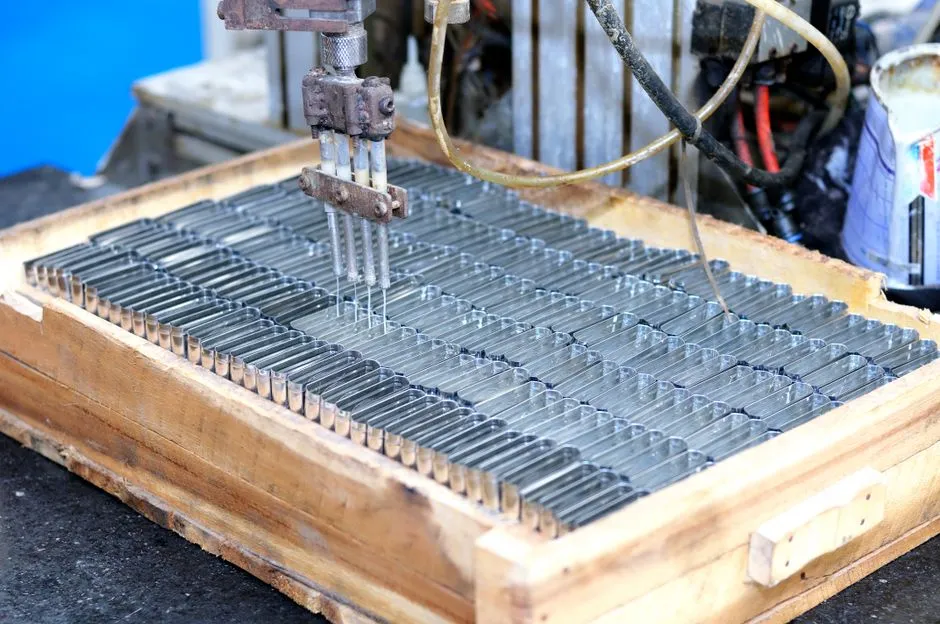
The treatment train should be built backward from the required sewer or reuse quality, with each stage assigned a contaminant and a measurable outlet condition. The process flow is:
- Mining wastewater equalization: buffer variable process and stormwater flows so chemical dosing and solids separation operate within a stable hydraulic and chemical envelope.
- pH correction: adjust acidity or alkalinity so dissolved metals can precipitate as metal hydroxides. A February 2024 PMC review describes lime raising pH above 10 before thickening in the process it reviewed; that operating condition is not a universal design target.
- Coagulation and flocculation: aggregate suspended solids and fine metal-bearing particles into flocs suitable for the selected separation method.
- DAF or lamella clarification: remove bulk precipitated solids. DAF suits buoyant floc, oil, or floatable fines; lamella clarification is the option when sludge volume and footprint control the project, according to Genesis Water Technologies in November 2025.
- Filtration: remove residual suspended material and colloids before RO, using a filtered-water target rather than raw-water turbidity as proof of membrane readiness.
- RO polishing: reduce dissolved metals and salts when they remain above the applicable limit or internal reuse requires additional separation.
- Monitoring: record flow, pH, conductivity, and permit-required pollutant measurements in the operating and self-monitoring system.
Each stage should protect the next. An PLC-controlled chemical dosing system for pH correction and flocculation provides the chemical setpoint linkage needed across pH adjustment and solids conditioning. Clarifier selection then depends on floc behavior and sludge handling, not simply available floor area. A DAF system for mining wastewater solids separation and a high-efficiency lamella sedimentation tank serve different hydraulic and sludge-handling objectives.
Before RO, a multi-media filter for residual solids and colloid removal should be assigned a defined filtered-water target. AMPAC USA’s September 2025 research reports greater than 99% rejection of dissolved metals and salts and RO recovery of 50–70% for acid mine drainage feed. Those are cited study results, not guaranteed performance for an uncharacterized site.
Choose DAF, lamella clarification, or UF for the difficult contaminants
DAF, lamella clarification, and UF remove different physical contaminants and should not be compared by equipment name alone. The choice begins with the contaminant and ends with the downstream duty: clarification must produce solids acceptable for dewatering, while UF must protect RO or another polishing process.
DAF is the practical choice when the objective includes suspended solids, colloidal material, oil and grease, or flocs that rise. The supplied HydropureWater range covers 4–300 m³/h across 13 models; that is a supplier’s equipment range, not a flow band established for mines near Phyllis. Lamella clarification becomes attractive when compacted sludge removal, high sludge volume, or a small footprint drives the design. The supplied product specification states surface loading rates of 20–40 m/h and up to 30% lower chemical consumption; these claims require clarification during supplier evaluation because the supplied research does not define the comparison basis or operating conditions.
UF is the stronger option when the principal requirement is chemical-free removal of colloids and suspended solids before RO. The supplied UF system uses 0.03 μm PVDF membranes, accepts inlet turbidity up to 300 ppm, and provides automatic backwash and air scour. Those specifications still do not establish site suitability without feed-water data and membrane-fouling assessment.
None of these units should be credited with removing dissolved salts. AMPAC USA’s September 2025 treatment literature assigns dissolved-metal and salt removal to RO. For a detailed decision sequence, compare the DAF versus clarifier selection for mining wastewater.
| Option | Primary design function | Key supplier information to request |
|---|---|---|
| DAF | Separation of floatable solids, colloidal material, oils, and buoyant floc | Contaminant loading, flow variability, floc behavior, air-to-solids basis, sludge discharge, and clarified-water guarantees |
| Lamella clarification | Separation of settleable floc with compact sludge removal | Surface-loading basis, underflow solids, sludge volume, footprint, chemical consumption conditions, and downstream protection |
| UF | Removal of residual colloids and suspended solids before sensitive polishing | Feed turbidity, membrane material, normalized flux, backwash and air-scour cycle, cleaning method, and filtrate acceptance criteria |
Use RO only when dissolved limits or reuse justify it
RO should follow wastewater stabilization, precipitation, clarification, and filtration because dissolved metals and salts remain after conventional solids-removal processes. It is justified when those dissolved constituents exceed the applicable discharge limit or when internal reuse requires additional separation—not simply because a complete mining package includes an RO skid.
AMPAC USA’s September 2025 research reports greater than 99% rejection of dissolved metals and salts, 50–70% RO recovery for acid mine drainage feed, and 70–85% recovery when RO is the first stage of a zero-liquid-discharge train. The same source reports 40–60% reduction in freshwater intake for internal reuse enabled by RO compared with once-through operation. That is a study result, not a guaranteed saving for every facility near Phyllis.
Require a site-specific water balance and recovery curve before accepting a system. The quotation should identify the concentrate-disposition route, pretreatment specification, membrane warranty conditions, energy assumptions, and reject-water management. A reverse-osmosis system for dissolved-metal and salt reduction should be evaluated against those conditions. The 2026 RO retrofit and upgrade guide provides a useful framework for separating membrane performance from plant-specific guarantees.
Any remaining discharge to sewer must still satisfy local pH, metals, TSS, and other applicable limits, even if most treated water is reused internally. Internal reuse does not transfer the residual stream outside the pretreatment obligation.
Control sludge, monitoring, and the risks that cause permit exceedences
Treatment performance can be lost after the water leaves the main process if sludge, chemical control, monitoring, and peak-flow management are not designed as part of the train. Metal hydroxide precipitation creates a sludge that needs a defined thickening, dewatering, storage, and disposal route. The supplied plate-and-frame press range is 1–500 m², with manual, hydraulic, or automatic PLC operation; that range describes supplier equipment, not the dewatering duty at a particular mine.
Specify automatic dosing for pH adjusters, coagulants, and flocculants with PLC control and HMI integration. Chemical delivery interruption, incorrect feed, and changing ore chemistry can disturb solids conditioning and increase sludge carryover. A plate-and-frame filter press for precipitated mining sludge should be selected against measured cake characteristics, cycle time, filtrate return, and final disposal requirements.
Monitor flow, pH, conductivity, and every parameter required by the NPDES and sewer permits. Preserve sampling and self-monitoring records so compliance can be demonstrated rather than inferred from equipment settings. Equally, plan for peak flows, chemical delivery interruption, sludge carryover, filter blinding, membrane scaling, and stormwater variability.
The final proposal should separate guaranteed performance from conditional claims. A supplier must state which results depend on influent chemistry, chemical quality and dosing, maintenance, sampling frequency, operator intervention, and documented upstream controls. A generic equipment guarantee does not establish compliance with a site-specific permit.
| Risk | Engineering consequence | Required control or evidence |
|---|---|---|
| Peak-flow or storm exceedance | Unstable dosing, shortened contact time, solids carryover | Equalization design, maximum-flow duty, and high-level or diversion response |
| Chemical interruption or misdosing | pH excursion, poor floc formation, higher sludge | PLC interlocks, chemical inventory procedure, alarms, and calibration records |
| Filter blinding or membrane scaling | Loss of throughput and deterioration in filtrate quality | Cleaning strategy, differential-pressure monitoring, and feed-quality limits |
| Sludge handling failure | Clarifier upset, recycled filtrate contamination, disposal nonconformance | Mass balance, cake and filtrate testing, storage capacity, and disposal route |
| Monitoring failure | Undetected exceedance or incomplete compliance records | Calibrated instruments, sampling schedule, records retention, and alarm response |
Turn the treatment concept into a defensible supplier request
A comparable quotation requires the same design basis, contaminant definitions, permit targets, and scope boundaries from every supplier. The minimum request should state peak and average flow in m³/h, representative influent pH and metals profile, current local discharge limits, required monitoring, and the desired reuse percentage. Without those inputs, a price cannot be compared because each supplier must assume different flow, chemistry, equipment, and compliance duties.
Ask each supplier to map every proposed unit operation to a named contaminant, discharge target, operating setpoint, and downstream protection requirement. Request the treatment sequence, electrical and control architecture, chemical-consumption basis, sludge output, maintenance plan, commissioning tests, and performance guarantee. This prevents a clarification skid, filter, RO system, and sludge dewatering equipment from being quoted as disconnected items.
Require evidence of comparable DAF, lamella, multimedia filtration, UF, RO, and sludge-dewatering applications. Comparable duty means more than having supplied the same equipment name: the supplier should explain how its proposed system addresses the site’s flow, chemistry, variability, sludge, and monitoring conditions. The supplied research contains no published Phyllis-area equipment price or standardized flow band, so neither should be represented as a regional benchmark.
A configured integrated water-treatment system may be requested as an option, but final selection should use site data and current permit documents. The mining and metals wastewater pretreatment approach can support internal review, but the owner must obtain the actual permit and sewer requirements before finalizing the basis of design.
| Supplier deliverable | Minimum content | Owner check |
|---|---|---|
| Basis of design | Flow cases, stream chemistry, local limits, monitoring, and reuse target | Matches plant data and current permit documents |
| Process guarantee | Contaminant-to-unit mapping and stated outlet parameters | Each guarantee is tied to a sampling point and operating condition |
| Controls and operations | PLC/HMI architecture, setpoints, alarms, chemical storage, and maintenance | Integration and operator responsibilities are defined |
| Residuals | Sludge mass, dewatering duty, filtrate destination, and disposal route | Complete route is assigned and permit-compatible |
| Commissioning | Tests, acceptance samples, training, documentation, and deficiency correction | Acceptance criteria reference applicable permit limits |
Frequently Asked Questions
What does a mining plant near Phyllis need for a sewer pretreatment permit?
It needs an operator-specific regulatory review covering the current NPDES permit, the applicable 40 CFR Part 440 subpart, and the receiving sewer authority’s pretreatment permit or written rules. The operator should obtain current limits for pH, metals, TSS and other applicable parameters, along with prohibited-discharge, monitoring, reporting, surcharge, and reuse provisions. The supplied research does not establish the Phyllis-area sewer authority or its numerical limits, so no equipment guarantee should use assumed local values.
How much does a complete mining wastewater treatment train cost near Phyllis?
The supplied research publishes no complete-train price for the Phyllis area, and a defensible quotation cannot be produced from a generic package. Request a price using peak and average flow in m³/h, representative source chemistry, current local limits, the required monitoring scope, sludge-disposal assumptions, and the desired reuse rate. Ask whether each figure is budgetary or firm, which performance guarantees it covers, and which civil work, chemicals, controls, commissioning, and operating costs are excluded.
How should a supplier size equalization, DAF, lamella, UF, and RO equipment?
Require sizing against maximum anticipated flow, equalization duty, contaminant mass loading, and the required clarified, filtered, or polished-water result—not average flow alone. The supplier should state its hydraulic and chemical design basis, handling of variable sludge and feed chemistry, and performance test method. Obtain comparable references and ask how the proposed equipment protects downstream filtration, UF, or RO.
Which supplier qualifications reduce pretreatment compliance risk?
Qualify suppliers on a complete, contaminant-by-contaminant scope, comparable installations, controls integration, sludge handling, commissioning tests, and documented performance guarantees. A supplier should explain which results are guaranteed under the stated influent and operating conditions, and which depend on chemical quality, maintenance, and operator compliance. This approach is more defensible than accepting a generic mining package without site-specific chemistry, flows, or permit targets.