What Kansas City Mining and Metals Wastewater Actually Looks Like in 2026
Kansas City-area mining and metals facilities in 2026 generally deal with one of three influent profiles, and which one you have already biases the clarifier choice. Mineral processing and tailings water carries high TSS (often 1,000-10,000 mg/L), silica, iron, and variable pH between 2 and 9 depending on the ore body and reagent scheme. Metal finishing rinsewater runs much lower on TSS (typically 50-500 mg/L) but is loaded with dissolved lead, cadmium, nickel, zinc, copper, and chromium, plus emulsified oils and FOG from machining, drawing, and stamping. Steel and galvanizing contact water is the hybrid: lubricating oils, mill scale, TSS, and dissolved metals all in the same stream at moderate concentrations (TSS 200-2,000 mg/L, oil 50-500 mg/L).
Discharge routing drives the rest of the design. Most KC facilities discharge to the Kansas City Water Services (KCWS) POTW under local limits derived from 40 CFR Part 433 for metal finishing, or 40 CFR Part 434 for ore mining and dressing, and 40 CFR Part 467 for aluminum forming — with site-specific NPDES permits issued by MoDNR (Missouri side) or KDHE (Kansas side). The dual-state reality is a practical headache: a plant that sits on the state line may answer to two permit writers, but KCWS pretreatment review is the real gatekeeper because that is where the sewer connection is. Facilities that discharge direct to surface water under a MoDNR or KDHE industrial NPDES permit face the federal effluent limitation guidelines (ELGs) directly and a more complex compliance demonstration.
The fine precipitates, sub-100-micron flocs, and emulsified oils common to these streams already tilt the technology choice. Gravity settling on inclined plates struggles with low-density, slowly-settling metal hydroxide flocs and FOG; bubble-attached flotation handles both in one pass. That is why the rest of this guide treats dissolved air flotation as the default primary clarifier for the KC metals envelope.
How a DAF Works Inside a Mining/Metals Treatment Train
A dissolved air flotation unit is a five-step physical separation: coagulation/flocculation of the influent, pressurized whitewater recycle (typically 20-40% of throughput sent through a saturation pump at 4-6 bar), micro-bubble contact where 30-80 micron bubbles nucleate onto floc particles, float/scum removal by a surface skimmer, and clarified underflow collection. The bubbles attach to flocs and lift them to the surface because the bulk density of the bubble-floc aggregate drops below 1.0 g/mL, which is the opposite of what a gravity clarifier exploits.
Headline performance numbers for a properly designed DAF in mining and metals service: TSS reduction up to 97%, COD removal of 60-80%, and removal of precipitated heavy metals in excess of 90% (industrial DAF performance data, 2025-12). The reason DAF is favored over settling for metal hydroxide flocs is straightforward: a freshly precipitated copper or nickel hydroxide floc at pH 9.0-9.5 is mostly water, with effective density only marginally above 1.0 g/mL, so it settles slowly. A 50-micron bubble attached to the same floc lifts it in seconds. The same floc that takes 2-4 hours to settle in a clarifier is on the DAF surface in 15-25 minutes of hydraulic residence time.
For Kansas City plants sizing a DAF, the HydropureWater DAF system covers 4-300 m3/h across 13 standard sizes (per the manufacturer's 2026 product sheet), so a typical KC flow of 50-150 m3/h from a single process line maps directly to a catalog unit without custom fabrication. The DAF design also runs as a packaged skid, which matters when the site has limited laydown space and a procurement team that wants a turnkey line item instead of a field-built concrete tank.
How a Lamella Clarifier Works for the Same Stream
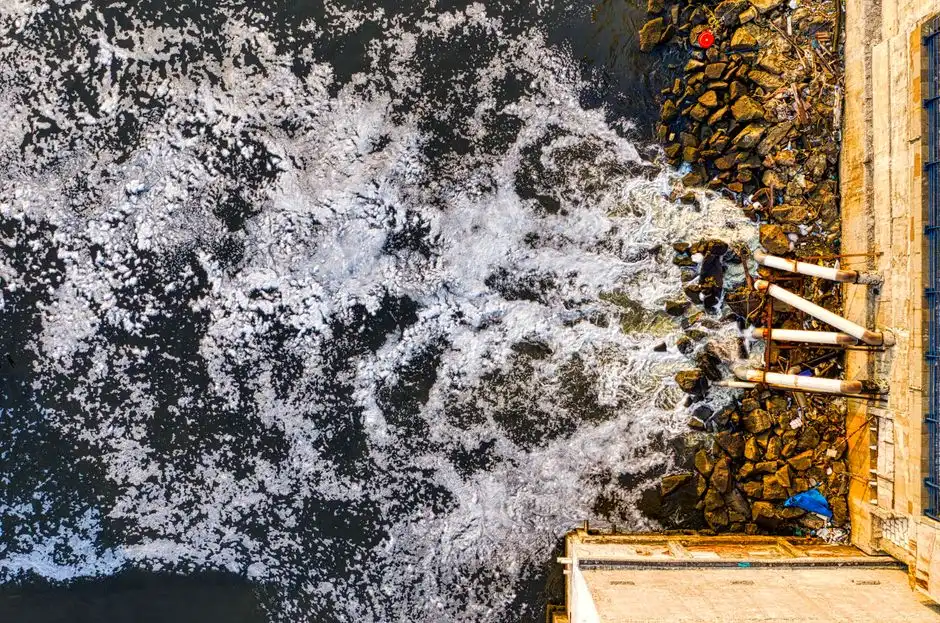
A lamella clarifier (also called an inclined-plate settler or high-rate sedimentation tank) uses parallel plates inclined at 55-60° inside a rectangular basin. Influent enters a flocculation zone, solids settle onto the plate surfaces where the inclination lets sludge slide down to a hopper, and clarified water rises counter-current through the plate pack to the outlet launder. Surface loading rates run 20-40 m/h — 5-10× higher than a conventional clarifier — because each plate acts as a shallow settling zone, and the effective settling area is the horizontal projected area of the entire plate pack, not just the footprint of the basin.
The main operational advantage of a lamella over a conventional clarifier is chemical economy. Sludge recirculation from the hopper back to the flocculation zone seeds floc growth, which means coagulant and flocculant doses can be cut by up to 30% versus a single-pass clarifier (HydropureWater engineering data, 2026). For a high-flow mineral slurry stream where chemistry is the dominant OpEx line, that 30% reduction is real money over a 5-year operating horizon.
The failure mode that matters for KC metal finishers is FOG and very fine metal hydroxide floc. Emulsified oils with droplet size below 20 microns do not coalesce on inclined plates — they ride the upflow and exit over the weir. Likewise, freshly precipitated metal hydroxide flocs smaller than about 50 microns slip through plate spacings of 50-80 mm. The HydropureWater lamella clarifier is offered as a skid- or basin-mounted package with a compact footprint, but installation is permanent: concrete pad, anchor bolts, fixed piping. That is the trade-off — lower chemistry cost in exchange for longer install time and a narrower influent envelope.
DAF vs Lamella Clarifier: Head-to-Head for KC Mining/Metals
The table below is the decision artifact. Pull the numbers, paste them into your memo, and adapt the right-hand column to your specific influent.
| Parameter | DAF (DAF-020 to DAF-080 class) | Lamella Clarifier |
|---|---|---|
| TSS removal | 90-97% (industrial DAF data, 2025-12) | 70-90% (depends on floc density) |
| FOG / emulsified oil removal | >90% (bubble-flotation mechanism) | <40% (FOG slips through plates) |
| Heavy metal removal post-precipitation | >90% (float captures fine hydroxide flocs) | 60-85% (settleable fraction only) |
| Surface loading rate | 5-15 m/h (HydropureWater DAF spec, 2026) | 20-40 m/h (inclined-plate design) |
| Hydraulic residence time | 15-25 minutes | 60-120 minutes |
| Chemical use (coagulant + flocculant) | Baseline reference | Up to 30% lower (sludge recycle seeding) |
| Footprint per 50 m3/h | ~8.4 × 3.6 m vessel (DAF-050 spec, 2026) | ~6 × 3 m basin + 3 m plate pack height |
| Turnkey install time | 1 day for mobile trailer; 2-4 weeks for packaged skid | 4-12 weeks (concrete pad, anchor, fixed piping) |
| Sludge consistency | Thick float (3-5% DS typical) | Dilute underflow (0.5-1.5% DS) |
| Best-fit KC stream | Metal finishing rinsewater, steel/galvanizing contact water, oil-laden mineral slurry | Coarse mineral tailings, low-FOG, low-density-loading streams |
| Regulatory alignment | Designed to meet 40 CFR Part 433 daily-max metal limits and Part 434 TSS limits | Designed to meet 40 CFR Part 434 TSS limits; oil/FOG parameters may not be met |
On CapEx signal, packaged DAF units (4-300 m3/h) carry a higher per-m3/h equipment cost than a custom basin-built lamella, but total installed cost is typically lower for flows under about 200 m3/h once concrete, anchor, and field-fabricated piping are priced in. For a real-world footprint reference on a temporary DAF, the WesTech mobile DAF trailer measures 47'-6" × 8'-6" (smaller unit) and 51'-7" × 8'-6" (larger unit) in operating configuration, with the unit delivered and online within a single day (WesTech mobile DAF specification, 2025-09). That kind of deployment is decisive when a KC plant needs supplemental capacity during a clarifier rebuild or a permit-driven upgrade.
Why Most KC Mining/Metals Plants Default to DAF in 2026
The default in 2026 is DAF, and the reason is the influent envelope, not vendor preference. A typical KC metals stream — metal finishing rinsewater blended with contact cooling water and occasional stormwater — carries both dissolved metals that require pH precipitation with NaOH or lime to pH 8.5-9.5, and emulsified oils from machining coolants, rolling lubricants, and galvanizing flux. Only DAF handles both removal mechanisms in a single unit: bubble-attached float for the precipitated flocs and skimmed FOG, and clarified underflow that is already low enough in oil and TSS to feed a downstream biological or membrane polish step.
Speed of deployment is the second reason. Trailer-mounted DAFs come online in a single day (WesTech mobile DAF spec, 2025-09), which is decisive when a KC plant faces an emergency bypass, a clarifier rebuild, or a permit-driven upgrade with a tight compliance schedule. A lamella clarifier requires a concrete pad, anchor bolts, and fixed influent/effluent piping — 4-12 weeks minimum, longer if permitting or weather intervenes.
The counter-case is real and worth naming: a high-density mineral tailings stream with mostly coarse, fast-settling solids and no oil — for example, a silica sand wash water or an aggregate plant overflow — is still a lamella use case, especially where chemical cost dominates OpEx and the site already has a concrete basin. For that envelope, lamella wins on 30% lower chemistry and 20-40 m/h loading. The HydropureWater DAF system and the matching automatic chemical dosing skid cover the metallic envelope; a lamella from the same product line covers the mineral envelope.
Pretreatment You Need in Front of Either Clarifier
Neither clarifier hits permit on its own. The standard pretreatment train in front of a primary clarifier at a KC metal finishing or ore processing plant runs: flow equalization (24-48 h HRT to buffer pH and load swings), pH adjustment to 8.5-9.5 with NaOH or lime to precipitate target metals as hydroxides, coagulant dosing (typically polyaluminum chloride at 50-200 mg/L or ferric chloride at 100-300 mg/L), flocculant dosing (anionic polyacrylamide at 1-5 mg/L), then the clarifier. The flocculation stage needs 10-20 minutes of gentle mixing — too much shear breaks the floc back into pin-floc that slips both DAF and lamella.
Jar testing is non-optional for KC metal finishers. Each site's metal mix — the specific ratio of Zn to Ni to Cu, the presence of chelating agents from cleaning chemistries, the variability of incoming FOG load — behaves differently with flocculants, and over- or under-dosing is the single most common cause of clarifier failure. The automatic chemical dosing skid from HydropureWater is PLC-controlled with flow-paced setpoints, which holds the dose inside the jar-test envelope once it is established.
Sludge from either clarifier still needs dewatering before disposal. A DAF float at 3-5% dry solids feeds a plate and frame filter press directly; a lamella underflow at 0.5-1.5% DS usually needs a thickening step first. The plate and frame filter press paired with either clarifier produces a 25-35% DS cake suitable for landfill or, depending on the TCLP result, hazardous waste disposal. For a broader Missouri-specific context on how this fits into a full plant design, the Missouri industrial wastewater treatment guide covers the full train from equalization through discharge. If the stream also carries sulfides from a pickling or mining process, the sulfide removal methods comparison is a useful adjacent read.
Frequently Asked Questions
Is a DAF or a clarifier better for heavy metal removal in mining wastewater?
DAF is the stronger primary clarifier for heavy metal removal once pH precipitation has converted dissolved metals to hydroxide flocs. Documented DAF performance is greater than 90% removal of precipitated heavy metal components (industrial DAF data, 2025-12), versus 60-85% for a lamella clarifier. The reason is floc density: a freshly precipitated metal hydroxide floc has effective density only marginally above water and settles slowly, but a 50-micron bubble attached to the same floc lifts it in seconds. For Kansas City facilities governed by 40 CFR Part 433 daily-max metal limits (e.g., 0.69 mg/L Cu, 0.43 mg/L Ni, 1.48 mg/L Zn) or 40 CFR Part 434 TSS limits, DAF is the safer default.
Can a lamella clarifier handle emulsified oils from a metal finishing shop?
No — not reliably. Emulsified oil droplets below about 20 microns do not coalesce on inclined plates; they ride the upflow and exit over the weir. Documented FOG removal on a lamella clarifier is typically below 40%, versus greater than 90% for a DAF where bubble attachment floats the oil to the surface for skimming. For any KC metal finishing or steel/galvanizing stream with more than trace oil, DAF is the correct primary clarifier. A lamella is appropriate only if the stream has been oil-removed upstream (e.g., via an oil-water separator or API interceptor) and the remaining FOG is below about 25 mg/L.
How much space does a DAF need for a 50 m3/h flow at a KC facility?
For 50 m3/h, the DAF-050 from the HydropureWater DAF line measures 8.4 m × 3.6 m × 2.7 m (L × W × H) with an operating weight of 55,000 kg (per the 2026 product sheet). A lamella clarifier for the same flow typically needs a 6 m × 3 m concrete basin plus a 3 m plate pack height. The DAF skid is taller and heavier but ships as a single packaged unit on a structural base; the lamella requires field concrete work. On a constrained KC site with limited laydown area, the DAF skid is usually easier to permit and install, even though the basin footprint of the lamella is smaller.
Do Kansas City facilities need a permit for a DAF or clarifier upgrade?
Yes. Any change in treatment chemistry, hydraulic capacity, or sludge handling at a KC industrial facility triggers a permit review. Missouri-side facilities file a permit modification with MoDNR; Kansas-side facilities file with KDHE. Either way, KC Water Services pretreatment review is required for any change that affects discharge to the sanitary sewer — including a new primary clarifier, a new chemical dosing skid, or a flow increase above the design hydraulic capacity. Direct discharge facilities under an industrial NPDES permit face the same federal ELG demonstration in 40 CFR Part 433 or 434, plus a state-level anti-degradation review if effluent quality changes.
What is the typical payback for a DAF vs a clarifier for a 100 m3/h mining stream?
Directionally, a DAF at 100 m3/h runs higher on chemistry (coagulant + flocculant dose is the reference baseline) but lower on labor (no basin scraping, automated surface skimmer) and produces a thicker, easier-to-dewater float at 3-5% DS that cuts downstream filter press cycles. A lamella at 100 m3/h saves up to 30% on chemistry (sludge recycle seeding) but produces dilute underflow at 0.5-1.5% DS that increases downstream dewatering cost — typically a thickening step such as the equipment covered in the sludge thickener engineering guide is needed before the filter press. For oil-laden streams, the DAF OpEx premium is usually recovered in lower sewer surcharges and avoided consent-order penalties within 18-36 months. For oil-free mineral slurries, the lamella OpEx advantage can push payback past 5 years and tilt the choice the other way.