A sludge thickener engineering specification sets the loading, retention, and discharge solids a plant can hold. Gravity units deliver 3–4% solids at 20–50 kg/m²/day, DAF reaches 4–6% in 20–60 minutes, and centrifuges reach 5–8% on the smallest footprint.
Sludge Thickener Engineering Specifications
A sludge thickener concentrates dilute sludge from about 0.5% solids to a pumpable 3-6% before dewatering. Gravity units load at 20–50 kg/m²/day with 12–24 hours of retention, DAF units load at 50–150 kg/m²/h in 20–60 minutes, and centrifuges trade 0.5–1.0 kWh/m³ of energy for the smallest footprint.
Three numbers decide most bids: solids loading rate, hydraulic retention time, and the solids target the downstream machine accepts. This page works from the same loading logic and adds field notes from sizing work on municipal and industrial plants.
Why Thickening Comes Before Dewatering
A sludge thickener concentrates dilute sludge before dewatering by removing free water with gravity, flotation, or centrifugal force. Gravity units commonly deliver 3–4% solids, DAF units 4–6%, and centrifuges 5–8%. Selection depends on solids loading rate, retention time, footprint, energy use, and the solids target needed by downstream dewatering.
Dewatering equipment such as belt presses and centrifuges operates at 30–50% lower efficiency when processing dilute sludge below 1% solids density (per EPA 2023 benchmarks). Without a dedicated thickening stage, those machines process large water volumes, raising wear, polymer use, and energy demand. In many plants, skipping thickening forces the dewatering train to act as a thickener it was not designed to be.
Disposal cost scales with volume, so thickening has a direct budget effect. Volume cuts of 50–70% reduce haulage in proportion. In the United States, liquid sludge disposal typically costs $0.25 to $0.50 per gallon. A 1 MGD plant that skips thickening may spend upwards of $250,000 per year on dewatering and disposal, while the same plant with a thickener can cut that to about $120,000 (HydropureWater field data, 2025).
The transport window matters in day-to-day operations. Thickened sludge at 3% to 6% solids stays pumpable in standard piping. Once sludge becomes cake at 15–30% solids, plants need conveyors or specialized cake pumps. The Wikipedia sewage sludge treatment overview puts the same boundary in water terms: after dewatering, sludge may be handled as a solid containing 50 to 75 percent water.
Thickening shrinks volume while keeping liquid handling, which helps facilities that store sludge before final processing. Most plants we size for intermediate storage plan around a 3-6% thickened product, because that band pumps cleanly and stabilizes tank volume.
How Sludge Thickeners Work: Mechanics and Process Steps
Thickening separates solids by gravity, buoyancy, or centrifugal energy. Across equipment types, plants follow a three-step sequence built to raise solids capture and keep supernatant turbidity low. The working steps inside a sludge thickener are covered in depth on the dedicated working-principle page.
Step 1: Conditioning. Influent sludge is treated with PLC-controlled flocculant dosing systems for sludge conditioning. Flocculants such as Polyacrylamide (PAM), or coagulants like ferric chloride, are dosed at 2–10 mg/L. These chemicals neutralize particle charge and form flocs from 0.1 mm to 1 mm. Sound conditioning supports capture rates above 95% in the next step.
Step 2: Thickening. Conditioned sludge enters the separation chamber. Gravity systems settle solids at surface loading rates of 20–40 m³/m²/day. In DAF systems, micro-bubbles of 20–50 microns attach to flocs and float them at 5–15 m³/m²/h. Centrifugal systems use high G-forces to speed separation.
Step 3: Collection and Return. Thickened sludge at 3-6% solids is collected by scrapers or nozzles and pumped forward. Supernatant returns to headworks. Engineers target supernatant TSS below 500 mg/L for gravity systems and below 200 mg/L for DAF systems so recycled organics do not overload secondary treatment. Each method aims for higher solids with a clear supernatant return.
Process Flow: Influent Sludge → Chemical Conditioning Tank → Thickener Separation Zone → Thickened Sludge Outlet (3-6% TS) → Supernatant Return (<500 mg/L TSS)
What Is a Sludge Thickener Tank Used For?
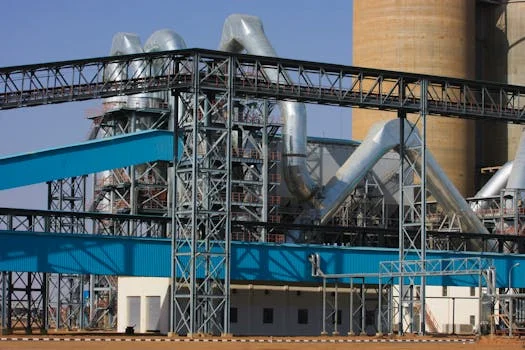
A sludge thickener tank holds the separation zone where free water leaves the solids mass. Tank geometry, depth, and residence time set how far solids can rise before sludge leaves for dewatering. Technology choice still depends on sludge character, footprint, and operating budget, which a Gravity Thickener vs DAF Thickener: Which Is Better for Your Sludge? helps frame before capital review.
Gravity thickeners suit municipal activated sludge that arrives dilute at 0.5–1% solids. They use the least energy at 0.05–0.1 kWh/m³ and keep mechanics simple. Their footprint is large, often 10–20 meters in diameter for a 1 MGD plant, which is hard to fit on tight industrial sites. The Wikipedia sewage sludge treatment overview adds the ceiling values: primary sludge may be thickened to about 8 or 10 percent solids, while secondary sludge may be thickened to about 4 percent solids.
For food processing or pulp and paper streams, DAF systems for high-efficiency sludge thickening are often a better fit. DAF units are roughly 50% more compact than gravity thickeners and handle high FOG or colloidal solids that settle poorly. They use more energy at 0.2–0.4 kWh/m³ and need skilled control for how to optimize flocculant dosing for sludge thickening, yet they absorb variable loads well.
Centrifuge Thickener Footprint and Energy Use
Centrifugal thickeners sit at the high-performance end for primary sludge or digester feed. They offer the smallest footprint and throughput up to 100 m³/h, with the highest capital and energy cost at 0.5–1.0 kWh/m³. Plants that choose them are usually buying floor space, not lowest energy.
The energy ladder is the clearest selection signal in this comparison. Gravity at 0.05–0.1 kWh/m³, DAF at 0.2–0.4 kWh/m³, and centrifuge at 0.5–1.0 kWh/m³ span an order of magnitude. Most sites we size for tight plots accept the top rung once the gravity tank diameter stops fitting the drawing.
The table below compares the three routes side by side.
| Feature | Gravity Thickener | DAF Thickener | Centrifugal Thickener |
|---|---|---|---|
| Best Use Case | Municipal WAS | Industrial / FOG-rich | Primary / Digested Sludge |
| Energy Use | 0.05–0.1 kWh/m³ | 0.2–0.4 kWh/m³ | 0.5–1.0 kWh/m³ |
| Footprint | Very Large | Moderate | Minimal |
| Solids Out | 3–4% | 4–6% | 5–8% |
| Est. Capital Cost | $50K – $200K | $100K – $500K | $200K – $1M |
Loading Rates, Retention, and Chemical Doses
Solids loading rate and hydraulic retention time drive thickener sizing. For gravity units, SLR should stay between 20–50 kg/m²/day; higher rates cause carryover and weak settling. Teams comparing unit data can review Sludge Thickener Specifications: 2026 Engineering Data, Standards & Selection Guide beside vendor curves. Detail on what is a good solids loading rate for gravity thickeners lbs/day/sqft belongs on the dedicated working-principle page rather than here.
DAF loading is higher, typically 50–150 kg/m²/h, because air assists flotation. Gravity HRT runs 12–24 hours, while DAF HRT is only 20–60 minutes, which is why DAF skids stay smaller. For high-flow industrial sizing, consult DAF clarifier engineering specs and selection criteria so air-to-solids ratio matches sludge density.
| Parameter | Gravity Spec Range | DAF Spec Range | Impact of Deviation |
|---|---|---|---|
| Solids Loading Rate | 20–50 kg/m²/day | 50–150 kg/m²/h | High SLR causes solids carryover |
| Hydraulic Retention | 12–24 Hours | 20–60 Minutes | Low HRT reduces solids capture |
| Flocculant Dose (PAM) | 2–5 mg/L | 5–10 mg/L | Overdosing increases OpEx |
| Supernatant TSS | <500 mg/L | <200 mg/L | High TSS increases headworks load |
Read the two spec columns against sludge type before quoting anything. Primary sludge settles fast and carries the highest solids ceiling, while biological sludge caps near the bottom of each band. Where a vendor curve disagrees with the table, trust the jar test on your own sludge first.
Sludge Thickener Selection Guide for Wastewater Plant

A wastewater plant should choose thickening from sludge character, available plot, and the feed solids its dewatering machine accepts. Clarifier and thickener decisions share the same loading logic: solids flux, retention, and supernatant quality. Primary, secondary, and tertiary clarifier trains set how much sludge arrives and how clean return water must be. Matching thickener output to those limits keeps the whole solids train stable.
Use this framework against total cost of ownership, not sticker price alone.
- Characterize Your Sludge: Run a jar test for settling velocity and TSS. Gravity is viable at 0.5–1% influent solids. High oil or grease, common in food plants, points to DAF.
- Assess Space Constraints: A 1 MGD gravity tank may need a 20-meter diameter, while a 3m x 6m DAF unit can serve the same capacity. Tight sites usually force DAF or centrifugal options.
- Evaluate Budget and Energy: Gravity units have the lowest capital and operating cost. DAF can still win on five-year TCO by cutting load on a Plate and Frame Filter Press for Sludge Dewatering.
- Check Downstream Compatibility: Most belt presses work best at 4–6% solids. If you need higher solids for land application without further dewatering, consider a centrifugal thickener.
- Pilot Test: Run a 2–4 week pilot on real process sludge before buying full scale. That trial confirms capture rate and the chemical dose your wastewater chemistry needs.
Pilot results shift more purchases than brochure curves do. Most plants we size run the 2–4 week pilot on real process sludge, because synthetic feed hides the polymer demand that decides operating cost. Project teams in emerging markets can also review how to select sludge dewatering equipment after thickening to see how thickening and dewatering form one solids plan.
Sludge Thickening Troubleshooting Poor Settling
Poor solids concentration or cloudy supernatant usually traces to overload or weak conditioning. In gravity thickeners, poor settling often comes from hydraulic overload or weak chemical dose. If surface loading is already in range, run a jar test and raise flocculant by 1–2 mg/L before changing hardware.
High supernatant TSS means solids are carried over the weir into the return flow. Check SLR and HRT against the design ranges above, then confirm floc size after conditioning. If loading is already in range, re-run a jar test and adjust PAM within the 2–10 mg/L conditioning band before changing mechanical settings.
Septic conditions show up as rising solids, gas bubbles lifting the blanket, and odor at the weir. The usual causes are underflow withdrawal that is too slow or feed that has sat too long in warm weather. Pulling the underflow harder and shortening blanket residence time fixes most cases without capital spend.
Under-thickened sludge below about 3% solids pushes polymer and energy into the dewatering step. Revisit the 1 MGD cost case: moving from no thickener to a working thickener cut annual dewatering and disposal spend from about $250,000 to about $120,000 in the field data set cited earlier. Stable 3-6% solids is the practical target for most pumpable intermediate storage.
Who This Is For / Who Should Look Elsewhere / Next Step
Who this is for: plant engineers and operations managers who need to size or replace sludge thickening ahead of belt presses, centrifuges, or filter presses, and who already know approximate influent solids and available footprint.
Who should look elsewhere: buyers seeking only chemical product catalogs, or sites that already dewater dilute sludge economically and have no volume or haulage pressure to justify a thickening stage.
Next step: lock sludge characterization and space limits, then run a 2–4 week pilot to confirm dose and capture before the purchase order is frozen. If solids and layout data are already in hand, send them with a thickening and dewatering sizing request so the pilot scope matches the real wastewater.
Frequently Asked Questions
What solids loading rate should a gravity sludge thickener run at?
Hold gravity solids loading between 20–50 kg/m²/day for stable settling. Rates above that band carry solids over the weir and thin the underflow. Primary sludge tolerates the top of the band, while waste activated sludge belongs near the bottom. Confirm the vendor curve with a jar test before the tank diameter is frozen.
How much does thickening cut sludge hauling volume?
Raising dilute sludge from about 0.5% solids to 3-6% cuts disposal volume by 50–70%, and haulage falls roughly in proportion. At $0.25 to $0.50 per gallon for liquid disposal in the United States, the 1 MGD field case dropped annual dewatering and disposal spend from about $250,000 to about $120,000. The exact saving tracks your starting solids and haul distance.
When should a plant pick DAF thickening over gravity?
Pick DAF when sludge carries oil, grease, or colloidal fines that settle poorly, as in food processing and pulp and paper plants. DAF units are roughly 50% more compact than gravity thickeners, load at 50–150 kg/m²/h, and hold retention to 20–60 minutes. The trade is 0.2–0.4 kWh/m³ of energy and closer chemical control.
What solids should feed a belt press or filter press?
Most belt presses work best at 4–6% solids feed, which is why a thickening stage sits ahead of them. A feed below 1% solids leaves the press doing thickening work it was not built for, raising polymer demand, wear, and cycle time. Condition the sludge and hold the feed in that band to keep cake quality stable.