Why Sludge Dewatering is Critical for Uzbekistan’s Wastewater Projects
In Uzbekistan, sludge dewatering equipment reduces wastewater treatment costs by 40–60% by minimizing sludge volume for disposal. Local projects in Tashkent and Samarkand use screw press dewatering (solids capture 18–25%), plate-and-frame filter presses (25–35% solids), or multi-disc dehydrators (20–30% solids) to meet UzStandard sanitation requirements. Equipment costs range from $25,000–$150,000 (UZS 300M–1.8B) depending on capacity (0.5–50 m³/h) and automation level, with payback periods of 12–36 months for industrial applications.
Sludge disposal costs in Uzbekistan currently range from $50 to $120 per ton (UZS 600,000–1.4M) for landfill tipping fees, according to 2024 Ministry of Ecology data. As the government tightens environmental oversight, facilities that fail to implement efficient volume reduction face escalating operational expenses and potential regulatory fines. For the textile industry, which accounts for approximately 60% of Tashkent’s industrial sludge output, dewatering is no longer optional; it is a financial necessity. Achieving a sludge volume reduction of 70–80% is the primary technical target to comply with UzStandard 2850:2020 for industrial effluent management.
The demand for advanced dewatering is driven by three primary sectors: the textile industry, food processing (20%), and municipal wastewater treatment plants (WWTPs) (20%). In these sectors, the moisture content of raw sludge often exceeds 95%, making transport and disposal logistically prohibitive. Real-world applications, such as the ESMIL installation at the Farhad WWTP, demonstrate that modern equipment can reduce sludge volume by 70%, significantly lowering the environmental footprint of municipal operations in the Tashkent region. By transitioning from traditional drying beds to mechanical dewatering, plants can reclaim valuable land and eliminate the odor issues associated with open-air sludge drying.
Sludge Dewatering Equipment Types: How They Work and When to Use Each
Screw press dewatering units achieve 18–25% solids capture and are preferred for continuous municipal operations due to their low energy consumption and minimal operator intervention. These machines use a slowly rotating screw within a cylindrical filter screen. As the sludge moves through the decreasing pitch of the screw, the pressure increases, forcing liquid through the screen while the solid "cake" is discharged at the end. For projects requiring high-solids output, HydropureWater’s plate-and-frame filter press for high-solids sludge (25–35% capture) is the standard choice for textile and chemical industries in Uzbekistan.
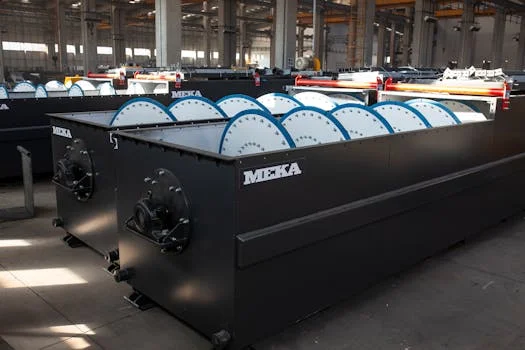
The plate-and-frame filter press operates on a batch basis, using high-pressure pumps to force sludge into chambers between recessed plates. This method produces the highest solids concentration, which is critical for minimizing disposal fees when dealing with inorganic or chemical-heavy sludge. Conversely, the multi-disc dehydrator is gaining traction in Samarkand's food processing sector. It utilizes a series of fixed and moving rings to self-clean the filter gaps, making it highly effective for oily sludge that would otherwise clog traditional screw presses or filter cloths.
| Equipment Type | Solids Capture (%) | Operation Mode | Best Use Case in Uzbekistan | Maintenance Level |
|---|---|---|---|---|
| Screw Press | 18–25% | Continuous | Municipal WWTPs, Tashkent region | Low |
| Filter Press | 25–35% | Batch | Textile and Chemical industries | High (Manual labor) |
| Multi-Disc Dehydrator | 20–30% | Continuous | Food processing, Oily sludge | Medium |
When selecting between these technologies, engineers must weigh the trade-offs between capital expenditure and operational labor. While the filter press provides the driest cake, it often requires dedicated staff for plate cleaning and cake removal unless fully automated systems are installed. Screw presses, though providing slightly lower solids capture, offer a "set and forget" workflow that integrates well into 24/7 industrial processes.
Technical Specifications: What to Look for in Uzbekistan’s Market
Uzbekistan’s UzStandard 2850:2020 requires a minimum of 20% solids concentration for sludge designated for landfill disposal to prevent leachate contamination. Meeting this standard requires precise synchronization between flow rates and chemical conditioning. For municipal plants in Tashkent, which average 10–30 m³/h in capacity, the equipment must handle fluctuating solids loads without compromising the capture rate. Engineers should consult global sludge press equipment specifications to ensure their local designs meet international performance benchmarks.
Energy efficiency is a critical parameter as electricity tariffs for industrial consumers in Uzbekistan continue to rise. Screw presses are the most efficient, consuming between 0.2 and 0.4 kWh/m³, whereas filter presses may require up to 0.8 kWh/m³ when factoring in the high-pressure feed pumps and hydraulic systems. Material compatibility is another localized concern; for textile sludge containing corrosive dyes or chemical residues, using Stainless Steel 304 or 316 is mandatory to prevent premature equipment failure. Automation via Programmable Logic Controllers (PLC) can add 20–30% to the initial cost but typically reduces labor requirements by 50%, a vital consideration for remote regional hubs where skilled technicians are scarce.
| Parameter | Uzbekistan Benchmark | Technical Requirement |
|---|---|---|
| Flow Rate Range | 0.5 – 50 m³/h | Must match peak WWTP influent |
| Solids Capture | ≥ 20% | Mandatory for landfill (UzStandard) |
| Energy Consumption | 0.2 – 0.8 kWh/m³ | Screw press is most efficient |
| Material Grade | SS304 / SS316 | Required for corrosive industrial sludge |
| Automation | PLC-Controlled | Reduces OPEX by 50% |
Cost Breakdown: CAPEX, OPEX, and ROI for Uzbekistan Projects
Capital expenditure (CAPEX) for sludge dewatering systems in Uzbekistan ranges from $25,000 to $150,000 (UZS 300M–1.8B) for standard capacities of 0.5 to 50 m³/h. Beyond the equipment price, installation costs typically account for 10–20% of the CAPEX, influenced by local labor rates in Tashkent which hover between $15 and $30 per hour for specialized mechanical work. Financing these projects is increasingly supported by local banks, with 3–5 year leasing terms becoming a standard option for industrial upgrades.
Operational expenditure (OPEX) is primarily driven by energy, maintenance, and chemical costs. Effective dewatering requires automated polymer dosing systems for sludge conditioning, which ensure optimal flocculation and reduce chemical waste. OPEX generally ranges from $5 to $15 per cubic meter of treated sludge. While the initial investment is significant, the Return on Investment (ROI) is rapid. For example, a textile factory in Samarkand recently saved $80,000 per year (UZS 960M) by switching from inefficient drying beds to a high-capacity screw press, achieving full payback in just 14 months.
| Cost Component | Estimated Range (USD) | Estimated Range (UZS) |
|---|---|---|
| Equipment (CAPEX) | $25,000 – $150,000 | 300M – 1.8B UZS |
| Installation | $2,500 – $30,000 | 30M – 360M UZS |
| Annual OPEX | $5 – $15 per m³ | 60K – 180K UZS per m³ |
| Payback Period | 12 – 36 Months | Case-dependent |
Supplier Decision Framework: How to Choose a Vendor in Uzbekistan
Evaluating a vendor for Uzbekistan projects requires verifying compliance with Ministry of Health sanitation permits and local UzStandard certifications. The selection process should begin with a clear definition of project requirements, specifically the sludge type (biological vs. chemical) and the desired automation level. While local suppliers like Asmex offer immediate proximity, international manufacturers like HydropureWater provide advanced engineering depth and longer-term warranties that include remote monitoring capabilities. For a broader perspective on regulatory alignment, review Uzbekistan’s industrial wastewater treatment compliance requirements.
A critical step in the decision framework is requesting on-site pilot testing. Industrial sludge, particularly from the textile and chemical sectors, varies significantly in its dewaterability. A pilot test, typically costing between $2,000 and $5,000, allows the plant engineer to verify the solids capture rate and polymer consumption before committing to a full-scale purchase. Buyers should negotiate service contracts that guarantee the availability of Tashkent-based technicians to minimize downtime. A vendor that offers a 2–3 year warranty and a local spare parts warehouse is significantly more valuable than a low-cost provider with no regional support structure.
Decision Flowchart:
1. Identify Sludge Type: Organic (Screw Press) vs. Inorganic (Filter Press).
2. Set Volume Targets: Calculate required m³/h based on peak influent.
3. Verify Compliance: Ensure vendor meets UzStandard 2850:2020.
4. Request Pilot: Test sludge samples for chemical dosing requirements.
5. Compare Lifecycle Costs: Evaluate CAPEX + 5 years of OPEX, not just the purchase price.
Case Study: ESMIL’s Sludge Dewatering Installation at Farhad WWTP
The Farhad WWTP upgrade in the Tashkent region achieved a 70% reduction in sludge volume following the 2023 installation of a screw press system. The facility was previously reliant on aging drying beds that were unable to handle the increased load from the growing municipal population. By implementing an ESMIL screw press with a 10 m³/h capacity, the plant transitioned to a continuous, automated dewatering process that operates with minimal supervision.
The financial impact of the upgrade was immediate, resulting in $45,000 per year (UZS 540M) in savings related to sludge transport and disposal. However, the project was not without challenges