How DAF Clarifiers Work: Process Mechanics and Microbubble Technology
DAF clarifier specifications for industrial units center on 92–97% TSS, oil, and fat removal using 30–50 micron microbubbles. Packaged models treat 4–300 m³/h at surface loading rates of 10–15 gpm/ft² (25–37 m/h), with recycle saturation held at 4–6 bar (60–90 psi). Material choices are 304SS, 316SS, or polypropylene, selected against chloride and temperature limits.
Poultry and other FOG-heavy plants often face surcharges when fats exceed 500 mg/L. Gravity clarifiers struggle because organic fat density sits close to water. Dissolved air flotation reverses the path: microbubbles cut particle effective density and drive solids to the surface for skimming.
The process runs on pressurization, air dissolution, and bubble-solid attachment. A fraction of clarified effluent is recycled and pressurized to 4–6 bar (60–90 psi). Air dissolves in a saturation tank with 2–5 minutes retention. When that whitewater flashes to atmospheric pressure in the flotation chamber, 30–50 micron bubbles form. Most plants we size for food and chemical waste stay at the lower end of that bubble range to protect fragile flocs.
Effective PLC-controlled chemical dosing systems for DAF pretreatment prepare the influent. Coagulants such as PAC or ferric chloride are typically dosed at 5–50 mg/L, then PAM bridges micro-flocs. Keep pH between 6.5 and 8.5 for stable attachment. Flow path: flocculation tank → DAF chamber → surface skim → clarified effluent, with float and settled sludge drawn off separately.
Residence time in the flotation zone and recycle rate decide how much whitewater you need. If recycle pressure drifts below 4 bar (60 psi), bubble volume collapses and effluent turbidity climbs within a shift on most industrial feeds.
DAF Clarifier Specifications: Standard Model Comparison Table
Standard DAF models are grouped by hydraulic capacity and flotation area so surface loading stays inside design limits. For industrial duty, the DAF line of Dissolved Air Flotation (DAF) System units scales footprint against solids capture. Match peak hourly flow (m³/h) to rated capacity, then check solids loading in kg/m²/h.
The table below lists chamber capacity and envelope dimensions used for layout planning on typical industrial trains.
| Model Number | Flow Rate (m³/h) | Chamber Capacity (m³) | Dimensions (L×W×H mm) | Material Options | TSS Removal (%) | Typical Applications |
|---|---|---|---|---|---|---|
| DAF-10 | 5–10 | 1.2 | 2,200×1,200×1,500 | 304SS / PP | 92–95% | Small dairies, textile workshops |
| DAF-30 | 20–30 | 3.5 | 2,800×1,500×1,800 | 304SS / 316SS | 94–96% | Food processing, laundries |
| DAF-50 | 40–50 | 6.2 | 3,500×1,800×2,000 | 304SS / 316SS | 95–97% | Slaughterhouses, paper mills |
| DAF-100 | 80–100 | 12.5 | 5,200×2,400×2,500 | 304SS / 316SS | 95–97% | Refineries, large chemical plants |
| DAF-200 | 150–200 | 28.0 | 7,500×3,200×3,000 | 304SS / Carbon Steel | 96–98% | Municipal pretreatment, oil fields |
Baffle layout and skimmer duty separate food service from petrochemical builds. Food lines usually need 316SS with CIP access. Petrochemical skimmers and compressors often need ATEX or Class I Div 1 motors. When reviewing DAF system specifications for food processing plants, set the air-to-solids ratio for emulsified oils in the 0.01–0.05 range.
Skimmer speed should clear the float blanket without whipping water back into the clarified zone. On oily food waste, operators often run slower flights and thicker blankets; on oily refinery water, thinner blankets and faster flights reduce hydrocarbon re-entrainment.
Material Selection for DAF Clarifiers: 304SS vs. 316SS vs. Polypropylene
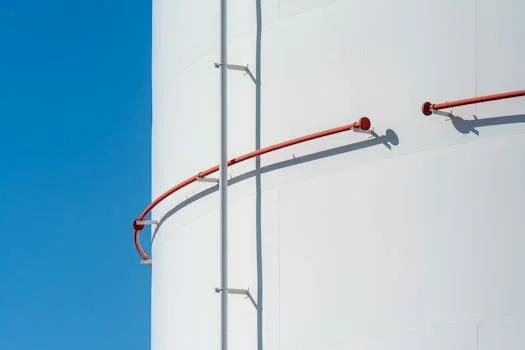
Tank alloy sets service life against pitting and stress cracking. 304SS suits neutral general waste. Chlorides, high heat, or extreme pH push the choice to 316SS or PP. Wrong metal in meat-brine or chemical service can fail in 24–36 months.
Relative cost and chloride limits for the four common builds are compared below.
| Material | Corrosion Resistance | Max Temperature | Chloride Limit | Relative Cost |
|---|---|---|---|---|
| 304 Stainless Steel | Moderate; good for neutral pH | 400°C | <500 ppm | 1.0x (Baseline) |
| 316 Stainless Steel | High; resistant to acids/salts | 450°C | <1,000 ppm | 1.4x – 1.6x |
| Polypropylene (PP) | Excellent for acids/alkalis | 80°C | Unlimited | 0.7x – 0.9x |
| Carbon Steel (Epoxy Coated) | Low; depends on coating integrity | 200°C | <200 ppm | 0.6x – 0.8x |
Meat plants with high sodium chloride need 316SS as a minimum. PP fits sulfuric or caustic chemical streams when wastewater stays at or below 80°C. Avoid mixed-metal builds: 304SS fasteners on a 316SS shell invite galvanic attack. Outdoor PP tanks need UV stabilizers. Float sludge from DAF often lands at 2–5% solids, so plan sludge dewatering equipment for DAF waste streams before the pad is poured.
Coating holidays on carbon steel show up first at weld toes and nozzle necks. If you must use epoxy-lined carbon steel, schedule holiday testing after install and after any hot-work repair.
Performance Benchmarks: TSS, FOG, and COD Removal Efficiency by Industry
DAF performance tracks influent solids character and chemical conditioning quality. The unit removes suspended matter and free oils well; COD cut is limited to the particulate fraction. Dissolved COD or BOD still needs biological or advanced oxidation polishing downstream.
Average field and guideline benchmarks by sector are summarized here.
| Industry | Influent TSS (mg/L) | Effluent TSS (mg/L) | TSS Removal (%) | FOG Removal (%) | COD Removal (%) |
|---|---|---|---|---|---|
| Food Processing | 800–2,500 | 40–120 | 95% | 90–98% | 50–70% |
| Pulp & Paper | 1,000–3,000 | 80–200 | 92–94% | N/A | 40–60% |
| Petrochemical | 200–800 | 10–30 | 97% | 95% (Hydrocarbons) | 30–50% |
| Laundry/Textile | 400–1,200 | 30–80 | 93% | 85% | 40–55% |
Bubble size and dose precision drive most of the spread. Bubbles above 60 microns rise too fast, shear flocs, and can drop TSS removal below 80%. At one Shandong dairy, a DAF-100 with 20 mg/L PAC at pH 7.2 cut influent TSS from 800 mg/L to about 30 mg/L and eased aeration load downstream.
EPA’s Metal Products and Machinery development work lists dissolved air flotation among proven oil and solids separation options for oily industrial wastestreams. That matches what we see on machining and wash-water lines: free oil and precipitated solids float; true dissolved organics do not.
How to Select an Industrial Wastewater Clarifier
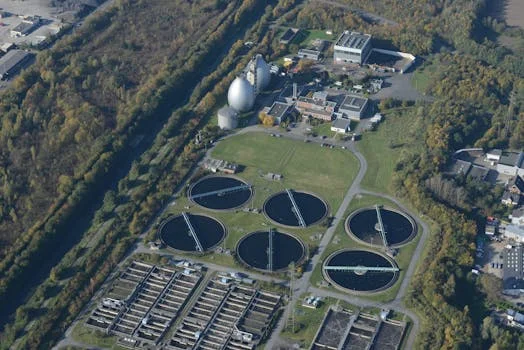
Industrial wastewater clarifier selection starts with whether solids float or settle. Choose DAF when FOG or light TSS dominates; choose primary/secondary gravity or lamella when dense settleable solids dominate. Oversizing wastes CAPEX and chemicals. Undersizing raises turbidity and surcharge risk.
Use this checklist before locking a model:
- Confirm average and peak flow (m³/h), plus TSS, FOG, COD, pH, and temperature from recent lab data.
- Run jar tests for coagulant/flocculant dose and floatability.
- Target industrial surface loading of 10–15 gpm/ft² (25–37 m/h); reserve 20 gpm/ft² only for stable, well-conditioned feed.
- Keep solids loading at or below 10 kg/m²/h on standard packs.
- Add about 20% hydraulic spare for peaks and modest expansion.
- Validate tank material against chlorides and temperature (316SS above 500 ppm Cl⁻).
- Budget OPEX at roughly $0.10–$0.50/m³ treated, not only CAPEX.
What Design Criteria Size a DAF Clarifier?
DAF sizing rests on surface loading rate, not nameplate volume alone. Use SLR = (Flow Rate × 448.83) / (DAF Area × 60) when working in U.S. customary units, and hold industrial SLR near 10–15 gpm/ft² (25–37 m/h). A plant at 100 m³/h with 800 mg/L TSS typically needs about 10 m² of effective area—often a DAF-100 class DAF clarifiers for industrial wastewater treatment with residence time for flotation.
Material, safety, and cost close the decision. Above 500 ppm chlorides, specify 316SS minimum. Food wetted parts should support CIP and FDA-compatible polymers or 316SS. Hazardous petrochemical zones need explosion-proof electrics. Packaged CAPEX commonly runs from about $50,000 at 4 m³/h to over $500,000 near 300 m³/h.
According to US EPA 40 CFR Part 403 (eCFR current through 2026), dischargers to POTWs must prevent pass-through and interference, including oily and corrosive loads that upset the plant. Build your local-limit spreadsheet before you buy steel.
Who This Is For / Next Step
This guide is for plant engineers, EPC designers, and procurement teams sizing pretreatment ahead of biological trains or sewer discharge. Look elsewhere if you only need coarse grit removal or dissolved-metal polishing without precipitation. To match a DAF model to your peak flow and FOG load, request a DAF clarifier sizing review with influent data in hand.
Frequently Asked Questions
What’s the difference between DAF and IAF (Induced Air Flotation)?
DAF dissolves air under 4–6 bar to form 30–50 micron bubbles and typically removes 92–97% of fine TSS and emulsified oils. IAF uses mechanical agitation or venturi injectors to make 100–500 micron bubbles. IAF costs less to run but usually reaches only 70–85% TSS removal, so it fits mining or primary oil-water cuts more than fine industrial pretreatment.
How do I size a DAF clarifier for my plant?
Start from peak flow and TSS, then size area for 10–15 gpm/ft² industrial surface loading. A 100 m³/h train at 800 mg/L TSS needs roughly 10 m² of flotation area. Hold solids loading under 10 kg/m²/h and leave about 20% hydraulic spare for surges before you freeze the model.
What maintenance is required for a DAF clarifier?
Check skimmer speed and float blanket depth daily. Weekly, confirm saturation pressure stays at 4–6 bar and verify dosing pump calibration. Monthly, clean diffuser ports and calibrate pH probes. Annually service the air compressor and inspect tank welds, especially on polypropylene shells.
Can DAF clarifiers handle heavy metals or toxic contaminants?
DAF alone does not remove dissolved metals such as hexavalent chromium or lead. After lime or sulfide precipitation, it can float the metal solids. Plating plants often cut nickel from about 50 mg/L to below 0.5 mg/L when precipitation and DAF run in series.
What are the compliance standards for DAF clarifiers?
According to US EPA 40 CFR Part 403 (eCFR current through 2026), industrial users must meet general and categorical pretreatment rules that prevent pass-through and interference at POTWs. Food duty still needs 316SS or FDA-approved wetted parts. Many Chinese sewer contracts still reference GB 8978-1996 COD caps near 100 mg/L for defined industrial discharges; always confirm the local permit text.