What Makes Elkhart Chemicals Wastewater Different from Other Industries
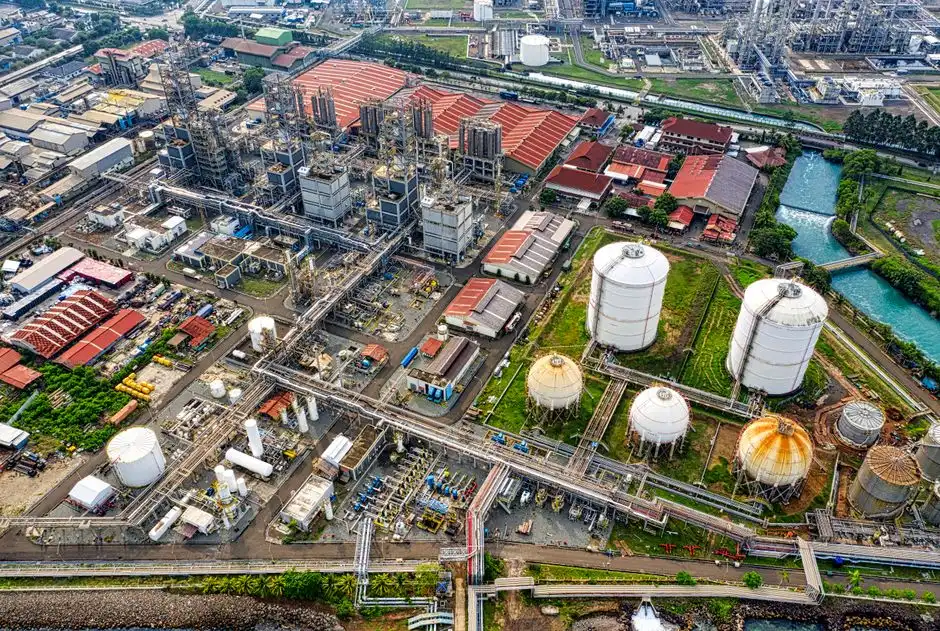
Elkhart-area chemicals manufacturers run a mix of batch reactors, solvent cleaning, surfactant production, and polymer synthesis, which produces waste streams with pH swings, emulsified FOG, and reactive floc that resist gravity settling more than municipal or food-plant streams. ChemREADY's Elkhart service page explicitly lists flow-equalization (EQ) basins, DAF units, biological processes, and clarification as design points in its Source-to-Discharge program, confirming that both flotation and gravity separation are in regular use across Northern Indiana chemical plants (getchemready.com, Elkhart Wastewater Treatment).
The same ChemREADY program description calls out removing foam and sludge from the surface of the aeration basin and controlling foaming organisms as recurring operating problems, and frames coagulant and polymer dosing optimization as the lever that maximizes cell removal through the treatment process. Because pH adjustment, coagulant, flocculant, and defoamer chemistries shift with every batch, equipment must tolerate changing influent chemistry — a design constraint to verify with any DAF or clarifier vendor before procurement.
DAF vs Clarifier: How Each Technology Actually Separates Chemicals Wastewater
DAF systems dissolve air under pressure and release 30-50 micron microbubbles that attach to suspended solids, oils, and FOG, lifting them to the surface where a paddle skimmer removes the float; a SigmaDAF/Clearwater design write-up confirms that microbubbles in that 30-50 µm range are the contact mechanism and that a paddle skimmer then scrapes floated solids, while heavier settleable solids are removed by an auger from the collection zone below (clearwaterind.com, Dissolved Air Flotation (DAF) Systems for Wastewater Treatment). Conventional and lamella clarifiers rely on gravity; lamella plates increase effective settling area so a compact tank reaches higher hydraulic loading, with the HydropureWater lamella clarifier rated at 20-40 m/h surface loading. For chemicals streams, DAF requires upstream coagulant/flocculant conditioning to enlarge particles for bubble attachment — Kemco's DAF process page states that coagulants and flocculants are added to coax suspended solids and colloidal particles into clumping together, and that accurate pH control precedes the DAF (kemcosystems.com, Dissolved Air Flotation (DAF) for Industrial Wastewater Treatment). Clarifiers need grit and settleable-solids removal upstream — a rotary bar screen such as the HydropureWater rotary mechanical bar screen for grit and debris removal is typical — but tolerate heavy, dense sludge that would blind a DAF, including metal-bearing floc from certain catalyst operations. DAF float is typically 2-5% solids skimmed from the surface; clarifier underflow is denser, and Kemco lists filter press dewatering for DAF residuals to reduce hauling cost. For FOG- and floatable-dominated streams, the right anchor is a HydropureWater DAF system (4-300 m³/h, 13 standard models); for settleable-solids- and grit-dominated streams, a HydropureWater lamella clarifier (20-40 m/h surface loading) is the better anchor.
Side-by-Side Comparison: DAF vs Clarifier for Elkhart Chemicals Plants
Scoring a plant's influent against a parameter table is the fastest way to convert chemistry into a specification. The table below maps each technology to the contaminant profile, hydraulic loading, and chemistry demand a chemicals plant should expect.
| Parameter | DAF | Lamella Clarifier |
|---|---|---|
| Best-fit contaminant profile | FOG, oils, light chemical floc, emulsions, floatables | Settleable solids, grit, heavy metal-bearing floc, dense sludge |
| Hydraulic loading range | 4-300 m³/h across 13 standard HydropureWater models | 20-40 m/h surface loading per HydropureWater specification |
| Footprint character | Shallow, compact per m³/h for FOG-heavy streams | Taller but narrower; compact via lamella plates |
| Material of construction | 304SS standard; 316SS and polypropylene available for corrosive chemicals service | Specify coating or alloy against acid/alkali exposure |
| Upstream chemistry | Coagulant + flocculant conditioning required to enlarge particles for bubble attachment; pH control precedes DAF | Simpler chemistry; coagulant optional for TSS/phosphorus removal |
| Sludge character | Float skimmed from surface, typically 2-5% solids | Dense underflow, augered or pumped |
| Downstream dewatering | Filter press sized to float solids | Filter press sized to underflow solids |
| Nutrient-removal reference | Useful as pretreatment ahead of clarifier polishing | 1.0 mg/L total phosphorus achievable with metal-salt addition and effluent TSS < 15 mg/L (EPA design manual) |
Material-of-construction selection is critical for corrosive streams: SigmaDAF offers 304SS as standard with 316SS and polypropylene available for corrosive service. DAF requires conditioned floc for every kilogram of floated solids, while clarifier chemistry is simpler but limits achievable TSS reduction. For nutrient-limited discharges, the EPA Design Manual: Phosphorus Removal states that 1.0 mg/L total phosphorus can be met with metal-salt addition and efficient clarification to assure effluent TSS of less than 15 mg/L (nepis.epa.gov, EPA Design Manual: Phosphorus Removal), which sets a useful clarifier sizing and DAF polishing reference point. Both technologies feed the same downstream dewatering step — a plate-and-frame filter press for DAF float and clarifier underflow — and both depend on a PLC-controlled chemical dosing for coagulant, flocculant, and pH adjustment to hold performance.
2026 Selection Matrix: Which Technology for Which Chemicals Plant
The right primary separator follows the plant's dominant contaminant and its permit target. The matrix below maps plant type to a recommended anchor and notes when a DAF-then-clarifier train is the correct scope to verify with the vendor.
| Chemicals plant profile | Primary unit | Secondary / polish | Chemistry emphasis |
|---|---|---|---|
| Surfactant, soap, cleaning-product lines with emulsified FOG | DAF as primary | Clarifier only if loading is very low | Coagulant + flocculant plus defoamer |
| Acid/caustic neutralization with metal-bearing floc and grit | Lamella clarifier as primary | DAF polish for residual floatables before discharge | pH adjustment, optional metal-salt addition |
| Batch specialty chemical with pH swings, foaming, variable FOG | DAF after EQ basin | Clarifier polish for settleable carryover | Right-sized coagulant, flocculant, pH adjuster, defoamer per ChemREADY Elkhart program |
| Nutrient-limited discharge (total phosphorus target) | Clarifier with metal-salt addition | DAF pretreatment to tighten baseline TSS | Metal-salt dose tied to influent phosphorus loading |
| Mixed FOG + settleable solids (some polymer and resin operations) | DAF first | Clarifier second | Dosing between stages — confirm this is the offered scope |
For a batch specialty chemical plant with pH swings and foaming, the integrated approach is a HydropureWater DAF system (4-300 m³/h, 13 standard models) preceded by an EQ basin, paired with a PLC-controlled chemical dosing for coagulant, flocculant, and pH adjustment — the same architecture ChemREADy's Elkhart team describes for Northern Indiana chemical plants. For a surfactant line with persistent emulsified FOG, the DAF is the anchor and a HydropureWater lamella clarifier (20-40 m/h surface loading) is at most a low-load polish. For broader context on a parallel chemicals corridor, see the DAF vs clarifier for chemical plants in Kalamazoo, MI (2026) buyer's guide, and for the technology-level comparison, the DAF vs sedimentation comparison with 2026 data.
Sizing, Chemistry, and Footprint for an Elkhart Plant
Equipment selection without influent data is guesswork. Provide the vendor with average and peak hourly flow, influent TSS, FOG, COD/BOD, pH range, temperature, and any batch discharge profile; without these, neither a DAF nor a clarifier can be properly sized. For the DAF, request the microbubble size range (SigmaDAF specifies 30-50 µm), the hydraulic loading rate in m³/m²·h, projected polymer consumption per dry ton of floated solids, and material of construction suited to the chemical stream (304SS, 316SS, or polypropylene per SigmaDAF's standard offering). For the lamella clarifier, request surface loading rate (the HydropureWater range of 20-40 m/h), plate spacing, sludge recirculation ratio, and projected chemical reduction versus a conventional basin. Pair the separator with a PLC-controlled chemical dosing for coagulant, flocculant, and pH adjustment — ChemREADY emphasizes right-sized coagulant, flocculant, pH adjuster, and defoamer feed points and mix energy as the lever for stable clarifier and DAF performance (getchemready.com, Elkhart Wastewater Treatment). Plan downstream dewatering with a plate-and-frame filter press for DAF float and clarifier underflow sized to the expected dry-solids throughput from either stream. For high-volume plants, the high water volume management best practices for manufacturing 2026 piece covers hydraulic buffering in more depth, and the industrial waste stream automation monitoring 2026 guide covers the controller side of dosing setpoints.
Local Service and Compliance: Why Elkhart Plants Need Both DAF and Clarifier Expertise
Procurement in the Elkhart-Goshen-South Bend corridor is a chemistry-plus-equipment program, not a hardware order. ChemREADy's Elkhart team is described as supporting the full source-to-discharge chain — influent characterization, DAF, clarification, biological processes, dewatering, odor control — with local technicians based in Elkhart serving Goshen, Mishawaka, South Bend, and Granger, so the chemicals plant's chemistry program and equipment selection are integrated under one contractor (getchemready.com, Elkhart Wastewater Treatment). Coagulant and polymer dosing optimization is explicitly named in that description as the lever that maximizes solids removal, which signals that chemistry tuning is the real OPEX driver after the equipment is chosen. Local inventory, SDS, and safe storage of coagulants, flocculants, defoamers, and pH adjusters — with proactive inventory thresholds and no-touch packaging — reduce downtime risk and are a procurement evaluation point rarely captured in generic DAF/clarifier comparisons. Audit-ready residual logs, KPI snapshots, and permit sampling support are also part of that program, which means compliance documentation must be specified alongside the equipment itself; pairing the separator with a PLC-controlled chemical dosing for coagulant, flocculant, and pH adjustment is the cleanest way to make those logs automatic.
Frequently Asked Questions
DAF or clarifier — which is the right primary step for a chemicals plant in Elkhart?
DAF is the correct anchor when the stream is dominated by FOG, oils, light chemical floc, or floatable emulsions; a lamella clarifier is the correct anchor when the stream is dominated by settleable solids, grit, or dense metal-bearing floc. Mixed streams — for example, polymer and resin operations with both FOG and settleable solids — typically use a DAF-
Frequently Asked Questions
Should a chemical plant in Elkhart choose a DAF or a clarifier in 2026?
The choice depends primarily on the density and particle size of your wastewater contaminants. Dissolved Air Flotation (DAF) is superior for chemicals with specific gravities near or less than 1.0, such as emulsified oils, greases, and lightweight suspended solids, as it uses micro-bubbles to float particles to the surface for removal.
Conversely, conventional gravity clarifiers are more effective for heavy, inorganic chemical precipitates or metallic hydroxides that settle rapidly. In 2026, many Elkhart facilities are opting for DAF units if their wastewater stream includes high concentrations of surfactants or hydrocarbons, which often interfere with the settling kinetics required for clarifiers.
How much does a DAF system cost for a chemical plant in Indiana?
For a standard chemical processing facility in Indiana, a turnkey DAF system—including the saturation tank, air compressor, and chemical dosing skids—typically ranges between $85,000 and $250,000 for units handling 50 to 300 gallons per minute (GPM). Costs vary based on materials of construction, such as 304 vs. 316 stainless steel, which is often required to resist the corrosive nature of specific chemical feedstocks.
Operational expenditures (OPEX) should also be factored, as DAF systems require ongoing costs for flocculant/coagulant chemicals and compressed air energy, typically adding $0.15 to $0.40 per 1,000 gallons treated depending on the influent loading.
What flow rate does an Elkhart chemicals factory need to size a DAF or clarifier?
Sizing is determined by your peak hourly flow rate rather than the average daily flow. A typical medium-sized Elkhart chemical plant should size for a peak hydraulic loading rate of 1.5 to 2.0 gallons per minute per square foot (GPM/ft²) for a DAF system to ensure adequate rise velocity and separation efficiency.
For gravity clarifiers, sizing is governed by the surface overflow rate (SOR), generally capped at 300 to 600 gallons per day per square foot (GPD/ft²) for effective solids removal. Facilities must also account for a 20% buffer to accommodate future production increases or potential plant expansions through 2030.
Can a lamella clarifier remove FOG and oils from chemical wastewater, or is DAF required?
While lamella clarifiers are highly efficient at removing settleable solids, they are generally ineffective for removing Fats, Oils, and Grease (FOG) or emulsified hydrocarbons. Because FOG has a lower density than water, it tends to rise or remain suspended, bypassing the settling plates of a lamella clarifier.
A DAF system is required for these applications because it forces the FOG to the surface via micro-bubble attachment, allowing for mechanical skimming. If your chemical wastewater contains high FOG levels, a clarifier will likely result in effluent concentrations that exceed Elkhart’s local municipal sewer discharge limits for oil and grease.
What is the lead time to procure and install a DAF system for a chemical plant in 2026?
In the 2026 industrial market, standard lead times for custom-engineered DAF systems range from 16 to 24 weeks from the date of approved shop drawings. This timeline accounts for the procurement of specialized pumps, stainless steel fabrication, and integrated PLC control panels.
Installation and commissioning typically add another 4 to 8 weeks to the project timeline. Factors such as site-specific foundation work, electrical tie-ins, and piping integration can extend this duration, so it is recommended to initiate the procurement process at least 8 months before the required operational date.