What Industrial Waste Stream Automation Monitoring Actually Means in 2026
Industrial waste stream automation monitoring is a four-layer stack — field sensors, PLC/RTU controllers, SCADA or DCS supervisory software, and analytics — that continuously measures pH, COD/BOD, TSS, flow, conductivity and nutrients on an industrial effluent line, then uses the data to control dosing, trigger alarms, and prove regulatory compliance. In a documented 2024 US municipal deployment, an Emerson Ovation automation upgrade cut backwash water and chemical use by 25% and centralized 90% of EPA reporting data (Emerson).
For 2026 the term has hardened into a specific deliverable: a single discharge line, usually with pretreatment, instrumented end-to-end and tied to a historian that can produce an EPA Discharge Monitoring Report (DMR) or an EU Urban Waste Water Directive report without manual transcription. The Rockwell 2026 industry page frames the same stack against four drivers — tightening regulatory expectations, a retiring workforce, climate-driven flow variability, and the move toward "autonomous operations" as the end state (Rockwell Automation, 2026-09). Endress+Hauser serves both municipal and industrial sites from the same Liquiline/Memosens platform, but the engineering deliverables differ: a municipal WWTP needs whole-sewer SCADA, while an industrial waste stream needs tighter process control on one effluent line.
Three terms get conflated in vendor literature and need to be separated on day one of any spec. Wastewater SCADA typically implies supervisory control of an entire collection and treatment network. PLC wastewater treatment is the deterministic control layer inside the plant. Online water quality sensors are the field instruments feeding both. An automation upgrade is the project that ties all three together under a single historian and reporting chain.
The Four-Layer Architecture: Sensors, Controllers, SCADA, Analytics
The stack is best drawn as four blocks on a P&ID. Layer 1 is the sensor layer — pH, ORP, conductivity, dissolved oxygen, turbidity, TSS, UV-based COD/BOD, ammonia, nitrate, phosphate, flow, level, and pressure, selected by waste stream type. Endress+Hauser's Memosens platform standardizes the digital interface for ion-selective sensors such as ammonium and nitrate, which is why the Memosens ion-selective sensor is the reference choice for real-time biological treatment monitoring (Endress+Hauser). The Liquiline multi-parameter transmitter is the cross-stream backbone most spec sheets default to when an industrial waste stream mixes physical, chemical, and biological parameters.
Layer 2 is the controller layer — PLCs and RTUs handling deterministic dosing and backwash logic. Emerson Ovation sits one level up as a DCS that unifies these controllers at plant scale, and Rockwell Automation positions ControlLogix/CompactLogix as the PLC and edge layer for water-specific applications. For a skid-mounted industrial plant, a single PLC with a remote I/O island is usually sufficient; for a multi-train municipal plant, expect redundant controllers and dedicated RTUs at each lift station.
Layer 3 is SCADA/DCS — Ovation and FactoryTalk View SE provide alarming, historian, and reporting above the PLCs. Emerson states that more than 150 Ovation systems in the United States help manage over 12 billion gallons of water per day, which is the best public scale benchmark for the SCADA layer (Emerson). For a 2026 capex review, the SCADA cost range from the published 2026 SCADA pricing breakdown for wastewater plants should be carried into this layer as a line item, not buried under "integration."
Layer 4 is analytics. Emerson describes Ovation plant prognostics as software that uses "expert rules, complex modeling, artificial intelligence and machine learning working together to alert and guide operators" (Emerson). Rockwell frames the same layer as digital-twin emulation and AI/ML asset performance. The output of this layer is not dashboards — it is closed-loop control on chemical dosing and predictive maintenance triggers, both of which need a clean historian to function.
Parameter-to-Sensor Mapping for an Industrial Waste Stream
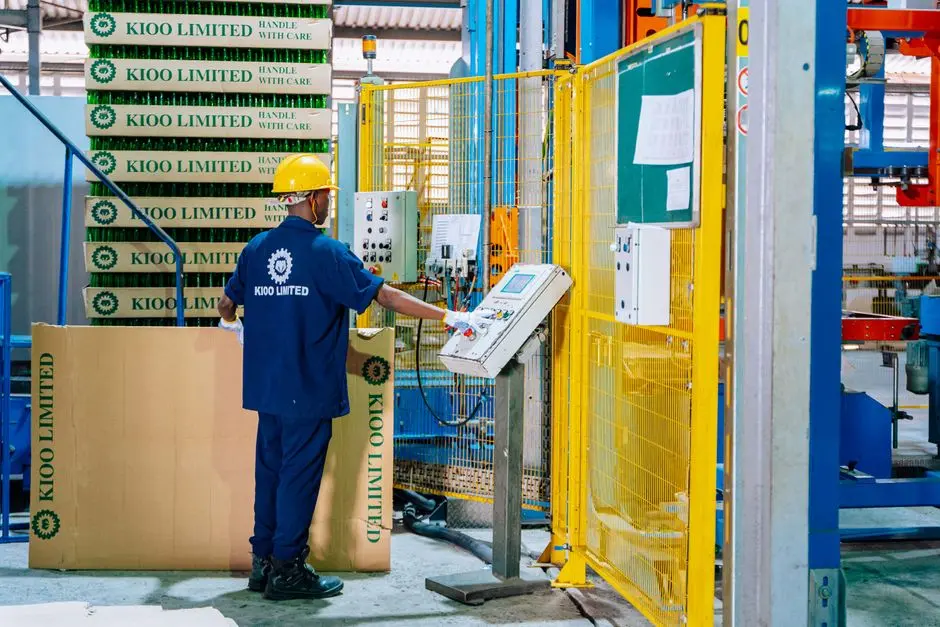
The table below is the asset most engineers will copy from this article. It pairs the typical industrial range for each parameter, the sensor type that covers it, the recommended mounting location on a generic treatment train, and the data use that justifies the spend. The biological-treatment rows (ammonia, nitrate, phosphate) default to the Endress+Hauser Memosens ion-selective family, which is the most widely installed digital IS platform for biological reactors. The high-TSS rows (food, metalworking, refinery) assume a DAF system with automatic skimming control or lamella clarifier upstream of the sensor.
| Parameter | Typical industrial range | Sensor type | Mounting location | Data use |
|---|---|---|---|---|
| pH | 2–12 | Glass / Memosens | Equalization basin, post-dosing | Compliance alarm, dosing control |
| Conductivity | 0–20 mS/cm | 4-electrode | Post-dosing, pre-discharge | Trend, chemical feed verification |
| Turbidity / TSS | 0–4,000 NTU / 0–10 g/L | Optical (90°/180°) | DAF outlet, clarifier overflow | Compliance alarm, sludge trend |
| COD (equiv.) | 0–10,000 mg/L | UV 254 nm | Biological reactor outlet | Loading trend, aeration control |
| Ammonium (NH₄-N) | 0–1,000 mg/L | Memosens ion-selective | Aeration basin, effluent | Nitrification control, compliance |
| Nitrate (NO₃-N) | 0–500 mg/L | Memosens ion-selective | Post-anoxic zone | Denitrification control |
| Phosphate (PO₄-P) | 0–50 mg/L | Memosens ion-selective / colorimetric | Pre-precipitation, effluent | Dosing control, compliance |
| DO | 0–20 mg/L | Luminescent | Aeration basin | Blower control |
| Oil-in-water | 0–500 ppm | Fluorescence / UV | DAF inlet/outlet | FOG compliance, DAF performance |
| Flow | 0–500 m³/h | Magnetic / ultrasonic | Influent, effluent, recycle | Dosing ratio, mass balance |
| Level | 0–10 m | Hydrostatic / radar | EQ basin, sludge bed | Pump control, trend |
For any stream carrying free oil or grease — metalworking, refinery, food processing — add an oil-in-water fluorescence sensor on the DAF outlet. The dosing loop behind this row is a PLC-controlled automatic chemical dosing system trimming coagulant and polymer on the influent turbidity and flow signal, not on a timer.
Vendor Landscape: Emerson, Endress+Hauser, Rockwell, and the System-Integrator Model
There are four procurement paths in 2026, and the right one depends on plant size, existing infrastructure, and whether the discharge is one line or a network. The matrix below compares the three OEM platforms named in the research and the OEM system-integrator path used for skid-based industrial plants under ~2,000 m³/day.
| Vendor / model | Core scope | Public scale benchmark | Best fit | Limit |
|---|---|---|---|---|
| Emerson (Ovation) | DCS + SCADA + analytics | 150+ US sites, 12B gal/day | Large municipal / multi-train industrial | Capex and integration time |
| Endress+Hauser | Sensors, analyzers, Liquiline/Memosens | Global install base across water cycle | Any plant as sensor layer | Less native DCS |
| Rockwell Automation | PLC + edge + OT cybersecurity | Water-specific PLC portfolio | Greenfield, OT-modernization projects | Lighter on plant-wide historian |
| OEM system-integrator skid | Pre-engineered PLC + HMI + sensor skid | Typical lead time 8–14 weeks | Single industrial waste stream < 2,000 m³/day | Limited enterprise integration |
The trade-off is honest. OEM platforms deliver enterprise scale and proven case studies — the 25%/90% Emerson numbers are the most cited public benchmarks in the segment (Emerson). Integrator skids deliver faster deployment, lower capex, and tighter process fit for a single stream, and they pull Endress+Hauser or Hach sensors as standard sub-components. Rockwell's OT cybersecurity callout applies regardless of vendor choice and should be on every 2026 evaluation regardless of which path is selected.
2026 Cost Ranges and ROI Calculation
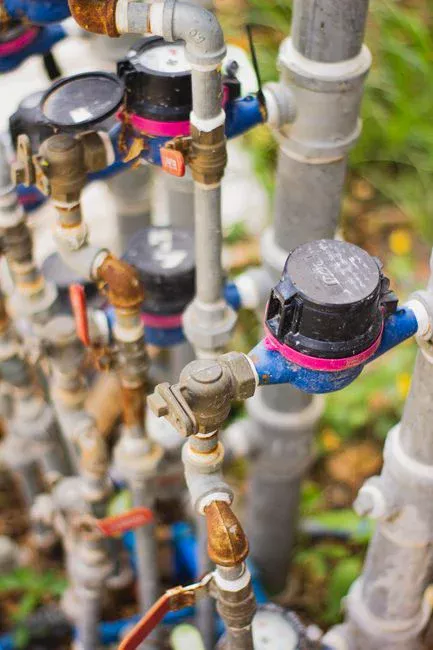
The SCADA cost benchmark for 2026 is the published HydropureWater breakdown: entry-level software starts at $1,000, full plant SCADA reaches $1M+, and engineering and integration are typically 1.5–3× the software license (HydropureWater, 2026). For an industrial waste stream skid, a realistic 2026 capex envelope is $80K–$250K for PLC + HMI + instrumentation, plus $40K–$150K for integration and commissioning.
| Cost line | Entry | Mid | Large |
|---|---|---|---|
| SCADA software license | $1,000 | $25K–$100K | $250K–$1M+ |
| Integration (1.5–3× license) | $1,500 | $40K–$300K | $400K–$3M |
| Field sensors (per stream) | $15K | $40K–$90K | $120K–$300K |
| PLC + HMI hardware | $8K | $20K–$45K | $60K–$150K |
ROI anchored to the Emerson 25% chemical reduction case: a plant spending $400K/year on coagulant and polymer captures $100K/year at 25% reduction. Add reduced operator overtime, fewer EPA excursions, lower sludge-hauling from tighter dosing, and the avoided cybersecurity risk premium from modernized controllers — the secondary savings typically add another 30–60% to the chemical line. On a $250K mid-sized skid, payback lands inside 18–36 months (Emerson case, treated as a stated assumption). Predictive maintenance on blowers and pumps, covered in the smart pump monitoring and predictive maintenance guide, layers another 5–10% energy saving on top. The 2026 smart water monitoring market outlook puts WastewaterSCAN at 150 sites across 40 US states — automation is now a default expectation, and lagging peers is a soft reputational cost that does not show on the P&L but does show up in board-level reviews.
Cybersecurity, Compliance, and the 2026 Non-Negotiables
Rockwell's 2026 framing for water utilities is the most useful public checklist: Connect → Modernize → Secure, in that order (Rockwell Automation, 2026-09). Aging controllers are the single biggest cyber exposure in water systems today, and the recommended remediation is a phased upgrade — secure remote access first, then controller modernization, then network segmentation — rather than a rip-and-replace. This sequence applies whether the OEM is Emerson, Rockwell, or an integrator skid; the threat model is the same.
The compliance chain has to be designed once, end-to-end: sensor → PLC tag → historian → automated EPA/EU discharge report. The Emerson 90% centralized data point is the working model — 90% of the EPA report is auto-populated from tagged values, leaving only lab confirmation and signature steps manual. In the US, industrial pretreatment sits under 40 CFR Part 401–471; in the EU, the Urban Waste Water Directive 91/271/EEC sets the reporting baseline. For the OT layer, IEC 62443 is the de facto standard for industrial automation cybersecurity and should appear in every 2026 RFP. Operator interfaces — alarms, trending, remote access — must be role-based with MFA, and the historian export to the regulatory report must be tamper-evident. These are no longer differentiators; they are the floor.
Frequently Asked Questions
What does an industrial waste stream monitoring system include?
It includes the four-layer stack: field sensors (pH, conductivity, turbidity, TSS, UV-COD, ammonia, nitrate, flow, level), a PLC or RTU controller handling deterministic dosing, a SCADA or DCS layer (Ovation, FactoryTalk, or an integrator HMI) for alarming and historian, and an analytics layer for predictive maintenance and closed-loop dosing. A minimum industrial skid will have 6–10 sensors, one PLC, one HMI/SCADA node, and a historian export to the compliance report.
How much does SCADA cost for a wastewater plant in 2026?
Entry-level SCADA software starts at $1,000, full plant SCADA reaches $1M+, and engineering and integration typically run 1.5–3× the software license. For an industrial waste stream skid, plan $80K–$250K for PLC + HMI + instrumentation and $40K–$150K for integration and commissioning in 2026 (per the published HydropureWater 2026 SCADA pricing breakdown).
Which vendors lead industrial waste stream automation?
Emerson (Ovation DCS — 150+ US sites managing over 12 billion gallons/day), Endress+Hauser (Liquiline/Memosens sensor and analyzer platform), and Rockwell Automation (PLC + edge + OT cybersecurity) are the three OEM leaders. A fourth path is the OEM system-integrator model, used for skid-based industrial plants under ~2,000 m³/day where a full enterprise SCADA is over-spec.
What ROI can automation realistically deliver?
Using the Emerson 2024 municipal case as a stated assumption: 25% reduction in backwash water and chemical use and 90% centralized EPA reporting data. For a plant spending $400K/year on coagulant and polymer, 25% chemical reduction alone returns $100K/year, and secondary savings on overtime, excursions, sludge handling, and avoided cyber risk typically add another 30–60% — payback inside 18–36 months on a mid-sized skid.
Is OT cybersecurity part of the monitoring scope?
Yes — in 2026 it is non-negotiable. Rockwell's 2026 industry page sequences upgrades as Connect → Modernize → Secure, and aging controllers are the single biggest exposure. The OT layer should be specified to IEC 62443, with role-based access, MFA on remote connections, segmented historian networks, and tamper-evident exports to the regulatory report.