The Three-Layer Compliance Stack for Poulsbo-Area Mining Discharges
Federal, state, and local requirements stack to dictate how a mine or aggregate operation near Poulsbo discharges wastewater to the sewer. The Mineral Mining and Processing Effluent Guidelines and Standards at 40 CFR Part 436 is the federal floor for any mining or quarrying operation that discharges wastewater in the United States; the EPA promulgated 40 CFR Part 436 in 1975 and amended the regulation in 1976, 1977, 1978, and 1979, and the rule covers wastewater discharges from mine drainage, mineral processing operations, and stormwater runoff, with the Mineral Mining regulatory requirements incorporated into NPDES permits (EPA, 2026-02).
Every POTW that accepts industrial discharge runs a pretreatment program under EPA's implementing regulations at 40 CFR 122, 123, 124, and 403 and chapter I subchapter N, and the local sewer authority sets local limits using the EPA MAHL (Maximum Allowable Headworks Loading) approach (EPA, 2026-02). The Washington State Department of Ecology and the Kitsap-area sewer authority add their own conditions on top of the NPDES permit, so an operator must reconcile both sets of limits when sizing a treatment train.
The reserved-subpart trap is the first thing to check. Dimension Stone (Subpart A), Lightweight Aggregates (Subpart H), Lithium (Subpart U), Ball Clay (Subpart AH), Feldspar (Subpart AI), Talc/Steatite/Soapstone/Pyrophyllite (Subpart AJ), and Garnet (Subpart AK) are reserved subparts with no current numeric effluent limits (EPA, 2026-02). A small operator serving a dimension-stone, aggregate, or lithium-exploration site in the Poulsbo area must first confirm whether the mineral falls under an active subpart with numeric limits or under a reserved subpart, because the answer drives whether federal numbers exist at all before the local layer applies.
Which Sewer Authority Actually Receives the Discharge
Local limits are issued by the receiving POTW, and the identity of that POTW depends on the collection system the site actually discharges to. The City of Poulsbo sits on the Kitsap Peninsula in Washington, and a mine or aggregate operator in the area must first identify whether discharge goes to the City of Poulsbo's collection system or to Kitsap County Sewer District infrastructure, because the receiving POTW is the entity that sets the local limits, issues the control mechanism to the industrial user, and enforces the limits derived from the EPA MAHL methodology (EPA, 2026-02).
The City of Poulsbo and the Kitsap County Sewer District maintain different local-limits lists. The operator's first concrete action — before any treatment equipment is sized — is to call the receiving POTW and request the current local limits list for metals (typically copper, lead, zinc, cadmium, nickel, mercury, arsenic, chromium), the pH range, the TSS cap, and any oil-and-grease limit. Without that list in hand, the basis-of-design for the train is incomplete, and the operator will size the wrong membrane or the wrong clarifier.
Characterize the Influent Stream by Stream Before Specifying Equipment
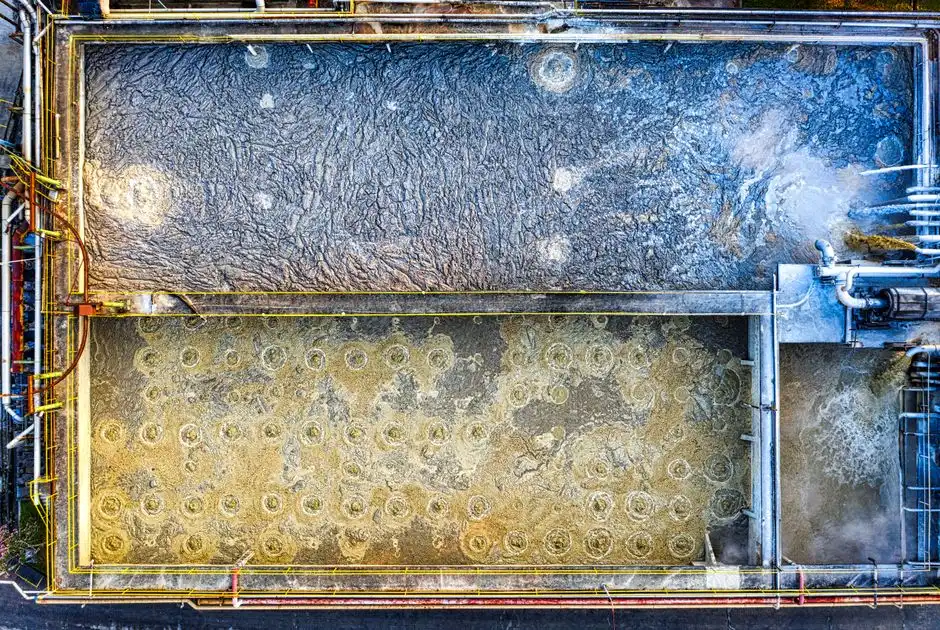
Acid Mine Drainage (AMD) is the most prevalent mining water quality problem and shows up wherever sulfide minerals are disturbed. When sulfide minerals (pyrite, pyrrhotite) in waste rock and tailings are exposed to oxygen and water, oxidation reactions produce sulfuric acid; this leaches into groundwater and surface water, creating highly acidic streams with dissolved heavy metals (iron, manganese, copper, zinc, arsenic, cadmium) at concentrations far exceeding regulatory limits (AMPAC USA, 2025-09). The literature groups mining wastewater into four common categories that drive equipment selection differently.
Process water from ore processing — flotation, heap leaching, cyanide gold extraction, and chlorination circuits — contains process chemicals, reagents, and dissolved ore constituents, typically high TDS, often with cyanide, ammonia, or chloramines depending on the circuit (AMPAC USA, 2025-09). Tailings pond effluent is the liquid fraction of tailings impoundments and contains fine solids, processing chemicals, and leached metals. Dewatering discharge is water pumped from underground mines or open pits to maintain access, and its composition varies by geology — in some settings it is relatively clean, in others it carries significant metal loading (AMPAC USA, 2025-09).
A copper mine, a coal operation, and a dimension-stone quarry produce fundamentally different wastewaters and cannot share a single default treatment train (AMPAC USA, 2025-09). Conventional wastewater approaches handle AMD, heavy metal leachate, processing chemicals, and suspended solids from tailings poorly, which is why a Poulsbo-area operator needs to characterize the influent stream by stream before talking to a treatment supplier rather than picking a packaged train off a catalog page.
The Six-Step Treatment Train That Satisfies Both Layers
A defensible unit-operation sequence for a Poulsbo-area mineral mining or aggregate operation in 2026 has six steps, and each one maps to a specific parameter and a specific piece of equipment. The order in the literature is consistent: pH correction first, then coagulation, then solids separation, then multimedia filtration, then a membrane polish when salts or trace metals persist, with monitoring and reporting on the back end (Genesis Water Technologies, 2025-11; PMC review, 2024-02).
Step 1 is pH correction: raise pH so dissolved metals precipitate as hydroxides and gypsum drops out, with lime raise to pH >10 before thickening (PMC review, 2024-02). The chemistry feed should be dosed through an automatic chemical dosing system for lime and flocculant with PLC control so setpoints track the influent. Step 2 is coagulation: aggregate suspended solids and fine metal particles into settleable or floatable flocs, and match coagulant and flocculant to the floc density that drives the next clarification step.
Step 3 is solids separation — DAF or lamella, addressed in the next section. Step 4 is multimedia filtration: drop turbidity and colloids to protect downstream membranes, and specify target SDI after the filter, not inlet turbidity; an multi-media filter for RO pretreatment is the standard workhorse here. Step 5 is membrane polish: UF for fine colloids and RO for dissolved salts and metals, with RO rated at >99% rejection of dissolved metals and salts (AMPAC USA, 2025-09). For a parallel reference on copper-specific polishing, see the copper removal from mining wastewater engineering methods guide. Step 6 is monitoring and reporting: a PLC/HMI with continuous pH, flow, and conductivity, plus POTW self-monitoring records (LiqTech, 2025-08).
| Step | Unit Operation | Parameter Controlled | Specification Driver |
|---|---|---|---|
| 1 | pH correction (lime raise) | Dissolved metal solubility | Raise to pH >10 before thickening (PMC review, 2024-02) |
| 2 | Coagulation / flocculation | Suspended solids, fine metal particles | Floc density matched to next clarifier |
| 3 | DAF or lamella | Bulk precipitated solids | Buoyant floc/oil → DAF; heavy sludge/footprint → lamella |
| 4 | Multimedia filtration | Turbidity, colloids, SDI | Target SDI after filter, not inlet turbidity |
| 5 | UF + RO polish | Dissolved salts and metals | >99% rejection of dissolved metals and salts (AMPAC USA, 2025-09) |
| 6 | PLC/HMI monitoring | pH, flow, conductivity; self-monitoring records | POTW reporting compliance (LiqTech, 2025-08) |
DAF or Lamella: Picking the Right Clarifier for the Influent
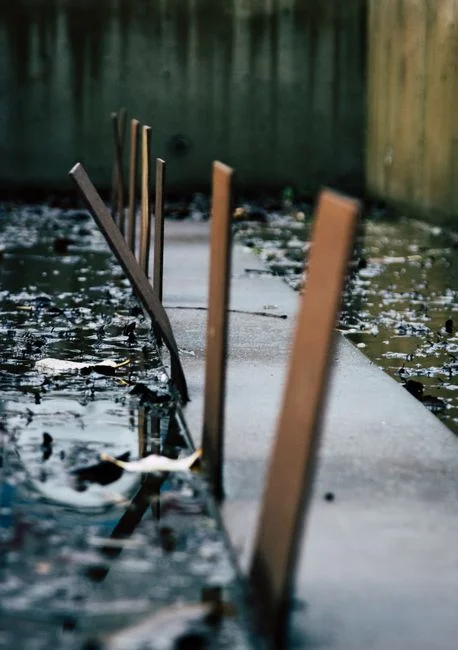
DAF works when the floc is buoyant or the influent carries oils and fines that float; the key spec drivers are air-to-solids ratio and polymer compatibility. A DAF system for mining wastewater solids separation is the right unit when the upstream chemistry produces a low-density floc or when residual oils are present in the feed.
Lamella is the right pick when sludge volume and footprint are the constraint and there is no oil loading; the key spec drivers are plate spacing and underflow solids. A lamella clarifier for metal hydroxide sludge handles high underflow solids in a small footprint and is the usual choice for AMD-influenced streams where the metal hydroxide sludge is heavy. For a more detailed head-to-head, the DAF vs clarifier for mining wastewater factory selection guide covers the published comparison.
For an AMD-influenced stream with metal hydroxide sludge and a tight site footprint, lamella generally wins on sludge handling; for a process stream with residual oils or buoyant floc, DAF is the safer pick (Genesis Water Technologies, 2025-11). The right clarifier choice depends on floc density and oil loading, not on supplier preference — specify the unit operation against the influent data first, then match the equipment to that specification.
| Selection Driver | Pick DAF When… | Pick Lamella When… |
|---|---|---|
| Floc density | Buoyant floc (below water) | Heavy floc, metal hydroxide sludge |
| Oil loading | Residual oils or floating fines present | No oil loading |
| Footprint | Site is not footprint-constrained | Tight site footprint |
| Sludge volume | Lower underflow solids, float to surface | High underflow solids, settle to bottom |
| Key spec drivers | Air-to-solids ratio, polymer compatibility | Plate spacing, underflow solids (Genesis Water Technologies, 2025-11) |
Sludge Handling and Reuse Economics: Where Compliance Pays Back
Chemical precipitation produces metal hydroxide sludge that requires dewatering — a filter press for mining sludge dewatering is the standard fit for the cake volumes produced by precipitation-based mining trains. Sludge handling is the last unit operation, and skipping it or undersizing it causes lagoon capacity problems long before the effluent limits fail.
Internal water reuse enabled by RO treatment can reduce freshwater consumption by 40–60% compared to once-through operations (AMPAC USA, 2025-09). Every cubic meter the plant reuses is a cubic meter it does not pay to discharge or to draw from a freshwater source. Where zero-liquid discharge is required, RO handles the bulk water recovery (typically 70–85%) before the more energy-intensive thermal stages handle the remaining concentrate, and the operator should request a recovery curve, not just a nameplate figure (AMPAC USA, 2025-09). For more on ZLD economics and supplier evaluation, see the ZLD plant buyer guide.
The sizing logic is to reuse as much as economics allow, then polish the rest to sewer quality, and a compact integrated water purification skid for small mining sites is the package a small Poulsbo-area operator typically requests when they want reuse and pretreatment in one footprint. For a parallel reference on a different regional context, see the Seattle hotel wastewater system guide — same Pacific Northwest permitting environment, different influent.
Frequently Asked Questions
What federal regulation governs mining wastewater discharge to a POTW?
The federal floor is the Mineral Mining and Processing Effluent Guidelines and Standards at 40 CFR Part 436, promulgated in 1975 and amended in 1976, 1977, 1978, and 197
Frequently Asked Questions
What federal regulation governs mining wastewater discharge to a POTW in Washington State?
Mining and aggregate facilities discharging to a Publicly Owned Treatment Works (POTW) are primarily governed by the Federal Pretreatment Regulations found in 40 CFR Part 403. These regulations prevent the introduction of pollutants that pass through or interfere with the operation of the POTW or contaminate sewage sludge.
Additionally, facilities must adhere to categorical pretreatment standards defined under 40 CFR Part 436 (Mineral Mining and Processing Point Source Category) if applicable, alongside local limits established by the City of Poulsbo or the relevant sewer utility district to protect the wastewater collection system.
Does a dimension-stone or aggregate quarry near Poulsbo have federal numeric effluent limits?
Most small-scale dimension-stone or aggregate quarries discharging to a sanitary sewer are not subject to federal numeric effluent limits unless they are classified under specific subcategories of 40 CFR Part 436. However, they are subject to "General Prohibitions" under 40 CFR 403.5, which prohibit the discharge of pollutants that cause pass-through or interference, such as high concentrations of total suspended solids (TSS) or pH extremes.
While federal numeric limits may not apply, local sewer ordinances in Washington State typically mandate strict numeric limits for pH (usually 5.0 to 11.0), oil and grease (often <100 mg/L), and TSS to prevent pipe sedimentation and operational failures at the treatment plant.
What is a defensible 2026 treatment train for a small mining or aggregate operation discharging to sewer?
A defensible pretreatment train for 2026 typically utilizes a multi-stage approach starting with a primary sedimentation basin or clarifier to remove heavy grit and suspended solids. This is followed by an automated pH adjustment system utilizing sulfuric acid or sodium hydroxide to maintain a stable range of 6.0 to 9.0.
For operations with fine silts or chemical additives, the inclusion of a flocculation/coagulation tank followed by a lamella clarifier or high-rate sand filtration is recommended. Final flow monitoring and proportional sampling are essential to ensure the discharge remains within the utility's permitted limits for daily volume and constituent concentration.
How much does a complete mining wastewater pretreatment train cost, and what determines the price?
A complete, skid-mounted pretreatment system for a small mining operation typically ranges from $50,000 to $250,000 for equipment alone, excluding civil works, permitting, and installation. Costs vary significantly based on the required flow rate (GPM), the complexity of the influent contaminant profile, and the level of automation required for remote monitoring.
Key price drivers include the material of construction (e.g., stainless steel versus high-density polyethylene), the need for advanced filtration or heavy metal removal, and the inclusion of data logging hardware necessary for compliance reporting to local sewer authorities.
What should I include in a basis-of-design request to a wastewater treatment supplier for a mining site?
To receive an accurate quote, provide a basis-of-design document containing the average and peak design flow rates in gallons per minute (GPM) or gallons per day (GPD). You must include a full laboratory analysis of the influent wastewater, specifically highlighting TSS, pH levels, turbidity, and any potential heavy metals or hydrocarbons.
Additionally, define the local sewer agency’s discharge permit limits, the available physical footprint for equipment installation, power availability (voltage/phase), and the required level of reporting automation. Specifying the desired maintenance frequency and the presence of any unique site constraints—such as seasonal weather variations—is critical for selecting the appropriate technology.