Why Luverne Mining and Metals Plants Are Rethinking DAF vs Clarifier in 2026
Luverne-area taconite, aggregate, and specialty-metals operations in 2026 are facing a tighter NPDES envelope on total suspended solids (TSS) and dissolved metals than the previous permit cycle, while producing higher volumes of fine tailings, flotation reagent residues, and oily lubricants from mobile equipment wash bays. The regional water balance is dominated by closed-loop recycle streams that swing between 2 °C and 25 °C across the year, and sub-freezing ambient conditions are the rule, not the exception, from November through March. That combination of fine suspended solids, low-density slimes, and cold recycle loops is the exact stream profile where a DAF or a clarifier stops being an equivalent choice and starts producing different compliance and OPEX outcomes. The real 2026 question for Luverne capex committees is not "DAF or clarifier" but whether to install a new DAF, retrofit an existing clarifier, or run a hybrid train — and what the 5- to 10-year TCO looks like in $/m³ for each option. Reference data confirms the upper bound of the technology: DAF units reach up to 97% TSS removal and 60–80% COD removal using 30–50 µm microbubbles, while a clarifier in a published mining case delivered roughly 90% solids reduction at lower operating cost than a DAF on the same stream (Ecologix 2024 DAF vs clarifier selection guide).
How a DAF System Actually Works in a Mining Wastewater Stream
DAF separates solids by floating them, not sinking them — a meaningful shift in mechanism for streams rich in fines, FOG, and low-density precipitates. The flow path runs through five stages: (1) coagulant and flocculant dosing to grow micro-solids into dense flocs; (2) saturation of a pressurized recycle stream with air at ≥5 bar; (3) release of the saturated recycle into the main tank at atmospheric pressure, generating a cloud of 30–50 µm microbubbles; (4) bubble–floc attachment that lifts the flocs to the surface; and (5) mechanical skimming of the float layer into an integrated sludge hopper (wastewatermachinery.com mining DAF description; clearwaterind.com SigmaDAF process description). For Luverne operators the engineering thresholds to verify on any bid are: microbubble diameter 30–50 µm, saturation pressure ≥5 bar, A/S (air-to-solids) ratio tuned to feed TSS, and PLC-controlled effluent monitoring with VFDs on recycle and skimmer drives (wastewatermachinery.com DAF selection table). Standard DAF packages are offered across 3–120 m³/h in 12 model sizes (DAF-003 through DAF-120), with 1.5–10 t dry weight and 5–130 t operating weight, so a 50 m³/h wash-water sidestream maps to DAF-050 and a 100 m³/h tailings sidestream to DAF-100 (wastewatermachinery.com DAF technical sheet). Material options worth specifying for corrosive Luverne waters are 304SS standard, 316SS upgrade, or polypropylene (clearwaterind.com SigmaDAF material spec).
How a Clarifier Handles Mining Wastewater (and Where It Wins)
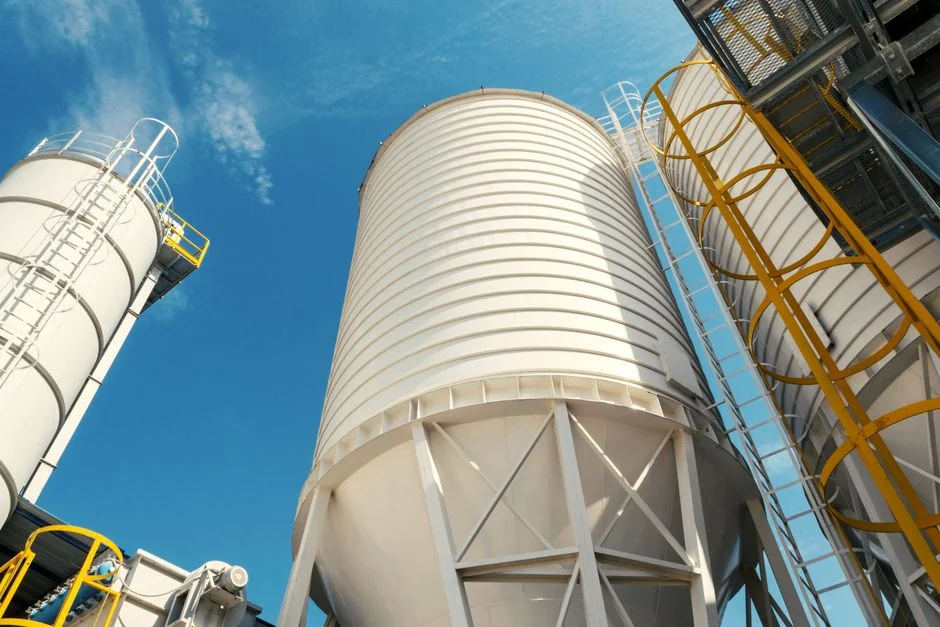
A clarifier separates by gravity: dense solids settle to a conical or hopper bottom, sludge is scraped or augered to a discharge, and clarified water overflows peripheral weirs. In mining service the relevant variant is the lamella or inclined-plate clarifier, which packs multiple plates into a small footprint and runs at surface loadings of 20–40 m/h — typically 5–10× the loading of a conventional circular clarifier — while cutting coagulant use by up to 30% when paired with internal sludge recirculation, as documented in the HydropureWater high-efficiency lamella clarifier specification. Clarifiers win on Luverne streams where coarse tailings, sand, and high-density grit dominate, because dense particles are precisely what gravity wants to remove. Operating cost is lower than a DAF at the same flow because there is no saturator, no recycle pump, and no compressed-air loop — only polymer feed and periodic sludge withdrawal. The published mining case (Ecologix 2024) showed a clarifier delivering ~90% solids reduction on a heavy-sediment mining stream at lower cost than a comparable DAF installation. The honest weaknesses: clarifiers underperform DAFs on FOG, oils, residual flotation reagents, and fine low-density colloids that simply do not settle in reasonable residence times.
DAF vs Clarifier: 2026 Decision Matrix for Luverne Operators
Match the stream to the technology in under a minute. The matrix below is built for Luverne mining and metals plants operating under 2026 NPDES conditions; use it as a first-pass filter before talking to vendors.
| Parameter | DAF | Clarifier / Lamella | Hybrid (Lamella + DAF Polish) |
|---|---|---|---|
| Target contaminants | Fines, FOG, oils, flotation reagents, fine metal hydroxides | Coarse tailings, sand, grit, dense precipitates | Both — bulk solids first, then fines, FOG, and metals |
| TSS removal | Up to 97% (wastewatermachinery.com) | ~90% in mining case (Ecologix 2024) | ~95–99% combined |
| COD removal | 60–80% (wastewatermachinery.com) | Modest; better with coagulant | 60–80% on DAF stage |
| Footprint | Small — skid units fit in existing bays | Large — needs headroom for sludge bed | Larger than either alone; best where space exists |
| OPEX profile | Compressed air + polymer + skimmer maintenance | Polymer + sludge withdrawal | Stacked: both OPEX lines |
| CAPEX order of magnitude | Moderate (skid DAF) | Moderate–high (custom concrete) or low (prefabricated lamella) | Highest of the three |
| Cold-weather sensitivity | High — recycle loop and froth handling need winterization | Moderate — viscosity slows settling, ice on launders | Manageable with insulation on both units |
| Flow surge tolerance | Moderate — hydraulic surface loading matters | Good — large volume dampens surges | Good; lamella buffers DAF |
| Best Luverne fit | Wash water, FOG-bearing sidestreams, reagent residues | Coarse tailings thickener overflow, aggregate wash | Most 2026 Luverne sites |
Mini decision tree: choose DAF when fines, FOG, oils, or reagent residues are present and footprint is tight. Choose clarifier or lamella when coarse tailings and grit dominate and CAPEX/OPEX matters more than polish. Choose hybrid when both describe your stream — and in 2026 that is most Luverne mining and metals plants. For a worked sizing sketch using the 50 m³/h example, see the Watertown mining wastewater 2026 guide for adjacent regional context.
Luverne-Specific Design Parameters: pH, Iron Coagulation, and Winterization
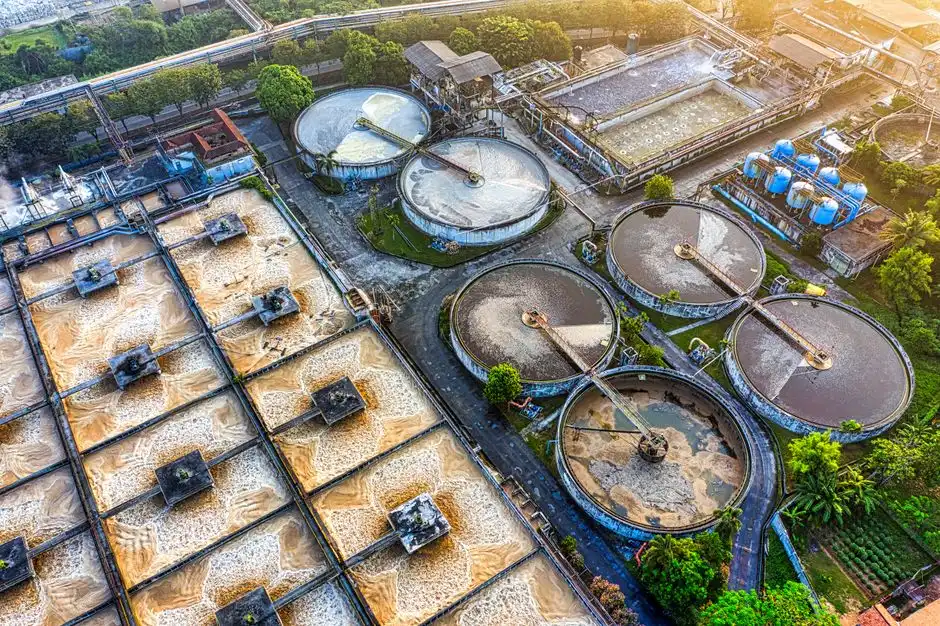
The compliance and OPEX outcomes for a Luverne site are usually decided by three local variables: pH, iron coagulation chemistry, and winter operations. Effective coagulation of iron, manganese, and trace heavy metals (Pb, Zn, Cu) with ferric chloride or alum sits in a pH window of 6.5–8.5; outside that band, metal hydroxides redissolve or fail to precipitate, and DAF removal collapses because the floc density is wrong. Pairing the DAF with a PLC-controlled coagulant and flocculant dosing skid upstream is the most reliable way to hold the pH window through diurnal flow swings. Winterization is the second variable and the one that catches Luverne buyers off-guard. Below 5 °C, water viscosity rises roughly 20–30% versus summer, microbubble yield per kg of air drops, and surface froth becomes thicker and harder to skim. Practical mitigations: insulated DAF enclosures, heat-traced recycle lines, recycle ratio bumped from a baseline 20–30% to 30–40% in deep cold, and a heavy-duty skimmer with a heated or insulated sludge hopper — features documented on SigmaDAF's FPAC and FPHF models (clearwaterind.com; wastewatermachinery.com). Permit touchpoints to map before any vendor meeting: NPDES TSS limits, metals limits for Pb, Zn, Cu, Fe, Mn, and the role of the DAF/clarifier as pretreatment ahead of multimedia filtration or RO.
Sizing a DAF or Clarifier for a Luverne Plant: Capacity, Footprint, and Headcount
Anchor DAF sizing to the DAF-003 to DAF-120 reference table: 3–120 m³/h flow range, 1.5–10 t dry weight, 5–130 t operating weight, 12 model sizes (wastewatermachinery.com DAF technical sheet). Two worked mappings for Luverne: a 50 m³/h aggregate wash-water sidestream with moderate fines lines up with a DAF-050 (8.4 × 3.6 m footprint, ~5.5 t dry, ~55 t operating); a 100 m³/h tailings sidestream with reagent residues lines up with a DAF-100 (12.1 × 4.2 m, ~9 t dry, ~110 t operating). For lamella clarifiers, the same flow window uses surface loadings of 20–40 m/h (HydropureWater high-efficiency lamella clarifier spec) to compute the plate pack area; a 50 m³/h stream at 30 m/h loading needs roughly 1.7 m² of projected plate area, and a 200 m³/h stream at 25 m/h needs 8 m², often packaged in a 3 × 2 m footprint — far smaller than an equivalent circular clarifier.
| Luverne sidestream | Flow (m³/h) | Recommended DAF model | Footprint (L × W, m) | Operating weight (t) | Lamella alternative (surface loading) |
|---|---|---|---|---|---|
| Small wash bay | 10 | DAF-010 | 4.65 × 2.7 | 12 | ~0.4 m² at 30 m/h |
| Aggregate wash | 50 | DAF-050 | 8.4 × 3.6 | 55 | ~1.7 m² at 30 m/h |
| Tailings sidestream | 100 | DAF-100 | 12.1 × 4.2 | 110 | ~4 m² at 25 m/h |
| High-flow clarifier retrofit | 120 | DAF-120 | 12.5 × 4.4 | 130 | ~4.8 m² at 25 m/h |
Headcount and maintenance: a DAF needs air-compressor, saturator, and skimmer maintenance; a lamella needs periodic sludge withdrawal; both can run unattended with PLC. The non-negotiable vendor ask is guaranteed effluent TSS and FOG limits, not just removal percentages (wastewatermachinery.com DAF selection table).
Total Cost of Ownership: 2026 OPEX and CAPEX Ranges for Luverne Sites
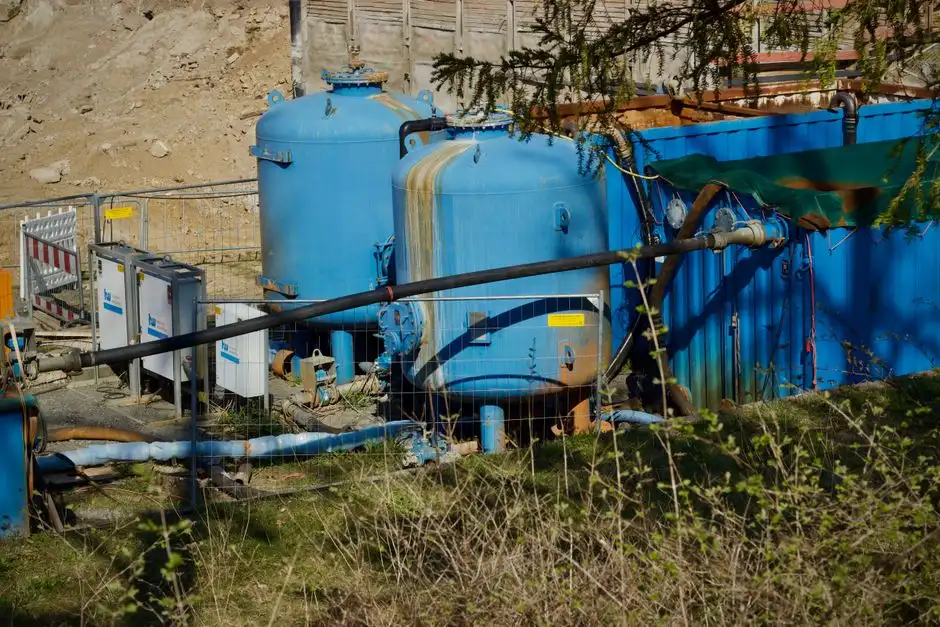
For 2026 capex committees, the decision belongs in a TCO frame, not a sticker frame. CAPEX: skid DAF units dominate at small to mid flows (≤120 m³/h) with predictable installed cost; custom concrete clarifiers dominate at high flows but add civil cost and lead time; prefabricated lamella clarifiers sit between, with the lowest civil cost per m³/h (HydropureWater high-efficiency lamella clarifier spec). OPEX: DAF compressed air and polymer are the recurring lines; clarifiers are mostly polymer and sludge handling; hybrid trains stack both. The published mining case showed a clarifier at lower cost than a comparable DAF for the same heavy-sediment stream, but DAF's value rises sharply when fines, FOG, or reagent residues are present (Ecologix 2024). Lamella with sludge recirculation can cut polymer use by up to 30%, which compounds across 5–10 years of operation. Build the TCO on a 5- to 10-year horizon, include sludge dewatering downstream — the HydropureWater plate-and-frame filter press typically pairs with either DAF or lamella skimmings — and put a dollar value on compliance risk, not just chemical and energy. For cross-technology context see the pressure flotation vs alternatives decision guide.
A 4-Step Selection Protocol for Luverne Mining Buyers in 2026
Step 1 — Run a full water analysis. Capture TSS, FOG, total metals (Fe, Mn, Pb, Zn, Cu), pH, and the full annual temperature range before talking to any vendor; this is the 2026 baseline that both Ecologix and wastewatermachinery demand. Step 2 — Match the stream profile to the decision matrix in the section above: fines + oils → DAF; coarse tailings → clarifier; both → hybrid. Step 3 — Confirm the engineering thresholds with shortlisted vendors: DAF microbubble spec 30–50 µm with saturation pressure ≥5 bar, and lamella surface loading 20–40 m/h, both documented in the reference selection tables. Step 4 — Ask for guaranteed effluent TSS and FOG limits, VFD/PLC controls, and 304/316SS wetted-part certification before signing. The one-line rule for 2026: the right answer for most Luverne plants is hybrid — a lamella clarifier for bulk solids, followed by a DAF for fines, FOG, and metals coagulation, sized using the table above. For a worked DAF unit process sketch, the DAF process flow diagram walkthrough is a useful internal handout; for an actual skid reference, the HydropureWater dissolved air flotation system is one mid-flow option to spec against.
Frequently Asked Questions
DAF or clarifier for mining wastewater — which removes more TSS?
A DAF reaches up to 97% TSS removal using 30–50 µm microbubbles, while a clarifier in a published mining case delivered roughly 90% solids reduction (wastewatermachinery.com; Ecologix 2024). The headline number favors DAF, but the engineering question is which technology matches the actual stream — coarse tailings still belong in a clarifier.
Which is better for heavy-metal removal in a Luverne mining stream?
Pair coagulation with a DAF or run a hybrid lamella-plus-DAF train. Hold pH in the 6.5–8.5 window with a PLC-controlled dosing skid so ferric chloride or alum can co-precipitate Fe, Mn, Pb, Zn, and Cu reliably across diurnal swings.
How do DAF and clarifiers perform in Minnesota winter conditions?
Both need winterization. DAFs need insulated enclosures, heat-traced recycle lines, and recycle ratios bumped from a 20–30% baseline to 30–40% below 5 °C to keep microbubble yield stable. Clarifiers and lamellas need insulated launders and sludge hoppers, plus allowance for the 20–30% viscosity rise that slows settling.
What are typical 2026 CAPEX and footprint ranges for Luverne sites?
Skid DAF units (3–120 m³/h) carry moderate CAPEX with small footprints — a DAF-050 fits in roughly 30 m² and a DAF-100 in roughly 51 m². Custom concrete clarifiers at high flows carry higher CAPEX and larger footprints; prefabricated lamellas sit between, with the lowest civil cost per m³/h of the three options.
Which DAF model fits a 50 m³/h Luverne stream?
Start at DAF-050 from the standard 12-model range (DAF-003 to DAF-120): 50 m³/h, 8.4 × 3.6 m footprint, ~5.5 t dry, ~55 t operating weight (wastewatermachinery.com DAF technical sheet). Verify microbubble spec, saturation pressure ≥5 bar, and guaranteed effluent TSS/FOG limits before signing.