Why Jazan Needs Purpose-Built Domestic Sewage Treatment in 2026
Jazan sits in Saudi Arabia's southwest and is anchored by the Jazan Economic City project around the Saudi Aramco Jazan Refinery and Terminal, with refinery construction beginning in 2014 according to a MENA-Water case study of the JCSTP plant. That industrial build-out drove a parallel need for domestic sewage treatment for contractor camps, worker housing, schools, and hospitality facilities, and it shaped the sizing logic that engineers still use today. The same case study documents a centralised 5,400 m³/day plant fed by tanker trucks rather than a sewered network, which is a strong signal that many Jazan sites still operate as decentralised, packaged installations rather than a single gravity-fed system.
Domestic wastewater is a globally significant contamination source, with global production estimated at 127.13 billion tons annually according to a 2024 ecological risk assessment in the journal Natural Resources and Conservation. That volume, combined with Jazan's coastal Red Sea location, puts pressure on designers to plan tertiary polishing rather than stopping at secondary biological treatment. Marine discharge limits and landscape irrigation reuse both demand low TSS, controlled nutrients, and reliable disinfection, and the buyer must build those requirements into the unit-operation list from the first inquiry. Anyone sizing a camp, residential compound, or school cluster in 2026 should plan around high ambient temperatures, coastal salinity in receiving waters, and either tanker-truck or sewered feed, exactly as the JCSTP scope was built (S3, MENA-Water). For a parallel 2026 framework applied to a different Saudi city, the domestic sewage treatment in Mecca 2026 guide covers the same compliance and process-selection logic.
How a 2026 Jazan Domestic Sewage Treatment Train Is Built
A 2026 Jazan domestic sewage treatment train starts at the headworks and ends at the sludge handling step, with every intermediate unit sized to protect the next one down the line. The JCSTP scope of works, as published by MENA-Water, begins with a tanker station, lifting pumps, screening, and grit removal, then moves into aeration tanks, containerised MBR packages, and all measuring instrumentation. The same case study lists storage tanks for treated water and for sludge, plus drying beds, before the final 24/7 PLC and online monitoring architecture.
For a packaged WSZ buried A/O packaged sewage treatment plant, the anoxic/aerobic (A/O) contact oxidation stage, sedimentation, and disinfection are integrated into a single buried unit, and the same process family is documented as suitable for residential communities, hotels, hospitals, factories, and rural areas at 1–80 m³/h per the HydropureWater product catalog. Where reuse or marine discharge is the target, designers add a polishing stage such as multi-media filtration, UF, or chlorination/UV after the biological step. Headworks protection is non-negotiable: a GX rotary mechanical bar screen removes rags and debris before they reach the membranes or aeration diffusers, which is the single most common cause of premature membrane fouling in containerised MBR packages.
The instrumentation baseline proven in Jazan — flow, level (hydrostatic), TSS, DO, and pressure control (S3) — should be on every 2026 quote, not sold as an upgrade. Lift stations and equalisation tanks are essential because Jazan camps frequently deliver wastewater in surges via tanker trucks rather than steady gravity flow, and the JCSTP scope specifically included a tanker station and lifting pumps to handle that batch delivery. The full treatment train a buyer should expect to see in any defensible Jazan proposal therefore reads: screening, grit removal, lift and equalisation, biological stage (A/O or MBR), disinfection, sludge thickening or dewatering, and PLC/SCADA monitoring.
Process Comparison: A/O Packaged STP vs MBBR vs MBR for Jazan Sites
Process selection in Jazan is driven by three variables: flow range, effluent target, and operator skill level. The table below consolidates the documented options a buyer should compare against a 2026 inquiry, anchored to the JCSTP reference and to the HydropureWater product catalog scope.
| Parameter | A/O Packaged (WSZ) | MBB | MBR |
|---|---|---|---|
| Documented flow range | 1–80 m³/h (S6, HydropureWater WSZ product) | Project-specific; chosen for retrofits of existing tanks | 10–2,000 m³/day as integrated packages; DF modules sold as building blocks (S6) |
| Effluent quality | Secondary, suitable for sewer discharge or basic reuse | Secondary, moderate TSS | Near-reuse quality, sub-1 μm solids rejection (S6, S3) |
| Footprint | Buried, landscaping above; small visible footprint (S6) | Conventional; retrofit-friendly | ~60% footprint reduction vs conventional activated sludge (S6) |
| Operator requirement | Fully automated, no operator required (S6) | Moderate | Membrane cleaning and integrity testing required |
| Best-fit use case in Jazan | Small-to-medium compounds, hotels, hospitals, rural sites | Existing tank retrofits at mid-scale flow | JCSTP-scale camps, coastal discharge, irrigation reuse |
| Documented Jazan reference | Not at JCSTP | Not at JCSTP | JCSTP at 5,400 m³/day, start-up October 2016 (S3, MENA-Water) |
The trade-off the reader must internalise: an A/O packaged plant wins on simplicity and CAPEX at small flows; MBR wins on effluent quality, footprint reduction, and reuse-readiness at the 5,400 m³/day JCSTP scale; MBBR sits between them and is often chosen for retrofit of existing tanks. An integrated MBR wastewater treatment system is the right starting point for any Jazan project targeting irrigation reuse or strict coastal discharge limits, and JCSTP at 5,400 m³/day uses exactly this MBR configuration. For a deeper look at containerised MBR sizing logic in another regional context, the containerized MBR STP sizing guide walks through the same flow-to-membrane-area arithmetic. Vermifiltration, documented in a 2022 IntechOpen review as low-expertise, decentralised, and viable for semi-arid regions, is relevant as a non-conventional option for very small or remote Jazan sites but is not a substitute for MBR at JCSTP scale.
Sizing a Jazan STP: From Population to Cubic Metres per Day
A defensible sizing logic for a Jazan STP in 2026 follows five steps, each anchored to documented evidence or flagged as an input the buyer must request.
- Anchor to a documented Jazan reference. JCSTP is designed for 5,400 m³/day of domestic wastewater from Aramco contractor camps, with start-up in October 2016 (S3, MENA-Water). That figure is the regional benchmark for a mid-size camp installation.
- Estimate population equivalent. Use the project's actual occupancy — residents, students, hotel beds, or camp workers — and apply a per-capita wastewater generation rate. The per-capita figure itself is project-specific and must be confirmed with the client's water utility or EPC documentation, since it is not provided in the supplied research.
- Apply a peaking factor for tanker-truck or camp feed. JCSTP specifically included a tanker station and lifting pumps to handle batch delivery (S3, MENA-Water), which means peak hourly flow is the controlling design number, not the daily average.
- Check that the selected process can cover the resulting flow. A WSZ packaged plant covers 1–80 m³/h, an integrated MBR wastewater treatment system covers 10–2,000 m³/day, and a DAF pretreatment unit covers 4–300 m³/h for high-FOG or high-solids streams that may need polishing upstream.
- List the missing inputs the writer cannot fabricate. Per-capita generation rate, peaking factor, influent BOD/COD/TSS/ammonia, and required effluent quality for either reuse or marine discharge — the client or consultant must supply these before a supplier can quote responsibly.
The 5,400 m³/day JCSTP figure also gives a quick sanity check: divide the daily flow by 24 to get an average hourly flow, then size the process train against the documented product ranges. Any vendor whose quoted flow range falls outside both the WSZ 1–80 m³/h band and the integrated MBR 10–2,000 m³/day band is either upsizing or using a non-standard process train, and the buyer should ask why.
Sludge, Reuse, and the Operational Reality of 2026 Plants
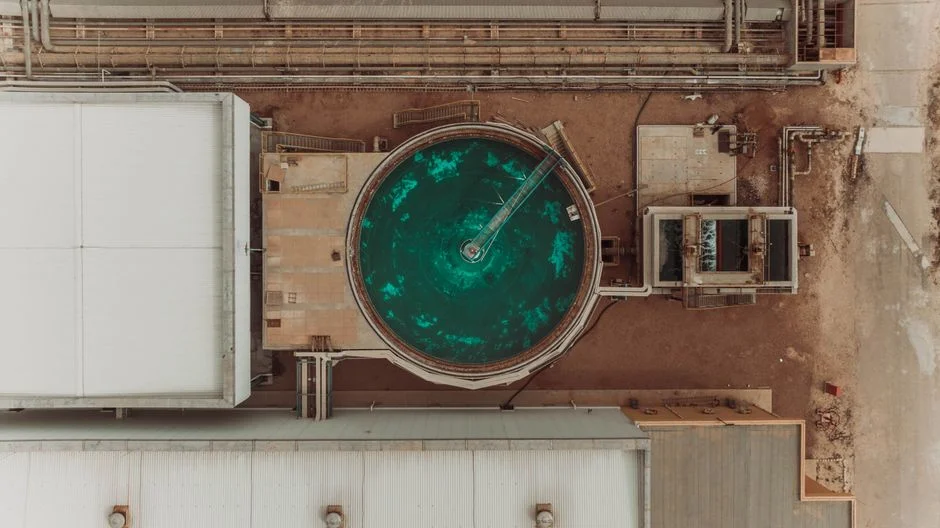
JCSTP explicitly provides storage tanks for treated water and for sludge, plus drying beds for sludge dewatering, which confirms that sludge handling is a primary scope item in a real Jazan plant, not an afterthought (S3, MENA-Water). For higher-throughput sites where drying beds are too slow or land is constrained, a plate and frame filter press with 1–500 m² of filtration area and manual, hydraulic, or fully automatic PLC control is the natural upgrade path.
Where treated effluent is destined for landscape irrigation within the camp or compound, the reader should plan a disinfection step such as chlorine dioxide generation or UV sterilisation. A chlorine dioxide generator covers 50 g/h to 20,000 g/h for sites that prefer chemical disinfection, and a UV sterilizer for water treatment covers chemical-resistant organisms without altering taste or producing by-products. The 24/7 PLC and online monitoring architecture used at JCSTP is now the baseline expectation for any 2026 Jazan installation, not an upgrade (S3). A full DAF-MBR-sedimentation-disinfection flow is the typical 2026 reference for a camp or municipal site that needs reuse-grade effluent; for cost-side guidance on the sludge train, the sludge disposal cost optimization guide covers the OPEX levers that apply to Saudi operators. The east-coast counterpart at Dammam ETP 2026 buyer's guide applies the same instrumentation and sludge-handling logic in a different coastal context.
2026 Compliance and Buyer Checklist for Jazan Domestic STPs
The compliance framing in 2026 is built around the National Center for Environmental Compliance (NCEC) wastewater discharge and reuse rules. The specific effluent limit values for 2026 are not contained in the supplied research, so the buyer must request the latest limit table from the supplier and confirm it against the current NCEC rules before purchase. A defensible inquiry package is built around four contractual asks, and the table below maps each ask to a documented Jazan or product reference.
| Ask the supplier for | Why it matters in Jazan | Documented reference |
|---|---|---|
| Full unit-operation list: screening, grit removal, aeration, MBR or A/O, disinfection, sludge handling | Makes bids comparable and prevents scope gaps | JCSTP scope of works (S3, MENA-Water) |
| Instrumentation list: flow, level (hydrostatic), TSS, DO, pressure | Required for 24/7 monitoring and NCEC reporting | JCSTP measurement scope (S3, MENA-Water) |
| Documented reuse or discharge intent | Drives whether tertiary polishing, UV, and sludge dewatering are needed | HydropureWater product scope (S6) |
| Reference plants in Saudi Arabia or comparable climate | Proves the design works at Jazan ambient conditions | JCSTP case (S3, start-up October 2016) |
Beyond the four contractual asks, the 2026 procurement checklist should also require a chemical dosing scope (an automatic chemical dosing system for coagulation, pH correction, or nutrient polishing), a spare-parts and consumables list, and a valves, fittings, and media schedule sized to the project flow. The buyer should also fix the lead time and commissioning protocol in writing, because containerised MBR packages in Saudi Arabia are typically shipped, installed, and commissioned in phases, and a vague scope at the inquiry stage almost always becomes a variation order on site.
Frequently Asked Questions
What is the documented reference plant for domestic sewage treatment in Jazan?
The most documented reference is the JCSTP centralised sewage treatment plant at Jazan Economic City, designed for 5,400 m³/day of domestic wastewater from Aramco contractor camps and started up in October 2016, with MENA-Water as the design-build contractor. The scope includes screening, grit removal, aeration tanks, containerised MBR packages, storage tanks, drying beds, and 24/7 PLC monitoring (S3, MENA-Water).
How much does a packaged domestic sewage treatment plant cost in Jazan in 2026?
The supplied research does not contain a price for a Jazan STP in 2026, so any specific figure is project-specific and must be requested from the supplier. The actionable check is to ask each vendor for a priced unit-operation list — screening, grit removal, biological stage, disinfection, sludge handling, and instrumentation — anchored to a defined flow, effluent target, and influent characterisation, so bids are directly comparable.
How do I choose between A/O packaged, MBBR, and MBR for a Jazan camp or compound?
The decision is driven by flow range, effluent target, and operator skill level. WSZ A/O packaged plants cover 1–80 m³/h with no operator and suit small-to-medium compounds; integrated MBR systems cover 10–2,000 m³/day and win on reuse-readiness and footprint reduction; MBBR is the retrofit option for existing tanks. The buyer should match the project's peak hourly flow and required effluent quality to one of these three bands before issuing inquiries (S6, HydropureWater).
What should I confirm about supplier selection and Saudi compliance before purchasing a Jazan STP?
Confirm two things: that the supplier can document a reference plant in Saudi Arabia or a comparable Red Sea coastal climate (JCSTP is the strongest Jazan-specific reference available, S3, MENA-Water), and that the proposal explicitly addresses the current NCEC wastewater discharge and reuse rules applicable in 2026, with the limit values attached as a schedule to the inquiry. The buyer should also request a 24/7 PLC/SCADA monitoring architecture and an instrumentation list covering flow, level, TSS, DO, and pressure, since these are the documented JCSTP baseline (S3).