What Counts as Domestic Sewage in Khobar
Domestic sewage is the wastewater stream from households, residential compounds, hotels, schools, and worker camps, defined by the Applied Water Science 2018 review as a complex mixture of water, organic and inorganic constituents, and large numbers of pathogenic bacteria, viruses, and parasites. This stream is distinct from hospital wastewater (which carries pharmaceuticals and laboratory residues) and industrial wastewater (often dominated by dissolved heavy-metal salts), as cited in the same Applied Water Science review.
In Khobar, the practical influent base matches that mix: residential compounds, hotels, schools, and worker camps feeding a sanitary sewer, with the Al-Khobar WWTP case study (Arab Water Council) confirming minimal industrial intrusion and trace-element and heavy-metal concentrations well below allowable limits. Sanitary sewers must still be segregated from stormwater, because the US EPA notes that infiltration and inflow during wet weather can drive peak flows severe enough to disrupt treatment plant operation. That risk is real in Gulf storm events and must be accounted for at the RFQ stage by clarifying per-capita flow, COD/BOD ratio, grease loading from food service, and any laundry or light commercial flow blended into the domestic stream, with screening handled upstream by a continuous-duty rotary mechanical bar screen sized to the expected rag and fiber load.
Treatment Process Design for a Khobar Domestic STP
A defensible reference train for a Khobar domestic STP runs in five stages and starts with the binding parameters identified in the Al-Khobar WWTP case study. Stage 1 is screening and grit removal, typically a rotary mechanical bar screen that protects downstream biological stages from rags, plastics, and fibrous debris that are common in compounds with heavy laundry or food-service loads. Stage 2 is flow equalization and primary clarification, which buffers infiltration/inflow peaks and matches the US EPA guidance on peak-flow management at treatment facilities. Stage 3 is biological treatment, with two proven options for the Eastern Province: a buried A/O package sewage treatment plant rated 1–80 m³/h for small compounds, hotels, and worker camps, or an MBR integrated wastewater treatment system with submerged PVDF membranes below 1 μm, rated 10–2,000 m³/day, which delivers higher effluent quality in roughly 60% of the conventional footprint. Stage 4 is tertiary polishing, where the Al-Khobar WWTP case study recommended applying reverse osmosis to a portion of the secondary effluent rather than the full stream to meet Saudi turbidity and TSS limits cost-effectively. Stage 5 is disinfection: chlorine remains standard, but the same case study flagged coliphage resistance to chlorination and recommended longer detention time or a chlorine/peracetic acid blend to improve microbial control. Each stage is anchored to a measurable output, which turns a vendor's process diagram into an auditable design.
| Stage | Function | Key equipment / design note | Performance anchor (Al-Khobar case study, Arab Water Council) |
|---|---|---|---|
| 1. Screening & grit | Protect downstream units from rags, plastics, fibrous debris | Rotary mechanical bar screen, continuous duty | Reduces rag carry-over that compromises MBR membranes |
| 2. Equalization / primary | Buffer peak flow from I/I and shift load to biology | Buffer tank, primary clarifier | Matches US EPA peak-flow management guidance |
| 3. Biological | Organic and ammonia removal | A/O contact oxidation (buried package) or MBR with PVDF <1 μm | Provides secondary effluent that can meet FAO reuse guidelines |
| 4. Tertiary | TSS, turbidity reduction before reuse or discharge | Reverse osmosis on a side stream (not full stream) | Targets Saudi turbidity and TSS limits cost-effectively |
| 5. Disinfection | Microbial kill before reuse or discharge | Extended chlorination or chlorine/PAA blend | Counters coliphage resistance to chlorine alone |
Saudi Reuse and Discharge Standards Khobar Plants Must Hit
The Al-Khobar WWTP case study is a useful compliance anchor because it shows exactly where well-run secondary treatment still falls short in Saudi Arabia. Treated effluent met the FAO guidelines for agricultural reuse but failed the stricter Saudi standards on Total Coliforms (average 749 counts/100 ml versus the Saudi limit of 220 counts/100 ml), turbidity, and TSS, as reported by the Arab Water Council case study. The same study confirmed that heavy metals and trace elements were well below allowable limits, which means the binding parameters for a well-run domestic STP in Khobar are microbiological (Total Coliforms and residual chlorine) and physical (TSS and turbidity), not metals. The Applied Water Science 2018 review reinforces this by noting that treated sewage still carries a diverse pathogen load, so designing for agricultural reuse in KSA means clearing the pathogen bar, not just the irrigation-suitability bar. In an actual RFQ, request the MOMRA/PME-prescribed reuse limits, proof of compliance on Total Coliforms, TSS, turbidity, BOD, COD, and residual chlorine, and an effluent monitoring plan that mirrors the Al-Khobar sampling protocol covering influent, secondary effluent, and final chlorinated effluent, with a pipeline or open-channel UV-C unit available as a polishing step on the disinfection side.
| Parameter | Saudi limit (as cited in the Al-Khobar case study) | Al-Khobar WWTP average effluent (Arab Water Council) | Design implication for a private domestic STP |
|---|---|---|---|
| Total Coliforms | 220 counts/100 ml | 749 counts/100 ml | Disinfection must over-perform standard chlorination; consider ClO₂ or PAA blend |
| TSS | Not numerically shown in the case study excerpt; flagged as a non-compliance parameter | Exceeded Saudi limit (qualitative) | Tertiary filtration or MBR membranes required for reuse |
| Turbidity | Not numerically shown in the case study excerpt; flagged as a non-compliance parameter | Exceeded Saudi limit (qualitative) | RO polishing on a side stream or MBR + UF needed |
| Trace elements / heavy metals (Al, As, Cd, Pb) | Maximum allowable limits | Well below allowable limits | Not binding for well-segregated domestic sewage |
Reuse Pathways: Where the Treated Effluent Goes
Agricultural irrigation is the highest-value reuse route, and the Al-Khobar WWTP case study estimates the treated effluent can support approximately 8,760 hectares of cropland annually, with nitrogen and phosphorus content offsetting commercial fertilizer demand in an arid region. For smaller package STPs, landscape irrigation inside compounds, parks, and roadside verges is the more common local reuse path because it avoids the full Saudi agricultural reuse bar, including the 220 counts/100 ml Total Coliforms limit. Cooling-tower make-up and toilet-flushing reuse are technically feasible once an MBR + RO + UV or ClO₂ polishing train is in place, but they require a higher disinfection target and a formal cross-connection control plan. Discharge to sea or to a municipal sewer remains the fallback when reuse economics are weak, but it still requires KSA discharge permit compliance, so the receiving sewer's allowable load must be confirmed with the local authority before that path is selected. Matching the reuse target to the influent segregation discipline and the operator's monitoring capacity is key to system longevity.
Sizing and Selecting a Domestic Sewage Treatment Plant in Khobar
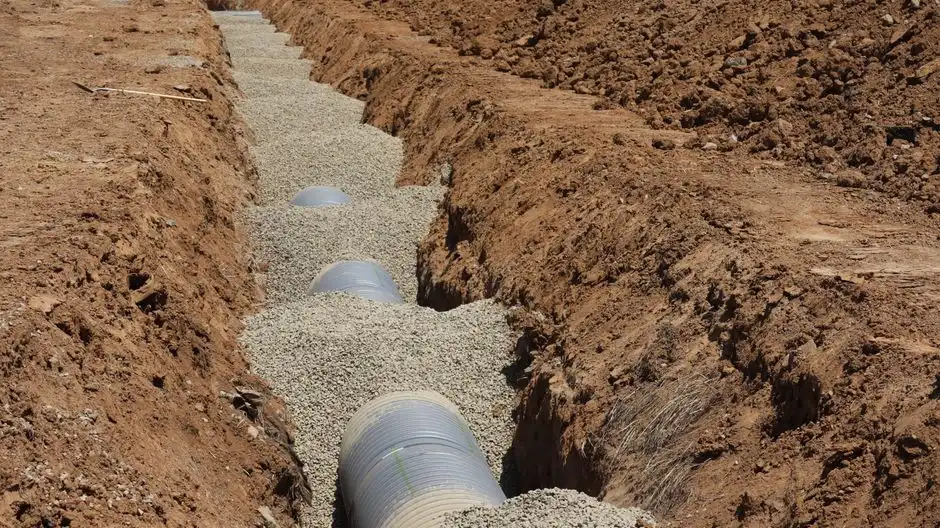
For flows up to 80 m³/h in compounds, hotels, schools, or worker camps, a buried A/O package unit such as the WSZ series is the lowest-footprint, no-operator option, with a 1–80 m³/h rating per the HydropureWater verified product catalog. For higher effluent quality targets such as agricultural reuse, restricted discharge, or constrained land area, an MBR integrated system at 10–2,000 m³/day with sub-1 μm PVDF filtration delivers near-reuse water in roughly 60% of the conventional footprint, per the same catalog. Where reverse osmosis polishing is specified, an ultrafiltration RO pretreatment skid at 2,000–40,000 L/h protects the RO membranes from fouling, and disinfection is covered by a chlorine dioxide disinfection generator at 50 g/h to 20,000 g/h or a UV-C skid to address chlorine-resistant organisms. Sludge is handled with a plate and frame filter press for sludge dewatering at 1–500 m², which is the standard route to a transportable cake for a domestic STP. The decision rule is straightforward: choose WSZ (A/O) for ≤80 m³/h and standard discharge; choose MBR for any reuse target or where footprint is constrained; add RO and ClO₂ or UV only when the Saudi Total Coliforms and turbidity bars are binding. For a complete cost and supplier comparison, the Khobar sewage treatment equipment supplier guide and the Dammam effluent treatment plant buyer's guide carry the commercial side, and the domestic sewage treatment in Mecca guide shows how the same logic applies in a stricter reuse context. Buyers evaluating suppliers should ask for documented performance on Total Coliforms, TSS, and turbidity against the Saudi 220 counts/100 ml coliform bar, not just generic BOD and COD curves, and should request a monitoring plan that mirrors the Al-Khobar influent, secondary, and final chlorinated sampling protocol.
| Selection driver | WSZ (A/O buried package) | MBR integrated system | Add-on modules |
|---|---|---|---|
| Rated flow | 1–80 m³/h (per HydropureWater verified product catalog) | 10–2,000 m³/day (per HydropureWater verified product catalog) | UF 2,000–40,000 L/h; ClO₂ 50 g/h to 20,000 g/h |
| Effluent target | Standard discharge | Reuse or constrained footprint | RO side stream + ClO₂/UV for Saudi coliform and turbidity bars |
| Footprint | Buried, landscaping on top, no operator | ~60% of conventional footprint | Modular skids |
| Sludge handling | Plate and frame filter press 1–500 m² (per HydropureWater verified product catalog) | Same | — |
| Compliance gap closed | BOD/COD reduction | TSS, turbidity, ammonia reduction | Total Coliforms ≤220 counts/100 ml; turbidity and TSS per Saudi limit |
Frequently Asked Questions
What flow range does a buried A/O package sewage treatment plant in Khobar actually cover?
The WSZ series is rated 1–80 m³/h, which covers most residential compounds, small hotels, and worker camps per the HydropureWater verified product catalog. For flows above that band, move to an MBR integrated system rated 10–2,000 m³/day.
What is the biggest compliance risk for a domestic STP in Khobar?
Total Coliforms. The Al-Khobar WWTP case study measured an average of 749 counts/100 ml against the Saudi limit of 220 counts/100 ml, so any RFQ must require proof of compliance on that specific parameter, not generic BOD and COD curves.
How should a buyer shortlist suppliers for a Khobar domestic STP?
Shortlist suppliers that can document performance against the Saudi 220 counts/100 ml Total Coliforms bar, can show an MBR or A/O reference train with sub-1 μm PVDF membranes where reuse is required, and that offer a sludge-dewatering plate and frame press in the same scope. Ask each bidder for a monitoring plan that mirrors the Al-Khobar influent, secondary, and final chlorinated sampling protocol.
Is reverse osmosis polishing required for reuse in Khobar?
The Al-Khobar WW