
Why a Textile Mill Needs a Drinking-Water-Grade Plant in 2026
Textile manufacturing encompasses pretreatments, dyeing, printing, and finishing operations that simultaneously consume large volumes of water and produce significant quantities of effluent containing hydrosulfides, color bodies, salts and auxiliary chemicals (Azanaw et al., Case Studies in Chemical and Environmental Engineering, December 2022). The same review documents that textile effluent reduces dissolved oxygen in receiving waters and blocks the passage of light through surface waters, which is why downstream discharge rules continue to tighten globally. Inside the mill fence, the inbound-water question is usually treated as a utility-purchase problem rather than a process-engineering decision.
Reframed for 2026, a "drinking water treatment plant" in a mill is an engineered inbound-water asset that turns municipal, surface, groundwater or recycled effluent into process-grade and potable water for four distinct consumers: dye-bath make-up, boiler feed, cooling-tower make-up, and worker potable supply. Each consumer has a different purity bar, but all four share a common pre-treatment backbone built around screening, DAF, media filtration, ultrafiltration and reverse osmosis. ZDHC water stewardship, brand-led supply-chain disclosure and tightening EU reuse rules have turned the inbound-water system into a board-level deliverable rather than a back-office purchase.
The Four Source-Water Options a Mill Can Draw From
The choice of raw water source dictates the equipment specification and downstream plant performance. Mills in 2026 typically draw from one of four sources, and the choice drives everything downstream.
Municipal potable supply offers the most consistent quality but the highest unit cost, which is why mills that can blend it with a cheaper source usually do. Surface water (river or reservoir) is low-cost but seasonally variable in turbidity and organic load, and requires the most robust pre-treatment. Groundwater is low in turbidity but frequently carries elevated TDS, iron and manganese that demand RO polishing before it can enter a boiler. Recycled effluent is the most price-attractive and ESG-defensible option, but it must be polished below the hydrosulfide and color envelope documented by Azanaw et al. (2022) before it can re-enter the dye house.
| Source | Typical quality profile | Cost position | Pre-treatment burden |
|---|---|---|---|
| Municipal potable | Consistent, already disinfected | High unit cost | Low — polishing only |
| Surface water (river/reservoir) | Variable turbidity, organics | Low | Heavy — DAF, media, UF |
| Groundwater | Low turbidity, often high TDS, Fe, Mn | Low to moderate | Iron removal + RO |
| Recycled effluent | BOD, COD, TDS, TSS, turbidity envelope per Azanaw et al. (2022) | Lowest marginal cost | MBR/UF + RO polishing |
Blended make-up — fresh source plus polished reuse — is now the default where discharge permits allow and where the mill has a stable reuse consumer such as a cooling tower. The blend ratio is a process decision, not a finance decision: it is set by what the boiler, dye bath and cooling system can each accept without fouling or shade drift.
Process Train: From Raw Water to Dye-Bath Make-Up
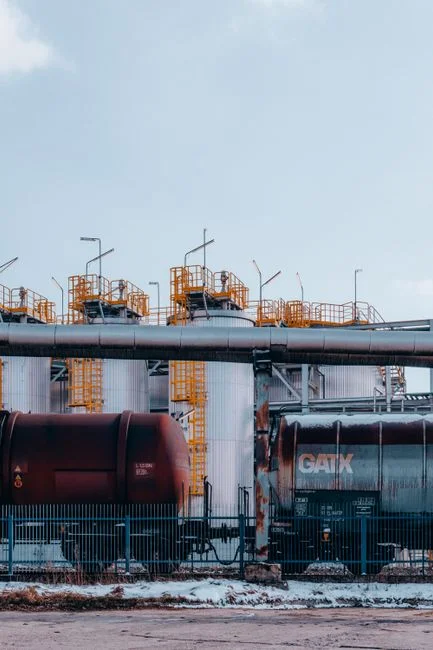
The following P&ID-grade sequence provides a blueprint for a new 2026 installation, with each stage designed to address specific textile-contaminant profiles.
Stage 1 — Intake screening. Rotary bar screen headworks protect downstream pumps and UF membranes from fibrous debris. Textile lint is a constant raw-water nuisance, especially where source water is drawn from open reservoirs exposed to airborne fibre.
Stage 2 — DAF pre-treatment. Textile-duty DAF pre-treatment removes suspended solids, oil and colloidal matter before the filtration stages. DAF is also the documented interface where hydrosulfide-bearing liquor is first separated from the water phase.
Stage 3 — Multi-media and activated-carbon filtration. Multi-media pre-filtration cuts turbidity and chlorine so the downstream membranes are not oxidised or blinded. Turbidity is one of the routinely monitored parameters in textile water (Azanaw et al., 2022) and the reason media filtration is non-negotiable ahead of UF.
Stage 4 — Ultrafiltration. 0.03 μm PVDF ultrafiltration removes bacteria, colloids and suspended solids. UF is the workhorse of the train: it protects RO, accepts variable feed quality, and runs an automatic backwash cycle that keeps hands-on operator time low.
Stage 5 — Reverse osmosis. Industrial RO polishing delivers the low-TDS water that boiler feed and high-quality dye baths require. Because TDS is one of the routinely monitored textile-water parameters (Azanaw et al., 2022), RO is increasingly inserted ahead of any boiler in a modern mill.
Stage 6 — Disinfection. Chlorine dioxide or UV disinfection finishes the train. UV is specifically chosen where chlorine-resistant organisms are a concern and where the mill wants to avoid chlorinated by-products in worker potable water.
| Stage | Unit operation | Contaminant removed | Textile-specific reason |
|---|---|---|---|
| 1 | Rotary bar screen | Lint, fibre, debris | Protects UF from blinding |
| 2 | DAF | Suspended solids, oil, colloids | First separation of hydrosulfide liquor |
| 3 | Multi-media + AC | Turbidity, chlorine | Pre-UF polishing; protects RO |
| 4 | UF (0.03 μm PVDF) | Bacteria, colloids, TSS | Stable RO feed, automatic backwash |
| 5 | RO | Dissolved salts | Boiler-grade and dye-bath TDS control |
| 6 | ClO₂ or UV | Microorganisms | Worker potable and process safety |
Reuse and Recycle: Closing the Mill's Water Loop
The plant doubles as a reuse hub when permeate from a membrane bioreactor is blended into the make-up tank. MBR for textile reuse loops delivers sub-1 μm filtration on activated-sludge effluent, which is the quality band cooling towers and rinsing sections can accept without shade or scale issues.
RO concentrate is not a discharge problem in a 2026 design — it is a stream-routing problem. Concentrate can go to a multi-effect evaporator, to a dedicated zero-liquid-discharge block, or back to the dyeing process at controlled ratios, where the salt load is sometimes a process asset rather than a liability. The decision is a process-engineering one, set by the dyestuff chemistry and the discharge permit envelope.
Any reuse scheme must still respect the BOD, COD, TDS, TSS, turbidity and pH envelope documented by Azanaw et al. (2022). Re-injecting polished water that breaches that envelope will re-contaminate the dye bath with salt, color or organic load and produce off-shade lots that are more expensive than the water saved.
UF vs RO vs MBR: Which Technology Belongs in Your Train?
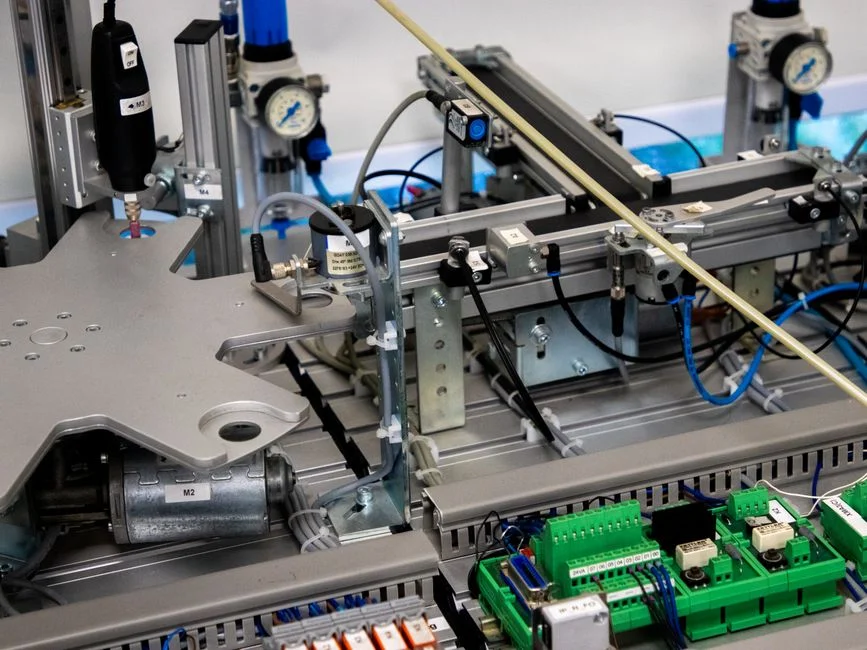
Most 2026 inbound-water plants combine all three technologies to serve specific process requirements. The engineering question is not which one to buy, but where each belongs in the train and which consumer it serves.
UF (0.03 μm PVDF) is the right barrier for turbidity, bacteria and colloids ahead of RO, but it does not remove dissolved salts. On its own, UF cannot supply low-TDS boiler feed, and a buyer who treats it as a complete answer is specifying a polishing stage, not a treatment plant. RO is mandatory where the consumer is a boiler, a high-ratio dye bath, or a worker potable loop with low-TDS requirements, because TDS is one of the routinely monitored textile-water parameters (Azanaw et al., 2022). MBR is the right choice for the recycle loop because it delivers sub-1 μm filtration on biologically treated wastewater and has a documented 60% footprint reduction versus conventional activated sludge.
For a deeper comparison of the COD/BOD removal side, see this 2026 buyer guide on the best COD/BOD removal technologies.
| Technology | Removes | Does not remove | Best-fit consumer in a mill |
|---|---|---|---|
| UF (0.03 μm PVDF) | Turbidity, bacteria, colloids, TSS | Dissolved salts | RO feed, rinsing, general process |
| RO | Dissolved salts, TDS, most organics | — | Boiler feed, high-ratio dye baths, potable |
| MBR (sub-1 μm) | BOD, COD, TSS on activated-sludge effluent | Dissolved salts | Cooling make-up, rinsing, blended feed |
Design rule: UF upstream of any membrane that salts would foul; RO where dissolved solids dictate the consumer's purity bar; MBR where the feed is biologically treated wastewater and footprint matters.
Specifying the Plant: Capacity, Compliance and 2026 Selection Criteria
Size the plant against peak wet-processing demand — dye house plus finishing plus boiler plus cooling plus potable — not against average daily flow. Peak load drives pump, media and membrane sizing; an averaging approach produces a plant that cannot hold specification on a Monday morning re-dyeing run.
Confirm the vendor can deliver a single integrated scope covering screening, DAF, media filtration, UF, RO and disinfection. Split-supply plants generate interface risk in textile duty, because each subcontractor will defend its own guarantee rather than the chain. Automatic chemical dosing and sludge handling should be on the same skid scope — for the dewatering side, a plate-frame filter press sized to the DAF sludge mass balance is the standard pairing. For regional context on textile wastewater design, the 2026 engineering guide to textile wastewater treatment in South Africa illustrates a comparable incoming-water envelope.
Require documented compliance with EU Drinking Water Directive 98/83/EC, the WHO Guidelines for Drinking-water Quality, and the local textile-effluent reuse rules that govern the mill — specifically the BOD, COD, TDS, TSS, turbidity and pH parameters listed by Azanaw et al. (2022). Ask for hydraulic capacity quoted in m³/day at a defined recovery rate, not a "production capacity" figure that hides the recovery assumption. Confirmation of UF, RO and MBR membrane replacement intervals, and a guaranteed permeate quality at year three, are non-negotiable. For sludge-side economics, the sludge dewatering machine selection guide covers the dewatering interface that any inbound-water plant has to budget for.
Frequently Asked Questions
What does a drinking-water-grade plant for a textile mill actually cost in 2026?
The research provided does not contain a CAPEX figure for a complete inbound-water train, so a defensible price cannot be quoted here. A buyer should request a budget-priced proposal on a defined m³/day basis at a stated recovery rate, broken into screening, DAF, media filtration, UF, RO, disinfection and chemical dosing line items, because the spread between a single-source integrated skid and a piece-meal supply is large enough to change the project's IRR. The proposal should also state the membrane replacement interval, the chemical consumption per m³ of permeate, and the guaranteed permeate quality at year three — these three numbers drive OPEX more
Frequently Asked Questions
What does a drinking water treatment plant for a textile industry actually include in 2026?
In 2026, a modern textile drinking water plant integrates multi-stage treatment including coagulation-flocculation, multi-media filtration (MMF), and activated carbon adsorption to remove dyes and surfactants. This is followed by advanced membrane filtration systems and final disinfection using ultraviolet (UV) sterilization combined with residual chlorination to ensure compliance with WHO drinking water standards.
Advanced facilities now incorporate real-time IoT monitoring sensors for turbidity, pH, and free chlorine levels. These systems are connected to automated PLC-based dosing units that adjust chemical injection rates instantly based on fluctuating raw water quality, ensuring consistent water safety for sensitive textile dyeing and finishing processes.
How much does a drinking-water-grade water treatment plant for a textile mill cost in 2026, and what is the typical lead time?
For a standard textile mill processing 500 cubic meters per day (m³/day), capital expenditure typically ranges from $250,000 to $600,000, depending on the complexity of source water contamination and the level of automation required. Operational costs average between $0.35 and $0.85 per cubic meter, inclusive of energy, membrane replacement, and chemical consumables.
Typical lead times from project kickoff to commissioning are between 16 and 24 weeks. This includes 4-6 weeks for design and engineering, 8-12 weeks for equipment manufacturing and procurement of long-lead items like specialized membranes, and 4-6 weeks for on-site installation and performance testing.
How do I choose between UF, RO and MBR when specifying a textile mill water plant?
Ultrafiltration (UF) should be selected as a primary pretreatment step to remove suspended solids, bacteria, and viruses, typically achieving a silt density index (SDI) of less than 3, which protects downstream equipment. Reverse Osmosis (RO) is mandatory when the specification requires significant reduction in total dissolved solids (TDS) and removal of trace synthetic organic compounds or dissolved dyes that UF cannot capture.
Membrane Bioreactor (MBR) technology is strictly utilized for the wastewater recovery side of the plant, not for primary drinking water production. MBR replaces conventional secondary clarifiers in effluent treatment, producing a high-quality permeate suitable for feeding into an RO system for final purification, effectively closing the loop on water reuse.
Can treated textile effluent be reused as drinking-quality process water without violating 2026 discharge and brand-compliance rules?
Yes, provided the treatment train includes advanced oxidation processes (AOP) such as ozone or hydrogen peroxide combined with high-rejection RO membranes. This configuration effectively removes recalcitrant pollutants, including persistent organic pollutants (POPs) and color-causing agents, meeting stringent ZDHC (Zero Discharge of Hazardous Chemicals) guidelines.
To remain compliant with 2026 brand standards, the system must maintain a permeate quality with TDS levels below 50 mg/L and non-detectable levels of heavy metals and carcinogenic amines. Continuous water quality monitoring and third-party verified water balance audits are required to satisfy international sustainability certifications and local environmental discharge permits.
Which textile-mill water parameters (BOD, COD, TDS, TSS, turbidity) drive the inbound-water specification?
Turbidity and Total Suspended Solids (TSS) are the primary drivers for pretreatment design, as levels exceeding 5-10 NTU will rapidly foul membranes and increase backwash frequency. TDS levels dictate the RO stage design, specifically the selection of membrane flux rates and the requirement for energy recovery devices to manage the osmotic pressure of high-salinity source water.
While BOD and COD are critical for effluent treatment, they serve as indicators of upstream contamination risk for drinking water supplies. Inbound water specifications for textile mills typically mandate COD levels below 10 mg/L and undetectable BOD levels to prevent biological growth within the distribution piping, which could otherwise compromise the integrity of the treated process water.