The Three-Layer Compliance Stack for a Sanderson-Area Mining or Metals Site
A mining or metals site near Sanderson, Texas does not face one pretreatment limit — it faces a stack of three, and the ceiling is set by whichever layer is most restrictive for each parameter. The federal floor is the EPA's categorical standard: 40 CFR Part 436 (Mineral Mining and Processing, promulgated 1975, amended 1976–1979) covers most sand-and-gravel, dimension-stone, and aggregate operations, while 40 CFR Part 440 (Ore Mining and Dressing, promulgated 1975, amended 1978/1979/1982/1988) covers metal-ore sites inside NAICS 2122 (EPA, 2026-02). Both are incorporated into NPDES permits, which means a discharge permit issued to a Trans-Pecos mine will cite the applicable subpart's numeric limits where they exist.
On top of the federal floor sits the Texas Commission on Environmental Quality, which administers the NPDES program in Texas and adds site-specific conditions to every permit it issues. For a Sanderson-area site that is not connected to a municipal sewer — and most small mines, quarries, and remote metals finishers in the Trans-Pecos are not — TCEQ also governs the indirect-discharge path. The third layer is the local pretreatment program: the receiving POTW reconciles the EPA categorical standard with locally established limits for heavy metals, pH, and TSS, and for a site that is on a sewer (or sending hauled waste to one) those local limits are the operator's day-to-day compliance number (EPA, 2026-02).
Sanderson-area operators also need to watch the reserved-subpart trap. Several 40 CFR Part 436 subparts are reserved with no current numeric effluent limits — Dimension Stone (A), Lightweight Aggregates (H), Lithium (U), Ball Clay (AH), Feldspar (AI), Talc/Steatite/Soapstone/Pyrophyllite (AJ), and Garnet (AK) (EPA, 2026-02). A small caliche or aggregate pit working a mineral that falls under a reserved subpart has no federal number to meet; the local sewer authority or TCEQ indirect-discharge limits effectively become the only ceiling. The same caveat applies to metals finishers: smelting is covered under 40 CFR Part 420 Subpart C (Iron and Steel) and 40 CFR Part 421 (Nonferrous Metals Manufacturing), not under Part 440, so a Sanderson-area shop doing electroplating or pickling needs to check those subparts separately. For a parallel pretreatment walkthrough on a fabricated-metals site in another region, see this fabricated-metals pretreatment playbook.
The Four Wastewater Streams a Sanderson-Area Site Has to Characterize
Buying a treatment train before the influent is characterized is the most expensive mistake a small operator can make, because mining and metals wastewaters are not interchangeable. The literature identifies four common stream categories that show up across the sector (AMPAC USA, 2025-09).
Acid mine drainage (AMD) is the most prevalent mining water quality problem: when sulfide minerals (pyrite, pyrrhotite) in waste rock and tailings are exposed to oxygen and water, oxidation produces sulfuric acid that leaches heavy metals — iron, manganese, copper, zinc, arsenic, cadmium — at concentrations far above regulatory limits (AMPAC USA, 2025-09). Process water from ore processing — flotation, heap leaching, cyanide gold extraction, chlorination circuits — typically runs high TDS and may carry cyanide, ammonia, or chloramines depending on the circuit. Tailings pond effluent is the liquid fraction of impoundments and contains fine solids, processing chemicals, and leached metals, and it is the regulatory focus after high-profile dam failures globally. Dewatering discharge is pumped from open pits or underground workings to maintain access; its composition varies by geology and can be relatively clean or heavily metal-loaded (AMPAC USA, 2025-09).
The practical consequence for a Trans-Pecos operator is that a copper leach pad, a caliche aggregate pit, and a small metals finishing shop near Sanderson generate fundamentally different wastewaters and cannot share a single default treatment train. Influent must be characterized stream by stream — and ideally blended only after each stream's profile is known — before a supplier is engaged.
The Six-Step Treatment Train That Closes the Gap to Sewer Quality
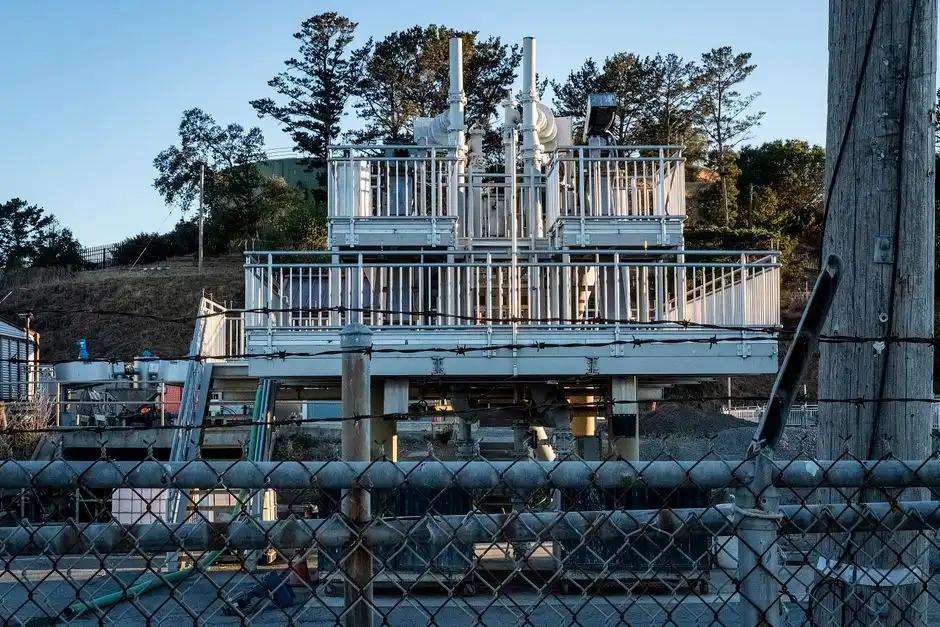
The defensible unit-operation sequence for a Sanderson-area site discharging to sewer or under a TCEQ indirect-discharge authorization runs in six steps, and each step has a specific basis-of-design input the operator should pin down before asking for a quote. The sequence is supported across the literature (Genesis Water Technologies, 2025-11; PMC review, 2024-02; AMPAC USA, 2025-09; LiqTech, 2025-08).
- pH correction. Raise pH so dissolved metals precipitate as hydroxides; lime raise to pH >10 before thickening to drop out gypsum (PMC review, 2024-02). An automatic chemical dosing skid with PLC control and pre-wiring is the standard package for lime, coagulant, flocculant, and pH-adjuster injection.
- Coagulation. Aggregate suspended solids and fine metal particles into settleable or floatable flocs; the coagulant and flocculant choice has to match the floc density that drives the next separation step (PMC review, 2024-02).
- Solids separation. A DAF system for buoyant floc or oily/fines streams; a lamella clarifier for sludge-volume and footprint-constrained metal hydroxide sludge (Genesis Water Technologies, 2025-11).
- Multimedia filtration. Drop turbidity and colloids to protect downstream membranes; specify target SDI after the filter, not just inlet turbidity, on the multi-media filter datasheet.
- Membrane polish. A UF system for fine colloids, then an industrial RO system for dissolved salts and trace metals, rated at >99% rejection of dissolved metals and salts; 50–70% recovery on AMD feed, 70–85% as the RO stage of a ZLD train (AMPAC USA, 2025-09).
- Monitoring and reporting. PLC/HMI with continuous pH, flow, and conductivity, plus POTW self-monitoring records (LiqTech, 2025-08).
The engineering rationale is straightforward: AMD and process streams together drive the need for pH correction and metals precipitation, and where salts persist — typical of any circuit with a heap-leach, chloride, or sulfate background — a membrane polish is what gets the residual dissolved load under the discharge limit. The table below summarizes the basis-of-design input for each step.
| Step | Unit operation | Basis-of-design input the supplier needs |
|---|---|---|
| 1. pH correction | Chemical dosing skid | Influent pH range; target pH setpoint; lime/coagulant/flocculant selection |
| 2. Coagulation | Inline mixer / floc tank | Floc density target; coagulant and flocculant dose |
| 3. Solids separation | DAF or lamella clarifier | Peak flow (m³/h); floc type (buoyant vs heavy); oil/fines loading |
| 4. Multimedia filtration | Multi-media filter | Inlet turbidity; target SDI to RO |
| 5. Membrane polish | UF + RO | Feed TDS; target recovery %; rejection specification; antiscalant selection |
| 6. Monitoring | PLC/HMI, instrumentation | Reporting parameters (pH, flow, conductivity); data retention period |
For parallel reference on biological options for some of these streams, see this comparison of MBR vs conventional activated sludge for mining wastewater.
Choosing DAF vs Lamella — Which One Fits a Sanderson-Area Site
The clarification-stage decision is the one a small operator will face first, and it is the one that suppliers most often get wrong by recommending a stock unit. The published comparison in the sector frames the choice around floc behavior and site constraints (Genesis Water Technologies, 2025-11; HydropureWater JY series basis).
- Pick a DAF system when the floc is buoyant or the influent carries oils and fines that float; this is the relevant case for process-water streams with surfactant or reagent residues, or where air-flotation thickening is already in use upstream (Genesis Water Technologies, 2025-11).
- Pick a lamella clarifier when the constraint is sludge volume and footprint, the floc is heavy (typical of metal hydroxide precipitation at pH >10), and there is no oil loading; inclined-plate designs in this service run in the 20–40 m/h surface-loading range that the HydropureWater JY series basis reflects.
The datasheet spec to request differs by unit. For DAF, the air-to-solids ratio and polymer compatibility drive performance; for a lamella, plate spacing and underflow solids concentration are the design numbers. A common mistake is to quote on nameplate flow only and let the supplier pick the unit; the operator should specify which one fits the chemistry and ask for a matched scope. Neither unit alone is sufficient when dissolved salts and trace metals are above the discharge limit — both feed the downstream multi-media filter and RO polish, and the supplier scope should tie the chemistry dosing skid, the clarification stage, and the membrane skid into a single integrated control system. The full head-to-head for the mining sector is in this DAF vs lamella clarifier for mining wastewater factory guide, and the canonical product references are the DAF system and the lamella clarifier.
| Decision factor | DAF system | Lamella clarifier |
|---|---|---|
| Floc type | Buoyant (below water density) | Heavy (metal hydroxide) |
| Influent character | Oils, fines, reagent residues | No oil loading; high solids |
| Footprint constraint | Larger footprint, shallow depth | Compact inclined-plate design |
| Key datasheet spec | Air-to-solids ratio; polymer compatibility | Plate spacing; underflow solids % |
| Sludge output | Float, typically 3–6% DS | Underflow, typically 2–4% DS |
| Best fit for Sanderson sites | Process water with reagent residues | AMD with pH>10 hydroxide precipitation |
Reuse Economics and the RFQ Basis-of-Design Checklist
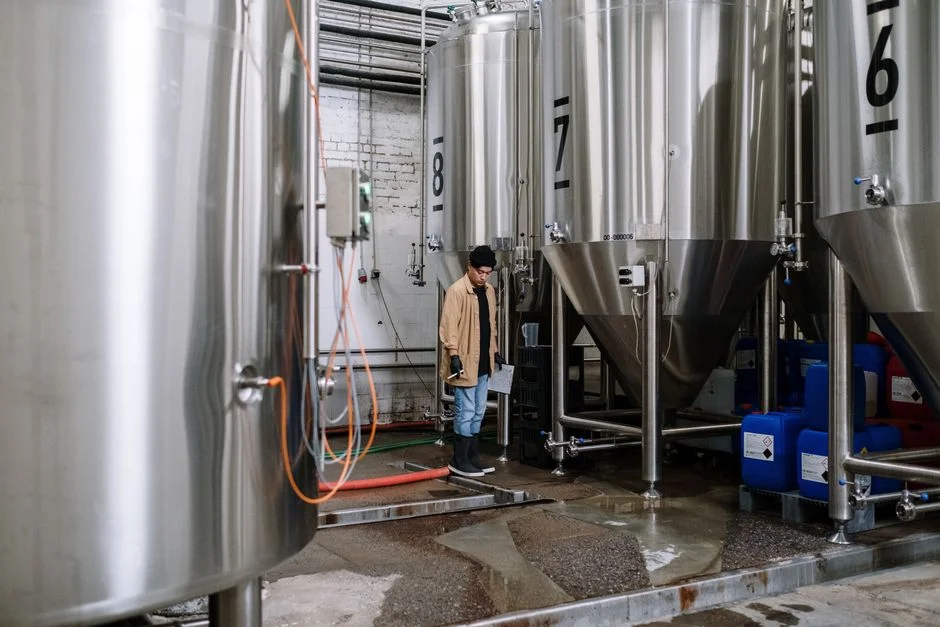
For a mine operating near sensitive ecosystems or in a water-stressed catchment, RO-enabled reuse can reduce freshwater consumption by 40–60% versus once-through operation (AMPAC USA, 2025-09). Where zero-liquid discharge applies — increasingly required for tailings facility decommissioning — RO handles the bulk water recovery (typically 70–85%) before the more energy-intensive thermal stages handle the remaining concentrate (AMPAC USA, 2025-09). The sizing logic is therefore "reuse as much as economics allow, then polish the rest to sewer quality," and equalization plus pump selection should be sized to peak flow, not average, because peak drives basin volume and pump head (LiqTech, 2025-11).
The supplied research does not publish price points for a complete pretreatment train, so a buyer has to request a quotation against their own basis of design rather than rely on a published range. What goes into that RFQ is the five-line package a Sanderson-area operator should hand a supplier so the quotes are comparable:
- Peak and average flow in m³/h, with the diurnal pattern noted.
- Influent pH and metal profile from a representative sampling round (at minimum: Fe, Mn, Cu, Zn, As, Cd, plus TDS and sulfate for AMD streams).
- The local sewer authority discharge limits for metals, pH, and TSS — or, for a non-sewered site, the TCEQ indirect-discharge authorization limits.
- The desired recovery percentage if reuse is in scope, with the destination of the permeate specified (grinding circuit, dust suppression, etc.).
- The basis of design for each train step: floc density, target SDI to RO, RO recovery and rejection spec, and sludge cake dryness target for the filter press.
On supplier selection, confirm the proposed scope ties the chemistry dosing, the PLC/HMI controls, and the membrane skid into a single integrated control system, and that the supplier has installed the same unit operations — DAF or lamella, multi-media filter, UF, RO, and sludge dewatering — at flows in the same order of magnitude as the Sanderson site (LiqTech, 2025-11). For a parallel framing of the same RFQ logic in another region, see the Halo-area mining and metals pretreatment playbook.
Frequently Asked Questions
What does a six-step mining wastewater pretreatment train cost for a small site near Sanderson?
The supplied research does not publish price points for a complete pretreatment train, so any quote should be requested against a buyer-specific basis of design rather than a published range. The actionable check is to send the five-line RFQ package above (peak/avg flow, influent profile, local discharge limits, recovery target, and per-step basis of design) to at least three suppliers and require each quote to itemize the chemistry dosing skid, the clarification stage, the multi-media filter, the UF/RO membrane skid, the sludge dewatering unit, and the PLC/HMI scope as separate line items — that is the only way to make quotations comparable.
How do I qualify a supplier before awarding a pretreatment train quote?
The actionable check is to require documented references for the same unit operations — DAF or lamella, multi-media filter, UF, RO, and sludge dewatering — at flows within the same order of magnitude as the Sanderson site, and to confirm in writing that the proposed scope ties the chemistry dosing, the PLC/HMI controls, and the membrane skid into a single integrated control system (LiqTech, 2025-11). A supplier that cannot show both is a documentation risk, not just a technical one.
Which 40 CFR subpart applies to a caliche or aggregate pit near Sanderson?
It depends on the mineral. 40 CFR Part 436 covers mineral mining and processing, but several subparts — Dimension Stone (A), Lightweight Aggregates (H), Lithium (U), Ball Clay (AH), Feldspar (AI), Talc/Steatite/Soapstone/Pyrophyllite (AJ), and Garnet (AK) — are reserved with no current numeric effluent limits (EPA, 2026-02). The actionable check is to confirm the subpart status in 40 CFR Part 436 before sizing any train; if the subpart is reserved, the local sewer authority or TCEQ indirect-discharge limits become the binding ceiling.
What is the compliance risk if my site's wastewater streams are not characterized separately before quoting?
Buying a treatment train against an uncharacterized influent is the single largest source of compliance risk for a small operator, because AMD, process water, tailings pond effluent, and dewatering discharge have fundamentally different profiles and cannot share a default train (AMPAC USA, 2025-09). The actionable check is to require a representative sampling round for each stream — at minimum pH, TDS, sulfate, and the metals expected from the ore body — before any supplier is engaged, and to attach that data to the RFQ as a non-negotiable attachment.