Why Kumasi Needs Decentralised Domestic Sewage Treatment in 2026
Domestic sewage treatment in Kumasi in 2026 is dominated by decentralised package and on-site systems because the central Kumasi Wastewater Treatment Plant (KWTP) cannot serve most compounds, peri-urban estates, schools, and hospitals. A 2023 Heliyon case study on KWTP sludge flagged real constraints on agricultural recycling, so any new STP must plan for sludge handling, not just effluent. Buyers should match influent strength to a verified Ghana-EPA-aligned process — A/O package, MBR, or constructed wetland — then specify dewatering and safe sludge reuse in the contract. Vermifiltration work in Zimbabwe and constructed-wetland + MFC research in IntechOpen chapters confirm that low-O&M, decentralised systems are credible for domestic loads, provided design is site-specific.
The 2023 Heliyon case study on the Kumasi Wastewater Treatment Plant examined sewage sludge quality at the central facility and concluded that the soil microbial biomass — not just nutrient content — is the binding indicator of risk when that sludge is recycled to agriculture (Heliyon, 2023). That finding matters for a buyer in 2026 because it shows the central plant is already being scrutinised for its own reuse pathway; any compound or hospital that simply assumes its sludge can follow the same route inherits that same scrutiny without the central plant's scale or staffing. For peri-urban Kumasi, the alternative to a compliant decentralised plant is documented in a World Bank–hosted study on wastewater use in informal irrigation, which establishes that under-treated domestic sewage is already reaching food-growing areas around the city (World Bank, as catalogued in OpenAlex W1519952459). Compliant on-site treatment is therefore not a preference; it is the public-health baseline.
For compounds, schools, hotels, and small hospitals outside the central catchment, the only realistic 2026 path is on-site or package STPs sized to actual occupancy and flow peaks. The IntechOpen chapter on integrating constructed wetlands with microbial fuel cells frames domestic sewage as a treatable, energy-bearing stream rather than a waste (IntechOpen, doi:10.5772/intechopen.75658). That framing justifies capital investment in properly designed biological systems — package A/O, MBR, or nature-based — instead of relying on soakaways or septic-only solutions, both of which leave the same informal-irrigation problem in place. The rest of this article gives a Kumasi engineer or developer the tools to make that choice defensibly. For a parallel discussion of rural contexts, see this rural sewage treatment in Ghana guide.
Characterising Domestic Sewage in Ghanaian Compounds and Peri-Urban Estates
A Kumasi designer cannot select a treatment process without a defensible description of the influent. The supplied research does not return Kumasi-specific numeric ranges for BOD, COD, TSS, or nutrients, so any table of "typical" values would be invented. What the research does support is the qualitative shape of the problem and the parameters a designer must still measure on site.
Domestic sewage in Ghanaian compounds, schools, and small institutions is characterised by high diurnal peaks — mornings and evenings dominate — and by infiltration during the rainy season when soakaways, joints, and manholes admit clean water. Informal settlements contribute significant grit, fibre, plastics, and food waste to the stream, which is why headworks screening is non-negotiable regardless of the downstream process. The Zimbabwe vermifiltration study (IntechOpen, doi:10.5772/intechopen.103920) shows the kind of septic-tank characterisation a designer still has to perform on a Kumasi site: filtration load, hydraulic loading rate, and organic loading rate, then a comparison of the filtered effluent against statutory discharge limits. The Heliyon KWTP sludge study (Heliyon, 2023) underlines that total solids, nutrients, and microbial loading drive both the biological stage and the downstream sludge train — influent characterisation cannot stop at BOD/COD.
At the head of every decentralised plant, a rotary mechanical bar screen removes rags, plastics, and grit that would otherwise destroy aerators and clog pumps. The table below lists the parameters a Kumasi buyer must obtain from a site audit or the supplier before sizing any of the systems discussed later in this article. None of these rows should be filled from a generic textbook; they are inputs, not outputs.
| Parameter | Why it matters in Kumasi | Source of the value |
|---|---|---|
| Average dry-weather flow (m³/day) | Sizes biological volume and sludge production | Site audit or metered existing discharge |
| Peak hourly flow (m³/h) | Sets hydraulic capacity of screening and equalisation | Site audit or supplier calculation from occupancy |
| BOD₅ / COD load (kg/day) | Drives aeration tank sizing and sludge yield | Site sampling; Kumasi-specific values not in supplied research |
| Total suspended solids (mg/L) | Determines headworks spacing and sludge-handling sizing | Site sampling |
| Temperature range (°C) | Affects nitrification rate and wetland plant selection | Local meteorological data |
| Rainfall / infiltration allowance | Prevents hydraulic overload in wet season | Hydraulic audit of upstream sewer or septic |
Technology Family 1: Passive and Nature-Based Systems
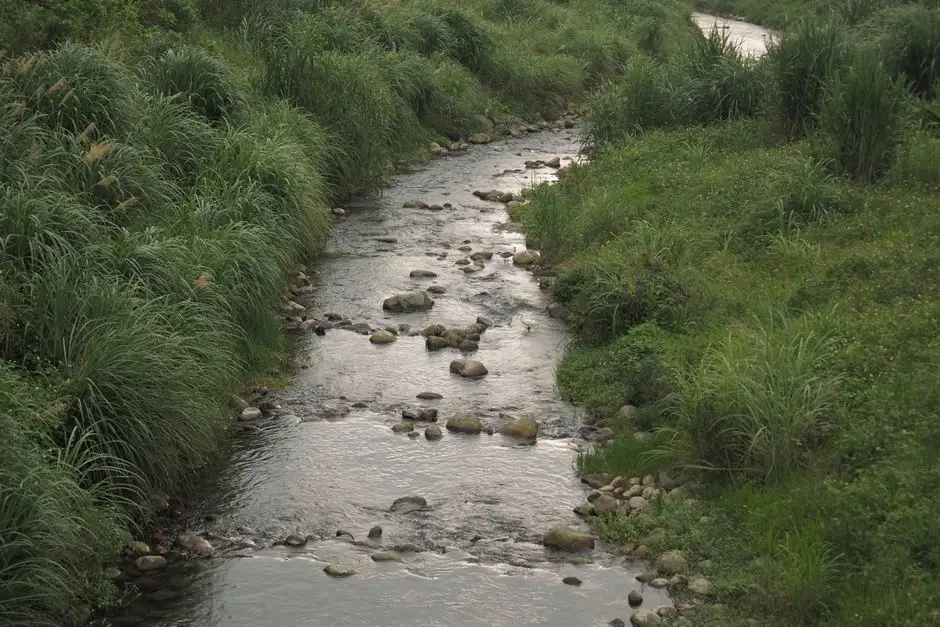
Passive and nature-based systems are appropriate where land is available, O&M skill is limited, and the operator can tolerate a larger footprint. Two technology anchors in the supplied research support their use on domestic streams: a constructed wetland integrated with a microbial fuel cell (IntechOpen, doi:10.5772/intechopen.75658), which targets both treatment and low-grade electricity recovery, and vermifiltration (IntechOpen, doi:10.5772/intechopen.103920), which combines filtration with earthworm activity on septic-tank effluent and has been benchmarked against statutory discharge limits in a Southern African context.
For Kumasi, a constructed wetland with or without MFC integration suits rural schools, eco-lodges, and large compounds that have unused land and tolerant neighbours. Vermifiltration is the right answer for very small domestic flows where the operator wants a low-expertise, decentralised unit and accepts that the discharge will be compared line-by-line against the regulator's statutory instrument. The land-area penalty versus a package plant is the main trade-off: a constructed wetland typically needs several square metres per cubic metre per day, where an A/O package plant needs a fraction of that. Buyers should also confirm plant species, hydraulic profile, and mosquito management with the supplier, because Kumasi rainfall and temperature are not the same as the research sites.
The supplied research documents the technologies but does not give Kumasi-specific hydraulic or organic loading rates. Those values must be confirmed with the supplier for local temperature and rainfall conditions before the design is frozen. For a deeper process description, see this primer on how a constructed wetland works.
| System | Research anchor | Best-fit site in Kumasi | Key buyer question |
|---|---|---|---|
| Constructed wetland (CW) | IntechOpen CW + MFC chapter (doi:10.5772/intechopen.75658) | Large compound, school, eco-lodge with land | What HLR and OLR are you designing to for Kumasi temperature? |
| CW + microbial fuel cell (MFC) | IntechOpen CW + MFC chapter (doi:10.5772/intechopen.75658) | Research / demonstration site with power-monitoring interest | Is the MFC intended for net power or for monitoring? |
| Vermifiltration | IntechOpen vermifiltration chapter (doi:10.5772/intechopen.103920) | Small community or rural school with limited O&M | How is the vermifilter protected against flooding in the wet season? |
Technology Family 2: Package and Buried STPs (A/O and SBR Class)
Package and buried A/O plants are the dominant 2026 procurement path for Kumasi compounds, hotels, and small institutions. The WSZ series underground package sewage treatment plant in the HydropureWater catalogue is a representative example: it combines anoxic and aerobic contact oxidation with sedimentation and disinfection in a single buried unit, runs fully automated with no on-site operator, and is rated across the 1–80 m³/h class for residential communities, hotels, hospitals, factories, and rural areas (HydropureWater product catalogue). It can be installed below grade with landscaping above, or mounted on a trailer for mobile deployment on camps and temporary sites.
These units dominate the Kumasi decentralised market because the footprint is small, the unit disappears below a lawn or car park, the control panel is unattended, and the process tolerates the intermittent flow patterns of compounds and schools. The process flow inside a typical WSZ-class unit is screening → anoxic → aerobic → sedimentation → disinfection. Screening at the headworks is non-negotiable: rags, plastics, and grit destroy downstream aerators and pumps, which is why every package plant in this class should be paired with a rotary mechanical bar screen at the inlet. The anaerobic hold in the anoxic zone also denitrifies a portion of the nitrified liquor returned from the aerobic zone, which is what differentiates an A/O package from a plain aerated septic tank.
The supplied research does not give Kumasi-specific design parameters for these units, so the buyer must obtain peak and average flow, BOD/COD load, effluent target, available head, and desludge cycle from the supplier before signing. The table below summarises the technology fit; the numbers are a process description, not a Kumasi design output.
| Aspect | Typical A/O buried package (WSZ class) | Buyer must confirm |
|---|---|---|
| Flow range | 1–80 m³/h (HydropureWater catalogue) | Site peak and average flow, including infiltration |
| Process stages | Screening → anoxic → aerobic → sedimentation → disinfection | Disinfection chemistry and contact time |
| Footprint | Buried; landscaping above grade; trailer option for mobile use | Setback from buildings and water table |
| Operator | None on site; control panel only | Who responds to alarms and how fast? |
| Sludge output | Surplus activated sludge to sludge holding | Desludge cycle and downstream dewatering |
Technology Family 3: MBR and Tertiary Reuse Systems
Where the buyer wants near-reuse quality — larger hotels, hospitals, estate masterplans reusing for irrigation or toilet flushing — an MBR is the next step up. The HydropureWater MBR membrane bioreactor combines submerged PVDF activated-sludge with membrane filtration in a single tank, delivering sub-1 μm solids removal in roughly 60% of the footprint of a conventional activated-sludge plant of the same throughput, and is rated across the 10–2,000 m³/day class (HydropureWater product catalogue).
MBR effluent can be polished further for reuse. A UV steriliser handles microbial inactivation without residual chlorine, which is the right answer for irrigation reuse where chlorine residuals damage crops. Where the Ghana EPA / Water Resources Commission regime in force at the time of commissioning calls for a residual disinfectant in a closed reuse loop — toilet flushing, for example — a chlorine dioxide generator is the alternative. The IntechOpen chapters on CW + MFC (doi:10.5772/intechopen.75658) and on vermifiltration (doi:10.5772/intechopen.103920) are academic anchors that support advanced biological polishing on domestic streams, which validates MBR adoption where the budget and O&M allow.
Three Kumasi-specific risks need pricing into the contract: membrane cleaning chemicals and their local availability, membrane replacement intervals in a high-temperature, variable-power environment, and power continuity. The supplied research gives the technology but not Kumasi operating cost data, so the buyer must request those numbers from the supplier before signing.
| Aspect | MBR (PVDF submerged) | Buyer must confirm |
|---|---|---|
| Throughput class | 10–2,000 m³/day (HydropureWater catalogue) | Site peak and average flow with reuse demand |
| Effluent quality | Sub-1 μm filtration, low TSS, near-reuse grade | Target reuse and which EPA / WRC limits apply |
| Footprint vs. conventional | ~60% of equivalent activated-sludge plant | Site footprint and tank burial depth |
| Polishing options | UV steriliser or ClO₂ generator | Residual requirement for the intended reuse |
| Operating risks | Cleaning chemicals, membrane life, power continuity | Spares stocking and emergency-power plan |
Sludge Management: The 2026 Question the KWTP Study Forces
The Heliyon 2023 case study on the Kumasi Wastewater Treatment Plant concluded that the binding constraint on agricultural reuse of sewage sludge is sludge quality, and that soil microbial biomass is the most useful indicator of that risk to soils and plants (Heliyon, 2023). That finding is the most important 2026 input for any Kumasi buyer who plans to discharge sludge to land, give it to a farmer, or send it to a composter. A decentralised plant that produces the same kind of sludge as the central plant inherits the same risk profile — and the same scrutiny.
The first response is to reduce sludge volume upstream. A high-efficiency sedimentation tank (lamella clarifier) thickens sludge before dewatering, which reduces chemical consumption downstream and cuts the volume that has to be transported. The second response is mechanical dewatering to a transportable cake, for which a plate and frame filter press is a representative option across the 1–500 m² filtration area class used for municipal sludge (HydropureWater product catalogue). For a compound or hospital producing tens of kilograms of dry solids per day, a small filter press sized to that throughput is a more defensible answer than a drying bed, which is exposed to Kumasi rainfall.
The contract language the buyer should demand in 2026: expected sludge volume per month, target dry-solids percentage after dewatering, intended reuse pathway or disposal route, and written confirmation that the design responds to the soil-and-plant risk profile described in the Heliyon case study (Heliyon, 2023). A supplier who cannot answer those four questions is not yet ready to deliver a Kumasi-compliant plant. The table below maps sludge trains to site conditions; the research supports the technology choices but does not give Kumasi-specific cake-solids targets, which the buyer must obtain from the supplier.
| Sludge train stage | Representative equipment | Buyer must confirm for Kumasi |
|---|---|---|
| Thickening | Lamella clarifier / high-efficiency sedimentation tank | Influent solids and polymer dose |
| Dewatering | Plate and frame filter press (1–500 m² class) | Target cake dry-solids % and cycle time |
| Storage / transport | Sealed skip or sludge bay | Rainfall protection and haulier route |
| End use | Documented disposal or reuse pathway | Acceptance from farmer, composter, or landfill operator |
Kumasi-Specific Decision Matrix and 2026 Sourcing Checklist
The technology is mature; the 2026 question for a Kumasi buyer is execution and sludge. The decision matrix below is qualitative — the supplied research does not give site-specific numeric thresholds — and is meant as the first filter a developer, estate manager, or hospital engineer applies before a supplier meeting.
| If your site has… | And you need… | And your O&M is… | Then the leading option is… |
|---|---|---|---|
| 1–80 m³/h, small footprint, no operator | Compliant discharge, no reuse | Unattended control panel | Buried A/O package with rotary bar screen upstream |
| 10–2,000 m³/day, irrigation or toilet reuse | Near-reuse effluent quality | Trained plant operator | MBR + UV or ClO₂ polishing |
| Land available, low flow, eco-sensitive site | Low-energy, low-chemical operation | Gardener-level skill | Constructed wetland, optionally with MFC |
| Very small community or rural school, limited O&M | Statutory-instrument-compliant discharge | Minimal skill | Vermifiltration with documented performance |
Reuse intent should default to at least on-site irrigation where land allows, to break the informal-discharge cycle documented in the World Bank–hosted study on wastewater use in informal irrigation in urban and peri-urban Kumasi (OpenAlex W1519952459). For a 2026 supplier-selection checklist, the procurement officer should demand: verified references in Ghana, evidence of after-sales spares holding, control-panel documentation and settings, a written training plan, and a written willingness to specify to Ghana EPA expectations. Kumasi buyers who write sludge handling and reuse pathway into the contract in 2026 will avoid the trap the Heliyon KWTP study (Heliyon, 2023) documents at the central plant.
Frequently Asked Questions
What is the most affordable compliant option for a small Kumasi compound in 2026?
For a small compound without on-site reuse, a buried A/O package plant paired with a rotary bar screen at the inlet is the lowest-capex compliant option in the 1–80 m³/h class (HydropureWater product catalogue). The supplied research does not provide a Kumasi-specific installed price, so the buyer should request a site-specific quotation that includes headworks, desludge cycle, and the first year of spares — not a headline unit price alone.
How do I choose between an MBR and a buried A/O package for a hotel or hospital in Kumasi?
Choose an MBR when the site needs reuse-quality effluent for irrigation or toilet flushing, has a trained operator, and can tolerate the higher operating cost of membrane cleaning and replacement. Choose a buried A/O package when the site needs compliant discharge to the environment or sewer, has limited footprint, and runs unattended. Confirm the Ghana EPA and Water Resources Commission regime in force at the time of commissioning before specifying reuse, because the rules in 2026 may not be the same as the rules at handover.
How should sludge be handled to satisfy Ghana EPA expectations in 2026?
Specify expected sludge volume per month, target dry-solids after dewatering, intended reuse pathway or disposal route, and written confirmation that the design responds to the soil-and-plant risk profile described in the Heliyon case study on the Kumasi Wastewater Treatment Plant (Heliyon, 2023). Mechanical dewatering with a plate and frame filter press is the standard answer for decentralised municipal sludge in the 1–500 m² filtration-area class (HydropureWater product catalogue).
What should I ask a supplier to prove they can deliver in Kumasi?
Ask for verified references in Ghana, evidence of after-sales spares holding, control-panel documentation and settings, a written training plan, and a written willingness to specify to Ghana EPA expectations. Ask also for the membrane or membrane-equivalent replacement interval in months and the cleaning-chemical supply route, because Kumasi operating cost data is not in the supplied research and only the supplier can supply it.