Why Dumas-area food and beverage plants need pretreatment before the sewer
Food and beverage processors near Dumas, Texas cannot send process wastewater to the local Publicly Owned Treatment Works (POTW) without on-site treatment. ALAR, a manufacturer of F&B wastewater treatment equipment, states that "wastewater generated in food and beverage operations cannot be discharged untreated" and that the sector "faces strict limits on BOD, TSS, pH, and nutrient levels," with hauling untreated waste off-site being "seriously expensive" (alar, alarcorp.com/food-dairy/). The cost of non-compliance is therefore a combination of permit penalties, surcharges, and hauling fees, not just a single fine.
Regulatory pressure on this sector continues to tighten. Integrated Water Services describes "increasingly stringent wastewater regulations" in the food and beverage industry and notes that "regulatory bodies, such as the Environmental Protection Agency (EPA), continuously review and update guidelines to address environmental concerns and protect water resources" (Integrated Water Services, integratedwaterservices.com, 2023). The same source notes that the Texas Commission on Environmental Quality (TCEQ) "regulates wastewater discharges" with a focus on "effluent quality, discharge permits, and compliance with state standards," and that "in areas facing water stress, emphasis is on water conservation and responsible wastewater management" (Integrated Water Services, 2023). Dumas sits in the Texas Panhandle, a region the source explicitly identifies as water-stressed, which pushes reuse and pretreatment economics above the level a Gulf Coast or East Texas plant would face.
The economic picture is dominated by two cost vectors: the price of fresh groundwater drawn for plant use, and the sewer discharge surcharges and sampling requirements imposed by the serving POTW. A pretreatment system has to beat the combined cost of those two vectors or it will not get approved internally. Request the current local sewer rate and any BOD/TSS surcharges from the serving POTW before sizing equipment; that number is the economic ceiling for the project.
The regulatory stack: federal categorical standards, TCEQ, and your local POTW permit
Three layers govern what a Dumas-area F&B plant can discharge to the sewer, and the engineer has to know which document is binding at any given moment.
Layer one is the federal framework. All industrial discharges into a POTW are governed by 40 CFR Part 403, the General Pretreatment Regulations, which define Significant Industrial User (SIU) status, categorical versus non-categorical limits, and reporting. Layer two is the sector-specific categorical standard: food and beverage processors fall under 40 CFR Part 432, which is divided into subcategories such as meat products, dairy products, grain mill products, canned and preserved fruits and vegetables, and beverages. Each subcategory carries its own parameter set and limit values. Do not rely on a remembered number for any of these limits; pull the current 40 CFR Part 432 subcategory table for the plant's specific SIC code before any design work begins.
Layer three is the state overlay. TCEQ operates the Texas pretreatment program on top of the federal framework, with attention to effluent quality, permit compliance, and Texas Surface Water Quality Standards. Integrated Water Services notes that TCEQ "regulates wastewater discharges" and that in stressed regions "emphasis is on water conservation and responsible wastewater management" (Integrated Water Services, 2023). TCEQ also runs the authorization that allows a POTW to enforce its local limits, so the state effectively delegates day-to-day enforcement downward.
The binding number on any given parameter is almost always the local POTW discharge permit, not the federal categorical value. A POTW can set limits stricter than 40 CFR Part 432 to protect its receiving stream or its own activated sludge system. Before sizing any unit operation, the design engineer must request the current local limits (BOD, TSS, FOG, ammonia, total phosphorus, pH range, maximum daily and instantaneous flow, sampling points, and reporting frequency) directly from the serving POTW. The 40 CFR Part 432 value is a ceiling; the POTW permit is the floor of the design.
The pollutant profile that drives pretreatment design for F&B plants
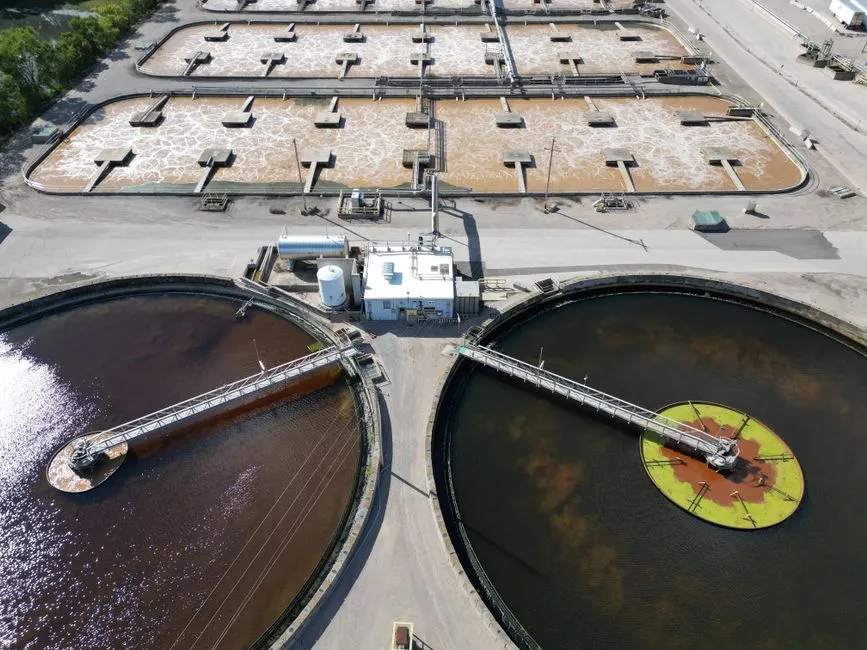
Treatment-train design starts with the influent, not the equipment catalog. ALAR's process narrative for F&B wastewater identifies five contaminant groups that consistently appear across meat, dairy, beverage, and grain sub-sectors (alarcorp.com/food-dairy/).
First, fats, oils, and grease (FOG) from meat and poultry processing, which "can clog pipes and interfere with biological treatment unless properly removed" (ALAR, alarcorp.com/food-dairy/). Second, sugars and starches from beverage and confectionery lines, which are "easily degradable" and "can cause rapid bacterial growth, increasing BOD levels" (ALAR). Third, proteins from dairy and meat, which contribute to high BOD and create "foaming or odor issues during treatment" (ALAR). Fourth, cleaning-in-place (CIP) chemicals — detergents, sanitizers, and residual biocides — that "can alter pH and affect downstream biological processes" and must be managed as a segregated stream (ALAR). Fifth, suspended solids — pulp, seeds, and grain fragments — that "require clarification and solids removal before discharge" (ALAR).
The Texas Panhandle adds a sixth layer. Plants in this region frequently draw on high-mineralization groundwater, which means iron, hardness, and total dissolved solids (TDS) enter the waste stream through plant wash water, boiler blowdown, and cooling-tower bleed. When the treatment train includes a membrane stage (MBR, UF, or RO), these minerals foul membranes and shorten cleaning intervals. A site water analysis from the actual production well, not a regional average, is the input a buyer must obtain before specifying any membrane-based polishing step. The Panhandle overlay also sharpens the reuse case: a plant that can produce reuse-quality water from its waste stream offsets both sewer surcharges and fresh groundwater pumping costs.
Pretreatment equipment that consistently gets F&B plants under their discharge limits
The treatment train is staged, and each unit solves one or two specific problems. The engineer should not buy a "package" plant; the train has to be assembled from the actual influent data and the actual local discharge limits.
Headworks first. A rotary mechanical bar screen for headworks protection removes large debris that would otherwise damage pumps, clog DAF nozzles, and overload downstream screens. Without it, every other unit in the train pays a reliability penalty.
Equalization and pH/chemical conditioning second. Batch processes, CIP surges, and variable production schedules produce diurnal peaks that wash out a biological stage if they are not damped. A flow equalization tank with mixing and aeration is the standard answer. Once flow is damped, a PLC-controlled automatic chemical dosing system for pH and coagulant control delivers the precise coagulant, flocculant, and pH-adjusting doses that ALAR identifies as "the first steps in food processing wastewater treatment" (ALAR, alarcorp.com/food-dairy/).
Third, FOG and fine solids removal with a dissolved air flotation (DAF) system for FOG and suspended solids removal. ALAR specifically describes flotation as the technology that "removes fats, oils, and fine solids that are common in food and beverage wastewater," easing the load on biological treatment (ALAR, alarcorp.com/food-dairy/). The DAF is typically where F&B plants see the largest single reduction in load and the most direct operating-cost benefit.
Fourth, biological treatment for BOD, ammonia, and (where required) nutrient removal. The three realistic options are Moving Bed Biofilm Reactor (MBBR), Integrated Fixed-Film Activated Sludge (IFAS), and Membrane Bioreactor (MBR). Integrated Water Services specifically calls out MBRs as the option that "combines biological treatment processes with membrane filtration to achieve higher removal rates of contaminants, ensuring better effluent quality" (Integrated Water Services, 2023). For plants that need to hit a tight local limit on TSS or BOD, a MBR membrane bioreactor for high-removal biological treatment consolidates the clarifier and the polishing step into one unit. A IFAS for slaughterhouse wastewater design and cost resource is the right starting point for meat and poultry plants that want biofilm biology on a conventional activated-sludge budget. See also the broader US F&B pretreatment compliance guide for cross-subcategory context.
Fifth, sludge dewatering at the end. ALAR uses rotary vacuum drum or filter press to "reduce sludge volume and hauling costs" (ALAR). A plate and frame filter press for sludge dewatering performs the same role for smaller or mid-sized plants, producing a dry cake that can be hauled economically.
Sizing is site-specific. The table below maps the typical F&B pollutant to the unit operation that removes it; the actual hydraulic and pollutant loading numbers must come from a site-specific influent characterization, not from a regional default.
| Pollutant | Typical F&B source | Primary unit operation | Stage in train |
|---|---|---|---|
| FOG (fats, oils, grease) | Meat, poultry, dairy | Dissolved air flotation (DAF) | After equalization, before biology |
| Suspended solids (pulp, seeds, grain) | Beverage, grain mill, canning | Mechanical bar screen + DAF | Headworks and post-equalization |
| BOD / COD | Sugars, starches, proteins | MBBR, IFAS, or MBR | After DAF, before discharge |
| Ammonia / total nitrogen | Meat, dairy, protein-rich streams | Nitrification in MBBR/IFAS/MBR; denitrification stage if required | Biological stage |
| Total phosphorus | CIP detergents, process additives | Biological P removal or chemical precipitation | Biological or post-biology |
| pH swings | CIP acids and caustics | Equalization + automatic chemical dosing | Pre-DAF |
| Iron, hardness, TDS (Panhandle overlay) | High-mineralization groundwater | Softening pre-treatment; reverse osmosis for reuse | Pre-membrane or pre-reuse |
| Sludge | DAF float, waste biosolids | Plate and frame filter press or rotary vacuum drum | End of train |
Process flow: how a Dumas F&B plant moves wastewater from floor drain to compliant discharge
Walking the train end-to-end helps the design engineer map it onto a plant P&ID. The sequence below is the standard arrangement for a Dumas-area F&B plant discharging to a POTW; the number of stages depends on the local permit.
- Floor drains and process streams flow to a lift station, then through a rotary mechanical bar screen for headworks protection to remove large solids.
- Screened wastewater enters a flow equalization tank with mixing and aeration, which damps batch and CIP surges and prevents biological washout.
- Equalized flow passes through a PLC-controlled automatic chemical dosing system for pH and coagulant control, then to a dissolved air flotation (DAF) system for FOG and suspended solids removal. The DAF float is wasted to sludge handling; the clarified underflow goes to an intermediate equalization basin.
- Clarified water enters biological treatment. MBBR or IFAS is the cost-effective default for BOD and ammonia removal; an MBR membrane bioreactor for high-removal biological treatment is selected when the local POTW or a reuse target requires very low TSS and BOD. A dedicated IFAS for starch wastewater design guide is relevant for plants with high carbohydrate load.
- Biological effluent passes through final polishing (clarifier for MBBR/IFAS, or built-in membrane filtration for MBR), then through flow metering and online monitoring before discharge to the POTW sewer under the local permit.
- Spent sludge from the DAF and the biological stage is sent to a plate and frame filter press for sludge dewatering for cake production before off-site disposal.
Sidestreams to manage in this layout: CIP chemical surges, brine from any softening step ahead of an RO, and backwash from screening and DAF all have to be returned to the head of the plant, not discharged around the train. Routing them around the treatment system is one of the most common causes of permit excursions during commissioning.
Matching equipment to your plant: a decision framework for the Texas Panhandle
The technology list above is a menu, not a recipe. The right train depends on which parameter is binding in the local permit and on the plant's reuse goals. The decision framework below is keyed to the situation a Dumas-area F&B plant is most likely to face.
If the binding limit is FOG and TSS and the local POTW accepts moderate BOD, the minimum train is screen, equalization, chemical dosing, and a dissolved air flotation (DAF) system for FOG and suspended solids removal. No biological stage is required. Confirm with the local POTW before final design; the engineer should request the actual BOD and ammonia limits in writing.
If BOD or ammonia is the bottleneck (the typical case for meat and dairy plants in this region), a biological stage has to be added. MBBR or IFAS delivers the lowest CAPEX for a given BOD load; MBR delivers a tighter effluent and a smaller footprint but at a higher operating cost, and Integrated Water Services notes MBR specifically for plants "facing tighter standards" (Integrated Water Services, 2023). A MBR vs. conventional activated sludge cost comparison walkthrough is the right input for the capital decision. For meat and poultry plants specifically, the IFAS for slaughterhouse wastewater design and cost resource applies the same comparison to the slaughterhouse sub-sector.
If nutrients (nitrogen and phosphorus) appear in the local permit, an MBR with biological nutrient removal or a dedicated nutrient polishing stage is typically required. Nutrient limits are increasingly common where the receiving POTW discharges to a sensitive watershed; the engineer should ask the POTW directly whether ammonia, total nitrogen, and total phosphorus are in the permit and what the numeric values are.
If water reuse is a strategic goal — and in the Panhandle it usually is — polishing downstream of the biological stage with an ultrafiltration system and a reverse osmosis (RO) system can produce reuse-quality water for washdown or boiler feed. The Panhandle overlay (high-mineralization groundwater) is what makes this option economic; a Dumas-area plant with a significant boiler or cooling-tower demand can offset both sewer surcharges and fresh-water pumping with reuse.
Decision factors to capture up front, before any equipment is specified: actual local discharge limits from the POTW, diurnal flow and load pattern from the production schedule, available footprint, available operator skill level, reuse targets and reuse water quality requirements, and the plant's CAPEX versus OPEX tolerance. The right answer changes when any one of these moves, and quoting equipment before these are pinned down is the most common source of project rework.
Frequently Asked Questions
Which EPA categorical standard applies to a food or beverage plant near Dumas, TX, and how do I confirm the current numeric limits?
Food and beverage processors are covered by 40 CFR Part 432, which is divided into subcategories such as meat products, dairy products, grain mill products, canned and preserved fruits and vegetables, and beverages. The exact subcategory depends on the plant's SIC code and primary product. The current numeric limits must be pulled from the live 40 CFR Part 432 tables for the specific subcategory; do not rely on a remembered value. The day-to-day binding number is almost always the local POTW's discharge permit, which can be stricter than the federal categorical limit, so request both the federal subcategory values and the current local permit limits from the serving POTW before any design work.
When should an F&B plant choose DAF versus a clarifier as the first solid-liquid separation step?
A DAF is the right answer when FOG or fine suspended solids are a significant fraction of the load — which is the case for most meat, poultry, and dairy plants — because flotation outperforms gravity settling on those contaminants and produces a higher-solids float that dewaters well. A conventional clarifier is appropriate when the load is mostly settleable suspended solids with little FOG, which is more typical of some beverage and grain-mill streams. See a detailed DAF vs. clarifier for food and beverage wastewater comparison for the engineering trade-offs, and confirm the FOG fraction in your own influent before specifying either unit.
What drives pretreatment capital cost for a food and beverage plant, and why is a single dollar figure misleading?
CAPEX is driven by hydraulic flow, pollutant loading, the local discharge limits the plant has to hit, the reuse target (if any), and the level of automation and enclosure required. A small meat processor with moderate BOD and a generous local permit can be served by a screen, equalization, and DAF; a large dairy plant facing tight ammonia and phosphorus limits typically needs MBR or IFAS with nutrient removal, which is a different cost class entirely. Quoting a single dollar figure without site-specific influent data and the actual local permit is therefore not useful. The buyer should request from each vendor a budgetary proposal keyed to the plant's actual flow, load, and local limits, and should compare proposals on the same basis.
How do I compare pretreatment equipment suppliers beyond the sticker price?
Evaluate after-sales service response time in the Texas Panhandle, spare-parts availability and lead time for critical items such as DAF pumps, membrane modules, and filter press cloths, the supplier's reference list of plants in the same F&B sub-sector, and the level of process support offered during commissioning and the first year of operation. Confirm whether the supplier has a documented track record with the specific equipment train being proposed (for example, IFAS at a slaughterhouse, or MBR at a dairy), and ask for operating data from at least one reference plant with comparable hydraulic and pollutant loading. The lowest sticker price from a supplier without a nearby service presence and without reference plants in the same sub-sector is rarely the lowest total cost of ownership over a 10-year horizon.