Why Conventional Activated Sludge Fails on Slaughterhouse Streams
Slaughterhouse influent is one of the most punishing streams a biological plant can receive, with typical loads of 2,000–8,000 mg/L COD, 800–3,000 mg/L BOD5, 200–1,500 mg/L fats-oils-grease (FOG), 100–400 mg/L total nitrogen, and 15–60 mg/L total phosphorus, alongside 2–4× flow swings within a single shift (Gürel & Büyükgüngör, 2011, cited in S4). Conventional activated sludge (CAS) floc-forming biomass collapses under these shock loads. FOG coats the floc, inhibiting oxygen transfer and nutrient uptake, while protein hydrolysate drives nitrogen spikes that out-pace the growth rates of slow-growing nitrifying bacteria. This combination results in bulking, foaming, and a loss of discharge compliance (S4).
The inherent instability of CAS in this environment stems from its reliance on a single, suspended biomass population that is susceptible to both hydraulic and organic shock loads. IFAS—integrated fixed-film activated sludge—specifically addresses this challenge by incorporating a parallel biofilm population. This biofilm protects slow-growing nitrifiers, allowing them to survive the rapid changes in sludge age and loading rates that typically disrupt pure CAS trains during kill-floor startups (S4).
How IFAS Works: Biofilm, Floc, and the SRT Decoupling
IFAS combines suspended-growth floc biomass with attached-growth biofilm on polyethylene or polypropylene carrier media, which occupies 25–65% of the aeration basin volume and provides 500–3,500 m²/m³ of protected surface area for biomass growth (S4). This hybrid configuration effectively creates two distinct biological populations: the conventional activated sludge floc, which primarily handles the bulk of the carbonaceous BOD/COD removal, and the biofilm attached to the carriers.
The key advantage for abattoir wastewater is the SRT decoupling. The effective solids retention time (SRT) of the biofilm can exceed 40 days, operating independently of the mixed-liquor SRT (S4). This allows nitrifying bacteria, which have slow growth rates, to establish and maintain a stable population within the protected environment of the biofilm. Consequently, these nitrifiers can withstand the 15–25 day sludge age swings that commonly cause nitrification failures in pure CAS systems during intermittent or shock-loaded operations, such as kill-floor startups (S4).
For cold-climate sites, where water temperatures drop below 15 °C, the nitrification rate within the biofilm can halve (S4). To compensate for this reduced activity and maintain nitrogen removal efficiency, engineers must increase the DAF pre-treatment for FOG removal upstream of IFAS carrier fill to 50–60%, rather than solely increasing blower air, which would be inefficient for biofilm-based nitrification (S4).
IFAS Design Guardrails for Abattoir Duty
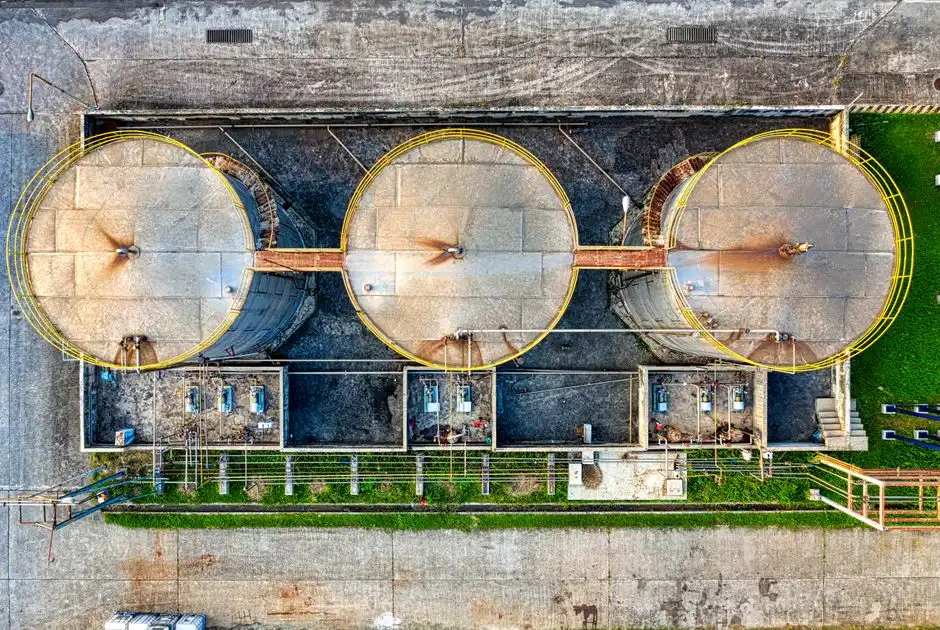
Effective IFAS design for abattoir wastewater requires adherence to specific operational parameters to ensure process stability and compliance (S4). Deviations from these guardrails can lead to rapid carrier fouling, nitrification failure, or inefficient operation.
| Parameter | Recommended Range for Abattoir Duty | Failure Mode Prevented |
|---|---|---|
| MLSS (Suspended + Biofilm) | 2,500–5,000 mg/L | Insufficient biomass for carbon removal |
| Basin Configuration | Two aerobic basins in series for high COD | Incomplete COD removal, nitrification inhibition |
| Biofilm Effective SRT | Can exceed 40 days | Nitrifier washout during shock loads |
| Carrier Fill (Standard) | 30–50% of basin volume | Inadequate surface area for biofilm |
| Carrier Fill (Cold Climates <15 °C) | 50–60% of basin volume | Halved nitrification rate in cold water (S4) |
| Influent FOG to Carrier | <100 mg/L | Rapid carrier fouling within weeks (S4) |
Three non-negotiable pre-conditions must be enforced before IFAS implementation: First, influent FOG must be stripped upstream to below 100 mg/L at the IFAS inlet. FOG concentrations above this limit will foul carriers rapidly, reducing effective surface area and inhibiting biofilm activity within weeks (S4). This necessitates a robust rotary bar screen for headworks protection ahead of the IFAS train and DAF pre-treatment.
Second, ammonia toxicity must be checked stoichiometrically. Protein breakdown releases approximately 1 mol NH3-N per 5–8 g of degraded protein, and abattoir blood streams can push the mixed liquor past 200 mg/L NH3-N within an hour (S4). This free ammonia concentration can inhibit nitrifying bacteria. An automatic chemical dosing system for pH and methanol-on-NO3-N control is often required to manage pH and prevent free ammonia build-up.
Third, for cold-climate sites where water temperatures are consistently below 15 °C, the carrier fill must be pushed to 50–60% of the basin volume (S4). This compensates for the halved nitrification rate observed at lower temperatures, ensuring sufficient nitrifying biomass is retained. Simply increasing blower air in an under-filled cold basin will not achieve the same nitrification capacity (S4).
Process Train: DAF → Equalisation → IFAS → Clarification → Sludge Dewatering
An IFAS system for slaughterhouse wastewater typically integrates into a complete treatment train, beginning with robust pre-treatment and concluding with effective sludge management (S4). This holistic approach ensures stable operation and compliance with discharge limits.
The headworks of an abattoir IFAS train begins with a rotary bar screen for solids protection to remove larger debris, preventing damage to downstream equipment. This is immediately followed by a dissolved air flotation (DAF) unit. The DAF system is critical for stripping FOG below the 100 mg/L carrier-fouling threshold (S4). Every IFAS proposal for meat processing pairs the biological basin with DAF pre-treatment for FOG removal, as exceeding this limit will rapidly compromise carrier performance (S4).
Post-DAF, an equalisation basin is essential to dampen the 2–4× flow and load swings characteristic of slaughterhouse operations (S4). This provides a more consistent feed to the biological stage. The wastewater then proceeds to the IFAS aeration basins, typically configured as two aerobic basins in series for high-COD loads (S4). A common design, as seen in a 500 m³/day beef plant reference case, employs a 40% carrier fill in the second basin (S4).
Downstream of the IFAS basins, clarification separates the suspended biomass from the treated effluent. Subsequent polishing may involve an automatic chemical dosing system for pH and methanol-on-NO3-N control, with methanol dosed at 0.5–1.2 kg per kg of NO3-N for denitrification, and 5–12 kg NaOH/day for pH control on ammonia-rich loadings (S4). Finally, waste-activated sludge requires dewatering. An IFAS system produces sludge with a yield of 0.25–0.40 kg TSS per kg COD removed, which is meaningfully lower than CAS due to biofilm predation on suspended solids (S4). However, this sludge still requires handling, and a filter press sized 1.5–2.0× the conventional CAS press throughput for IFAS waste-activated sludge is the standard pairing to manage the volume effectively (S4).
2026 Cost Benchmarks: IFAS vs CAS, SBR, MBR
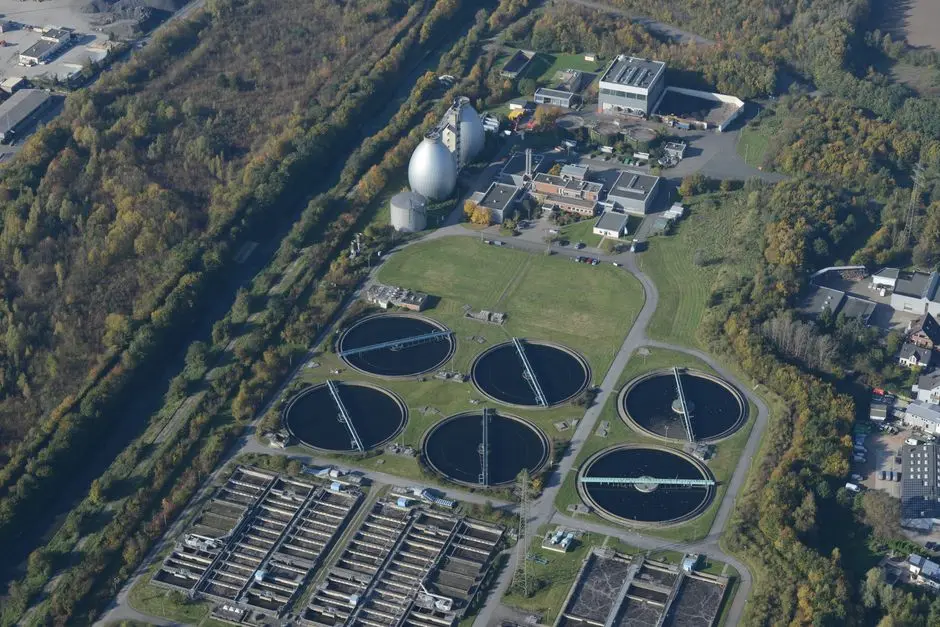
In 2026, IFAS for slaughterhouse duty installs at $280–$650 per m³/day of capacity, positioning it competitively among biological treatment options (S4). Understanding the CAPEX and OPEX breakdown, especially in a retrofit scenario, is crucial for procurement decisions.
For 2026 benchmarking, comparable CAPEX ranges across mainstream biological options for slaughterhouse duty are:
| Technology | CAPEX Range (2026) |
|---|---|
| MBR | $700–$1,400/m³-day |
| SBR | $350–$750/m³/day |
| CAS | $230–$480/m³-day |
| IFAS | $280–$650/m³-day |
IFAS sits between CAS and SBR on price, offering enhanced performance over CAS (S4). The chief commercial case for IFAS is its retrofit potential into existing CAS tankage, where civil works costs drop significantly to $20–$50/m³-day (S4). This retrofit premium is where IFAS beats MBR by a factor of three to five on total installed cost (S4).
IFAS OPEX on slaughterhouse duty typically runs $0.22–$0.48 per m³ of treated effluent in 2026 (S4). Aeration dominates this cost stack, consuming 55–65% of OPEX (S4). Fine-bubble membrane diffusers in slaughterhouse mixed liquor deliver an α-factor of 0.55–0.70 (S4). Switching to high-efficiency turbo blowers can cut aeration energy by 20–35% compared to multi-stage centrifugal units at the same airflow (S4). Carrier attrition, a new line item for CAS operators, accounts for 2–4% of media volume loss per year at $4–$8/kg (S4).
A critical vendor-quality tell: proposals that omit an automatic chemical dosing system for pH and nutrient control should be questioned (S4). Ammonia-rich abattoir streams will not hold pH without it, potentially leading to nitrification failure and compliance issues (S4). For further comparison with MBR retrofit economics, consider MBR retrofit economics for the reuse-quality polishing stage downstream of IFAS.
Operating KPIs an IFAS Slaughterhouse Plant Should Track Weekly
Maintaining optimal IFAS performance in slaughterhouse applications requires consistent monitoring of specific operational key performance indicators (S4). These KPIs provide real-time insight into biofilm health, FOG management, and overall process stability, preventing compliance issues before they arise.
| KPI | Target Range/Action | Purpose |
|---|---|---|
| DO in Aerobic Basin | Maintain 1.5–2.5 mg/L | Ensure sufficient oxygen for BOD/COD and nitrification |
| MLSS (Suspended) | 2,500–5,000 mg/L | Monitor suspended biomass concentration |
| FOG at IFAS Inlet | <100 mg/L | Prevent carrier fouling; indicates DAF performance (S4) |
| Carrier Fill Integrity | Visual check; ensure no loss/clumping | Verify media retention and distribution |
| Sieve Differential Pressure | Monitor for increases | Indicates clogging, requires cleaning |
| Effluent NH3-N | Meet permit limits | Primary indicator of nitrification efficiency |
| Free Ammonia Toxicity Check | Calculate based on pH, temp, total NH3-N | Prevent nitrifier inhibition from high ammonia (S4) |
| Methanol:NO3-N Ratio (if denit.) | 0.5–1.2 kg methanol per kg NO3-N | Optimize denitrification for effluent NO3-N (S4) |
The α-factor, representing the oxygen transfer efficiency in mixed liquor compared to clean water, typically ranges from 0.55–0.70 on fine-bubble diffusers in slaughterhouse wastewater (S4). This means blower set-points cannot be directly transferred from a clean-water or typical CAS plant without re-tuning, as doing so would lead to wasted energy or insufficient oxygen transfer (S4).
A new recurring task compared to conventional CAS is the quarterly carrier-sieve inspection. This typically requires a half-day per basin per quarter to ensure proper media retention and prevent blockages. Additionally, a planned annual carrier top-up of 2–4% of media volume is necessary due to attrition, budgeted at $4–$8/kg (S4).
Case Reference: 500 m³/day Beef Plant IFAS Retrofit
A 500 m³/day mid-size beef plant retrofit provides a practical example of IFAS implementation and its associated economics for abattoir wastewater treatment (S4). This case aligns with a typical BCSH specific water consumption of 325 L/animal, treating wastewater from approximately 1,500 animals per day, yielding around 488 m³/day of effluent (S4).
The plant in this reference case processed influent with 5,500 mg/L COD, 800 mg/L FOG, and 280 mg/L TN. The retrofit involved two aerobic basins in series, with 40% carrier fill in the second basin, DAF upstream pre-treatment, and a filter press downstream for sludge dewatering (S4).
The CAPEX for this 500 m³/day IFAS retrofit landed in the range of $185,000–$325,000, with a midpoint of $255,000 (S4). The major cost components were media ($45,000), blowers ($60,000), and retrofit civil works into existing CAS tankage ($40,000) (S4).
| CAPEX Component | Estimated Cost (500 m³/day) |
|---|---|
| Media | $45,000 |
| Blowers | $60,000 |
| Retrofit Civil Works | $40,000 |
| Other (Controls, Sieves, Install) | $40,000–$180,000 |
| Total CAPEX (Midpoint) | $255,000 |
Annual OPEX for this facility totaled approximately $102,000/year (S4). This breaks down as: aeration $42,000, sludge handling $18,000, carrier replacement $12,000, chemicals (methanol + NaOH) $9,000, labor $14,000, and maintenance $7,000 (S4). At full-load operation, this equates to $0.56/m³; however, at a realistic 0.60 design load factor for slaughterhouses (which rarely run flat-out 365 days), the OPEX drops to $0.34/m³ (S4).
The payback period for this IFAS retrofit, when compared against running an overloaded CAS train with escalating polymer dose and sludge-haul fees, was estimated at 2.8–3.6 years, including the civil retrofit (S4). For sites where discharge permit compliance is the primary driver, avoided fines and consent-order upgrades typically reduce the payback period to below three years (S4).
Decision Rule: When IFAS Is the Right Specification
IFAS is the appropriate specification for slaughterhouse wastewater treatment when influent COD consistently exceeds 2,500 mg/L, existing conventional activated sludge tankage is available for retrofit, and the discharge limit does not require reuse-quality total suspended solids (S4). This configuration offers superior shock-load tolerance and reliable performance for high-strength industrial streams.
However, if the end goal is reuse-quality water requiring effluent TSS below 5 mg/L, specifying an MBR for reuse-quality polishing downstream of an IFAS system is the optimal approach, rather than choosing between the two technologies (S4). This combined train captures both the FOG and shock-load resilience of IFAS and the high-quality effluent of MBR. Field data from the Mwanza City Slaughterhouse, Tanzania, confirms the efficacy of an integrated biological train, achieving 87.5% BOD5 and 92.2% COD removal at full scale (S5), demonstrating that biofilm-augmented biology is a deployable and robust response to challenging abattoir duties. For broader insights into COD removal process selection across high-strength industrial streams, additional resources are available.
Frequently Asked Questions
How much does IFAS cost for slaughterhouse wastewater in 2026?
In 2026, IFAS for slaughterhouse wastewater installs at $280–$650 per m³/day CAPEX and $0.22–$0.48 per m³ OPEX. When retrofitting into existing CAS tankage, civil works costs drop significantly to $20–$50/m³-day, placing these projects at the lower end of the cost ranges (S4).
What influent COD can IFAS handle from an abattoir, and what are the pre-treatment requirements?
IFAS is designed to handle high-strength abattoir influent with COD concentrations ranging from 2,000–8,000 mg/L, achieving 85–95% removal (S4). A critical pre-treatment step is dissolved air flotation (DAF) to reduce influent FOG to below 100 mg/L before it enters the IFAS basin, as FOG concentrations above this threshold will foul the carrier media within weeks (S4).
Is IFAS better than MBR for meat processing wastewater?
IFAS generally offers a significant CAPEX advantage, being three to five times cheaper than MBR when retrofitting into existing tankage (S4). It also provides superior FOG tolerance and shock-load resilience. However, MBR excels at producing reuse-quality effluent with sub-5 mg/L TSS. The choice depends on discharge limits: IFAS for robust treatment without direct reuse, or MBR (potentially downstream of IFAS) for water recovery applications (S4).
How often do IFAS carriers need replacement, and what is the associated cost?
IFAS carriers experience an attrition rate of 2–4% of media volume per year (S4). This is typically managed through planned annual top-ups, rather than emergency replacements, at a cost of $4–$8/kg for bulk media (S4).