
Why Gelatin Wastewater Is a Special Case for Biological Treatment
Gelatin manufacturing effluent contains high levels of COD, total nitrogen, and suspended solids derived from collagen, bone, and soft-tissue residues. The exact influent values for COD, TKN, and TSS are not provided in the supplied research, requiring each plant to pull these from its own influent monitoring before sizing. The proteins and colloids in this stream are the same fraction that biologynotesonline.com identifies as a target for MBR's physical barrier, which explains why gravity settling alone underperforms on gelatin lines — the colloidal protein load does not flocculate cleanly into a clarifier sludge blanket.
Cooker and cooler washwater frequently leaves a gelatin plant's heat-recovery stage at 40–60 °C, exceeding the comfort zone of a conventional activated-sludge basin and reaching the operating ceiling of many polymeric membranes. The supplied HydropureWater DF-series spec does not state a maximum membrane temperature, making this a mandatory vendor-confirmation item. A treatment train that keeps the biological step robust and the membrane step fouling-resistant is the core design problem, and the system must be engineered around both the foulant chemistry and the thermal envelope rather than retrofitted to a standard municipal MBR reference design.
How an MBR Treats Gelatin Effluent Step by Step
A submerged MBR for gelatin service operates as a five-stage flow that can be integrated directly into a P&ID.
- Fine screening. Raw effluent passes through a fine screen that removes hair, fibres, and abrasive debris before the bioreactor (biologynotesonline.com). On a gelatin line, this is non-negotiable because bone chips and connective-tissue fragments carry over from cookers and would blind any downstream membrane within hours.
- Equalization and flow balancing. Batch cooker discharges create swings in both COD and temperature; the supplied research does not describe equalization explicitly, so buffer tank volume and mixing strategy must be confirmed with the plant's batch schedule.
- Aeration tank. Suspended microorganisms degrade organic pollutants under aerobic conditions, with oxygen supplied to the tank (biologynotesonline.com). This is where the bulk of the protein and dissolved COD reduction occurs.
- Submerged membrane module. The module replaces the secondary clarifier: treated water passes through the membrane while sludge is retained in the tank (biologynotesonline.com). Permeate is drawn out under a modest vacuum while mixed liquor is held at high MLSS on the upstream side.
- Permeate polishing. If the reuse target demands RO-grade water, downstream UF or RO can polish the MBR permeate; UV or chlorine dioxide can be added for final disinfection when the water returns to washdown. The base system is the HydropureWater integrated MBR system, and the module at the heart of step 4 is the HydropureWater DF series flat-sheet MBR module.
MBR Module Format, Materials, and What to Specify for Gelatin Service
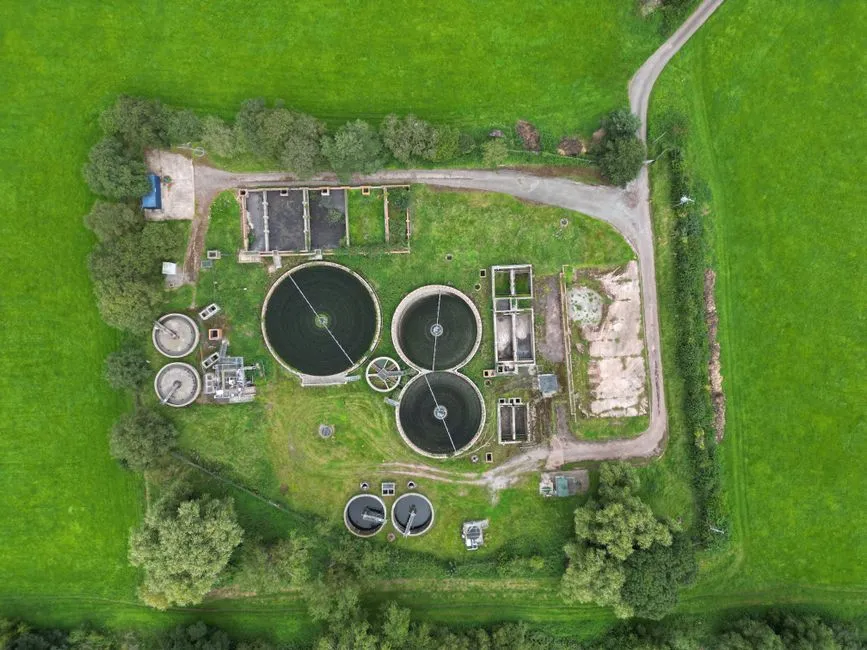
Procurement engineers should specify 0.1 μm nominal pore size in PVDF, flat-sheet geometry, integrated scouring aeration, and individually replaceable elements for gelatin-plant datasheets. The HydropureWater DF series flat-sheet module uses 0.1 μm PVDF — a tight-UF cutoff that retains colloids, emulsified fats, and proteins in the bioreactor instead of bleeding them into the permeate. biologynotesonline.com notes that tubular membranes are typically used in side-stream or external MBR systems, while flat-sheet and hollow-fibre dominate submerged formats; gelatin plants select submerged formats to avoid the high cross-flow pump energy of external loops, consistent with EPA MBR guidelines for industrial retrofits.
Integrated coarse-bubble aeration provides continuous membrane scouring, preventing protein-rich MLSS from forming a cake on the membrane surface. Because the membrane removes suspended solids, bacteria, viruses, proteins, and other macromolecules (biologynotesonline.com), these species are the dominant foulant class. The DF series' individually replaceable elements are critical: protein fouling shortens element life unevenly across a rack, and the ability to swap a single fouled cassette keeps a gelatin plant online during a CIP recovery.
| Specification line | Value / requirement | Why it matters on gelatin feed |
|---|---|---|
| Membrane polymer | PVDF (DF series) | Chemical and oxidative tolerance for CIP with NaOCl / citric acid |
| Nominal pore size | 0.1 μm | Retains colloids, emulsified fats, and proteins that defeat clarifiers |
| Module geometry | Flat-sheet, submerged | Avoids external cross-flow pump energy; suits retrofit footprints |
| Aeration | Integrated coarse-bubble scouring box | Primary anti-fouling mechanism against protein cake |
| Element replacement | Individually replaceable cassettes | Uneven protein fouling — swap hot spots without a full rebuild |
Operating Parameters and Foulant Control on Gelatin Feed
Submerged MBRs operate at elevated MLSS relative to conventional activated sludge, allowing them to tolerate colloidal protein loads that would wash out a clarifier; however, the supplied research does not provide numeric MLSS, SRT, or HRT ranges for gelatin, so these must be sized with the vendor against the plant's mixed-liquor settleability and oxygen demand. Submerged flat-sheet MBRs with integrated scouring aeration use 10–20× less energy than external cross-flow MBRs (HydropureWater DF-series spec), providing a significant OPEX advantage for 24/7 aeration. Integrated MBR packages offer a 60% smaller footprint than conventional systems (HydropureWater integrated MBR system spec), which is beneficial for retrofitting gelatin plants within existing facility footprints.
Engineers must plan for proteins, residual fats, and bone-derived colloids as primary foulant classes. biologynotesonline.com identifies proteins and macromolecules as targets for membrane removal, implying they are also the dominant foulant class; CIP frequency and recovery cleaning chemistry (typically NaOCl for organic fouling and citric acid for inorganic scaling) must be specified by the module vendor. Maximum operating temperature must be confirmed in writing, as gelatin effluent often arrives at the biological stage hotter than municipal ratings assume. A 2026 perspective on MBR cost and selection is available in the MBR cost-per-m³ 2026 guide, and the platform itself is the HydropureWater integrated MBR system.
| Parameter | Documented value / status | Engineer action |
|---|---|---|
| MLSS | Elevated vs CAS; numeric range not in supplied research | Size with module vendor against actual mixed-liquor data |
| SRT / HRT | Not stated in supplied research | Engineer from influent COD/TKN and target MLSS |
| Energy vs external MBR | 10–20× lower (HydropureWater DF-series spec) | Use in OPEX comparison vs side-stream tubular |
| Footprint vs conventional | 60% smaller (HydropureWater integrated MBR spec) | Use in retrofit feasibility check |
| Maximum temperature | Not stated in supplied research | Confirm with vendor — gelatin effluent is hot |
| CIP chemistry / frequency | Not stated in supplied research | Specify in vendor agreement |
Pretreatment, Equalization, and Sludge Side: Making MBR Stable on Gelatin
Undersized upstream screening is the primary cause of MBR failure in gelatin plants; therefore, a fine screen to remove hair, fibres, and abrasive debris is required before the bioreactor (biologynotesonline.com). At headworks, a HydropureWater GX series rotary bar screen protects downstream pumps, valves, and the biological process from rags and fibrous debris that are heavier than those found in municipal sewage. While not described in the supplied research, equalization is required to buffer batch cooker discharges, and volume must be engineered based on the plant's specific batch schedule.
Gelatin waste activated sludge is typically high in protein-bound water and benefits from mechanical dewatering; the MBR's waste sludge stream can be paired with a HydropureWater plate and frame filter press sized from 1 m² to 500 m² depending on dry-solids throughput. Any coagulant or pH adjuster dosed upstream of the MBR must be compatible with the PVDF membrane, and a HydropureWater automatic chemical dosing system ensures the controlled, documented dosing required for compliance audits. If the membrane fails, the upstream process should be the first area investigated.
Effluent Quality, Reuse Options, and the 2026 Sizing Reality
MBR permeate quality is documented as near-reuse-quality effluent (<1 μm filtration) (HydropureWater integrated MBR system spec). The integrated MBR capacity range is 10 to 2,000 m³/day (HydropureWater integrated MBR system spec), which supports both small single-line gelatin plants and large multi-line facilities; at the module level, DF series cassettes produce 32–135 m³/day per 80–225 m² rack, allowing for modular capacity expansion as cookers are added. The base system is the HydropureWater integrated MBR system.
For reuse targets exceeding MBR permeate quality, the polishing train includes a HydropureWater UF system as a safety barrier ahead of a HydropureWater reverse osmosis system for boiler-feed or process-water reuse, complemented by a HydropureWater UV sterilizer for final disinfection. The MBR removes the bulk of COD, suspended solids, and proteins, ensuring the RO feed is low-fouling and maintains stable specific flux. A broader food-industry perspective is given in the food-processing wastewater engineering guide, and a parallel case study is the UF system for food-industry wastewater guide. Per-m³ cost claims should be deferred to the MBR cost-per-m³ 2026 guide.
Frequently Asked Questions
What influent values do I need before I can size an MBR for a gelatin plant?
The supplied research does not contain a numeric range for COD, TKN, TSS, or temperature on gelatin effluent, so the engineer must pull these from the plant's own influent monitoring — typically 24-hour composite samples across a full batch cycle to capture cooker and cooler swings. Submit these values to the module vendor along with the target permeate quality and daily flow envelope.
Is a submerged flat-sheet MBR cheaper to run than a side-stream tubular MBR on a hot, protein-rich feed?
Submerged flat-sheet MBRs with integrated scouring aeration use 10–20× less energy than external cross-flow MBRs (HydropureWater DF-series spec), and this advantage compounds on a 24/7 gelatin line. Because capital cost and membrane-replacement frequency are not provided in the supplied research, request a side-by-side quote rather than assuming energy savings translate to total cost of ownership.
What should I confirm with the MBR vendor before signing a PO for gelatin service?
Confirm four items: (1) maximum membrane temperature rating; (2) documented CIP chemistry and expected CIP interval for protein and fat fouling; (3) element-replacement policy and the price of an individual replacement cassette for the DF series; and (4) the integrated system capacity range (10 to 2,000 m³/day) matched to your peak and average daily flow.