Why Pulp & Paper Mills Near Sarasota Are Indirect Dischargers, Not Direct Ones
A pulp, paperboard, or tissue mill in the Sarasota industrial base that pipes its wastewater to a publicly owned treatment works is, by EPA definition, an indirect discharger — and that single classification routes the entire compliance strategy through two stacked rule sets (per 40 CFR Part 430 framework, EPA effluent guidelines page, 2026). The federal side is 40 CFR Part 430, the Pulp, Paper and Paperboard Effluent Guidelines originally promulgated in 1974 and 1977, with major toxic-pollutant amendments in 1998. The local side is the receiving POTW's sewer-use ordinance, enforced through a state-delegated pretreatment program under 40 CFR Part 403. A direct discharger holds an NPDES permit and self-monitors against federal limits only; an indirect discharger must satisfy federal categorical limits and whatever the local utility has written into its ordinance.
The Sarasota industrial base is dominated by Subcategory G (paperboard from wastepaper, tissue without deinking, builders' paper and roofing felt) and Subcategory L (tissue, filter, non-woven, and paperboard from purchased pulp at nonintegrated mills). Subcategory drives the numeric BOD, TSS, and AOX limits that show up in the federal table, so a retrofit sized for the wrong subcategory will under- or over-design the biological stage. If the mill is nonintegrated and uses purchased pulp or recycled furnish, it almost always falls into L or G — and local limits in a Sarasota-area sewer ordinance typically sit below the federal floor on TSS, BOD, pH, and oil & grease, which is the practical reason a 2026 retrofit program exists at all.
The 2026 Sarasota Pretreatment Playbook: Federal vs. Local Limits
The gap a Sarasota mill has to close is rarely the federal 40 CFR Part 430 limit — it is the local cap layered on top. The table below shows typical federal monthly-average values for Subcategory G/L alongside the kind of local limits a Sarasota-area POTW writes into its sewer ordinance; the right-hand column is the delta the plant has to engineer out of the wastewater at the compliance sampling point (per EPA 40 CFR Part 430 subcategory definitions; local-limit values are typical municipal pretreatment framing because the exact Sarasota County Utilities / City of North Port ordinance is utility-specific).
| Parameter | 40 CFR Part 430 monthly avg (Subcategory G/L, illustrative) | Sarasota-area POTW local limit (typical) | Delta the plant must close |
|---|---|---|---|
| TSS | ~30–60 mg/L | ~30 mg/L cap | Clarifier overflow runs 60–120 mg/L; tertiary solids capture required |
| BOD5 | ~150–300 mg/L | ~200–250 mg/L cap | Manageable with biological polishing; MBBR or activated sludge closes it |
| COD | ~600–1,500 mg/L (no federal cap in all subparts) | Often not capped numerically; used for surcharge | Anaerobic stage drives COD cut for surcharge control |
| pH | 5.0–9.0 (federal envelope, where stated) | 5.0–10.0 envelope | Equalization + neutralization holds the band |
| Oil & Grease | Not always capped federally in G/L | 10–15 mg/L cap common | DAF cuts 25–50 mg/L overflow to <15 mg/L with proper chemistry |
| Total Phosphorus | Limited applicability | Often 1–5 mg/L in sensitive watersheds | Chemical precipitation or biological luxury uptake |
| Ammonia (as N) | Limited applicability in G/L | 10–20 mg/L summer; tighter in winter | MBBR nitrification stage required |
| Temperature | Not federally capped | ≤ 40 °C / 104 °F typical | Equalization basin + cooling if condensates are blended |
| AOX (chlorinated) | Federal cap applies to bleaching subcategories | Often tracked, not always capped locally | Rarely the binding constraint for a non-bleached purchased-pulp or recycled fiber mill |
For a typical Sarasota purchased-pulp or recycled-fiber mill, TSS and oil & grease are the parameters that almost always force a tertiary step. The other binding constraint is often ammonia in summer, when warm wastewater plus high recirc temperatures starve nitrification. Chlorinated AOX is regulated federally but rarely the binding case in this region because most Sarasota mills do not bleach on-site; they buy market pulp. That detail alone reorders the engineering priority list toward organics and solids, not advanced oxidation.
The Pretreatment Equipment Train Sarasota Mills Actually Run
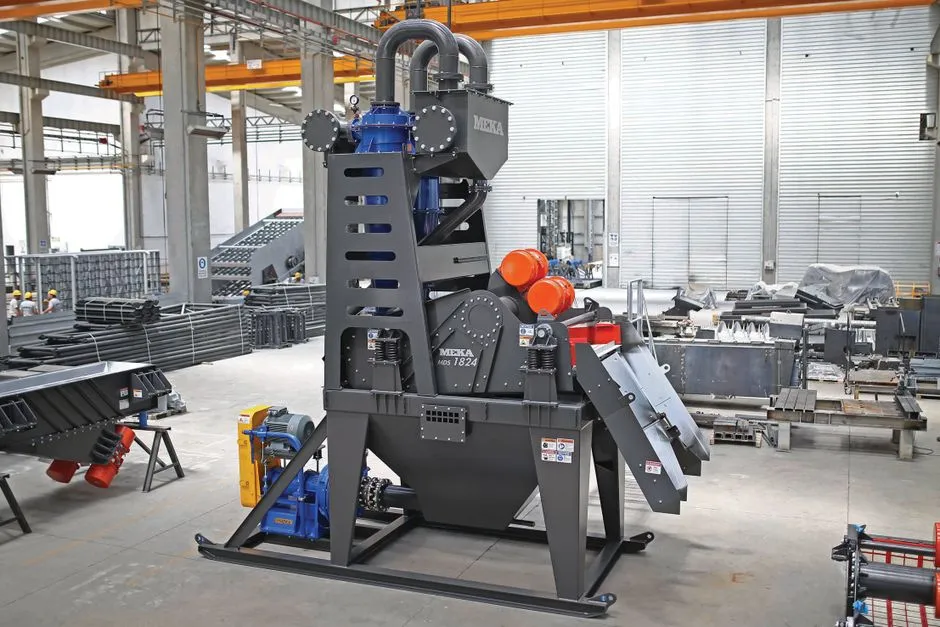
The unit operations below appear in the same order on a typical P&ID for a 0.5–1.0 MGD paper-mill sidestream. Each step has a defensible removal target, not a marketing claim.
- Rotary mechanical bar screening at the headworks. A rotary bar screen headworks with 1–3 mm openings pulls rags, plastic strapping, and large fiber bundles before they blind downstream equipment. Without it, DAF nozzles clog and discfilter media tear within weeks.
- Flow and pH equalization. An 8–24 hour hydraulic retention basin damps wet-end and broke-recovery surges that are characteristic of paper machines and stabilizes pH ahead of the biological train (per Hubbe et al., NC State BioResources review). Stable operations — not peak removal numbers — are what equalization actually buys you.
- Dissolved air flotation for primary fiber, filler, and FOG. An industrial DAF system operated at 15–25 m³/m²·h hydraulic loading, with an automated coagulant and flocculant dosing skid ahead of the cell, is the first real solids cut. DAF is the established primary clarification step for P&P sidestreams because the float loads fiber and FOG together, which is exactly what a downstream POTW surcharge penalizes (per the same NC State review).
- High-rate anaerobic pretreatment (UASB or EGSB). An anaerobic reactor upstream of aeration strips 70–90% of COD, drops downstream aeration energy, and produces a usable biogas stream (per Veolia/Biothane field data on P&P retrofits). This is the single biggest OPEX lever in the train — see the cost section below.
- MBBR or activated sludge for BOD and ammonia polishing. An MBBR stage is preferred where footprint is tight or nitrification at low temperature matters; the BAS/HYBAS configuration (MBBR carriers in series with activated sludge) protects the clarifier from bulking and improves settleability (per Veolia/AnoxKaldnes field data). For a small Sarasota retrofit, an MBR membrane bioreactor is also a defensible option when TSS and BOD have to be met in one tank.
- Tertiary solids capture — discfilter or membrane barrier. A discfilter delivers 50–80% TSS reduction in normal operation and up to 98% when the upstream clarifier is bulking, on a very small footprint (per Veolia/Hydrotech field data, including a 2,500 gpm peak unit on a 7 ft × 20 ft footprint at an Alabama paper plant). This is the step that closes the gap to a 30 mg/L TSS cap.
For digester upset or off-design operation during commissioning, an anaerobic pretreatment troubleshooting guide is worth bookmarking — most Sarasota commissioning delays trace to one of three hydraulic or sulfide issues, not biology.
Sizing the Train: Parameters and Removal Targets for a 0.5–1.0 MGD Pulp/Paper Sidestream
Use the table below as a defensible baseline; tune each row to the mill's own influent sampling before issuing a P&ID. P&P sidestreams commonly run 1,000–3,000 mg/L COD and 200–500 mg/L TSS before DAF — that range is a process-engineering description, not a value pulled from a single source — so the table below assumes a mid-range feed and a 30 mg/L local TSS cap.
| Unit operation | Design loading / HRT | Influent range | Effluent target | Removal % |
|---|---|---|---|---|
| DAF (primary) | 15–25 m³/m²·h hydraulic loading; polymer-aided | 200–500 mg/L TSS, 25–50 mg/L O&G | 60–120 mg/L TSS, < 15 mg/L O&G | 60–80% TSS, 70–90% O&G |
| High-rate anaerobic (UASB/EGSB) | 8–14 kg COD/m³·day; 6–10 h HRT for warm condensates | 1,000–3,000 mg/L COD | 200–600 mg/L COD | 70–90% COD |
| MBBR (BAS / HYBAS) | 10–25 g BOD/m²·day; 30–50% carrier fill; 4–8 h HRT for polishing | 200–600 mg/L COD; 80–150 mg/L BOD; 5–20 mg/L NH₃-N | < 30 mg/L BOD; < 5–10 mg/L NH₃-N | 85–95% BOD; 50–80% NH₃-N |
| Discfilter (tertiary) | 10–20 m/h hydraulic loading on disc surface | 30–80 mg/L TSS from clarifier overflow | 5–20 mg/L TSS | 50–80% normal; up to 98% if upstream bulking |
Two practical notes. First, a high-efficiency sedimentation tank ahead of the discfilter is cheap insurance — it knocks out the bulk of the TSS swing and lets the discfilter run at design loading rather than chase hydraulic peaks. Second, if the receiving utility is sensitive to fecal coliform or has a reuse-friendly reuse program, a UV sterilizer downstream of the discfilter is a low-CAPEX add. For a full biological-rebuild case, the lagoon-to-MBR retrofit comparison lays out the trade-off between capex, footprint, and effluent quality.
2026 Retrofit Costs, ROI, and the Decision Framework

The table below uses industry-typical installed-cost bands expressed in U.S. dollars per gallon-per-day of nameplate capacity ($/GPD). These are not bids — they are the order-of-magnitude range a mill should anchor a CAPEX meeting with before asking vendors for firm numbers (industry-typical framing, 2026; confirm with a Class A estimate).
| Unit operation | Installed CAPEX band ($/GPD, 2026) | Primary OPEX driver | Notes for a Sarasota retrofit |
|---|---|---|---|
| Rotary bar screen headworks | $0.05–0.20/GPD | Wear parts, spray water | Always included; usually a small fraction of total CAPEX |
| Equalization basin | $0.10–0.40/GPD | Mixing energy, neutralization chemical | Civil-dominated; cheaper if an existing basin can be repurposed |
| DAF | $0.30–0.80/GPD | Polymer, saturator air | Smallest footprint of the solids train; fast ROI from FOG surcharge avoided |
| High-rate anaerobic (UASB/EGSB) | $1.20–2.50/GPD | Heat, recirculation, biogas handling | Longest payback — justified when influent COD > 1,500 mg/L |
| MBBR (BAS/HYBAS) | $1.00–2.00/GPD | Blower energy, carrier media | Preferred where nitrification and footprint both matter |
| Discfilter | $0.40–0.90/GPD | Backwash water, cloth replacement | Closes the TSS cap with the smallest footprint of any tertiary option |
| MBR (membrane bioreactor) | $2.50–4.50/GPD | Membrane cleaning, air scour, replacement | Replaces clarifier + discfilter; tightest effluent |
The single biggest OPEX offset is the anaerobic stage. Per the Veolia/Biothane field data, leading with anaerobic pretreatment at 70–90% COD removal cuts downstream aeration electricity by 50–70% and produces recoverable biogas that can be burned in a mill boiler or a CHP unit. For a 0.5–1.0 MGD sidestream, that biogas value alone can fund 1–3 years of the anaerobic CAPEX delta in many paper-mill energy balances. Sludge handling downstream is a separate line — a filter press for DAF and biological sludge typically drives the dewatering CAPEX, and a polishing step with RO/UF membrane elements only enters the picture if the mill is targeting water reuse rather than just discharge compliance.
Three questions will resolve the go/no-go logic for each unit operation in a Sarasota CAPEX meeting:
- Is the binding local cap TSS or BOD? If TSS, the cheapest path is DAF + discfilter. If BOD plus ammonia, the anaerobic + MBBR combination is justified.
- Is the mill space-constrained? Tight footprint favors MBBR or MBR over aerated lagoons, and discfilter over sand filters.
- Is energy recovery worth the anaerobic CAPEX? Yes if influent COD reliably exceeds 1,500 mg/L and the mill has a host boiler that can take biogas. Below that threshold, jump straight to MBBR.
Close the loop on compliance: any retrofit has to be documented in the POTW's pretreatment program submittal, with sampling at the compliance sampling point defined in the utility's sewer-use ordinance. For context on how a peer Florida industry segment handles the same paperwork, the Tampa-area POTW pretreatment playbook walks a comparable local-ordinance structure.
Frequently Asked Questions
What is the difference between a direct and an indirect discharger for a pulp and paper mill?
An indirect discharger sends its wastewater to a POTW rather than to surface water, which routes compliance through both the federal 40 CFR Part 430 categorical limits and the local POTW's sewer-use ordinance (per EPA 40 CFR Part 430 framework). A direct discharger holds an NPDES permit and is bound only by the federal effluent guideline. Most Sarasota-area tissue and paperboard mills are indirect dischargers.
Which 40 CFR Part 430 subcategory applies to a typical Sarasota tissue or paperboard mill?
Subcategory G covers paperboard from wastepaper, tissue without deinking, and builders' paper; Subcategory L covers tissue, filter, non-woven, and paperboard from purchased pulp at nonintegrated mills (per 40 CFR Part 430 subcategory definitions, EPA). The subcategory sets the federal numeric BOD, TSS, and AOX limits, so it must be confirmed before sizing the biological stage.
How much does a 2026 pulp and paper pretreatment retrofit cost per gallon of capacity?
Installed CAPEX bands for a Sarasota retrofit typically run DAF $0.30–0.80/GPD, high-rate anaerobic $1.20–2.50/GPD, MBBR $1.00–2.00/GPD, and discfilter $0.40–0.90/GPD, with MBR as a single-tank alternative at $2.50–4.50/GPD (industry-typical framing, 2026). Anaerobic pretreatment at 70–90% COD removal typically cuts downstream aeration energy by 50–70% and produces recoverable biogas, which is the largest OPEX offset in the train.